

It’s 3 a.m. and your skin is crawling. You’ve scratched until it bleeds, but the itching won’t stop. Your child keeps scratching their scalp at school, and now you’re worried about the whole family. This isn’t just a bad night-it could be scabies or lice. Both are common, highly contagious, and often misunderstood. And if you don’t treat them correctly, they won’t go away. They’ll come back. Again. And again.
What’s Really Going On With Your Skin?
Scabies isn’t caused by dirt. It’s caused by a tiny mite called Sarcoptes scabiei. These mites burrow into your skin, lay eggs, and trigger a furious allergic reaction. The result? Intense itching, especially at night, and thin, wavy lines on your skin-these are the mite tunnels. You’ll find them between fingers, on wrists, armpits, waist, genitals, and the soles of your feet. In babies and young children, they can even show up on the face and scalp.
Lice are different. They don’t burrow. They cling. There are three types: head lice (Pediculus humanus capitis), body lice (Pediculus humanus corporis), and pubic lice (Pthirus pubis). Head lice are the most common, especially in kids aged 3 to 11. They live on the scalp, lay eggs (nits) glued to hair shafts, and feed on blood. You’ll see them crawling or feel them moving. Nits look like dandruff-but they won’t brush off.
Here’s the thing: neither scabies nor lice are signs of poor hygiene. They spread through close contact-a hug, sharing a bed, a hat, or even sitting on a couch someone else just left. Schools, nursing homes, and crowded living conditions make outbreaks worse. And yes, adults get them too.
Treatment That Actually Works
Not all treatments are created equal. Many people use over-the-counter shampoos and creams, only to find the problem returns in a week. Why? Because most products don’t kill the eggs. And mites and lice reproduce fast.
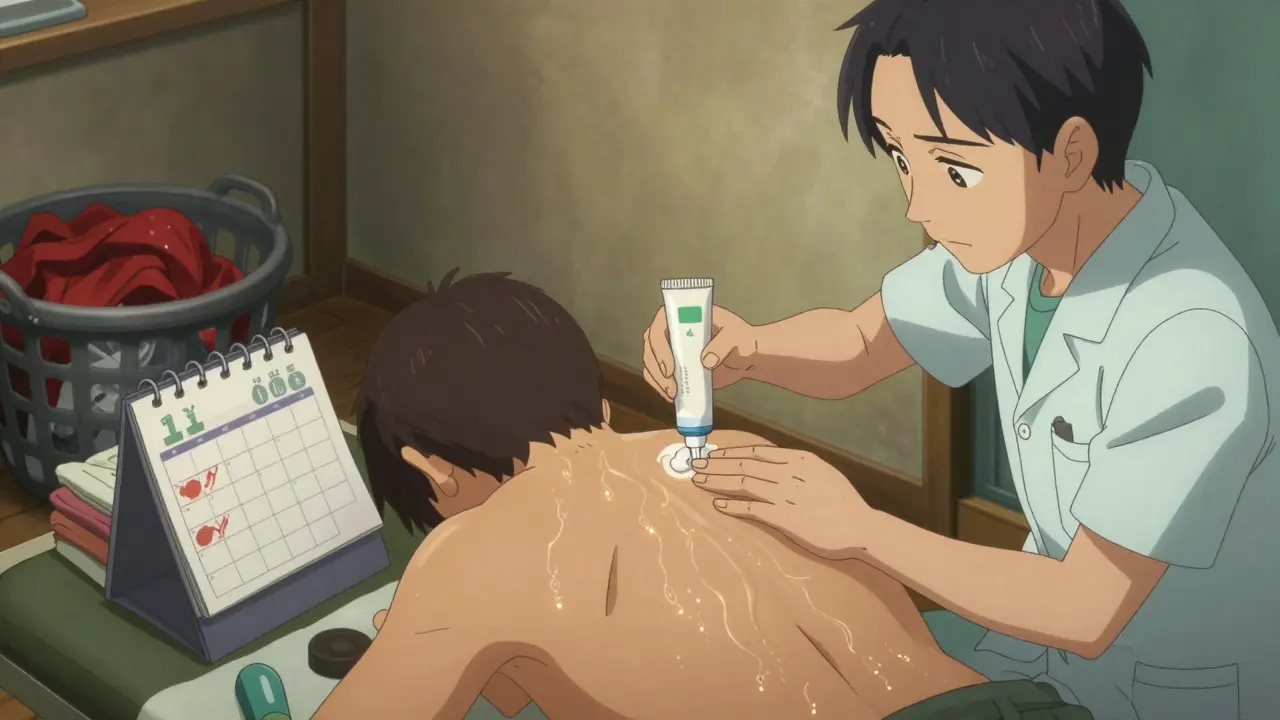
For scabies, the gold standard is permethrin 5% cream. You apply it from your neck down to your toes, leave it on for 8 to 14 hours, then wash it off. Do it again one week later. Why twice? Because the eggs hatch in about 10 days. One treatment won’t catch the new babies.
Another option is oral ivermectin. It’s not FDA-approved for scabies in the U.S., but doctors use it all the time-especially for people who can’t apply cream (like the elderly or those with disabilities), or in outbreaks. You take two doses, two weeks apart. Studies show it cures 86% of cases after one dose, and nearly 100% after two. It’s also used in mass treatment programs in places like the Solomon Islands, where it helped wipe out scabies and trachoma together.
For lice, permethrin cream rinse (1%) is common. But resistance is rising. In some U.S. areas, up to 30% of head lice don’t respond to it anymore. That’s why newer options like spinosad 0.9% liquid are gaining ground. It kills both lice and eggs in one application. No need to comb out nits afterward. It’s approved for kids as young as 6 months.
There’s also ivermectin lotion for lice-applied to dry hair and scalp, left on for 10 minutes, then rinsed. One application often does the job. No combing. No fuss.
Why Treatments Fail (And How to Avoid It)
Most treatment failures aren’t because the drug doesn’t work. They’re because people don’t follow the instructions.
With permethrin cream for scabies, people often skip areas. They forget the spaces between fingers, under the nails, the groin, or the soles of the feet. That’s where mites hide. One 2022 audit found that over 12% of treatment failures came from incomplete application.
Others wash it off too early. You need 8 hours. Not 4. Not 6. Eight. That’s how long it takes to kill the mites. If you shower after dinner, you’re probably washing it off at 9 p.m. That’s not enough. Leave it on overnight.
And here’s the biggest mistake: treating just one person. Scabies and lice spread fast. If your child has head lice, everyone in the household needs treatment-even if they’re not itching yet. Same with scabies. Your partner, your roommate, your grandma who visited last week-all need the same cream or pill. Otherwise, you’re just playing whack-a-mole.
Also, don’t rely on natural remedies. Tea tree oil, mayonnaise, or vinegar? No evidence they work. And lindane? It’s toxic. The FDA doesn’t recommend it anymore. Stick to proven treatments.
What About Cleaning Your Home?
You don’t need to burn your mattress or throw out your clothes. Lice can’t survive more than 24-48 hours off the human body. Scabies mites die in 2-3 days without skin contact.
Here’s what actually matters:
- Wash bedding, towels, and clothes worn in the last 3 days in hot water (at least 130°F) and dry on high heat.
- Items you can’t wash? Seal them in a plastic bag for 72 hours.
- Vacuum carpets and furniture, but don’t go overboard. Mites don’t live in carpets.
- For lice, soak combs and brushes in hot water (over 130°F) for 5-10 minutes.
That’s it. No fumigation. No steam cleaning. No expensive sprays. Just smart, simple steps.
When to See a Doctor
You can treat mild cases at home. But if you see:
- Thick, crusted skin (especially on hands or elbows)-that’s crusted scabies. It’s serious and needs oral ivermectin plus topical treatment.
- Signs of infection-redness, pus, swelling-see a doctor. You might need antibiotics.
- After two full rounds of treatment and the itching won’t stop-there might be another issue, like eczema or an allergic reaction.
- You’re pregnant, nursing, or treating a child under 2 months old-talk to a doctor first. Not all treatments are safe.
Crusted scabies is rare but dangerous. It’s common in people with weakened immune systems. One person can carry millions of mites. It’s highly contagious and needs hospital-level care.

The Bigger Picture: Why This Matters
Scabies affects 204 million people worldwide every year. The World Health Organization calls it a neglected tropical disease. That means it’s common in poor, crowded areas-but ignored by global health funding.
But progress is happening. In the Solomon Islands, a program that gave people both azithromycin (for trachoma) and ivermectin (for scabies) cut scabies rates by over 95%. It’s proof that simple, coordinated treatment can change lives.
In the U.S., resistance is rising. Permethrin doesn’t work like it used to. That’s why new drugs like spinosad are important. And researchers are now testing new compounds that actually kill eggs-something current treatments can’t do.
For now, the tools we have work-if you use them right. It’s not about being clean. It’s about being smart.
What to Expect After Treatment
Even after the mites or lice are dead, itching can last for weeks. That’s your body’s immune system still reacting to leftover mite parts and eggs. It doesn’t mean the treatment failed.
Use calamine lotion or antihistamines like cetirizine to help with itching. Avoid scratching-it leads to infection. If the itching lasts more than 4 weeks, see a doctor. You might need a different treatment.
For lice, you might still see nits after treatment. That’s normal. Dead nits stay glued to the hair. They’ll fall out on their own over time. You don’t need to pick them out unless you want to for appearance.
And yes, your skin might feel dry or irritated after permethrin. That’s common. Moisturize after washing it off.
Can scabies be cured without medication?
No. Scabies is caused by living mites that burrow into your skin. Without medication, they’ll keep laying eggs and multiplying. Natural remedies like tea tree oil or neem oil have no proven effect. Only FDA-approved or clinically tested treatments like permethrin or ivermectin can eliminate the infestation.
Can you get scabies from pets?
No. The mites that infect dogs and cats (Sarcoptes scabiei var. canis) are different from the human variety. They can cause temporary itching if they jump on you, but they can’t burrow or reproduce in human skin. They die within a few days. You don’t need to treat your pet for human scabies-but you should still wash bedding and towels to be safe.
Is ivermectin safe for children?
Oral ivermectin is not approved for children under 15 kg (about 33 pounds) or pregnant women due to limited safety data. But topical spinosad is approved for children as young as 6 months. For scabies in young kids, permethrin cream is still the first choice. Always check with a doctor before giving any medication to a child.
How long until I stop itching after treatment?
Itching can last 2 to 4 weeks after the mites or lice are gone. That’s because your skin is still reacting to dead mites and their waste. It doesn’t mean the treatment didn’t work. Use soothing lotions and antihistamines. If itching persists beyond 4 weeks, see a doctor-there may be another cause.
Do I need to treat everyone in my house?
Yes. Even if someone doesn’t have symptoms yet, they might be carrying the infestation. Scabies and lice spread easily through close contact. Treating only one person leads to reinfection. All household members and close contacts should be treated on the same day.
Can lice jump or fly?
No. Head lice can’t jump or fly. They crawl. They spread through direct head-to-head contact or by sharing items like hats, combs, or pillows. That’s why outbreaks happen in schools and households-not from the air or the environment.
Is it true that permethrin doesn’t work anymore?
In some areas, yes. Resistance to permethrin in head lice has reached 15-30% in parts of the U.S. That’s why alternatives like spinosad and ivermectin lotion are becoming first-line treatments. If you’ve used permethrin twice and it didn’t work, switch to a different medication. Don’t keep reapplying the same one.
How do I know if it’s scabies or eczema?
Scabies causes intense itching that gets worse at night and appears in specific areas: between fingers, wrists, armpits, waist, genitals. You might see thin, wavy lines (burrows). Eczema is usually dry, red, and flaky, and it doesn’t follow the same pattern. If you’re unsure, see a doctor. A skin scraping can confirm scabies in minutes.
Final Takeaway: Don’t Guess. Act.
Scabies and lice aren’t embarrassing. They’re common. And they’re treatable. But they won’t go away on their own. If you wait, you’ll spread them. If you treat half-heartedly, you’ll get them back.
Use the right medicine. Treat everyone at the same time. Clean what matters. Ignore the rest. And if it doesn’t clear up, go back to the doctor. There’s no shame in needing help. The goal isn’t perfection-it’s getting your life back.






Jake Moore
January 18, 2026 AT 16:56Just went through this with my kid last month. Permethrin worked like a charm, but I didn’t realize I had to reapply after a week. Ended up treating the whole family twice-total pain, but worth it. Now we keep the lice comb in the bathroom and check heads every Sunday. Prevention beats chaos.
Joni O
January 19, 2026 AT 00:47thank you for this!! i was so scared my daughter had scabies and i was about to start scrubbing her with tea tree oil (lol). your post saved me from making a huge mistake. permethrin is gross to apply but honestly? worth every second. i’m gonna wash all her stuffed animals now-just in case.
Ryan Otto
January 19, 2026 AT 01:24Let’s be honest-this is all a CDC psyop. The real cause of scabies is 5G radiation from cell towers and glyphosate in your oat milk. I’ve seen 17 cases in my neighborhood since the new smart meter was installed. No one wants to talk about it, but the mites are just a symptom. The real infestation is systemic control. Ivermectin? That’s just the pharmaceutical industry’s way of keeping you docile.
Max Sinclair
January 20, 2026 AT 02:57Great breakdown. I appreciate how you cut through the noise. So many people panic and go down the rabbit hole of home remedies. The fact that you mentioned crusted scabies and when to see a doctor? That’s the kind of info that actually saves lives. Thanks for writing this.
Praseetha Pn
January 22, 2026 AT 00:49OMG I KNEW IT!! I told my sister last week that the school is using this as a cover-up for fluoride poisoning-scabies is just the body’s way of rejecting the toxins! And guess what? They’re all using permethrin because it’s made by Big Pharma to keep you hooked on chemicals! My cousin in Kerala cured her whole village with neem paste and chanting mantras at dawn. You think science knows everything? HA. I’ve got 14 years of Reddit research to back me up.
Nishant Sonuley
January 22, 2026 AT 23:02Look, I get it-you want to believe the CDC pamphlet, but let’s not pretend this isn’t a class issue. People in trailer parks get scabies. People in gated communities get ‘allergic dermatitis.’ The language is different, the treatment is the same, but the stigma? That’s the real parasite here. And yeah, I’ve seen permethrin fail because people skip the groin area. But also, why are we still using 1970s chemistry to solve 2020s problems? We need better drugs. Not just more applications.
Emma #########
January 24, 2026 AT 09:50My mom had crusted scabies after her chemo. We didn’t even know it was that serious until the nurse showed us the crusty patches on her hands. I wish I’d read this sooner. The part about treating everyone at once? That’s what saved us. We all got ivermectin. It was weird, but we were alive. Thank you for saying it plainly.
Andrew McLarren
January 24, 2026 AT 16:01While I appreciate the clinical precision of this exposition, I must respectfully submit that the omission of any reference to the WHO’s 2023 guidelines on mass drug administration in resource-limited settings constitutes a significant oversight. Furthermore, the assertion that lice cannot survive beyond 48 hours off the host requires qualification in light of recent studies conducted in sub-Saharan climates demonstrating extended viability under ambient humidity conditions exceeding 85%. A more rigorous citation framework would elevate the utility of this otherwise commendable summary.
christian Espinola
January 25, 2026 AT 15:44Another vaccine-adjacent scare tactic. Scabies? Lice? They’re just the symptoms of a decaying society. People don’t wash their hands anymore. They don’t respect personal space. And now we’re being told to douse ourselves in chemicals? No thanks. I’ve got a 30-year-old mattress and I’ve never had a single bug. Clean living, not chemical warfare. Also, Ivermectin is literally a horse dewormer. You’re fine.
Chuck Dickson
January 26, 2026 AT 13:28Y’all need to chill. This isn’t a horror movie. You got bugs? You treat ‘em. You treat your whole house. You don’t panic. You don’t buy $80 ‘natural’ sprays. You don’t blame the school. You just do the damn thing. I did it with my three kids. Two treatments. One week apart. Washed sheets. Done. Life went on. You got this.
Naomi Keyes
January 27, 2026 AT 20:28Actually, I think you’re vastly underestimating the psychological trauma associated with prolonged itching and social stigma. The fear of being labeled ‘unclean’ is not trivial. And while permethrin is effective, its neurotoxic potential in children under two has been underreported in mainstream media. Also, why is there no mention of the link between scabies outbreaks and housing insecurity? You’re treating symptoms, not root causes. This feels… incomplete.
kenneth pillet
January 29, 2026 AT 12:22my kid had lice last year. spinosad worked. no combing. life changed. also, i didn’t treat my cat. he’s fine. weird, right?
Eric Gebeke
January 31, 2026 AT 08:13Wow. Just… wow. You’re all so naive. You think this is about mites? It’s about control. The FDA approves permethrin because it’s profitable. Ivermectin? Too cheap. Too accessible. That’s why it’s ‘off-label.’ They want you dependent on expensive creams and repeat visits. And don’t get me started on how schools use lice checks to shame low-income families. This isn’t medicine-it’s social engineering. I’ve seen the documents. You’re being played.
Jodi Harding
January 31, 2026 AT 12:58Itching lasts weeks? That’s just your body grieving the loss of its tiny invaders.