
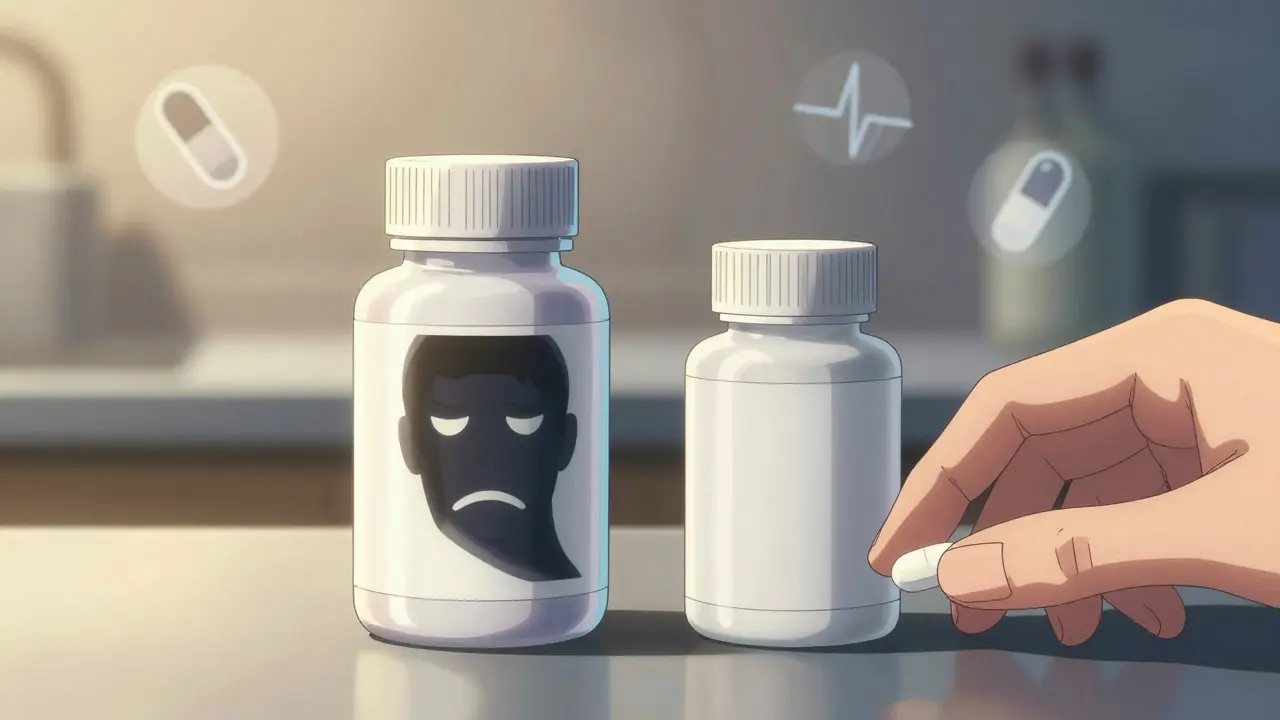
Think about this: two pills, identical in every chemical way, one labeled generic, the other branded. One costs $4. The other costs $40. You take them both. Do you feel the same? Research says you won’t.
Same Medicine, Different Mind
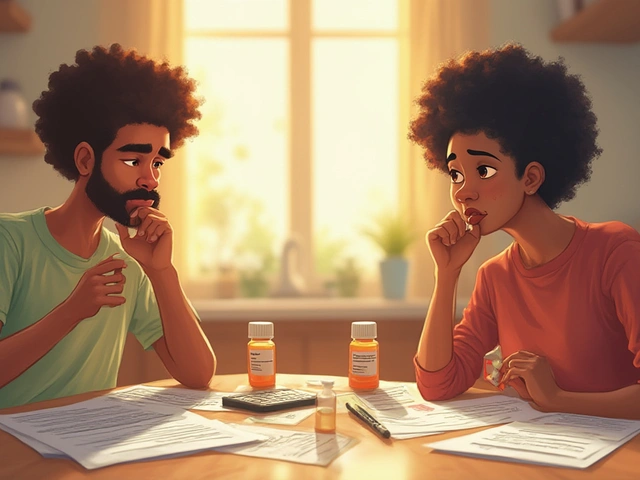
The science is clear: the label on your pill changes how your body responds-even when the active ingredient is exactly the same. This isn’t placebo magic. It’s the labeling effect, a psychological phenomenon where the name, packaging, or branding of a drug shapes your expectations, your pain levels, even your willingness to keep taking it. In a 2019 study with 72 participants, researchers gave everyone the exact same placebo pill. Half were told it was a brand-name drug. The other half were told it was generic. After just seven days, 54% of the people who thought they were taking the generic version stopped taking it. Only 33% of the brand-name group did. Why? They believed the generic didn’t work. Even though it was sugar. This isn’t just about quitting pills. People who thought they were on generics reported higher pain levels, more side effects, and even took extra pills they weren’t prescribed-just because they didn’t trust what they were taking.Brand Name = Better Results (Even When There’s No Drug)
A 2016 study took this further. Researchers gave students either real ibuprofen or a placebo. The catch? The placebo was labeled either as a brand-name drug or as generic. The brand-name placebo made people feel almost as good as the real drug. The generic placebo? Almost no pain relief at all. Here’s the kicker: when people thought they were taking a brand-name placebo, 63% said their headache improved. When they thought it was generic? Only 42% felt better. That’s a 21-point gap-created by a label. Even side effects changed. 47% of people who got the generic-labeled placebo reported nausea or dizziness. Only 28% of those who got the brand-name placebo did. The pill was the same. The body’s reaction? Totally different.Why Does This Happen?
Your brain doesn’t know chemistry. It knows stories. Brand-name drugs come with decades of advertising, sleek packaging, doctor endorsements, and hospital use. You’ve seen them on TV. You’ve heard your mom say, “I always take the name-brand one.” Generic drugs? They’re often in plain white bottles. No logos. No ads. Sometimes they look like something you’d buy at a dollar store. Even if you know they’re FDA-approved, your subconscious still whispers: “Is this the real thing?” This isn’t just about trust. It’s about the nocebo effect-the flip side of placebo. If you expect something to fail, your body delivers failure. Pain feels worse. Fatigue sets in faster. Side effects appear out of nowhere. The drug hasn’t changed. Your perception has.Who’s Most Affected?
The labeling effect hits harder for some people. Those with lower health literacy-people who don’t fully understand how drugs are approved-show the biggest drop in adherence. In the 2019 study, 67% of low-literacy patients stopped taking the generic. Only 41% of high-literacy patients did. Older adults, people managing chronic conditions like high blood pressure or diabetes, and those who’ve had bad experiences with medications in the past are also more likely to doubt generics. They’re not being irrational. They’re responding to cues they’ve learned over years: big brands = safe. Plain bottles = risky.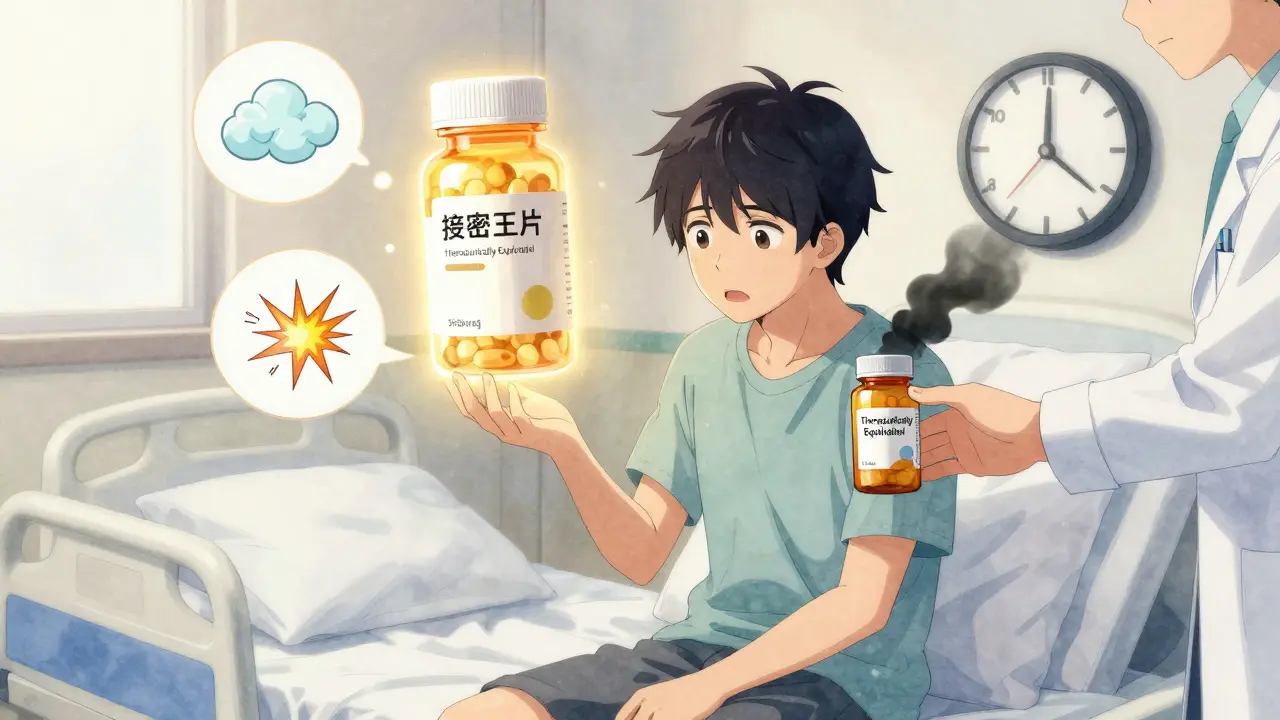
The Real Cost of the Labeling Effect
Generic drugs save the U.S. healthcare system over $370 billion a year. They’re 80-85% cheaper than brand-name versions. But if patients stop taking them-or take them inconsistently because they think they’re weaker-that savings vanishes. When people quit their blood pressure meds because they think the generic doesn’t work, they end up in the ER. When they switch back to brand-name drugs out of fear, insurance pays more. Hospitals pay more. Everyone pays more. A 2023 study found that adding the phrase “therapeutically equivalent to [brand name]” to generic labels cut discontinuation rates from 52% to 37%. That’s a 29% drop in people quitting-just from clearer wording.It’s Not Just the Label-It’s the Paperwork Too
Here’s something even scarier: the labels on generic drugs don’t always match the original brand. A 2020 analysis of 31 drugs found that every single one had differences between the brand and generic product information. Four had differences that could be life-threatening. Eleven more could cause serious harm. Why? Because generic manufacturers aren’t required to update their labels every time the brand updates theirs. So if a brand adds a warning about a rare side effect, the generic might still say nothing. You’re taking the same chemical-but you might not know the same risks.What’s Being Done?
The FDA launched “It’s the Same Medicine” in 2020. It’s a simple campaign-videos, brochures, posters-that explains how generics are tested, approved, and monitored. In pilot programs, it reduced patient concerns by 28%. In 2024, the Generic Pharmaceutical Association started a $50 million education push called “Generic You Can Count On.” They’re putting the message in pharmacies, doctor’s offices, and even social media ads. Some hospitals now use “therapeutically equivalent” labels on all generics. Others train pharmacists to say, “This is the exact same medicine as the brand, just cheaper,” when handing out prescriptions.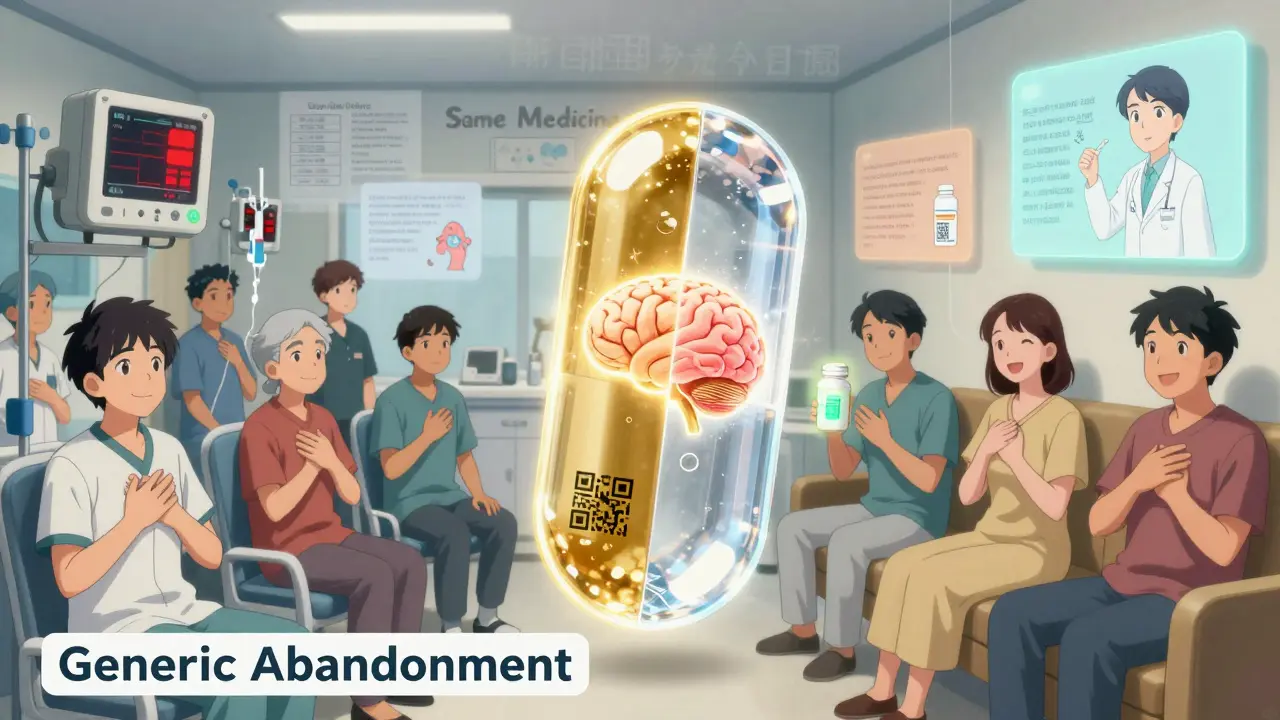
What Should You Do?
If you’ve been told to switch to a generic and you’re nervous, you’re not alone. But here’s what you need to know:- Generics must meet the same FDA standards as brand-name drugs. Same active ingredient. Same strength. Same way it works in your body.
- Different color? Different shape? That’s just the inactive ingredients-fillers, dyes, coatings. They don’t change how the drug works.
- If you feel worse after switching, talk to your doctor. It might be the labeling effect. Or it might be a real issue. Either way, don’t stop without asking.
- Ask your pharmacist: “Is this the same as the brand?” They’ll tell you yes-and often explain why.
The Future of Labels
Experts predict that in the next five years, labels on high-risk drugs-like blood thinners, epilepsy meds, or insulin-will be held to stricter standards. If the brand name updates its warning, the generic will have to match it. No exceptions. Some researchers are even testing “smart labels”-digital QR codes on pill bottles that link to short videos explaining equivalence, side effects, and how to take the drug properly. The goal isn’t to stop generics. It’s to make sure people don’t stop taking them.Bottom Line
Your pill doesn’t care if it’s called “Lipitor” or “atorvastatin.” But your brain does. And that matters. The labeling effect proves that medicine isn’t just chemistry. It’s psychology. It’s trust. It’s perception. And if we want to save money, improve health, and make healthcare fairer-we have to fix how we talk about generics. It’s the same medicine. But if you don’t believe it, your body won’t either.Are generic drugs really the same as brand-name drugs?
Yes. By law, generic drugs must contain the same active ingredient, strength, dosage form, and route of administration as the brand-name version. They’re tested to be bioequivalent-meaning they work the same way in your body. The only differences are in inactive ingredients (like dyes or fillers), packaging, and price.
Why do some people feel worse on generic drugs?
Often, it’s not the drug-it’s the label. Studies show people who believe they’re taking a generic report more side effects and less effectiveness, even when the pill is identical to the brand. This is called the labeling effect. In rare cases, differences in inactive ingredients can cause reactions in sensitive people, but this is uncommon and usually mild.
Can generic drug labels be different from brand-name labels?
Yes. While active ingredient info must match, generic manufacturers aren’t required to update their labels every time the brand does. This can lead to missing warnings, different side effect lists, or outdated instructions. A 2020 study found nearly half of generic labels had discrepancies that could impact patient safety.
Should I avoid generic drugs because of the labeling effect?
No. Generics save billions and are just as effective for most people. The labeling effect is a perception issue, not a drug quality issue. If you’re concerned, ask your pharmacist to explain why the generic is safe. Many patients who learn the facts switch back and feel better-not because the drug changed, but because their mind did.
What’s being done to fix the labeling effect?
The FDA and generic drug makers are launching educational campaigns like “It’s the Same Medicine” and “Generic You Can Count On.” Some pharmacies now add “therapeutically equivalent to [brand name]” on labels. Research shows this simple change cuts patient discontinuation by nearly a third.

Joanna Brancewicz
January 9, 2026 AT 08:21Labeling effect is a classic cognitive bias wrapped in pharmacological clothing. The nocebo phenomenon here isn't just psychological-it's physiological. Expectation modulates neurotransmitter release, HPA axis activity, even pain threshold via endogenous opioid dynamics. When you tell someone a pill is 'generic,' you're priming their limbic system to anticipate failure. It's not irrational-it's neurobiology.
Kristina Felixita
January 10, 2026 AT 07:16omg i just realized why my grandma keeps switching back to brand name ibuprofen 😭 she swears the generic gives her 'weird vibes'... turns out her brain is just trained to think plain bottles = sketchy. she needs one of those 'it's the same medicine' stickers on her pill bottle lol
Dave Old-Wolf
January 11, 2026 AT 21:57So if I believe the generic works, it actually does? That’s wild. I’ve been taking generics for years and never felt different. Maybe I just never doubted it. Funny how your mind can trick your body like that.
Prakash Sharma
January 13, 2026 AT 14:02Western medicine is falling apart because people believe in labels instead of science. In India, we take whatever is available and trust the doctor-not the brand name. This ‘labeling effect’ is a privilege of overmedicated Americans who have too many choices and too little discipline.
Manish Kumar
January 14, 2026 AT 06:59Think about it-this isn't just about pills. It's about the entire architecture of trust in modern society. We've outsourced meaning to logos, to packaging, to corporate narratives. The pill is a blank slate, but the label is a story we've been conditioned to believe. We don't consume medicine-we consume myth. The real drug isn't in the capsule-it's in the cultural script that surrounds it. The body doesn't heal; it recites the narrative it's been fed. And when the narrative shifts, so does the physiology. We are not patients. We are characters in a pharmaceutical drama.
Donny Airlangga
January 15, 2026 AT 13:27I had a friend who swore the generic metformin made her nauseous. She switched back to the brand and felt fine. Turns out, the generic had a different filler-she was mildly allergic to the dye. Not the labeling effect. Real biology. But still-most cases are psychological. Important to check both.
Molly Silvernale
January 16, 2026 AT 22:29It’s like wearing a cheap suit and feeling like a fraud-even if you’re the CEO. The pill doesn’t know the difference. But your soul? Your soul remembers every ad, every billboard, every whispered doubt from your aunt at Thanksgiving. The body is a mirror. It reflects the stories you tell yourself. And sometimes… the story is the only medicine you ever needed.
Ken Porter
January 18, 2026 AT 01:09So the solution is more ads? Great. Let’s just market the generics harder. Next thing you know, we’ll have ‘Premium Generic’ labels with gold foil. This is capitalism turning science into a branding contest.
swati Thounaojam
January 18, 2026 AT 22:04in india we dont care about label... if doctor say take it, we take it. no drama. no brand names. just medicine.
Annette Robinson
January 20, 2026 AT 15:05As a nurse who’s seen patients skip meds because they ‘don’t trust the generic,’ I can tell you-this isn’t just about perception. It’s about safety. We need pharmacists to say, ‘This is the exact same medicine’ every single time. Simple. Clear. Reassuring. It’s not marketing-it’s patient care.