

Why Thyroid Medication Matters in Pregnancy
When you’re pregnant, your body doesn’t just need more food or rest-it needs more thyroid hormone. That’s because your baby relies entirely on your thyroid hormones during the first 10 to 12 weeks of development, before its own thyroid gland even starts working. If your thyroid levels drop too low, it can affect your baby’s brain development, increase your risk of miscarriage, or lead to preterm birth. The good news? With the right medication and monitoring, these risks drop dramatically. Studies show that properly managed hypothyroidism during pregnancy can improve your child’s IQ by 7 to 10 points and cut miscarriage rates by 60%.
The go-to medication for hypothyroidism in pregnancy is levothyroxine. It’s safe, effective, and identical to the hormone your thyroid naturally produces. Brands like Synthroid® are commonly prescribed, but generic levothyroxine works just as well if taken consistently. What matters most isn’t the brand-it’s getting the right dose and keeping your TSH levels in the target range throughout each trimester.
How Much More Medication Do You Need?
If you’re already on levothyroxine before getting pregnant, you’ll likely need more-right away. Most women need a 20% to 30% increase in their daily dose as soon as pregnancy is confirmed. That’s not something you wait to see about. The demand for thyroid hormone spikes the moment conception happens, often before you even miss your period.
Here’s what that looks like in practice: A woman taking 85.7 mcg per day before pregnancy might need to jump to 100 mcg per day by the first trimester. That’s a 14.3 mcg increase-about the size of half a standard 25 mcg tablet. Some doctors recommend adding two extra doses per week (so instead of seven, take nine), while others suggest an immediate 50 mcg boost. The American College of Obstetricians and Gynecologists (ACOG) leans toward that bigger jump, especially if you’ve had trouble keeping your TSH stable before.
For women newly diagnosed with hypothyroidism during pregnancy, dosing depends on how high your TSH is. If it’s above 10 mIU/L, start with 1.6 mcg per kilogram of body weight per day. If it’s between 5 and 10, start with 1.0 mcg/kg/day. Severe cases (TSH over 20) may need 75 to 100 mcg extra per day. These aren’t guesses-they’re based on large studies tracking thousands of pregnancies.
When and How to Monitor Your TSH
Checking your TSH isn’t optional. It’s the only way to know if your dose is right. The American Thyroid Association says you should get your TSH tested within four weeks of any dose change, and every four weeks until your levels stabilize. That means frequent blood tests-especially in the first half of pregnancy.
A typical monitoring schedule looks like this:
- Test at 4 to 6 weeks gestation
- Test again at 8 to 10 weeks
- Test every 4 to 6 weeks until 20 weeks
- Test again at 24 to 28 weeks
- Final check at 32 to 34 weeks
Why so often? Because your body’s need for thyroid hormone keeps rising. By the end of pregnancy, many women need 40% to 50% more than their pre-pregnancy dose. And if you skip a test, your TSH could creep up without you knowing-putting your baby at risk.
What TSH Levels Are Safe?
There’s some debate among experts about the exact target, but the consensus is clear: lower is better in early pregnancy.
The American Thyroid Association recommends keeping TSH at or below 2.5 mIU/L throughout pregnancy. The Endocrine Society is a little more flexible-allowing up to 3.0 mIU/L in the second and third trimesters-but still pushes for ≤2.5 in the first. Why? Because studies show women with TSH above 2.5 in the first trimester have a 69% higher risk of miscarriage.
Some doctors argue that being too strict might lead to overtreatment, especially since TSH naturally dips in early pregnancy. But the risks of under-treatment are far worse. A baby’s brain cells are forming every day during those first weeks. Even a small drop in thyroid hormone can have lasting effects.
How to Take Your Medication Right
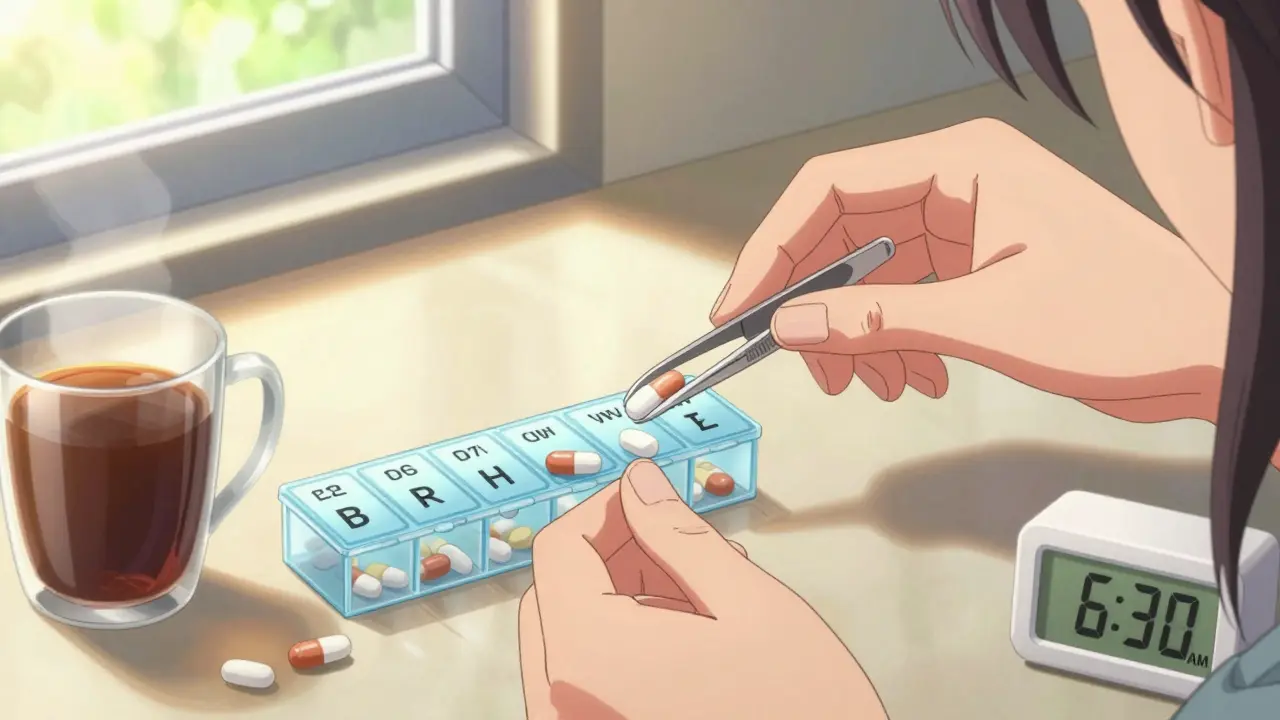
It doesn’t matter how perfect your dose is if you’re not taking it correctly. Levothyroxine needs to be taken on an empty stomach, at least 30 to 60 minutes before eating. Coffee, food, and even fiber can cut absorption by up to 40%.
And don’t take it with calcium, iron, or prenatal vitamins that contain these minerals. Wait at least four hours after taking levothyroxine before you take them. Many women find it easiest to take their thyroid pill first thing in the morning and their prenatal vitamin at night with dinner.
If you’re taking extra doses to reach your increased weekly total, spread them out. Don’t just double up on weekends. Taking two extra doses on Saturday and Sunday can cause your TSH to spike on Monday. Better to add one extra dose every other day.
What Happens If You Don’t Adjust Your Dose?
Delaying a dose increase is one of the most common mistakes. A survey of 150 OB/GYNs found that 68% don’t check TSH at the first prenatal visit for women with known hypothyroidism. That’s dangerous. By the time you’re 12 weeks along, your baby has already been relying on your thyroid hormone for nearly three months.
One patient on a thyroid forum shared: “My doctor waited until 8 weeks to adjust my dose. My TSH was 4.2. I was terrified my baby wouldn’t be okay.” She ended up needing another increase. Her anxiety was real-and understandable. But she wasn’t alone. Many women have to advocate for themselves because not all providers are up to speed on the guidelines.
On the flip side, women who get their dose adjusted within four weeks of confirmation have 23% fewer preterm births. That’s not a small difference. It’s life-changing.
Technology and New Tools Helping Patients
There’s good news on the tech front. The MyThyroid app, used by over 12,500 pregnant women since 2019, helps track doses, reminders, and lab results. Eighty-seven percent of users say it improved their adherence. Hospitals using Epic’s electronic health record system now get automatic alerts if a pregnant patient is on levothyroxine-prompting doctors to schedule TSH tests.
Even more exciting? AI is starting to predict individual dose needs. The 2022 ENDO trial showed that using a patient’s pre-pregnancy TSH, weight, and thyroid antibody status, AI could predict the right dose with 28% more accuracy than standard methods. This isn’t science fiction-it’s happening now.

What About Breastfeeding?
Good news here: levothyroxine is completely safe while breastfeeding. Less than 0.1% of the dose passes into breast milk, and it doesn’t affect the baby’s thyroid. You can keep your dose the same as during pregnancy. No need to reduce it. In fact, your body may still need more than your pre-pregnancy dose, especially if you’re still recovering from the hormonal shifts after birth.
Global Access and Future Challenges
While this level of care is standard in places like the U.S., Canada, and the U.K., it’s not universal. In low-income countries, only 22% of women have consistent access to levothyroxine. That’s why 15% of preventable developmental delays in those regions are linked to untreated maternal hypothyroidism. The World Health Organization added levothyroxine to its Essential Medicines List for maternal health in 2023-a major step toward fixing that gap.
In the next five to seven years, personalized dosing based on genetics and AI will likely become routine. But for now, the basics still matter most: test early, adjust quickly, take your pill right, and don’t wait for symptoms to appear. Your baby’s brain is counting on it.
Can I take levothyroxine while pregnant if I’ve never had thyroid issues before?
Yes-if your doctor diagnoses you with hypothyroidism during pregnancy. Many women develop thyroid dysfunction for the first time while pregnant due to hormonal changes. If your TSH is above the trimester-specific target (usually above 2.5-4.0 mIU/L depending on guidelines), your doctor will prescribe levothyroxine. It’s safe and necessary for your baby’s development.
Do I need to keep taking thyroid medication after my baby is born?
Most women do. Your thyroid hormone needs usually return to pre-pregnancy levels within 6 to 8 weeks after delivery. But you should get your TSH checked around 6 weeks postpartum to confirm. Some women find they need less medication after birth, while others need to stay on the same dose they used during pregnancy. Don’t stop or change your dose without testing.
Can I switch from Synthroid® to generic levothyroxine during pregnancy?
Yes, but only if you stay on the same brand. Switching between brands or generics can cause small variations in absorption. If you’ve been stable on Synthroid®, stick with it. If you switch, your doctor should recheck your TSH in 4 to 6 weeks to make sure your dose is still right.
What if my TSH is normal but I have thyroid antibodies?
Even if your TSH is normal, having thyroid antibodies (like TPOAb) increases your risk of developing hypothyroidism during pregnancy. The Endocrine Society recommends treating these women if their TSH is above 2.5 mIU/L, even if it’s within the general normal range. This is because antibodies can damage the thyroid over time, especially under the stress of pregnancy.
How do I know if my dose is too high?
Signs of too much levothyroxine include rapid heartbeat, jitteriness, weight loss, or trouble sleeping. But the only reliable way to know is through a TSH test. If your TSH drops below 0.1 mIU/L, your dose is likely too high. Overtreatment can also affect your baby’s thyroid function, so don’t assume “more is better.” Always follow your doctor’s lab results, not how you feel.
What to Do Next
If you’re pregnant and on thyroid medication:
- Call your endocrinologist or OB/GYN within one week of a positive pregnancy test.
- Ask for a TSH test immediately-don’t wait for your first prenatal visit.
- Take your levothyroxine on an empty stomach, at least 30 minutes before food or supplements.
- Use a pill tracker app or calendar to avoid missing doses.
- Keep a log of your doses and lab results to share at every appointment.
If you’re not on medication but have a history of thyroid issues, fatigue, weight gain, or a family history of autoimmune disease, ask your doctor for a TSH test-even if you feel fine. Early detection saves more than just lab numbers. It saves development, potential, and peace of mind.






Katelyn Slack
January 7, 2026 AT 05:44Melanie Clark
January 7, 2026 AT 08:40Harshit Kansal
January 8, 2026 AT 21:32Saylor Frye
January 10, 2026 AT 20:20Tiffany Adjei - Opong
January 11, 2026 AT 22:52Lily Lilyy
January 13, 2026 AT 14:24Mukesh Pareek
January 14, 2026 AT 07:35Ashley S
January 15, 2026 AT 09:21Gabrielle Panchev
January 16, 2026 AT 08:32Katie Schoen
January 17, 2026 AT 09:45Stuart Shield
January 18, 2026 AT 00:04Indra Triawan
January 18, 2026 AT 22:25Susan Arlene
January 20, 2026 AT 17:53