

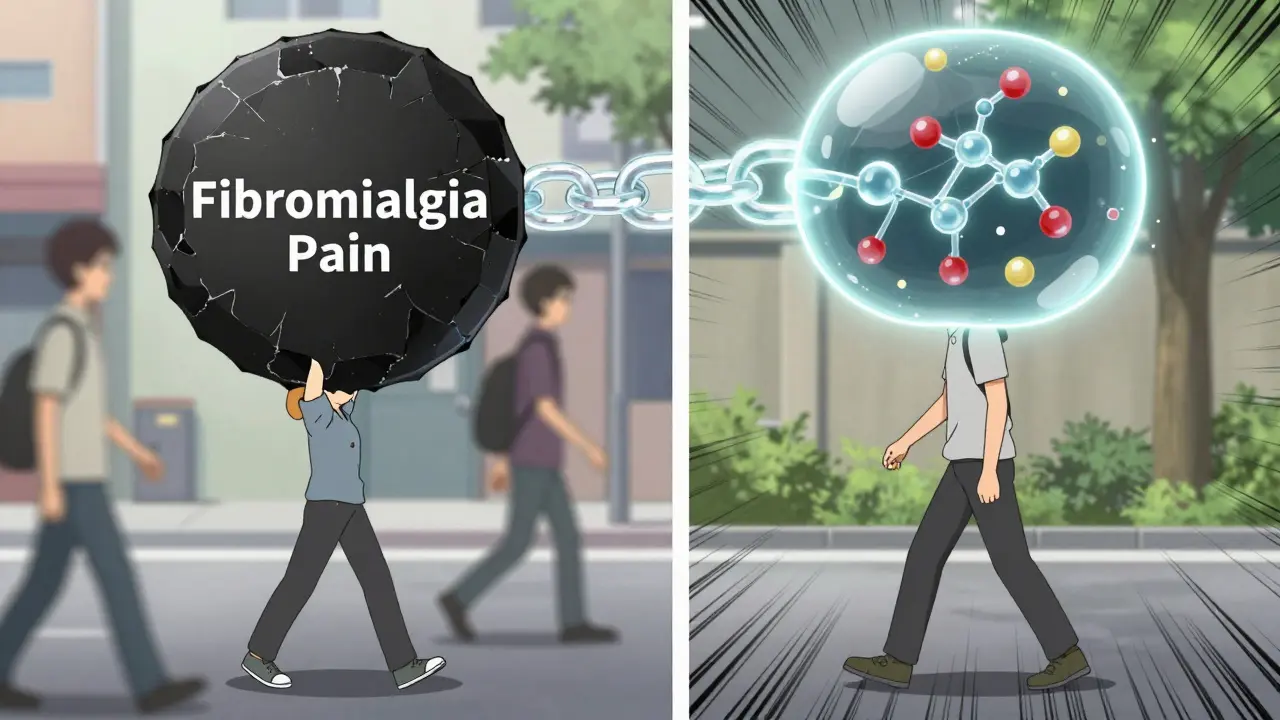
Widespread pain that never seems to go away - that’s the reality for millions living with fibromyalgia. It’s not just muscle aches or tiredness. It’s a constant, deep ache that moves around your body, making even light touches painful. You might feel it in your neck one day, your hips the next, and your shoulders the day after. No injury, no inflammation, no X-ray shows why it’s happening. But it’s real. And for many, antidepressants have become one of the most common tools to manage it - not because they’re depressed, but because these drugs change how the brain processes pain.
What Makes Fibromyalgia Pain Different?
Fibromyalgia pain isn’t like a sprained ankle or a bad back. It doesn’t come from damaged tissue. Instead, it’s caused by the nervous system turning up the volume on pain signals. Think of it like a faulty alarm system that goes off even when there’s no fire. The central nervous system becomes hypersensitive. Everyday sensations - a hug, a breeze, or even wearing clothes - can feel painful. According to the American College of Rheumatology, this pain must last at least three months and affect both sides of the body and above and below the waist to be classified as fibromyalgia. It’s not about one spot; it’s everywhere at once.
People with fibromyalgia often describe it as a burning, throbbing, or stabbing ache. Fatigue, sleep problems, and brain fog are just as common as the pain. Sleep doesn’t refresh you - it’s shallow, interrupted, and unsteady. This isn’t laziness. It’s biology. The brain’s pain control centers are stuck in overdrive. That’s why treatments that target muscles or joints often fail. You need to calm the nervous system.
Why Antidepressants? They’re Not Just for Depression
It’s a common misconception: if you’re not depressed, why take an antidepressant? The answer lies in how these drugs work. Antidepressants like amitriptyline and duloxetine don’t just lift mood - they change how pain signals travel through the spinal cord and brain. They boost two key neurotransmitters: serotonin and norepinephrine. These chemicals help the brain block or dampen pain messages before they reach your conscious awareness. In fibromyalgia, this is like turning down a loudspeaker that’s been stuck on maximum.
Research shows these drugs can reduce pain by about 30% in half of users. That might not sound like much, but for someone who’s been at an 8 out of 10 pain level for years, dropping to a 5 or 6 can mean the difference between staying in bed and picking up your kid from school. The Arthritis Foundation and European League Against Rheumatism both list antidepressants as first-line options, especially when combined with movement and stress management.
The Three Main Types Used - and How They Compare
Not all antidepressants work the same way for fibromyalgia. Three classes are most commonly prescribed:
- Tricyclic Antidepressants (TCAs) - like amitriptyline and nortriptyline. These are old, cheap, and surprisingly effective. Amitriptyline, in particular, is used at very low doses - often just 10 to 25 mg at night. That’s far below what’s needed for depression. Its biggest strength? Improving sleep. Studies show it reduces sleep disturbances by 35%. But side effects are real: dry mouth, drowsiness, weight gain. About one in four people stop taking it because of these.
- SNRIs - duloxetine (Cymbalta) and milnacipran (Savella). These are newer, more targeted, and designed specifically for fibromyalgia. Duloxetine is FDA-approved for both depression and fibromyalgia. Milnacipran is approved only for fibromyalgia and requires higher doses than for depression. They’re better tolerated than TCAs. Nausea and sweating are common, but drowsiness is less of an issue. About 50% of users report noticeable pain relief.
- SSRIs - like fluoxetine or sertraline. These are less effective for fibromyalgia pain. They help mood and anxiety, but don’t do much for the physical pain. Most guidelines don’t recommend them as a primary pain treatment.
Here’s how they stack up in real-world use:
| Medication | Typical Dose | Pain Reduction | Sleep Improvement | Common Side Effects | Discontinuation Rate |
|---|---|---|---|---|---|
| Amitriptyline (TCA) | 10-50 mg at bedtime | 25-30% higher than placebo | 35% reduction | Dry mouth, drowsiness, weight gain | 25% |
| Duloxetine (SNRI) | 30-60 mg daily | 20-25% reduction | 22% reduction | Nausea, sweating, dizziness | 15% |
| Milnacipran (SNRI) | 100-200 mg daily | 20-25% reduction | 18% reduction | Headache, constipation, high blood pressure | 35% |
Cost matters too. Amitriptyline costs $4-$10 a month as a generic. Duloxetine and milnacipran can run $300-$500 without insurance. That’s why many doctors start with amitriptyline - especially for patients with sleep issues.
What Patients Really Say
Real experiences vary wildly. On Drugs.com, amitriptyline has a 6.5/10 average rating. One user wrote: “Took 10mg for 6 weeks. Finally slept through the night. Dry mouth? Yes. Worth it.” Another said: “I felt like a zombie. Couldn’t get out of bed.”
Duloxetine, rated 6.8/10, gets praise for reducing pain but criticism for emotional blunting. “It took my pain from 8 to 5,” said one Reddit user, “but I stopped crying when my dog died. That wasn’t what I signed up for.”
Milnacipran is less popular - 6.2/10. People like the energy boost, but headaches and stomach issues are common. “I could finally walk my kids to school,” shared a mother, “but the headaches were unbearable. I switched back to amitriptyline.”
Positive themes? Better sleep (63% of positive reviews), less pain (58%), improved mood (47%). Negative themes? Not enough pain relief (41%), side effects (37%), and waiting too long (29%).
How to Start - and When to Quit
Doctors don’t just prescribe these drugs and walk away. There’s a process.
Start low. Very low. Amitriptyline often begins at 5 mg at bedtime. Duloxetine at 30 mg daily. You increase slowly - over weeks, not days. Why? Side effects hit hard at first. Drowsiness, nausea, dizziness - they’re common. About 78% of people experience them early on. But they usually fade after 2-4 weeks.
Wait. Don’t expect results in a week. It takes 4-6 weeks to feel the first changes. Maximum benefit can take up to 12 weeks. Many people give up too soon.
Check in every 4-6 weeks. If pain hasn’t dropped by at least 20%, your doctor may adjust the dose or try something else. If side effects are unbearable, don’t suffer - talk to your doctor. Switching to a different drug is often better than quitting entirely.
Important note: You’re not taking these because you’re depressed. Many people with fibromyalgia aren’t. But if you are depressed or anxious - which affects 30-50% of patients - antidepressants can help both pain and mood at the same time.
The Bigger Picture: Medication Isn’t Enough
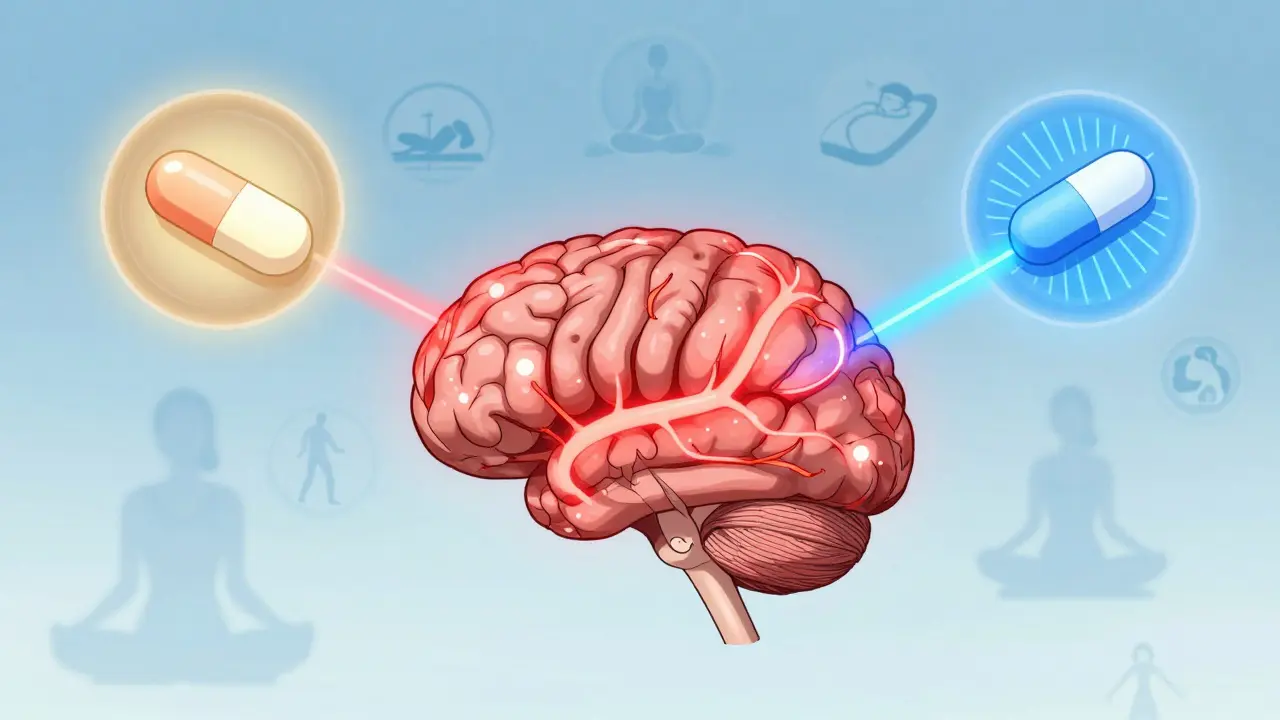
Antidepressants are tools - not cures. The most effective treatment for fibromyalgia is movement. Not intense workouts. Just consistent, gentle activity. Walking, swimming, yoga. Studies show regular exercise reduces pain more than any drug. Stress management matters too. Mindfulness, breathing exercises, and sleep hygiene are just as important.
The American Pain Society says it plainly: antidepressants should be part of a team, not the whole team. Combine them with physical therapy, pacing your day, and learning how to rest without guilt. A 2023 survey found that 85% of rheumatologists now use combination therapy - drug plus non-drug - as the first approach.
And don’t forget: fibromyalgia pain is manageable. It’s not curable. But it’s not untreatable. With the right mix of medication, movement, and mindset, many people regain control. Some find that after a year of steady care, they can reduce their dose. Others keep taking it long-term. One patient in her 60s told me: “I’ve been on amitriptyline for 12 years. I’m not pain-free. But I’m alive. I can hug my grandkids. That’s enough.”
What’s Next?
Researchers are exploring new options - drugs that target nerve signals more directly, like NMDA receptor blockers. Early results look promising. But for now, the best tools we have are still the ones we’ve used for decades: low-dose antidepressants, movement, and patience.
The key is not to rush. Don’t expect miracles. Don’t quit too soon. And don’t let stigma stop you. Taking an antidepressant for pain isn’t weakness - it’s science.
Do antidepressants cure fibromyalgia?
No. Antidepressants don’t cure fibromyalgia. They help manage symptoms - mainly pain, sleep problems, and mood. The goal is to reduce pain intensity and improve daily function, not to eliminate the condition entirely.
Why take an antidepressant if I’m not depressed?
These drugs work on pain pathways in the brain, not just mood. At low doses, they help block overactive pain signals by boosting serotonin and norepinephrine - chemicals that regulate how your nervous system responds to discomfort. You don’t need to be depressed for them to help with pain.
How long does it take for antidepressants to work for fibromyalgia pain?
It usually takes 4 to 6 weeks to notice any change, and up to 12 weeks for full effects. Many people stop too early because they don’t feel results right away. Patience is essential - and so is sticking with the dose your doctor recommends.
Which antidepressant is most effective for fibromyalgia?
Amitriptyline (a TCA) is often the most effective for pain and sleep, especially at low doses. Duloxetine (an SNRI) is slightly less effective for sleep but better tolerated. Milnacipran is approved for fibromyalgia but has higher side effect rates. The best choice depends on your symptoms, side effect tolerance, and cost.
Can I stop taking antidepressants if they don’t work?
Yes - but don’t stop suddenly. If after 8-12 weeks you haven’t seen at least 20% pain reduction, talk to your doctor. They can help you taper off safely or switch to another medication. Abruptly stopping can cause withdrawal symptoms like dizziness, nausea, or mood swings.
Are there alternatives to antidepressants for fibromyalgia?
Yes. Pregabalin (Lyrica) is FDA-approved and helps with nerve pain. Non-drug options include regular low-impact exercise, cognitive behavioral therapy, acupuncture, and improving sleep habits. Many people find the best results come from combining medication with these lifestyle changes.






pradnya paramita
February 5, 2026 AT 11:14The central sensitization model in fibromyalgia is well-documented in the IASP diagnostic criteria - it's a neuroplastic phenomenon where descending inhibitory pathways are downregulated, and ascending nociceptive signaling is amplified. SSRIs are suboptimal here because they lack significant norepinephrine reuptake inhibition, which is critical for modulating spinal dorsal horn excitability. TCAs like amitriptyline remain first-line due to their dual monoaminergic action and GABAergic potentiation at low doses.
caroline hernandez
February 7, 2026 AT 04:18Just wanted to say - this is such a clear breakdown. So many people think antidepressants = 'you're just sad,' but the neuropharmacology here is legit. SNRIs like duloxetine actually normalize pain threshold by enhancing noradrenergic tone in the PAG and rostral ventromedial medulla. It’s not magic - it’s neuroscience. 💪🧠
Jhoantan Moreira
February 7, 2026 AT 20:14Thank you for writing this. I’ve been on 25mg amitriptyline for 3 years. Sleep improved from 2 hours to 6.5. Dry mouth? Still there. But I can now carry my groceries without crying. 🙏❤️ You’re not broken - your nervous system just got stuck on loud. This helps.
Meenal Khurana
February 7, 2026 AT 21:00Amitriptyline works. Side effects suck. But it’s worth it.
Keith Harris
February 9, 2026 AT 02:12Oh please. You're telling people to take antidepressants for pain like it's some kind of miracle cure? Newsflash - it's just chemical sedation. You're not treating fibromyalgia, you're drugging people into numbness so they stop complaining. And don't get me started on that placebo-grade 30% pain reduction. That's just the baseline noise of the human condition. You're selling snake oil with a prescription pad.
Nathan King
February 9, 2026 AT 19:07While the pharmacological mechanisms described are broadly accurate, one must acknowledge the methodological limitations of the cited clinical trials. Many of the RCTs demonstrating efficacy for SNRIs exhibit high heterogeneity in baseline pain scores and inadequate control for placebo response, which, in chronic pain populations, can exceed 40%. Furthermore, the long-term safety profile of chronic low-dose tricyclic administration remains under-researched.
Harriot Rockey
February 11, 2026 AT 00:35Love this breakdown! 🌱 So many of us feel so alone with this. I started with duloxetine - nausea for 2 weeks, then BAM - I could walk to the mailbox without wincing. And yes, I cried less when my cat passed… but I also smiled more on sunny days. It’s not perfect. But it’s a tool. And tools help. 💕
rahulkumar maurya
February 11, 2026 AT 13:01Pathetic. You're promoting pharmaceutical dependency as if it's wisdom. The real solution? Eliminate processed sugar, adopt ancestral sleep cycles, and practice cold exposure. Your nervous system isn't broken - it's maladapted to modern life. These drugs are band-aids on a hemorrhage. And you call this science? Please. The real breakthroughs are in vagal toning, breathwork, and circadian entrainment - none of which Big Pharma wants you to know.
Demetria Morris
February 12, 2026 AT 21:16It’s irresponsible to suggest antidepressants are ‘not for depression.’ You’re normalizing chemical coping for a condition that’s largely psychosomatic. People with fibromyalgia are often anxious, avoidant, or emotionally dysregulated - they’re using this as an excuse to avoid accountability. Why not therapy first? Why not take responsibility for your own nervous system? These drugs are just a crutch for weakness.
Geri Rogers
February 12, 2026 AT 23:50YESSSSS. I’ve been screaming this from the rooftops for years. If you’re on SSRIs for fibro and not getting anywhere - SWITCH. Amitriptyline is the OG for a reason. I went from 9/10 pain to 4/10. Sleep? Finally. Energy? Not gone all day. Side effects? Yes. But I’d rather be dry-mouthed and functional than numb and broken. You’re not weak for taking it - you’re SMART. 💪🩹
Susheel Sharma
February 13, 2026 AT 21:09Let’s be brutally honest - this article is a corporate-funded puff piece. The 30% pain reduction statistic? That’s barely above placebo in a population with high nocebo sensitivity. And why is milnacipran portrayed as ‘less popular’? Because it’s expensive and poorly marketed. Also, the table omits dropout rates due to cognitive fog - a major reason people abandon treatment. This isn’t evidence-based - it’s marketing.
Janice Williams
February 14, 2026 AT 22:27It is deeply concerning that medical professionals continue to prescribe psychotropic agents for somatic conditions without first establishing psychiatric comorbidity. The normalization of pharmacological suppression of pain perception - particularly in the absence of objective biomarkers - constitutes a dangerous precedent. One must question the ethical implications of prescribing neuroactive compounds for non-psychiatric indications, especially when non-pharmacological modalities remain underutilized.
Roshan Gudhe
February 15, 2026 AT 10:11What if the pain isn't a malfunction… but a message? Fibromyalgia might not be a disease of the nervous system - it could be the nervous system screaming that something else is wrong. Trauma. Burnout. Disconnection. The drugs mute the scream. But what if we learned to listen? I’ve seen people reduce pain by 70% through somatic therapy and community reconnection. Not because of serotonin - because they finally felt safe. Maybe the real cure isn't in the pill… but in the pause.
Rachel Kipps
February 16, 2026 AT 12:52i just wanted to say thank you for this post. i’ve been on amitriptyline for 5 years. i had no idea why it worked. now i do. i still get dry mouth and i still feel tired sometimes. but i can hold my baby. and that’s everything. ❤️