GI Medication Absorption Estimator
Absorption Analysis
Identified Factors:
You swallow your pill with a glass of water, expecting relief. But what if that medication never actually reaches your bloodstream? For millions of people taking gastrointestinal medications, defined as drugs designed to treat conditions affecting the digestive system, from acid reflux to inflammatory bowel disease, this is not just a hypothetical worry-it is a daily reality. Oral drugs make up about 70-80% of all prescriptions because they are easy to take. Yet, for many patients, especially those with gut disorders, these pills fail to work simply because the body cannot absorb them properly.
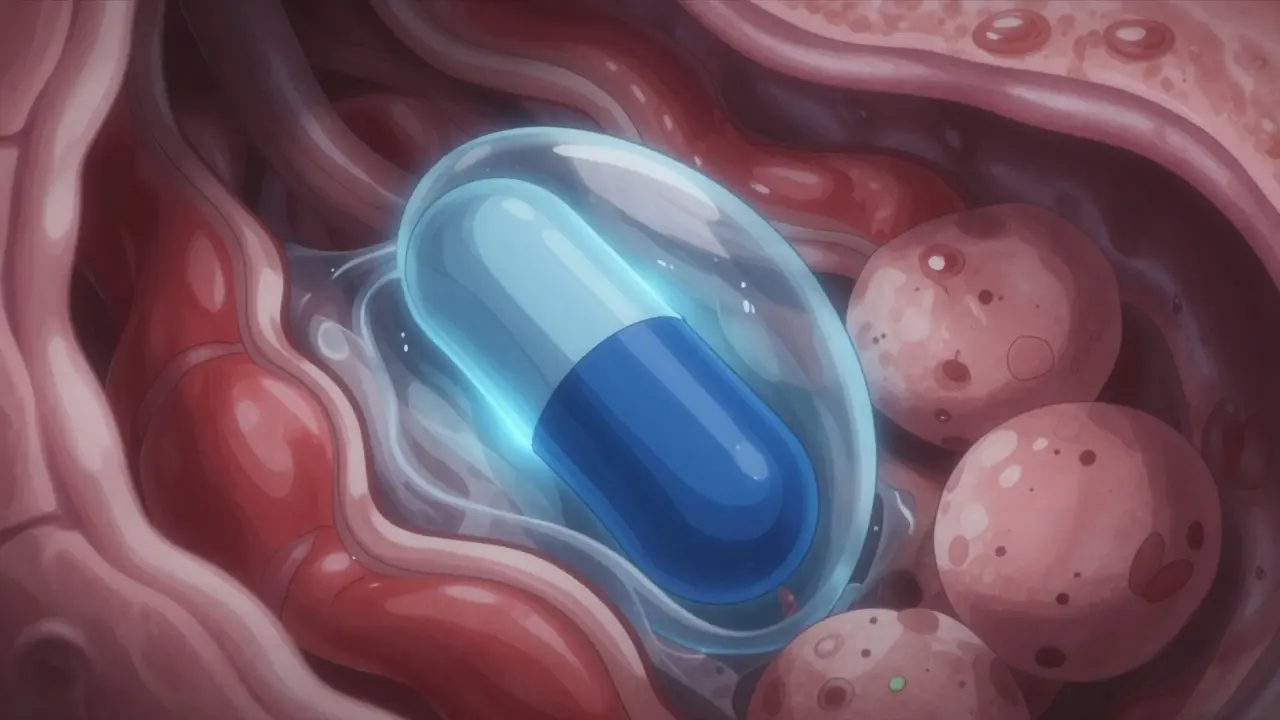
The problem isn't always the drug itself. It is often the complex, hostile environment of your own digestive tract. From stomach acid that destroys active ingredients to transport proteins that actively pump drugs back out before they enter your blood, your gut is designed to keep things out. When you add chronic conditions like Crohn's disease or ulcerative colitis into the mix, the barriers become even higher. Understanding why your medication might be failing is the first step toward getting it to work.
The Biological Barrier: Why Your Gut Fights Back
Your gastrointestinal tract is not just a passive tube for food; it is a sophisticated barrier system. Its primary job is to extract nutrients while keeping toxins and pathogens at bay. Unfortunately, your medication often gets caught in the crossfire. The lining of your small intestine is covered in a thick layer of mucus-ranging from 100 to 500 micrometers in thickness in the stomach alone. This mucus acts as a physical shield, slowing down how fast a drug can reach the cells that need to absorb it.
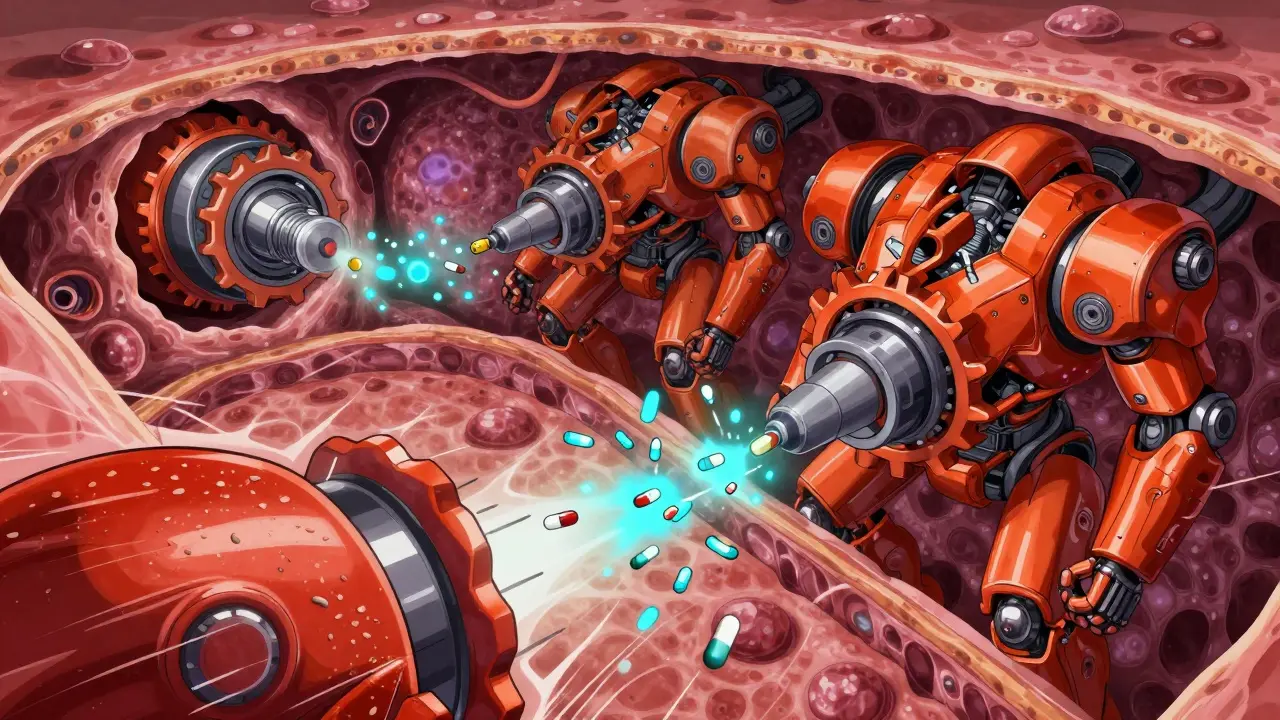
Beyond the mucus, there are cellular gatekeepers known as efflux transporters. One of the most notorious is P-glycoprotein, described as a protein that pumps foreign substances, including many drugs, out of cells and back into the gut lumen. If your medication is a substrate for P-glycoprotein, this transporter recognizes it as an intruder and ejects it before it can enter your bloodstream. This is particularly problematic for hydrophilic (water-loving) drugs and large molecules weighing more than 500 Daltons. These compounds struggle to pass through the lipid membranes of intestinal cells on their own, relying instead on specific channels that may be blocked or overwhelmed.
Then there is the issue of enzymatic degradation. Your gut is full of enzymes designed to break down proteins and other complex structures. If you are taking a peptide-based drug or a biologic, these enzymes can chop the medication into useless fragments long before it has a chance to be absorbed. This is why insulin, a molecule weighing roughly 5,800 Daltons, has less than 1% bioavailability when taken orally without special enhancement strategies. The body simply destroys it.
The pH Trap and First-Pass Metabolism
As a drug travels through your digestive system, it encounters a dramatic shift in acidity. The stomach is highly acidic, with a pH around 1-3, while the duodenum starts neutralizing this acid, reaching a pH of 4-5. By the time the drug reaches the lower ileum, the environment is alkaline, approaching pH 8. This gradient matters immensely. Many drugs only cross cell membranes in their un-ionized form. An acidic drug, for example, stays un-ionized in the acidic stomach but becomes ionized-and therefore unable to pass through membranes-as soon as it hits the more alkaline intestine. Conversely, basic drugs absorb better in the intestine. If a formulation does not account for this pH shift, the drug may precipitate out of solution or remain trapped in the wrong part of the gut.
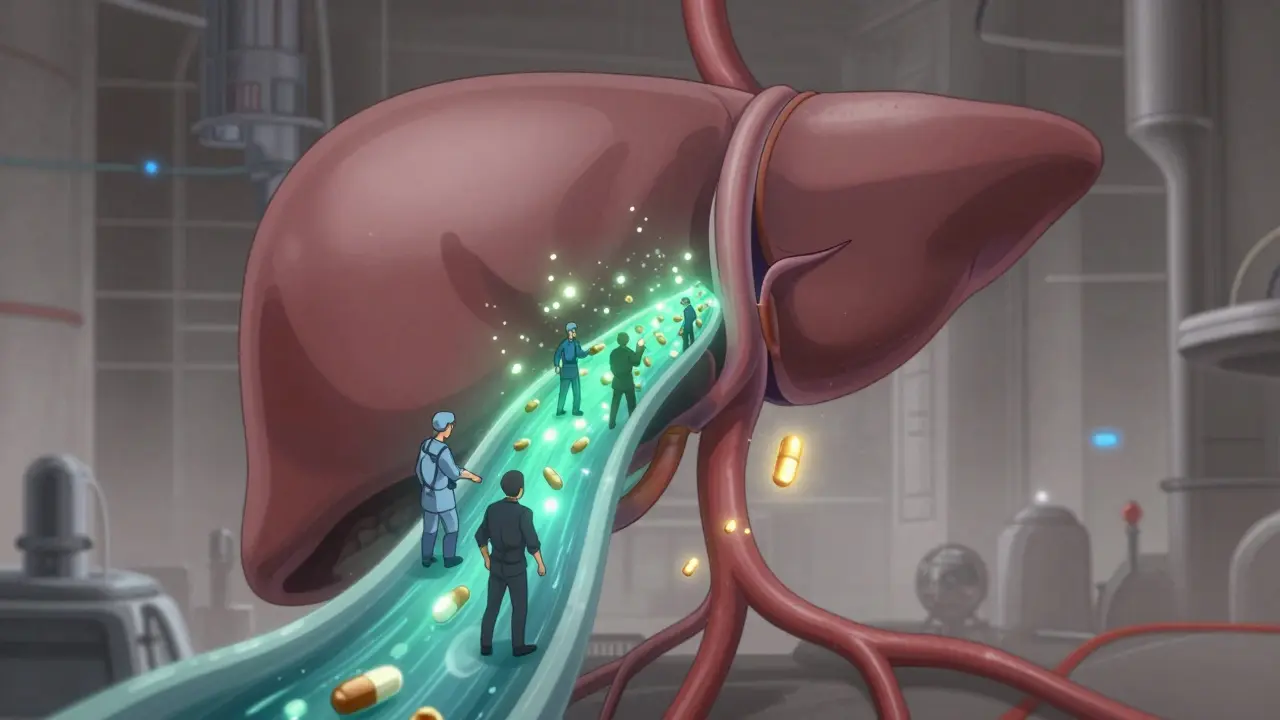
Even if a drug successfully crosses the intestinal wall, it faces another hurdle: the liver. Blood from the intestines flows directly to the liver via the portal vein before circulating to the rest of the body. This is where first-pass metabolism, defined as the metabolic process by which a drug's concentration is reduced significantly before it reaches systemic circulation occurs. Liver enzymes can metabolize up to 90% of certain drugs during this initial pass. This means that even if you swallow a 100mg pill, only 10mg might actually reach your brain or target organs. This variability makes dosing tricky, especially for drugs with a narrow therapeutic index, where too little is ineffective and too much is toxic.
| Factor | Mechanism | Impact on Bioavailability |
|---|---|---|
| Mucus Layer | Physical barrier slowing diffusion | Reduces rate of absorption |
| P-glycoprotein | Efflux transporter pumping drugs out | Significantly lowers net absorption |
| Gastric Emptying | Speed at which contents move to intestine | Delays onset of action |
| pH Gradient | Affects ionization state of drug | Can prevent membrane crossing |
| First-Pass Metabolism | Liver breakdown before systemic circulation | Can reduce dose by up to 90% |
Food, Motility, and the Timing Game
What you eat plays a massive role in whether your medication works. Food, especially fatty meals, slows down gastric emptying by two to four hours. This delay keeps the drug in the stomach longer, where it might be degraded by acid or simply sit idle. For some drugs, like levothyroxine, this delay reduces peak plasma concentrations by 30-50%, rendering the dose ineffective. This is why doctors insist on taking thyroid medication on an empty stomach.
However, for other drugs, food is helpful. High-fat meals can stimulate bile secretion, which helps dissolve lipophilic (fat-loving) drugs, improving their absorption. The key is knowing which category your drug falls into. Ignoring food interactions is one of the most common reasons for treatment failure.
Motility-the speed at which food and drugs move through your gut-is another critical variable. In healthy individuals, transit time is relatively predictable. But in conditions like irritable bowel syndrome (IBS), transit can be erratic. Delayed transit can cause extended-release formulations to release their drug too slowly, leading to subtherapeutic levels. Conversely, rapid transit, seen in diarrhea or short bowel syndrome, gives the drug insufficient time to dissolve and absorb. Patients with short bowel syndrome often require two to three times the standard dose of many medications because the surface area available for absorption is drastically reduced.
When Disease Changes the Rules
If you have an underlying gastrointestinal condition, the rules of absorption change entirely. Inflammatory bowel diseases (IBD), such as Crohn's disease and ulcerative colitis, alter the physiology of the gut in profound ways. Inflammation thins the mucosal barrier, increases permeability, and disrupts normal blood flow. This might sound like it would help absorption, but it often leads to unpredictable results. For instance, mesalamine, a common treatment for ulcerative colitis, shows 25-40% lower bioavailability in immediate-release forms in IBD patients compared to healthy subjects. The inflamed tissue may not absorb the drug consistently, or altered pH levels may degrade it prematurely.
Newer classes of drugs, such as GLP-1 receptor agonists, described as medications like semaglutide that mimic gut hormones to regulate appetite and blood sugar, introduce a new layer of complexity. These drugs intentionally slow down gastrointestinal motility to promote satiety. While this is beneficial for weight loss and diabetes control, it can reduce the absorption of concomitant medications by 15-30%. If you are taking a heart medication or a blood thinner alongside a GLP-1 agonist, your doctor needs to monitor your levels closely, as the slowed transit may lead to unexpectedly low drug concentrations.
Solutions: Formulations and Future Tech
Pharmaceutical companies are aware of these challenges and are developing smarter solutions. Nanocarrier-based formulations, including liposomes and polymeric nanoparticles, have shown promise in preclinical studies. These tiny carriers protect the drug from enzymatic degradation and enhance its ability to cross the intestinal membrane. Some studies show these technologies can increase bioavailability by 1.5 to 3.5 times for poorly soluble drugs.
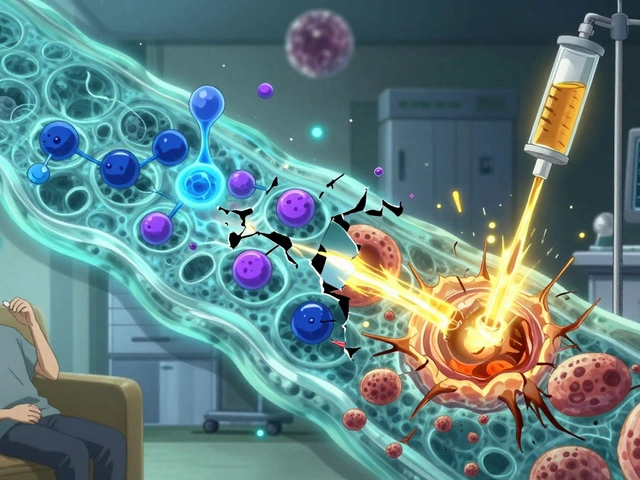
Absorption enhancers are another tool in the arsenal. Substances like sodium caprate and chitosan derivatives can temporarily open tight junctions between intestinal cells or inhibit efflux transporters like P-glycoprotein. This allows more drug to pass through, boosting absorption by 20-200% depending on the drug's properties. However, these enhancers must be used carefully, as opening the gut barrier too much could allow harmful bacteria or toxins to enter the bloodstream.
For patients with swallowing difficulties or severe malabsorption, alternative formulations are essential. Oral suspensions, chewable tablets, and liquid concentrates bypass some of the dissolution steps required for solid pills. In extreme cases, such as severe short bowel syndrome, parenteral nutrition or injectable medications may be necessary to ensure adequate drug delivery.
Looking ahead, personalized medicine offers hope. Physiologically based pharmacokinetic (PBPK) modeling allows researchers to simulate how a specific patient's gut physiology will affect drug absorption. Early-stage trials are even testing capsule-based sensors that measure pH and pressure in real-time, allowing for dynamic dosing adjustments. As the pipeline of biologic and large-molecule drugs grows-with 70% of Phase III investigational new drugs now exceeding 500 Daltons-solving the absorption puzzle will become even more critical.
Practical Steps for Patients
If you feel your medication isn't working, don't just assume you need a higher dose. Consider these factors:
- Timing: Are you taking your medication with food when it should be on an empty stomach, or vice versa?
- Formulation: Is your pill dissolving properly? If you have trouble swallowing whole pills, ask your pharmacist if a liquid or crushable version exists.
- Disease State: Has your condition worsened? Active inflammation can alter absorption. Inform your doctor if your symptoms fluctuate despite consistent dosing.
- Drug Interactions: Are you taking other medications that affect gut motility, such as GLP-1 agonists or anticholinergics?
Communication with your healthcare provider is key. Pharmacists can offer valuable insights into how different formulations behave in the gut. If you have a history of GI surgery or chronic inflammation, request a review of your medication regimen to ensure optimal absorption.
Why do some medications need to be taken on an empty stomach?
Taking medications on an empty stomach ensures faster gastric emptying, allowing the drug to reach the small intestine quickly where most absorption occurs. Food can delay this process by 2-4 hours, potentially reducing peak plasma concentrations by 30-50% for sensitive drugs like levothyroxine. Additionally, food components can bind to certain drugs, preventing them from being absorbed.
How does P-glycoprotein affect drug absorption?
P-glycoprotein is an efflux transporter located on the surface of intestinal cells. It acts as a pump that recognizes foreign substances, including many drugs, and pushes them back into the gut lumen before they can enter the bloodstream. This mechanism significantly reduces the bioavailability of drugs that are substrates for this transporter, particularly large or hydrophilic molecules.
Can inflammatory bowel disease (IBD) change how my meds work?
Yes, IBD alters the gut's physiology by causing inflammation, changing pH levels, and disrupting the mucosal barrier. These changes can lead to unpredictable absorption rates. For example, mesalamine bioavailability can drop by 25-40% in ulcerative colitis patients due to premature drug release or altered transit times. Doctors may need to adjust doses or switch formulations to maintain therapeutic effects.
What is first-pass metabolism?
First-pass metabolism is the process where the liver metabolizes a significant portion of an oral drug before it reaches systemic circulation. Blood from the intestines flows directly to the liver via the portal vein. Enzymes in the liver can break down up to 90% of certain drugs, meaning only a fraction of the swallowed dose actually reaches the target organs.
Do GLP-1 agonists interfere with other medications?
Yes, GLP-1 receptor agonists like semaglutide slow down gastrointestinal motility to promote satiety. This delayed transit can reduce the absorption of concomitant oral medications by 15-30%. This is particularly concerning for drugs with a narrow therapeutic index, where precise blood levels are critical for safety and efficacy. Monitoring and potential dose adjustments are recommended.