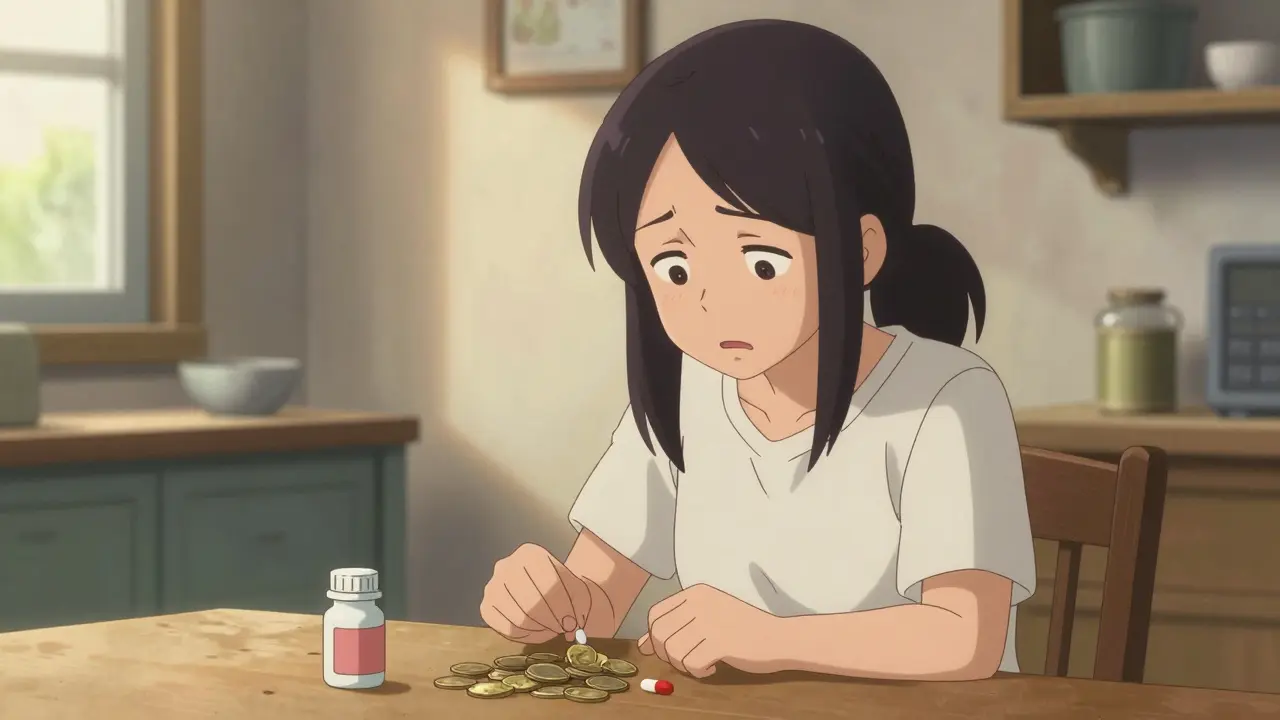
Imagine needing a life-saving antibiotic for your child’s infection. In many parts of the world, that single course of treatment could cost more than a week’s wages. For billions of people living in low-income countries, this isn’t a hypothetical nightmare-it is daily reality. While we often hear about medical breakthroughs and new drugs, the real story of saving lives in resource-constrained settings doesn’t involve expensive innovations. It involves something much older, simpler, and far more critical: generic medicines.
Generic drugs are pharmaceutical products containing the same active ingredients as branded medications but sold without patent protection. They are supposed to be the great equalizer in global health. Yet, despite their potential to slash costs by up to 80%, they remain out of reach for too many. Why does a solution that exists on paper fail so often on the ground? Let’s look at what is actually happening with global health access today.
The Promise vs. The Price Tag
To understand why generics matter, you have to look at the numbers. Medicines account for between 20% and 60% of total health expenditures in many low- and middle-income countries (LMICs). That is a massive chunk of limited budgets. When families cannot afford these costs, the consequences are catastrophic. According to surveys from DrugPatentWatch, approximately 100 million people are pushed into extreme poverty every year solely because of healthcare costs.
Here is where generics come in. If a branded drug costs $100, a generic version might cost $20 or even less. This price drop allows health systems to treat many more patients with the same budget. We saw this work dramatically during the scaling up of treatments for HIV/AIDS, tuberculosis, and malaria. The World Health Organization (WHO) has long stated that equitable access to safe and affordable medicines is vital for achieving the highest possible standard of health. Sustainable Development Goal 3.8 specifically targets "access to safe, effective, quality and affordable essential medicines and vaccines for all." But having a goal is different from achieving it.
Currently, about 2 billion people globally have no access to essential medicines. Most of them live in LMICs. The gap between the promise of cheap generics and the reality of empty pharmacy shelves is widening, not shrinking. Why? Because availability is not just about manufacturing pills; it is about infrastructure, policy, and money.
Where Are the Generics?
You might assume that if generics are cheaper, everyone would buy them. In the United States, unbranded quality-assured generics make up 85% of the market by volume. In LMICs, however, unbranded generics account for only 5% of the pharmaceutical market by volume. This stark contrast reveals a deep structural problem.
Regional disparities play a huge role here. A study published in PMC covering 72 countries showed that the median generic market share by volume ranges from 60% in the Western Pacific region to 82% in Southeast Asia. But even in regions with higher shares, availability falls short. All regions reported medicine availability below the WHO target of 80% in both public and private sectors.
| Region | Trend Since 2009 | Status |
|---|---|---|
| European Region | +27.8% | Improving |
| Eastern Mediterranean | +12.1% | Improving |
| Western Pacific | -5.2% | Declining |
| African Region | Stagnant/Declining | Critical Gap |
Notice the decline in the Western Pacific and the stagnation in Africa. These aren’t random fluctuations. They reflect heavy reliance on weak infrastructure and economic instability. Meanwhile, nearly 90% of people in developing nations pay for medication out-of-pocket. There is no safety net. When you combine high out-of-pocket spending with poor supply chains, generics become hard to find, even when they are theoretically available.

The Corporate Blind Spot
Who makes these drugs? Major pharmaceutical companies hold the keys to production. The Access to Medicine Foundation’s 2024 analysis looked at five major generic manufacturers: Cipla, Hikma, Sun Pharma, Teva, and Viatris. Together, they cover 90% of the 102 off-patent essential drugs identified as priority access targets in LMICs. Sounds good, right?
Not quite. For those 102 priority drugs, these companies had strategies in place to expand access to only 41 of them. More importantly, those strategies were "very limited in scope" and largely ignored affordability for the poorest patients-those who are uninsured and must pay cash. The report highlighted a glaring lack of evidence for strategies designed to boost affordability based on ability-to-pay.
In contrast, some branded pharmaceutical giants like Bristol Myers Squibb, Novartis, and Pfizer have adopted inclusive business models that technically facilitate access across 102 LMICs. However, the outcomes are "somewhat mixed," and there is a severe lack of transparent reporting on how many patients are truly being reached. Without transparency, it is impossible to know if these efforts are helping millions or just marketing campaigns.
Barriers Beyond the Pill
It is easy to blame high prices, but the barriers to accessing generics are multifaceted. Dr. Jonathan D. Quick, former president of Management Sciences for Health, pointed out that demands for extra safeguards, such as market and data exclusivity, impede low-income countries’ ability to manufacture and produce their own generic pharmaceuticals. This creates a dependency loop where local production is stifled by international regulatory pressures.
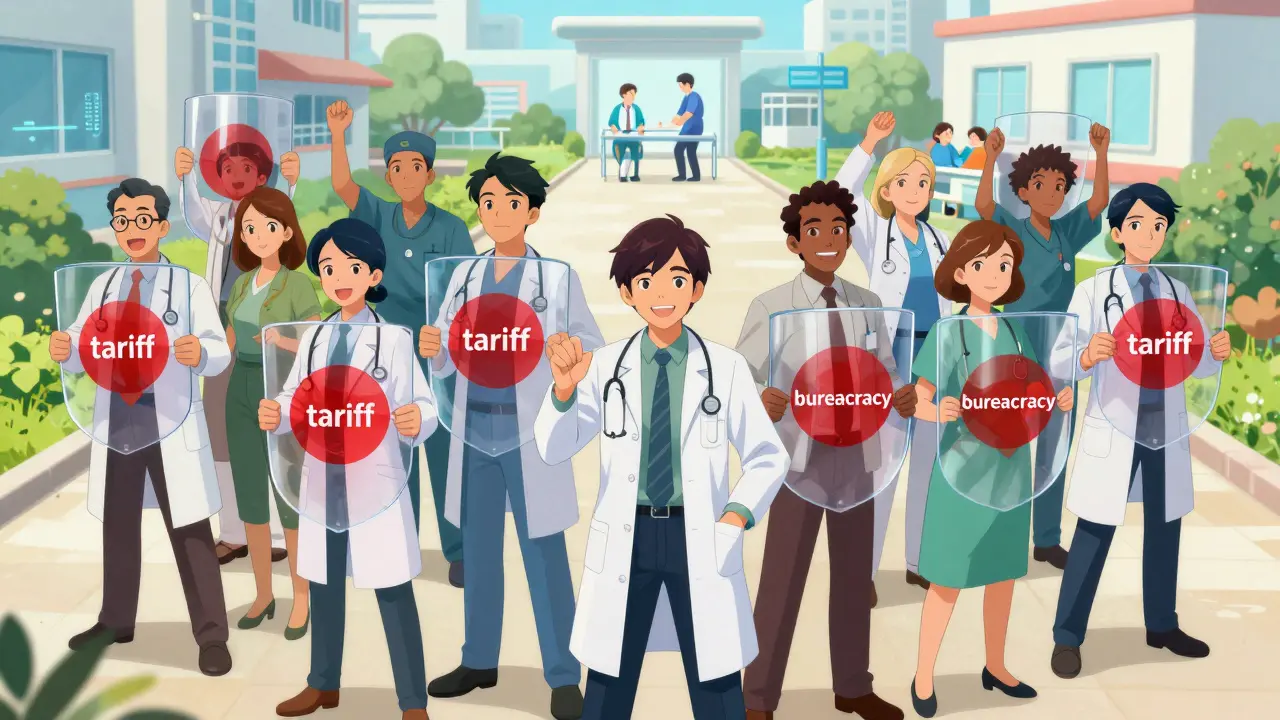
Then there is the issue of trust. Despite concerns about safety and forgery, unbranded generics remain underutilized. Patients often prefer branded medications due to perceived quality, even when they cannot afford them. This preference drives up costs unnecessarily. At the same time, regulatory environments vary wildly. Some countries maintain high tariffs and trade barriers that artificially inflate medicine costs. The Geneva Network Report recommends abolishing these barriers to reduce unnecessary expenses, but political will is often lacking.
Infrastructure is another silent killer. Poor roads, unreliable electricity, and fragmented supply chains mean that even when generics arrive at a port, they may never reach the rural clinic that needs them. The Lancet paper cited by MedAccess emphasizes that supply chain issues complicate price reduction efforts significantly. You can lower the price per pill, but if the distribution system fails, the patient still gets nothing.
What Needs to Change?
Solving this crisis requires moving beyond charity and looking at systemic fixes. Here are three concrete steps that experts and organizations like the WHO and the Geneva Network highlight:
- Reduce Financial Barriers: Governments should reduce taxes and abolish tariffs on essential medicines. Every percentage point saved on import duties translates directly to lower costs for patients.
- Streamline Regulation: Speeding up patent examination and simplifying drug approval processes can accelerate access. Modernizing government reimbursement decisions ensures that once a generic is approved, it is quickly integrated into public health programs.
- Invest in Public Health: The African Union signed the Abuja Declaration in 2001, pledging to allocate at least 15% of annual budgets to health. As of 2022, only 23 of 54 African countries met this target. Chronic underfunding perpetuates weak infrastructure. Meeting these commitments is non-negotiable for sustainable access.
Data also plays a crucial role. A survey found that 76% of healthcare organizations across emerging markets plan heavy investment in big data to address access challenges. By using data to track supply chains, predict demand, and identify stockouts, health systems can ensure that generics reach the right places at the right time.
The Path Forward
The potential of generics to transform healthcare in low-income countries is undeniable. They have already scaled treatments for HIV, TB, and malaria. But realizing that potential fully requires addressing the fundamental issues of public sector investment, supply chain infrastructure, and regulatory harmonization. Until then, the gap between those who can afford health and those who cannot will continue to widen.
We need to stop viewing generics as just a cheaper alternative and start seeing them as a human right. The tools exist. The knowledge exists. What is missing is the political and financial commitment to make sure every person, regardless of income, has access to the medicines they need to survive.
Why are generics so important for low-income countries?
Generics contain the same active ingredients as branded drugs but cost significantly less, often up to 80% less. In low-income countries where 90% of people pay for medicine out-of-pocket, this price difference determines whether a family can afford treatment or faces catastrophic financial loss.
Do generic drugs work as well as branded ones?
Yes, quality-assured generics must meet strict bioequivalence standards set by regulatory bodies like the WHO. They contain the same active ingredients and provide the same therapeutic effect as the original branded medication, though inactive ingredients may differ.
Why don't more people in LMICs use unbranded generics?
Despite lower costs, unbranded generics make up only 5% of the LMIC market compared to 85% in the US. This is due to mistrust in quality, fear of counterfeits, strong marketing for branded drugs, and inconsistent availability in local pharmacies.
What is the WHO target for medicine availability?
The World Health Organization sets a target of 80% availability for essential medicines in both public and private sectors. Currently, no region meets this target consistently, with significant declines noted in the Western Pacific and African regions.
How do tariffs affect access to generics?
Tariffs and taxes on imported medicines increase the final cost to patients. Abolishing these barriers, as recommended by the Geneva Network Report, can significantly reduce prices and improve affordability for uninsured populations paying out-of-pocket.