
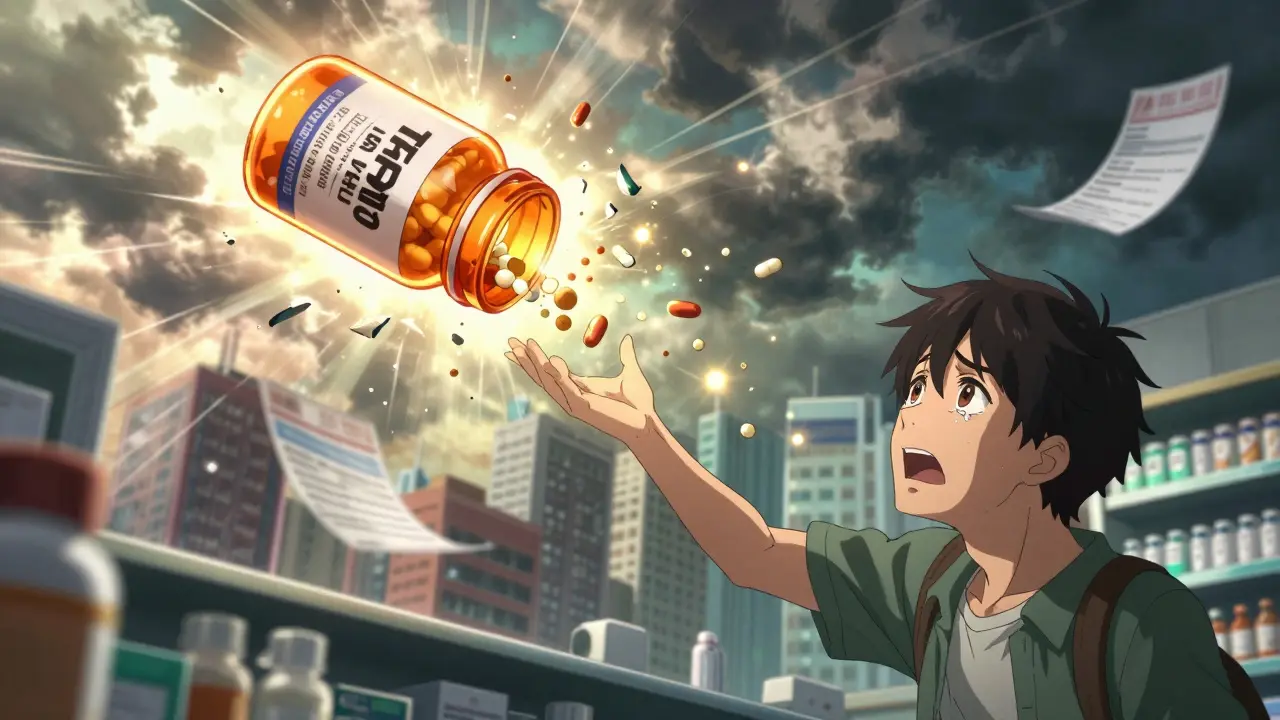
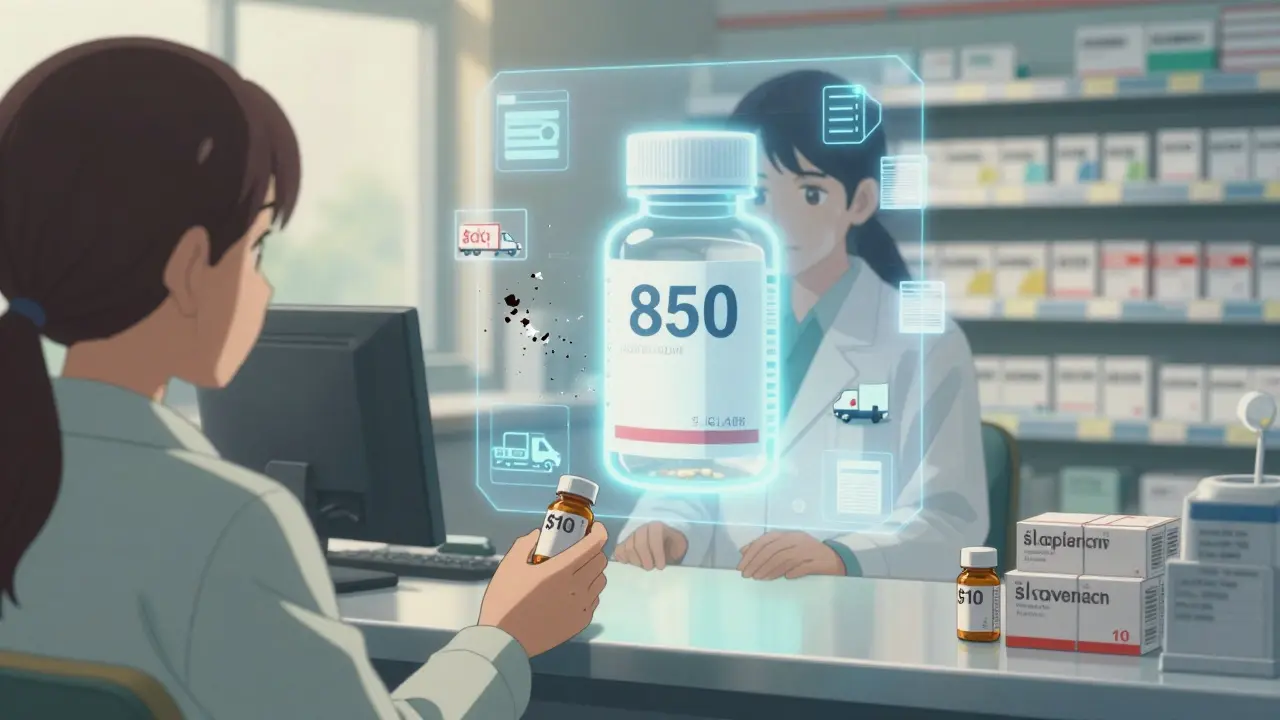
When a drug’s patent runs out, something powerful happens: prices begin to fall - often dramatically. This isn’t just a minor adjustment. It’s a market earthquake. Patients who were paying $850 a month for a brand-name medication suddenly find the same drug for $10 a month as generics flood the market. The moment patent protection ends, the rules of the game change completely. Companies that once had a monopoly suddenly face dozens of competitors, and the only thing that matters now is price.
How patent expiration turns monopolies into markets
Before a patent expires, the drug maker owns the product. No one else can legally make or sell it. That means they can set any price they want. There’s no competition, no pressure, no reason to lower costs. But as soon as the patent clock hits zero, everything flips. Generic manufacturers can step in. They don’t have to repeat expensive clinical trials. They just need to prove their version works the same way. The FDA approves them quickly - sometimes in under a year. And once the first generic arrives, prices begin to slide.
The first generic usually cuts the price by 15% to 20%. That sounds good, but it’s only the start. The real drop comes when the second, third, and fifth generics enter. Each new player adds more pressure. By the time 10 or more companies are selling the same drug, prices often fall by 80% or more. A 2023 study of 505 drugs across eight countries showed that in the U.S., prices dropped 82% over eight years after patent expiration. In the UK, the drop was 60%. In Switzerland, it was just 18%. Why the difference? It’s not about the drug. It’s about the system.
Why the U.S. sees the steepest drops
The U.S. has the most dramatic price falls because it has the least regulation. Unlike countries like Germany or Canada, where governments negotiate prices directly with drugmakers, American insurers and pharmacies are left to haggle on their own. When generics enter, they compete fiercely for shelf space. Pharmacies want the cheapest option. Insurers push for lower costs. Patients demand affordability. All of this pushes prices down fast.
But here’s the catch: even when a generic is available, you might not get it. Insurance plans often keep brand-name drugs on their formularies - the list of covered medicines - because of rebates. Drugmakers pay pharmacies and insurers huge kickbacks to keep their expensive brand on the list. So even if a $10 generic exists, your plan might still make you pay $300 for the brand. That’s why some patients don’t see savings right away. The drug is cheaper, but their bill doesn’t change.
Biologics: the exception that proves the rule
Not all drugs follow this pattern. Biologics - complex drugs made from living cells, like Humira or Enbrel - are different. They can’t be copied exactly like a simple pill. So instead of generics, we get biosimilars: very close, but not identical, versions. These take longer to approve. The FDA takes 24 months or more to review them. And originator companies fight hard to delay them.
AbbVie, the maker of Humira, filed over 130 secondary patents after the original one expired. These weren’t new drugs. They were tweaks - different dosages, delivery methods, packaging. Each one bought time. Even after the first biosimilar launched in January 2023, Humira’s price barely budged. Why? Because AbbVie made deals with insurers: if you want to cover Humira, you have to take all their other drugs too. It’s a bundle deal. And it worked. For a year, patients saw almost no price drop.
But once enough biosimilars entered - nearly a dozen by the end of 2023 - the pressure became too strong. Prices finally started falling. Still, it took nearly four years after the patent expired. That’s far longer than a simple pill.
Patent thickets: how companies stretch exclusivity
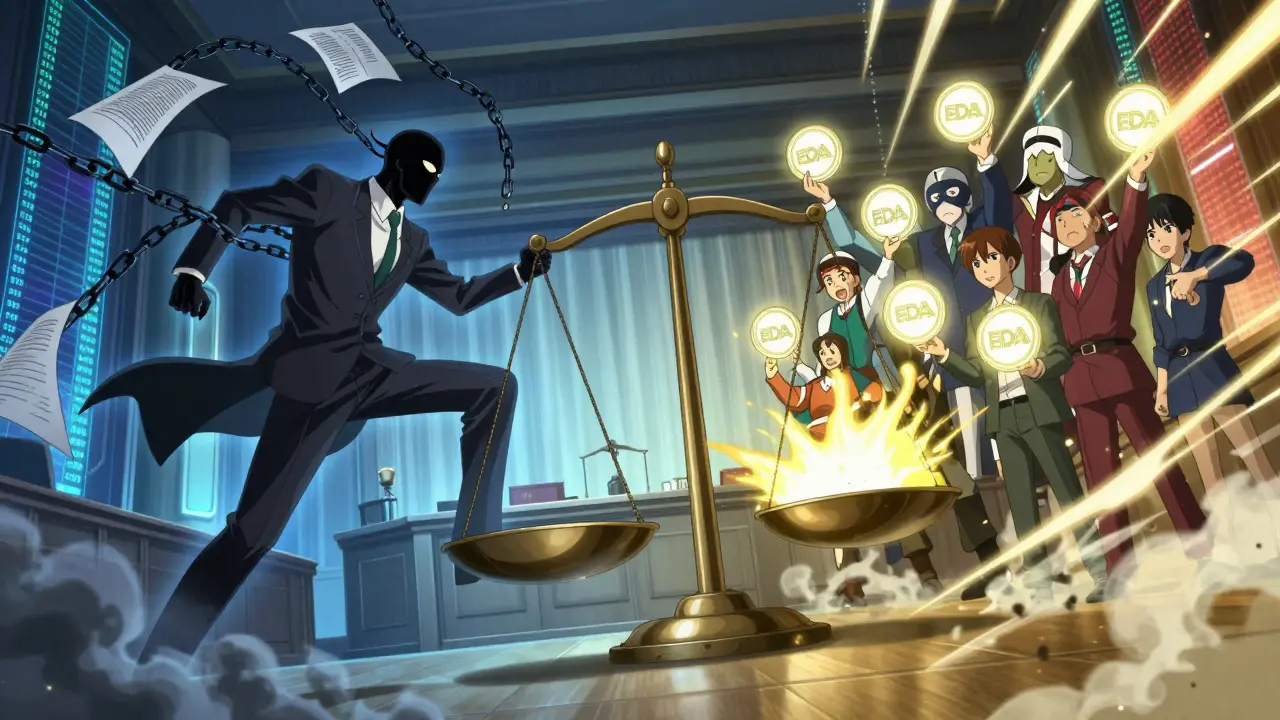
Drug companies don’t wait until the last minute to protect their profits. They start building legal walls years before the patent expires. This is called a “patent thicket.” Instead of one patent, they pile on 10, 15, even 20 more. Each one covers a small change: a new tablet coating, a slightly different dose schedule, a new use for an old drug. These aren’t breakthroughs. They’re legal tricks.
According to I-MAK’s 2025 report, the average blockbuster drug accumulates 10 to 15 secondary patents. Together, they extend market control by 12 to 14 years beyond the original patent. Semaglutide - the active ingredient in Ozempic and Wegovy - has 142 patents. Even though the base compound patent expired in 2026, these filings could keep prices high until 2036.
The FDA and U.S. Patent Office have started pushing back. In 2023, the Patent Trial and Appeal Board began rejecting obvious or repetitive patents. But it’s a slow fight. The system was built to reward innovation. Now, it’s being used to delay competition.
What happens to patients - and pharmacies
For patients, the drop in price can be life-changing. A Reddit user in February 2024 shared that Eliquis cost $850/month before generics. After, it was $10. That’s not a savings. That’s a rescue. A Kaiser Family Foundation survey found 68% of insured adults saw lower out-of-pocket costs when generics launched. But 22% said their insurance changed formularies and blocked access - sometimes for months.
Pharmacists face their own challenges. In 49 U.S. states, they can automatically swap a brand-name drug for a generic - unless the doctor writes “dispense as written.” But with biologics, substitution rules vary by state. Some require a doctor’s permission. Others allow it without notice. That confusion delays adoption. Patients don’t know what they’re getting. Doctors don’t always understand the rules.
And then there’s the supply chain. Making generics sounds simple. But producing the active ingredient - the chemical that does the work - isn’t. Many are made in India or China. If there’s a shortage, or a quality issue, production halts. That’s why some generics don’t hit shelves even after approval. The FDA approved 870 generics in 2023 - up 12% from 2022 - but not all of them were immediately available.
The numbers don’t lie
By 2030, the global generic drug market will be worth $700 billion. That’s up from $407 billion in 2023. Why? Because patents are expiring fast. Between 2020 and 2025, $220 billion in annual drug sales lost patent protection. That’s billions in savings waiting to happen.
The Congressional Budget Office estimates that generic and biosimilar competition will save the U.S. healthcare system $1.7 trillion over the next decade. But I-MAK warns: without reform, those savings will be delayed by an average of 4.2 years per drug. That’s over four years of people paying inflated prices because of legal loopholes.
What’s next?
Regulators are waking up. The European Commission proposed limits on supplementary patents in 2024. The FDA is speeding up approvals for complex generics. The Inflation Reduction Act lets Medicare negotiate prices - a move that could force manufacturers to choose: lower prices now, or risk being left out of the system entirely.
But change moves slowly. Patients still pay too much. Doctors still struggle with confusing rules. Pharmacies still face supply shortages. The system works - but only if the rules are enforced fairly. Patent expiration isn’t the end of the story. It’s the beginning of a fight - between competition and control, between savings and strategy.
One thing is certain: when a patent expires, prices don’t just drop. They crash. And for millions of people, that crash is the difference between taking their medicine - and not taking it at all.
Why do drug prices drop so much after patent expiration?
When a drug’s patent expires, other companies can legally make and sell generic versions. These generics don’t need to repeat expensive clinical trials, so they cost far less to produce. With multiple manufacturers competing, prices fall rapidly - often by 80% or more. The more competitors that enter, the harder the price drops.
Do all drugs see the same price drop after patent expiration?
No. Simple pills - small molecule drugs - usually see the fastest and deepest price cuts. Complex drugs like biologics (e.g., Humira, Enbrel) are harder to copy, so biosimilars take longer to enter the market. Even then, originator companies use tactics like patent thickets and rebate deals to delay price drops. As a result, biologics often keep high prices for years after patent expiration.
Why don’t patients always see lower prices even when generics are available?
Insurance plans often keep brand-name drugs on their covered lists because drugmakers pay them rebates - hidden payments that offset the higher cost. So even if a $10 generic exists, your plan might still cover the $300 brand-name version. This means your out-of-pocket cost doesn’t change. It’s not about availability - it’s about how insurance and pharmacies are paid.
What is a patent thicket, and how does it affect drug prices?
A patent thicket is when a drug company files dozens of secondary patents on minor changes - like a new pill coating or a slightly different dosage - to extend legal protection beyond the original patent. These aren’t new drugs. They’re legal barriers. The average blockbuster drug accumulates 10-15 of these patents, delaying generic competition by 12-14 years. This keeps prices high long after the original patent expires.
How long does it take for generics to enter the market after a patent expires?
In the U.S., the average time for the first generic to enter is 30 months after patent expiration. In Europe, it’s 12-18 months. The delay is caused by legal challenges, patent disputes, and complex approval processes - especially for biologics. The FDA approved 870 generic drugs in 2023, but many still faced delays due to supply chain issues or litigation.
Will drug prices keep falling after generic entry?
Yes - but the steepest drops happen in the first few years. The first generic cuts prices 15-20%. The second and third can cut another 30-40%. By the time 10+ companies are selling the drug, prices often fall 80-90%. After that, prices stabilize at a low level, but rarely rise again unless supply is disrupted.

Levi Viloria
March 3, 2026 AT 11:13Been there. My mom was on Eliquis before generics. $850 a month. After? $12. She cried. Not from sadness. From relief. That’s not healthcare. That’s extortion wrapped in a prescription.
And don’t even get me started on how insurance still pushes the brand name. Like, no, I don’t want to pay $300 for the same damn pill just because some pharma rep gave your plan a kickback. It’s not a bug. It’s the system.
Richard Elric5111
March 5, 2026 AT 10:30The economic phenomenon elucidated herein is not merely a function of market competition, but rather a structural recalibration of rent-seeking behavior within the pharmaceutical industrial complex. The patent expiration mechanism, ostensibly designed to incentivize innovation, has been co-opted into a mechanism of prolonged monopolistic retention via legalistic obfuscation-what some scholars term ‘patent evergreening.’
The divergence in price elasticity across jurisdictions-namely, the 82% drop in the U.S. versus 18% in Switzerland-reflects not differential drug efficacy, but divergent regulatory architectures. In centrally administered systems, price controls preempt market volatility. In the U.S., the absence of such intervention permits unbridled competition, thus yielding dramatic price collapses. One might argue this is market efficiency. I argue it is regulatory failure masquerading as laissez-faire.
Betsy Silverman
March 5, 2026 AT 18:26I work in a pharmacy. I see this every day. A patient comes in with a script for Humira. $4,000. We tell them there’s a biosimilar for $1,200. They look at us like we’re speaking another language.
Then we explain: your insurance doesn’t cover it unless you switch. And if you switch, you have to go through a 3-week approval process. Meanwhile, you’re still on the old one. You can’t just swap. It’s not like buying a new brand of toothpaste.
And yeah, some doctors won’t even sign the switch form. They say, ‘I don’t know if it’s the same.’ But they never say that about insulin or metformin. Funny how that works.
Ivan Viktor
March 7, 2026 AT 15:20So let me get this straight. The drug costs $850 because one company owns it. Then 10 other companies make the same thing for $10 and suddenly it’s a miracle? No. It’s just capitalism. The price was always ridiculous. The system didn’t fix itself. It just got exposed.
And now we’re supposed to be grateful? Like, thanks for letting us buy our medicine at a price that doesn’t require a second mortgage. What a world.
Zacharia Reda
March 8, 2026 AT 17:35People act like generics are this magical solution. But here’s the real story: the first generic enters. Price drops 20%. Cool.
Then the second one comes in. Price drops another 30%. Still good.
Then the third, fourth, fifth… and suddenly, the price is so low that the manufacturer can’t even cover the cost of shipping the pills. So they stop making it.
And then? No supply. You can’t buy it. Ever. I’ve seen this happen with atorvastatin. Ranitidine. You name it. The market doesn’t just drop prices. It sometimes kills the product.
So yeah, competition is good. But it’s not always sustainable. And no one talks about that.
Helen Brown
March 10, 2026 AT 17:14Did you know the FDA gets paid by the drug companies? They do. It’s called user fees. So when they approve a generic, they’re approving a company that paid them. And when they delay a biosimilar? That’s the same company paying them to delay it.
It’s not a coincidence. It’s a system. They let you think it’s about safety. But it’s about money. They’re in bed with Big Pharma. And they’re not letting go. Not until the public screams loud enough. And we’re still whispering.
John Cyrus
March 11, 2026 AT 00:01Patent expiration is not a right. It’s a privilege granted by Congress. And Congress is full of lawyers who used to work for pharma. So they write the rules. They make the loopholes. They protect the profits. Then they pretend they’re helping patients.
And you fall for it. You think the system works. It doesn’t. It’s rigged. And you’re the one paying for it. Every month. Every pill. Every co-pay. Wake up. This isn’t capitalism. It’s feudalism with a pharmacy counter.
marjorie arsenault
March 11, 2026 AT 08:06I’ve been on meds for 12 years. I’ve seen the shift. The first time I saw my copay drop from $400 to $15? I thought it was a mistake.
But then I realized-it wasn’t magic. It was justice. Slow, messy, delayed justice. But justice.
And you know what? We need more of it. Not just for the big drugs. For the small ones too. The ones no one talks about. The ones that keep people alive. This isn’t politics. It’s survival.
So if you’re reading this and you’re not angry? You should be.
And if you’re angry? Do something. Talk to your rep. Ask your doctor. Demand transparency.
We don’t need heroes. We need systems that work.
Deborah Dennis
March 11, 2026 AT 18:27And yet… the same people who scream about drug prices are the ones who refuse to buy generics. They want the brand. Because ‘it’s better.’ Or ‘my doctor said so.’ Or ‘I’ve always taken it.’
Then they’re shocked when their insurance denies coverage? You created this problem. You chose the expensive pill. Now you’re mad the system didn’t save you from your own choices?
It’s not the system. It’s you.
Shivam Pawa
March 13, 2026 AT 03:09India makes 20% of global generics. China makes 40%. US makes less than 5%. So when there’s a shortage? It’s not about quality. It’s about supply chains.
And when the FDA shuts down a factory in Hyderabad? Suddenly, 10 million people can’t get their meds.
We talk about patents. But we ignore the real bottleneck: manufacturing. We outsource everything. Then we wonder why prices don’t drop.
It’s not about competition. It’s about control. And control is in China. Not here.
Diane Croft
March 13, 2026 AT 05:10My dad’s on a generic for high blood pressure. $8 a month. He says it’s the first time in 15 years he’s not stressed about paying for pills.
That’s the real story. Not the patents. Not the rebates. Not the biosimilars.
It’s a man who can breathe again because his medicine finally cost less than his coffee.
That’s what we’re fighting for. Not money. Peace.