
The Slow Slide into Hand Deformity
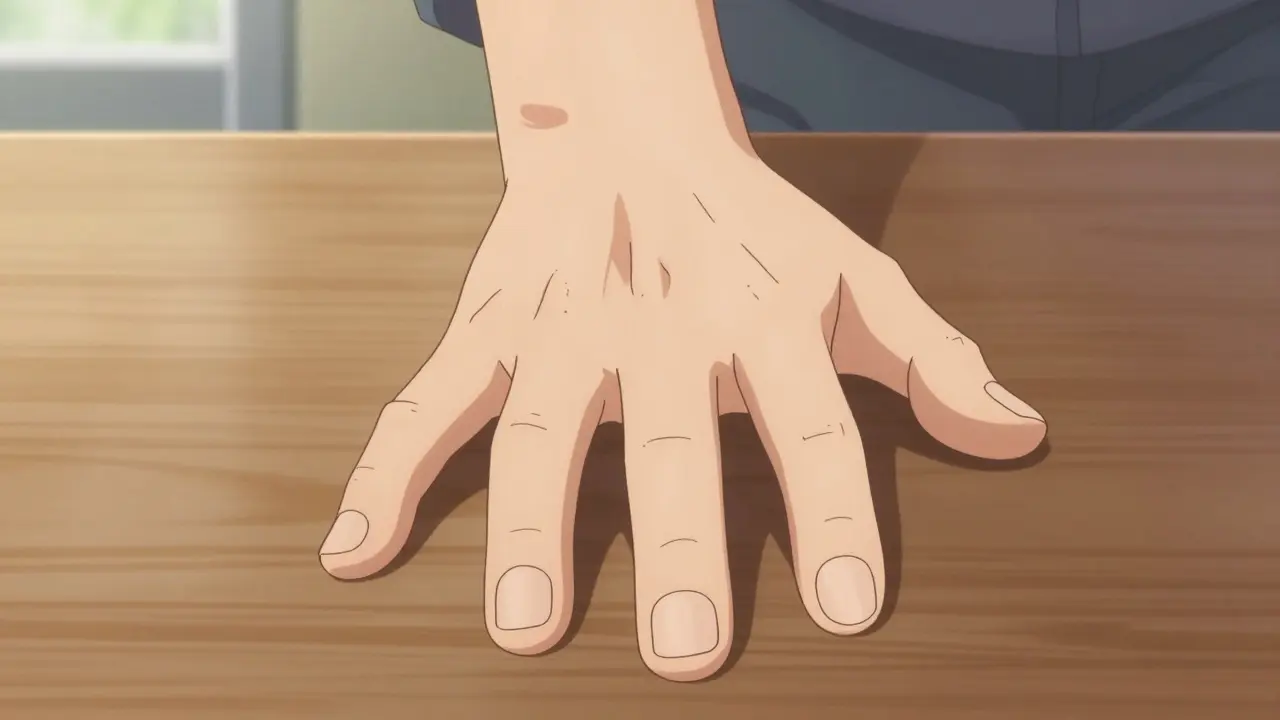
This condition doesn't happen overnight. Usually, it's a gradual process that takes 5 to 15 years, though some people see rapid changes in just a year or two. It all starts with the Palmar Fascia, which is the layer of tissue just under your skin that supports your palm. In people with this contracture, the body produces too much collagen, creating thick, rope-like cords. These cords act like tight guitar strings, pulling your fingers-most often the ring and pinky fingers-down toward the palm. It generally moves through four distinct stages:- Stage 1: Small, hard nodules form. You might feel them as lumps near the base of your fingers, but they don't usually hurt.
- Stage 2: Those nodules connect to form cords. This is where you'll start noticing your skin dimpling.
- Stage 3: The fingers begin to bend. You might have a 10 to 30-degree pull that makes it hard to fully extend your hand.
- Stage 4: Severe contracture. Fingers are pulled in more than 45 degrees, making a normal grip almost impossible.
Knowing When to Stop Waiting
One of the hardest parts of managing Dupuytren's contracture is deciding when to actually do something about it. Many doctors suggest a "watchful waiting" approach. If your fingers only bend a tiny bit, surgery or injections might be overkill. Clinical guidelines generally suggest intervening when the bend at the knuckle (metacarpophalangeal joint) hits 30 degrees or the middle joint hits 20 degrees. A quick way to check this at home is the "table top test": try to place your palm completely flat on a table. If you can't, it's time to see a specialist.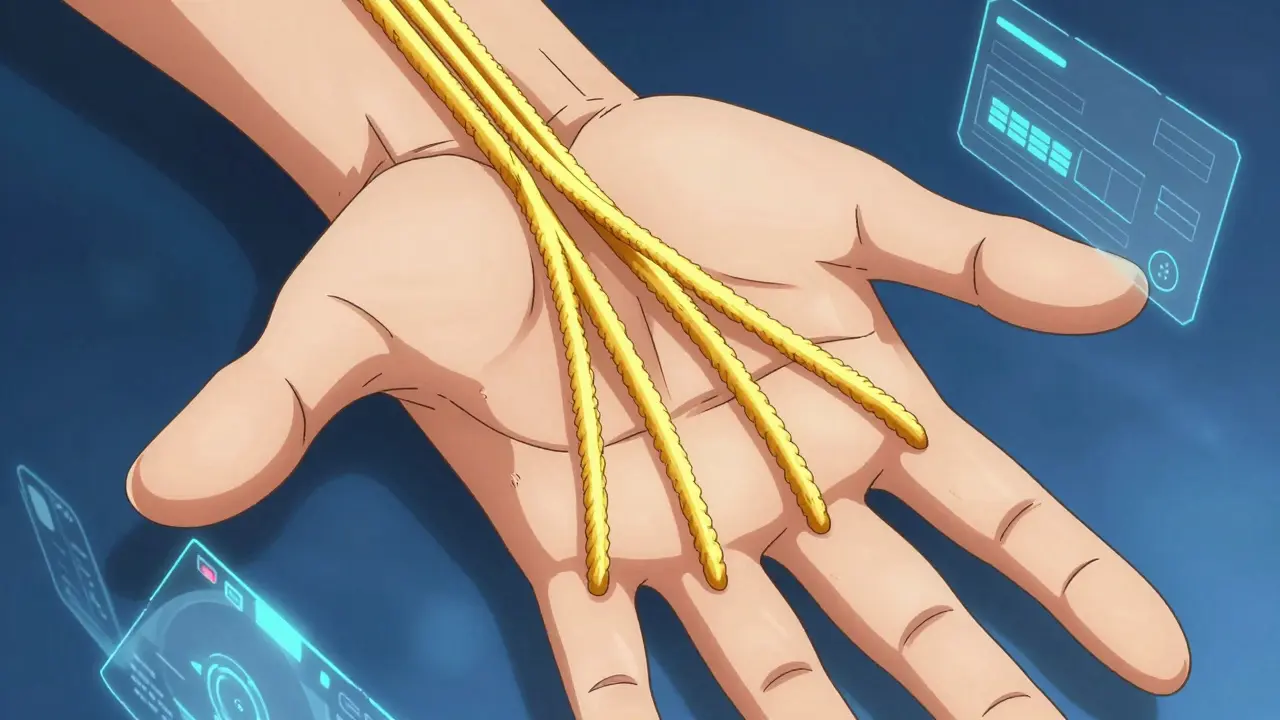
Comparing Your Treatment Options
Depending on how far the condition has progressed, your doctor will likely suggest one of three main paths. Each has a different trade-off between recovery time, cost, and the chance that the deformity comes back.| Method | How it Works | Recovery Time | Recurrence Risk | Avg. Cost (USD) |
|---|---|---|---|---|
| Collagenase (Xiaflex) | Enzymes dissolve the cord | Days to Weeks | Moderate | $3,500 - $5,000 |
| Needle Aponeurotomy | Needle snaps the cord | Immediate/Short | High (30-50%) | $1,500 - $3,000 |
| Open Fasciectomy | Surgical removal of tissue | 6 - 12 Weeks | Low (20-30%) | $8,000 - $15,000 |
The Enzyme Approach: Xiaflex
Instead of a scalpel, Collagenase clostridium histolyticum (known as Xiaflex) uses an enzyme to chemically "eat" the collagen cords. A doctor injects the enzyme, and a day or two later, they manually straighten your finger to break the weakened cord. It's great for people who can't handle a long surgery, but it's expensive and requires strict follow-up exercises to be effective.
The Quick Fix: Needle Aponeurotomy
This is a minimally invasive move where a doctor uses a needle to pierce and break the cord. It's fast, and some people feel an immediate relief. However, because the diseased tissue is still there-just snapped-it has a much higher chance of growing back within three years compared to full surgery.
The Gold Standard: Fasciectomy
An Open Fasciectomy is a full surgical procedure to remove the thickened fascia entirely. It's the most thorough option and has the lowest recurrence rate. The downside? The recovery is long. You're looking at months of physical therapy and a higher risk of temporary nerve irritation during healing.
The Secret to Success: Post-Treatment Work
No matter which treatment you pick, the "magic" doesn't happen in the clinic-it happens during your recovery. If you get Xiaflex but skip the extension maneuvers, your success rate drops from 85% down to 65%. The enzyme breaks the cord, but *you* have to move the finger to keep it from scarring back together. For those who go the surgical route, physical therapy is non-negotiable. Patients who stick to their 2-3 weekly sessions for two months regain significantly more motion than those who wing it. At home, you should be doing 5-10 minutes of stretching 4-6 times a day. It's tedious, but it's the only way to ensure you don't lose the progress the surgeon just bought you.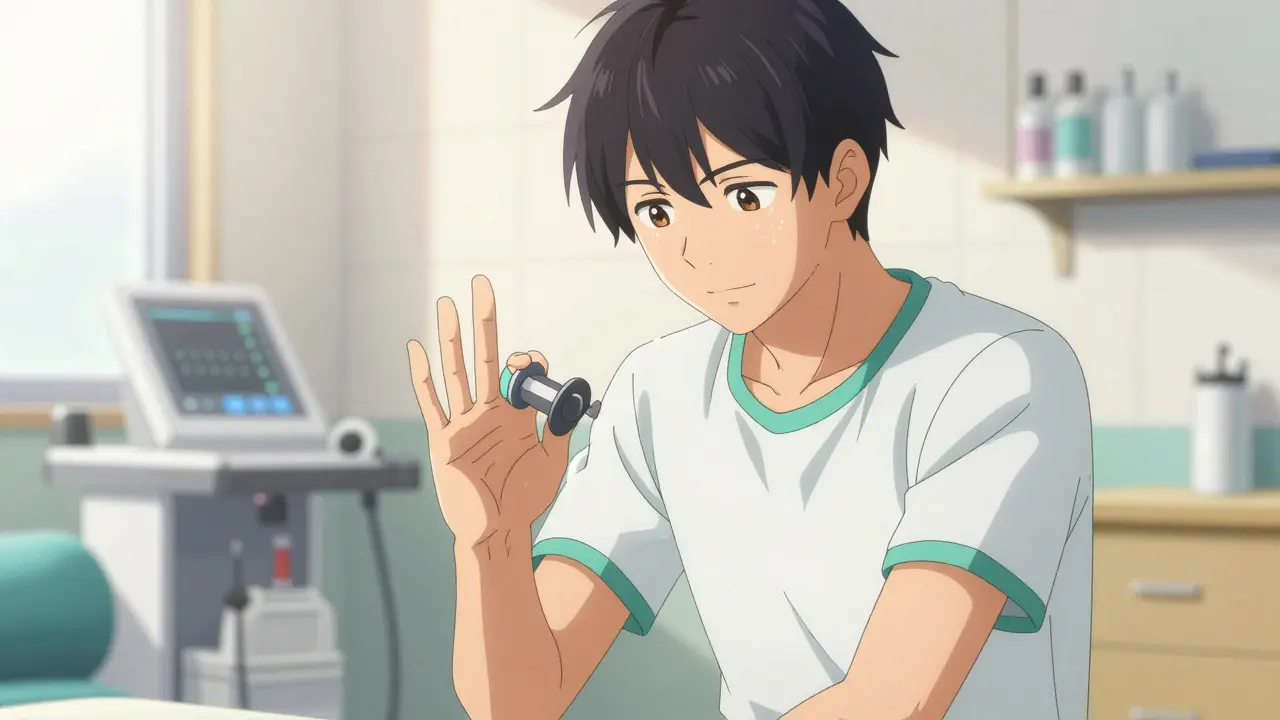
Common Pitfalls and Warning Signs
Be wary of "miracle" gloves or splints sold online. While some people find mild comfort in them, many users report skin breakdown and very little actual improvement in the contracture. Splints cannot "stretch out" a fibrous cord; they can only maintain a position once the cord has been broken by medical intervention. Keep an eye out for these red flags that suggest your condition is progressing:- Skin on the palm looks like it's being sucked inward (dimpling).
- You start dropping things because your grip feels "off."
- You can't flatten your hand to wash a window or push a button.
- The nodules in your palm are becoming more numerous or moving toward your fingers.
Looking Ahead: New Frontiers in Hand Health
We're entering an era where we might move past just "breaking" cords. Researchers are currently testing gene therapies that target TGF-β1-the protein responsible for the overproduction of collagen. Early trials have already shown a significant reduction in cord thickness without the need for invasive surgery. Additionally, new tools like the "Fasciotome" (an ultrasound-guided device) are making needle procedures faster and more precise, reducing the time you spend in the operating room. We're also seeing promising results from stem cell research that could potentially prevent the recurrence of the disease entirely.Does Dupuytren's contracture cause pain?
In the early stages, the nodules are usually painless. However, as the contracture progresses, you may experience discomfort due to the tension on the skin or joint stiffness. Some people also report pain during the "manipulation" phase of enzyme treatments like Xiaflex.
Can I prevent this if it runs in my family?
Currently, there is no proven way to prevent the onset of the condition. However, early detection is key. If you have a strong family history, regularly perform the "table top test" to catch nodules early, and consult a hand surgeon for a baseline evaluation.
Are steroid injections effective for this?
Generally, no. Most health organizations recommend against corticosteroids as a primary treatment because they only work in about 30% of cases and can cause the skin and tissue to thin (atrophy). They are occasionally used for very painful nodules but won't fix the actual contracture.
How long does recovery take after surgery?
For a full fasciectomy, expect a recovery period of 6 to 12 weeks for the initial healing, with physical therapy continuing for several months to regain full strength and flexibility.
Will my fingers eventually straighten on their own?
No. Once the collagen cords have formed and contracted, they will not resolve on their own. The condition is progressive, meaning it will either stay the same or get worse without medical intervention.





Lando Neal
May 1, 2026 AT 12:28The table top test is such a simple way to catch this early!!!
Rebekah Korak
May 3, 2026 AT 00:21It is truly fascinating how the physical manifestation of our genetic destiny plays out in the palms of our hands, reflecting a deeper cosmic inevitability that most people simply ignore in their pursuit of shallow wellness. Most of you probably think a simple surgery fixes the problem, but you fail to see that the tightening of the fascia is merely a mirror to the tightening of the human spirit in a rigid, bureaucratic society. We treat the symptom with scalpels and enzymes, yet we never address the ontological dread that comes with realizing our bodies are betraying us in slow motion. The irony is that we spend thousands of dollars to regain the ability to shake a hand, while the actual human connection has been eroded by the digital void we inhabit. If you cannot lay your hand flat, perhaps it is a sign that you are not meant to grasp the material world so tightly. I have seen countless individuals obsess over these nodules, ignoring the spiritual call to accept the decay of the flesh as a rite of passage into a more enlightened state of being, though most are too blind to realize that their physical limitation is actually a spiritual liberation from the need to produce. You all act like a 30-degree bend is a tragedy, but in the grand tapestry of existence, it is a mere ripple in an ocean of indifference.
Srinivas Komakula
May 3, 2026 AT 08:49The correlation between Northern European descent and these collagen mutations is far too convenient...!!! It is highly probable that the pharmaceutical industry is leveraging these genetic markers to push Xiaflex-a high-cost biological agent-onto a specific demographic to maximize profit margins through targeted genomic profiling!!! The systemic overproduction of TGF-β1 is likely not a random biological error, but a result of environmental catalysts introduced via synthetic additives in the water supply!!!
Kelly Feehely
May 4, 2026 AT 15:18Srinivas is actually hitting on something here. Follow the money. Why is the 'gold standard' surgery so expensive? Because they want you in the system for months of PT. It's all about the billing cycles and keeping the clinics full of 'recovery' patients while they experiment with gene therapies on the side without full disclosure!
Halle Dagley
May 6, 2026 AT 08:12The United States has the most advanced medical facilities in the world for this. It is an absolute disgrace that anyone would suggest our pharmaceutical companies are anything but the pinnacle of global innovation. Some of youe are simply too blind to see the greatness of Amercan medicine.
Andrew Hanssen
May 8, 2026 AT 04:14Actually, the 'gold standard' label for fasciectomy is largely a legacy term. Many surgeons now prefer a combination approach because the recurrence rates for open surgery are not as low as the brochures claim. The data is often skewed by patient reporting bias.
Tallulah Sandison
May 8, 2026 AT 23:45Just got my needle procedure done last week!! Recovery is super fast and I can finaly use my hand again! Go for it guys!
SWATI NAWANGE
May 10, 2026 AT 04:26The sheer audacity of some people to suggest a needle aponeurotomy is a viable long-term solution is frankly laughable. One must possess a certain level of intellectual sophistication to realize that 'snapping' a cord is a primitive fix. It is an amateur's choice, devoid of any real surgical elegance or foresight regarding the inevitable recurrence.
Jimmy Crocker
May 10, 2026 AT 10:52I find it quite droll that people are arguing over a few degrees of finger flexion when the real issue is the lack of a truly refined aesthetic in modern hand surgery... the scarring from a fasciectomy is often just dreadfull and frankly an eyesore for anyone with a modicum of taste in their physical appearance.
Alexa Mack
May 11, 2026 AT 05:30I wonder if there are traditional methods in other cultures that help with this? I've read about some herbal compresses in Asia that might reduce inflammation, though maybe not the collagen cords themselves.
Prudence Wesson
May 11, 2026 AT 06:29The lack of discipline in the recovery phase is simply appalling...!! Most patients fail because they are lazy with their stretching, which is a failure of character, not a failure of the surgery...!! Your results are a direct reflection of your mental fortitude!!!
Divya Patel
May 11, 2026 AT 13:50It is a poignant reminder of how the body maps our lineage... the ways we carry the silent echoes of our ancestors in the very palms that shape our current lives!!!
nikki paurillo
May 11, 2026 AT 22:39There is something so hauntingly poetic about the way these cords tie us to our past. It's like a physical anchor of heritage, a tangible, stubborn knot of history that refuses to let go of our grip on the world.
Bradley Gusick
May 12, 2026 AT 03:41This is all a distraction from the fact that they are tracking our biometrics through these 'new' ultrasound devices! They'll map your hand and then use that data to predict your health risks for insurance premiums! Wake up and see the pattern of control!
J. Walter Jenkem
May 13, 2026 AT 11:31I agree that the recovery work is the hardest part, but it's definitely worth the effort to get that mobility back. Just take it one day at a time and stay consistent with the exercises.