
Every year, U.S. healthcare facilities throw away billions of dollars worth of medications that haven’t expired. It’s not just money lost-it’s wasted resources, unnecessary environmental harm, and missed chances to help patients who can’t afford their prescriptions. The problem isn’t that drugs are going bad too fast. It’s that we’re not managing them well.
Why Medications Get Wasted (Even When They’re Still Good)
Most people assume expired medications are unsafe. But the truth? Many drugs stay effective for years past their printed expiration date. The FDA’s own testing shows that 90% of medications retain potency well beyond their labeled date-sometimes for over a decade. So why do we toss them? The real culprits are poor inventory systems, overprescribing, and lack of staff training. A small clinic might order 100 bottles of a common blood pressure pill because the supplier offers a bulk discount. But if only 60 patients take it that month, the rest sit on the shelf. By the time someone remembers to check, the expiration date is looming-and out it goes. No one questions whether it’s still safe. No one thinks to redistribute it. In hospitals, refrigerated biologics like insulin or vaccines are especially vulnerable. If the fridge temperature spikes by just 2°F for a few hours, the whole batch might be flagged for disposal-even if it’s still perfectly usable. And in pharmacies, patients often get full 30-day supplies of chronic meds they don’t need right away. That’s waste waiting to happen.Temperature Control: The Silent Killer of Medications
Medications aren’t like canned food. They’re sensitive. Refrigerated drugs like insulin, epinephrine, and certain antibiotics must stay between 36°F and 46°F. Room-temperature meds like tablets and capsules need 68°F to 77°F. Go outside that range-even briefly-and you risk losing potency. A 2022 case study from a rural clinic showed $8,200 in biologics destroyed because the fridge alarm failed for three days. No one noticed until it was too late. That’s preventable. Solution? Use digital temperature loggers with alerts. They cost under $100 and connect to your phone. Set it to notify you if the temp goes out of range. Check it daily. Write it down. Don’t rely on manual logs-people forget. Digital records are clear, time-stamped, and legally defensible.FIFO: The Simple System That Stops Waste
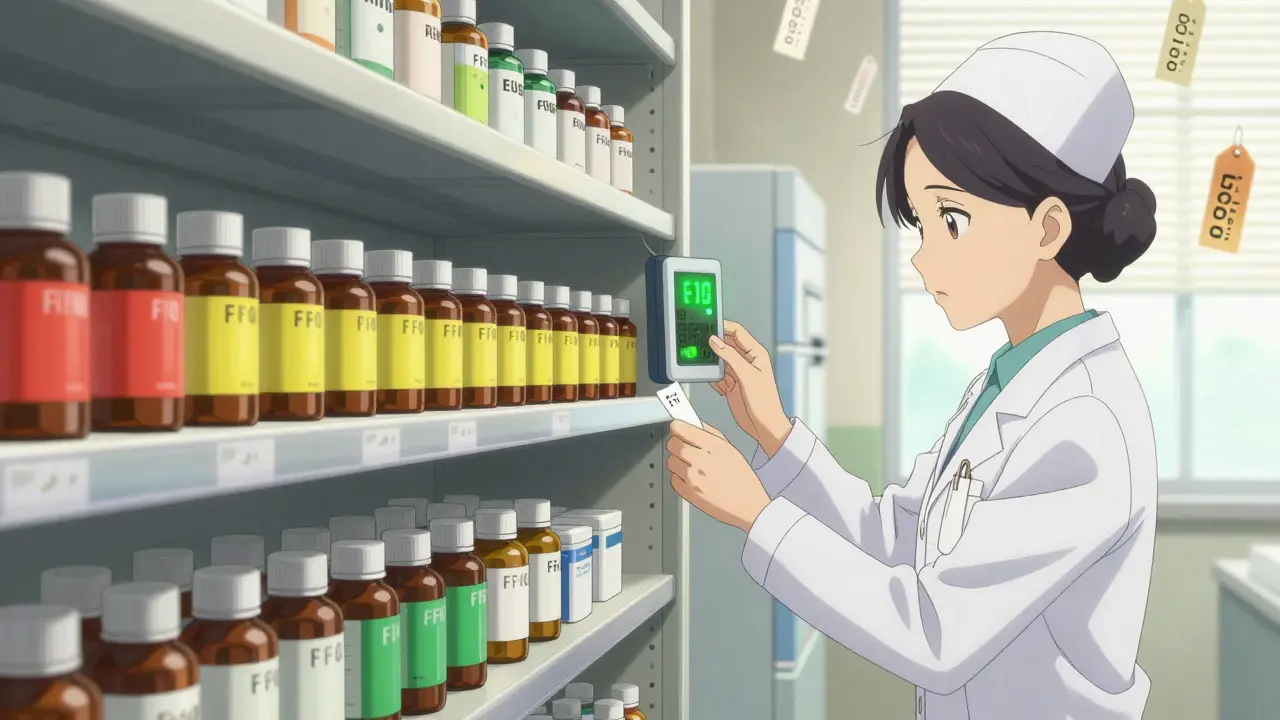
FIFO stands for First-In, First-Out. It sounds basic. But in pharmacies and clinics, it’s rarely done right. Here’s how it works: When new stock arrives, put it behind the older stock. Don’t just shove it on top. Push the older bottles forward so they’re the first ones used. This isn’t optional-it’s the single most effective way to avoid accidental expiration. Pair FIFO with color-coded labels. Use red stickers for meds expiring in the next 30 days. Yellow for 31-60 days. Green for everything else. Staff can scan shelves in seconds and spot what needs attention. One nurse practitioner in Ohio cut her clinic’s waste by 29% just by starting this practice. Do a weekly expiration audit. Pick Friday morning. Grab your checklist. Go through every shelf. Flag anything close to expiring. If it’s still good, find a patient who needs it. If not, send it to a take-back program.Prescribe Smaller Amounts-It Works
Doctors often default to 30-day or 90-day scripts. But what if a patient only needs 14 days of antibiotics? Or 7 days of pain meds after surgery? Dr. Sarah Thompson at Mayo Clinic found that prescribing smaller quantities reduced chronic medication waste by up to 37%. That’s not just theory-it’s data. Try this: Instead of writing “30 tablets, take one daily,” write “14-day supply, refill if needed.” Patients still get what they need. You avoid leftover pills sitting in medicine cabinets. Pharmacies don’t have to dispense extra. And when the patient’s condition changes, you’re not stuck with unused meds. Split-fill prescriptions are another win. For chronic conditions like diabetes or high cholesterol, give the patient a 14-day supply first. Then refill after they’ve shown they’re taking it. You’ll reduce waste, improve adherence, and catch side effects early.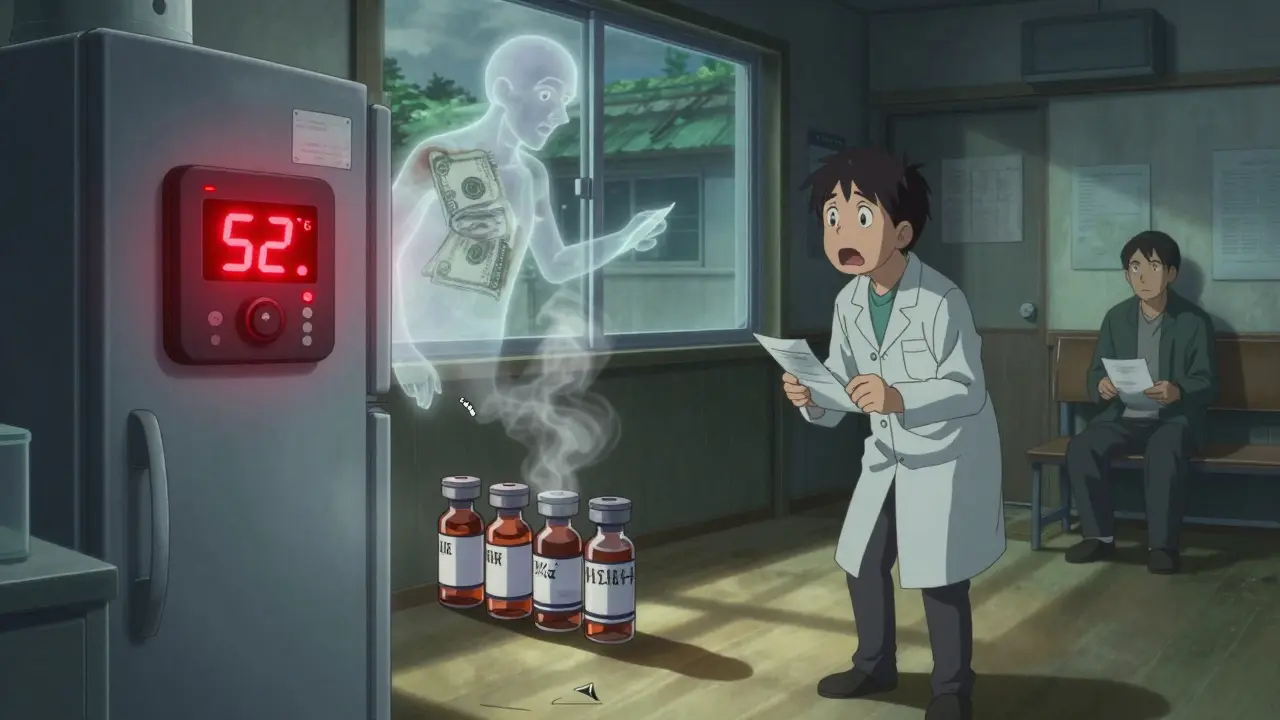
Technology Helps-But It’s Not Required
Big hospitals use barcode scanners, cloud-based inventory systems, and AI alerts. Epic, Cerner, and Omnicell can track every pill from delivery to dose. They cut waste by 25-30%. But if you’re a small clinic with a $5,000 budget? You don’t need that. A simple Excel sheet with columns for drug name, quantity, expiration date, and last checked date works fine. Print it out. Post it on the wall. Assign someone to update it every Monday and Friday. Use sticky notes to mark expiring items. It’s low-tech, but it’s real. The key isn’t the tool-it’s the habit. Do the check. Write it down. Act on it.Take-Back Programs: The Right Way to Dispose
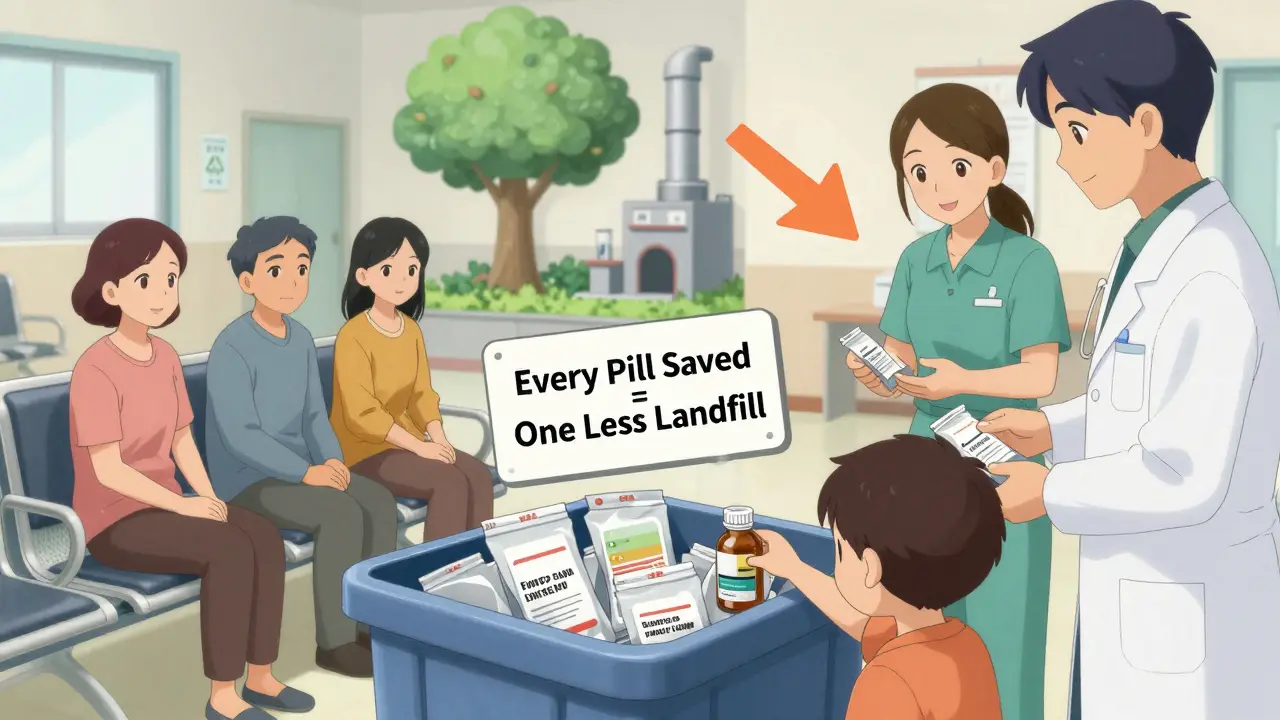
Never flush meds down the toilet. Never throw them in the trash unless they’re non-hazardous. And never assume “expired” means “safe to toss.” The FDA maintains over 11,000 take-back locations across the U.S.-pharmacies, police stations, and hospitals that collect unwanted meds for safe disposal. Find your nearest one at DEA.gov/takeback. Hazardous drugs like opioids, chemotherapy agents, and certain antidepressants must be incinerated. Landfilling them violates EPA rules and risks contaminating water supplies. In 2022, 43% of facilities were still illegally dumping these materials. Set up a collection bin in your waiting room. Label it clearly: “Unwanted Medications - Do Not Flush.” Empty it weekly. Train staff to explain the program to patients. It’s simple. It’s legal. It’s responsible.Training Is the Foundation
No system works without trained people. The WHO says staff training is the #1 factor in reducing waste. Facilities with formal training programs see 28% less waste than those without. What should staff learn?- How to read expiration dates and understand stability data
- Proper storage temperatures for different drug types
- How to use FIFO and color-coding systems
- When to request smaller prescriptions
- How to identify and handle hazardous waste
- Where to send unused meds for safe disposal
What About the Expiration Date? Is It Even Real?
Here’s the uncomfortable truth: Expiration dates aren’t the same as “use-by” dates. They’re mostly about manufacturer liability, not science. The FDA requires drugs to be tested for potency only up to their labeled expiration date. After that? No data. But studies show many remain stable for years. In 2012, the Pentagon tested over 100 drugs stored for 15+ years-90% were still effective. That doesn’t mean you should use every old pill you find. But it does mean you shouldn’t toss something just because the date passed. If it’s stored properly, looks normal, and hasn’t changed color or smell, ask a pharmacist. Don’t assume it’s bad.Start Small. Think Big.
You don’t need to overhaul your whole system tomorrow. Pick one thing. - Start using color-coded labels for expiring meds. - Switch to 14-day scripts for antibiotics. - Install a $50 temperature monitor in your fridge. - Set up a take-back bin in your waiting room. Track your results. After three months, compare how much you’re throwing away. You might be surprised. The goal isn’t perfection. It’s progress. Every pill you save is money saved. Every dose kept out of the landfill is a cleaner environment. And every patient who gets the right dose at the right time is healthier because of it.What’s Next?
By 2026, AI will predict medication needs before they’re prescribed. Hospitals will use data to auto-adjust orders based on patient trends. But until then, the tools you already have-FIFO, temperature logs, small prescriptions, take-back bins-are enough. You don’t need fancy tech. You need consistent habits. Start today. One shelf. One script. One bin.Can I still use a medication after its expiration date?
Yes, many medications remain safe and effective well past their expiration date, especially if stored properly. The FDA has found that 90% of drugs retain potency for years beyond their labeled date. However, never use drugs that have changed color, smell, or texture, or that are liquid-based (like insulin or eye drops) past their date. When in doubt, consult a pharmacist.
What’s the best way to dispose of expired medications?
The safest method is using a drug take-back program. Over 11,000 locations across the U.S. accept unwanted or expired medications for proper disposal-often at pharmacies, police stations, or hospitals. Never flush most medications unless they’re on the FDA’s flush list (mostly potent opioids). For non-hazardous pills, mix them with coffee grounds or cat litter in a sealed bag before tossing in the trash. Never recycle medication packaging.
Do I need expensive software to prevent medication waste?
No. While systems like Epic or Omnicell can help large clinics reduce waste by 25-30%, small practices can achieve similar results with simple tools: color-coded labels, weekly expiration checks, temperature monitors, and manual logs. The key isn’t technology-it’s consistency. A $50 digital thermometer and a printed checklist can save more than a $10,000 software subscription if used correctly.
How can I reduce waste with chronic medications like blood pressure or diabetes drugs?
Prescribe smaller initial supplies-like a 14-day or 30-day supply instead of 90 days. Ask patients to return for a follow-up before refilling. This reduces the chance of unused pills piling up. It also improves adherence, since patients are more likely to take meds consistently when they’re not overwhelmed by large quantities. Many patients appreciate this approach because it reduces cost and clutter.
What should I do if a refrigerated medication was left out overnight?
Don’t automatically throw it away. Check the manufacturer’s guidelines-some drugs can tolerate short temperature excursions. For example, insulin can often be kept at room temperature for up to 28 days. If the medication was out for less than 24 hours and the temperature didn’t exceed 80°F, consult a pharmacist. Use a digital temperature logger going forward to catch these issues before they cause waste.
Are there any free resources to help small clinics manage medication waste?
Yes. The Healthcare Environmental Resource Center offers free monthly webinars on pharmaceutical waste reduction. ASHP (American Society of Health-System Pharmacists) provides a free Medication Safety Toolkit with checklists, training guides, and policy templates used by over 60% of teaching hospitals. These are practical, ready-to-use tools-no cost, no sales pitch.




Thomas Anderson
December 16, 2025 AT 09:37Just started using color-coded labels in my clinic last month. Red for 30-day expirations, yellow for 60, green for everything else. Cut our waste by almost a third in 8 weeks. No fancy tech, just sticky notes and a little discipline. Seriously, if you're not doing this, you're leaving money and meds on the shelf.
Dwayne hiers
December 16, 2025 AT 17:30The FIFO system is non-negotiable in pharmacy operations. If you're not rotating stock properly, you're not just wasting drugs-you're risking regulatory noncompliance. The FDA's Stability Testing Guidelines (ICH Q1A) clearly state that expiration dates are contingent on proper storage and rotation protocols. Digital temperature loggers with audit trails are now considered best practice, even for small practices. $100 is a trivial investment compared to the liability of a contaminated batch.
Sarthak Jain
December 18, 2025 AT 02:49bro this is so real. i work in a rural pharmacy and we used to toss like 200 bucks a month in insulin just bc the fridge glitched. got a $40 temp monitor off amazon, now it texts me if it goes over 48°F. saved 3 vials last month alone. also switched to 14-day scripts for antibiotics-patients actually take them now instead of hoarding. small changes, big impact.
Sinéad Griffin
December 18, 2025 AT 06:03AMERICA NEEDS TO STOP WASTING MEDS LIKE THIS. 🇺🇸 We have people skipping doses because they can’t afford insulin, and we’re throwing away vials like trash. This isn’t just inefficiency-it’s moral failure. Take-back bins, FIFO, smaller scripts-these aren’t suggestions, they’re obligations. Shame on any clinic still flushing pills. #MedicineNotLandfill
Alexis Wright
December 19, 2025 AT 06:44Let’s be brutally honest: expiration dates are a corporate legal shield, not a scientific truth. The Pentagon’s 2012 study showed 90% of stockpiled drugs retained potency after 15+ years. The FDA knows this. Manufacturers know this. But they won’t change the labeling because liability trumps ethics. We’re not managing waste-we’re perpetuating a system designed to maximize profit through manufactured scarcity. The real problem isn’t the fridge-it’s capitalism.
Daniel Wevik
December 20, 2025 AT 17:28Temperature control isn’t optional-it’s a pharmacokinetic imperative. Biologics like insulin and monoclonal antibodies are protein-based compounds susceptible to denaturation. A 2°F deviation for 72 hours can trigger aggregation, reducing bioavailability by up to 40%. Digital loggers aren’t a luxury; they’re a compliance requirement under USP <797> and <800>. If your clinic still relies on handwritten logs, you’re operating in the pre-digital dark ages. Fix it before you get audited.
Rulich Pretorius
December 22, 2025 AT 11:39From a small clinic in South Africa, I can confirm: this works everywhere. We don’t have Epic or Omnicell, but we use a whiteboard, colored tape, and a weekly 15-minute huddle. One nurse checks expiration dates, another confirms take-back bin is emptied. We’ve reduced waste by 34% in six months. It’s not about money-it’s about dignity. No one should go without medicine because we were too lazy to rotate the shelf.
jeremy carroll
December 24, 2025 AT 05:35just started doing the 14-day script thing for pain meds after surgery. patients were like ‘wait, you’re not giving me a whole month?!’ but then they realized they didn’t need it. one guy even texted me saying ‘i saved $80 and didn’t have to deal with leftover pills.’ honestly? it’s a win-win. also, got a temp logger for the fridge. best $50 i ever spent.
Edward Stevens
December 24, 2025 AT 22:50Wow. A whole article about how to not throw away medicine like a high schooler with a expired energy drink. Who knew? Maybe next you’ll tell us not to leave the fridge open. Truly groundbreaking stuff. I’m sure the FDA will send you a medal.
Tim Bartik
December 26, 2025 AT 11:03Y’all are overcomplicating this. It’s not rocket science. If it’s still in the bottle, doesn’t smell like ass, and hasn’t turned into a science experiment-USE IT. Stop letting bureaucrats and Big Pharma scare you into tossing perfectly good pills. I’ve got a 7-year-old blood pressure med in my cabinet that still works. You wanna waste it? Fine. I’ll take it. Someone’s gotta use it.
Wade Mercer
December 26, 2025 AT 23:37It’s not just about waste-it’s about moral responsibility. Every pill discarded is a potential life denied. If you’re not actively minimizing waste, you’re complicit in systemic neglect. The fact that 43% of facilities still illegally dump hazardous drugs? That’s not negligence. That’s criminal indifference. Shame on you if you’re not auditing your inventory daily.
Daniel Thompson
December 27, 2025 AT 12:37As a former hospital administrator, I can confirm: training is the single most underutilized tool. We implemented mandatory quarterly modules on medication stability, storage, and disposal. Within 90 days, waste dropped 28%. Staff began reporting near-expiry items proactively. The key? Tie it to performance evaluations. People respond to accountability, not goodwill. If you want change, measure it. Reward it. Enforce it.