
What FDA Foreign Facility Inspections Really Mean for Overseas Food Plants
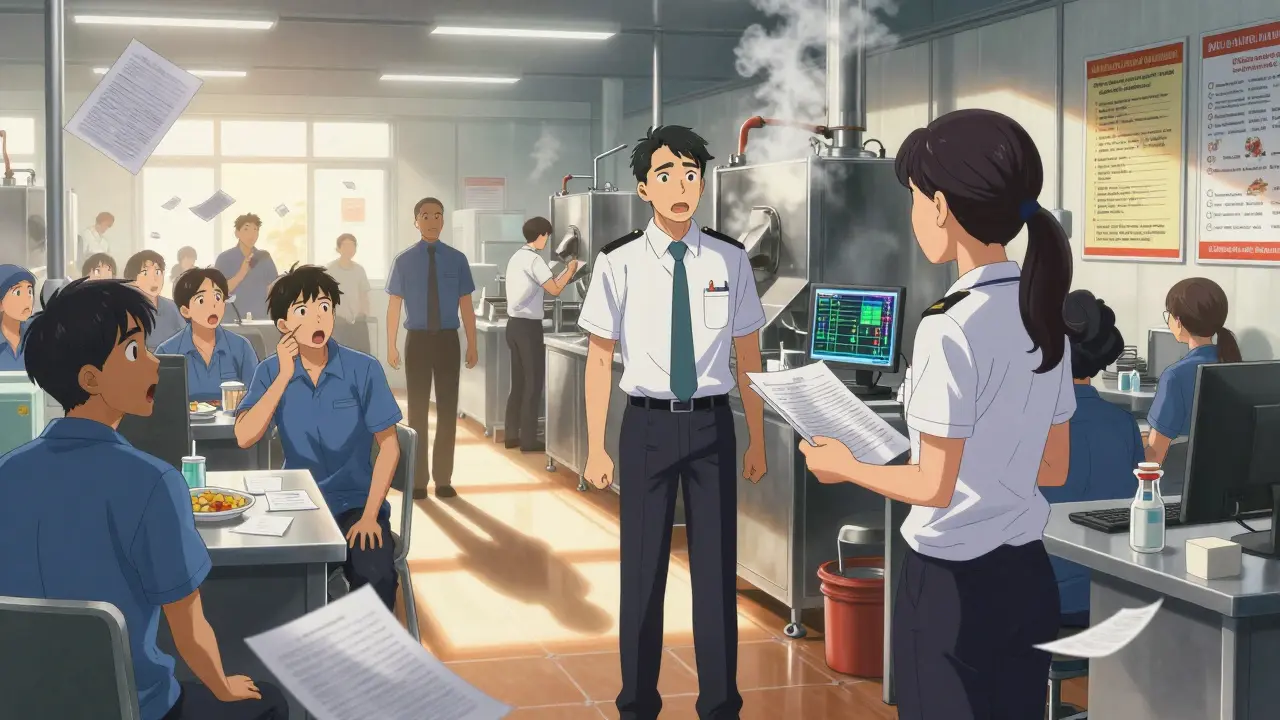
If you run a food factory in India, Vietnam, or Mexico and ship products to the U.S., your life just got a lot more complicated. Starting in 2024, the U.S. Food and Drug Administration stopped giving foreign facilities advance notice before inspections. No more warning calls. No more time to clean up, hire translators, or hide paperwork. The same rule now applies to overseas plants as it does to U.S. factories: inspections happen when they happen.
This isn’t a minor tweak. It’s a complete overhaul of how the FDA ensures the safety of the 15% of America’s food supply that comes from abroad. For years, foreign facilities had a built-in advantage: they knew when inspectors were coming. Domestic plants didn’t. That double standard is over. And if your facility isn’t ready, your products could be blocked at the border-or worse, your company could face criminal charges.
Why the FDA Changed the Rules
The shift didn’t come out of nowhere. In 2011, Congress passed the FDA Food Safety Modernization Act (FSMA), which gave the agency new power to prevent food safety problems before they happen. But for over a decade, enforcement lagged. Budget cuts under the Trump administration slashed foreign inspections to historic lows. ProPublica reported in 2018 that the FDA was inspecting fewer than 2% of registered foreign facilities each year. Meanwhile, imports kept growing. Today, over 300,000 foreign food facilities are registered with the FDA, and nearly 32% of fresh produce consumed in the U.S. comes from overseas.
FDA Commissioner Martin A. Makary called the old system “a double standard.” Why should American factories be held to strict, surprise inspection standards while foreign ones got weeks of notice to prepare? The answer was simple: they shouldn’t. The new policy aims to level the playing field. If your facility exports to the U.S., you’re expected to be inspection-ready every single day-not just when you know someone’s coming.
How the FDA Picks Who Gets Inspected
The FDA doesn’t inspect every foreign facility every year. It can’t. With 300,000 registered sites and only a few hundred inspectors, they have to be smart about who they target. Here’s how they decide:
- Food type risk - Raw seafood, sprouts, and nut butters are high-risk. Canned goods and baked snacks are lower risk.
- Process complexity - Facilities that do pasteurization, fermentation, or allergen handling get more scrutiny than those that just package pre-made products.
- Compliance history - If your products have been refused entry into the U.S. before, you’re on the list. Repeat offenders get top priority.
Under FSMA, the FDA was supposed to double foreign inspections every year for five years after 2011. That didn’t fully happen due to funding and staffing issues. But now, with renewed political and public pressure, the agency is back on track. In 2024, pilot programs in China and India showed that unannounced inspections found more violations than scheduled ones-especially around record-keeping and sanitation.
What Happens During a Surprise Inspection
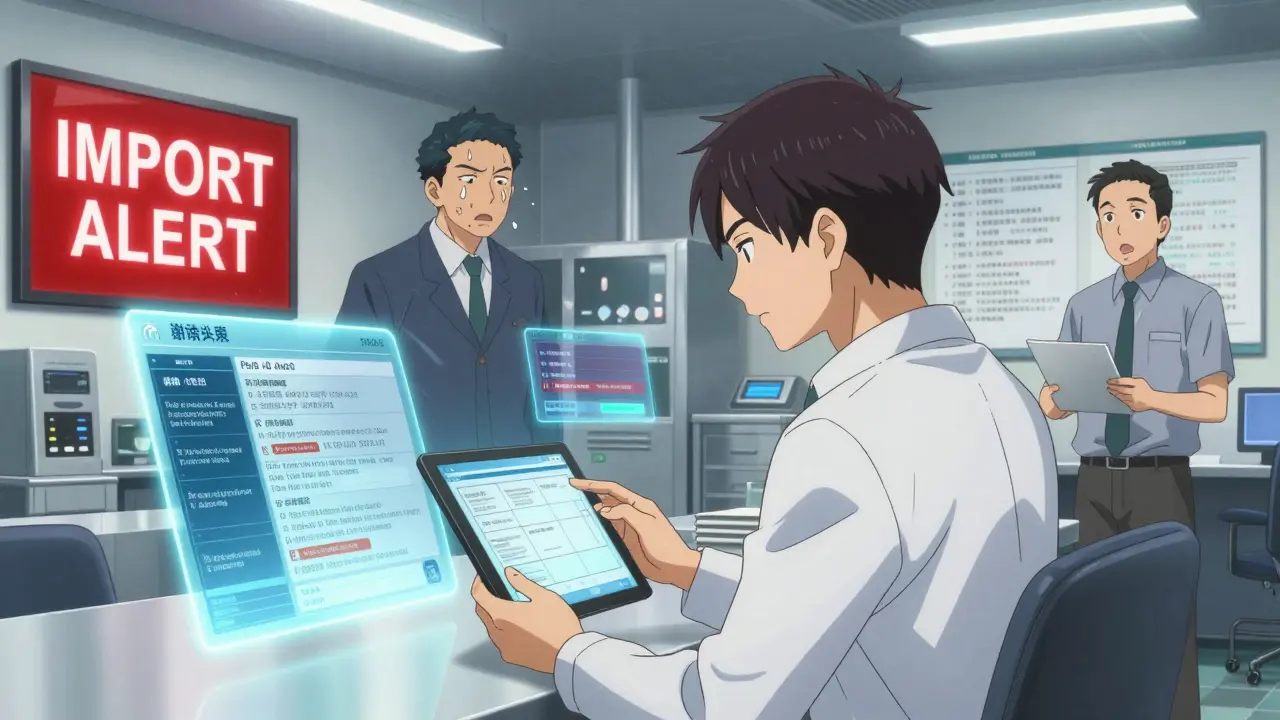
When an FDA inspector walks into your facility without warning, they’re not there to chat. They’re there to verify compliance with the Federal Food, Drug, and Cosmetic Act (FDCA) and Current Good Manufacturing Practices (21 CFR 117). Here’s what they’ll check:
- Are your sanitation procedures documented and followed?
- Do your employees wear proper protective gear?
- Are allergens properly separated to avoid cross-contact?
- Can you produce real-time records of temperature logs, cleaning schedules, and supplier approvals?
- Are your water sources tested and safe?
They’ll ask to see everything. No redactions. No delays. No “we’ll get that in a few hours.” The FDA inspector has the legal right to photograph equipment, review records on the spot, and observe any part of the production line-even if you don’t want them to.
And here’s the catch: if you refuse, delay, or limit access, you’re breaking the law. That’s not a warning. That’s a criminal offense. The U.S. Department of Justice can pursue fines, asset forfeiture, and even debarment from exporting to the U.S. ever again.
The New Rules No One Talks About
There’s another change that’s quietly causing panic among foreign manufacturers: FDA inspectors can no longer accept rides, hotels, or meals from the companies they inspect.
Before, it was common for factories to arrange taxis, book hotels, and even pay for meals for inspectors. It was seen as good hospitality. Now, it’s a conflict of interest. The FDA requires inspectors to pay for their own travel and lodging. That means:
- Inspections may happen on weekends or holidays when local transport is scarce.
- Inspectors might arrive without translators-expecting you to have bilingual staff ready.
- There’s no more “buffer time” to prepare.
This policy was introduced to ensure inspectors remain impartial. But for small factories in countries where English isn’t widely spoken, it’s a nightmare. One facility in Vietnam reported an inspector showing up at 7 a.m. on a Sunday with no translator, demanding documents in English. They couldn’t produce them. The shipment was refused.
How to Get Ready-Before It’s Too Late
There’s no grace period. If you’re exporting to the U.S., you need to be ready now. Here’s what successful facilities are doing:
- Train your staff daily - Every employee, from the line worker to the warehouse manager, must know what to do if an FDA inspector shows up. Conduct monthly drills.
- Hire bilingual QA staff - Don’t rely on temporary translators. Have at least one person on-site who can communicate clearly in English about food safety protocols.
- Digitalize your records - Paper logs get lost. Cloud-based systems with real-time access are now mandatory. Use platforms that allow remote viewing by FDA investigators if needed.
- Conduct mock inspections - Hire a third-party auditor to surprise-inspect your facility every quarter. Treat it like a fire drill.
- Know your rights-and your limits - You can’t refuse an inspection. But you can ask for an official notice of inspection. If they don’t show one, ask for their credentials. Document everything.
Facilities that adopted these steps saw their refusal rates drop by over 60% in 2024. Those that didn’t? Their shipments are sitting in customs, or worse-getting destroyed.
What Happens If You’re Refused Entry
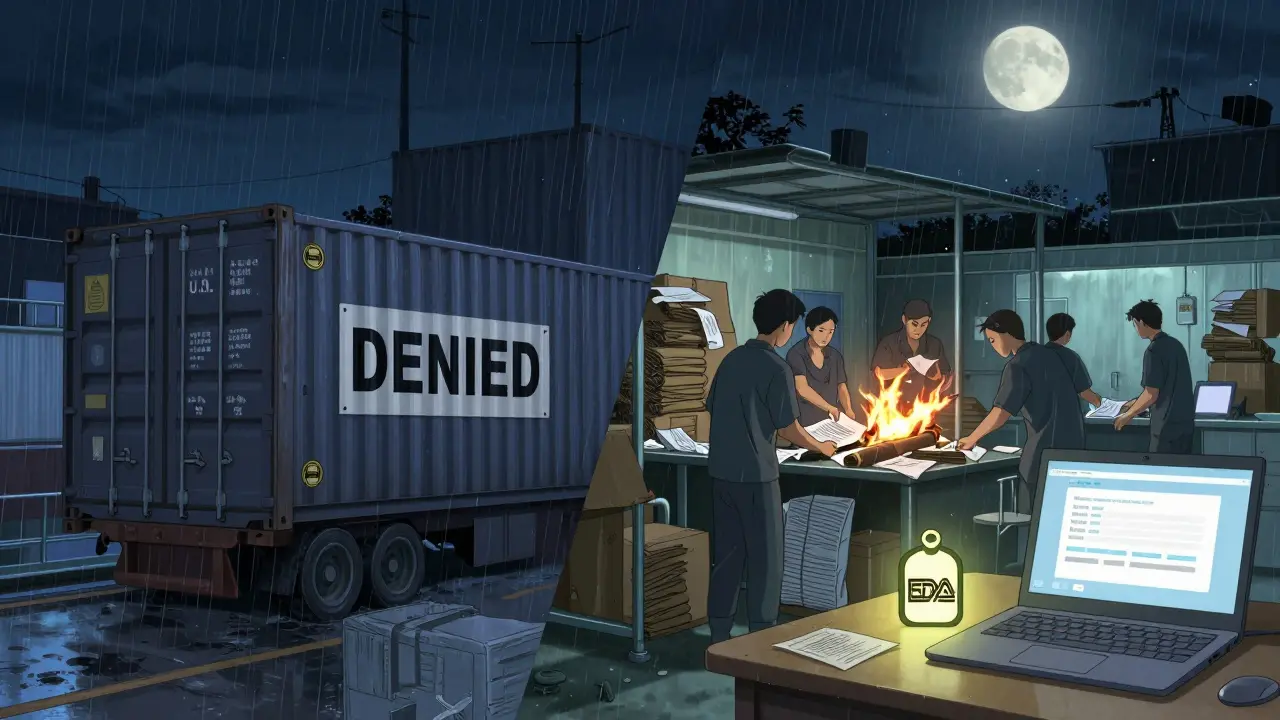
If the FDA finds violations during an inspection, they can refuse admission of your products. That means your shipment is turned away at the port. You lose the product, the shipping cost, and the customer trust.
But refusal is just the beginning. If this happens repeatedly, you’ll be placed on the FDA’s “Import Alert” list. That means every future shipment from your facility will be automatically detained-no exceptions. You’ll need to prove compliance over months of inspections before you’re taken off the list.
And if you obstruct an inspection-by hiding records, shutting down equipment, or refusing photography-you could be criminally prosecuted. The FDA has worked with the Department of Justice to bring charges against foreign companies before. One facility in India was fined $2.3 million in 2023 for deleting digital logs during an inspection.
The Bigger Picture: Global Standards Are Rising
The FDA isn’t alone in tightening oversight. The European Union, Canada, Japan, and Australia are all moving toward unannounced inspections. The U.S. is just ahead of the curve.
For large multinational food companies, this is manageable. They already have global compliance teams. But for small and medium-sized exporters-especially those in developing countries-the pressure is intense. Many are choosing to exit the U.S. market rather than invest in compliance.
That’s not the FDA’s goal. They want safe food. They don’t want to shut down businesses. But they won’t compromise on safety. The message is clear: if you want to sell to America, you must meet American standards. No exceptions. No shortcuts.
What’s Next for FDA Inspections
The FDA is already testing new tools to handle the scale of the problem:
- Third-party inspectors - Certified private auditors may soon conduct inspections under FDA supervision, especially in high-volume regions like Southeast Asia.
- AI-powered risk scoring - Algorithms will analyze shipment history, supplier data, and past violations to predict which facilities are most likely to fail.
- Remote digital inspections - Some facilities may soon be required to stream live video of critical processes during inspections.
The goal is to make inspections more efficient-not more punishing. But for now, the message is simple: be ready. Every day. All year.
Do foreign food facilities still get advance notice for FDA inspections?
No. As of May 2024, the FDA eliminated advance notice for all foreign food facility inspections. This change aligns foreign inspections with U.S. domestic practices, where surprise inspections are the norm. Facilities can no longer schedule time to clean, hire translators, or prepare documents in advance. Inspections now happen without warning.
What happens if a foreign facility refuses an FDA inspection?
If a foreign facility refuses, delays, or limits an FDA inspection, the agency can legally refuse entry of all food products from that facility into the United States. Under Section 306 of the FDA Food Safety Modernization Act (FSMA), refusal of inspection is grounds for automatic detention of shipments. Repeated refusals can lead to placement on the FDA’s Import Alert list, and in extreme cases, the U.S. Department of Justice may pursue criminal charges for obstruction.
Can FDA inspectors accept travel help from the facilities they inspect?
No. Since 2024, FDA inspectors are prohibited from accepting lodging, transportation, meals, or any other form of hospitality from inspected facilities. This rule was implemented to prevent conflicts of interest and ensure inspections remain impartial. Inspectors must pay for their own travel and accommodations, which can make surprise inspections more logistically challenging for both parties.
How often does the FDA inspect foreign food facilities?
There’s no fixed schedule. Inspections are risk-based and unannounced. High-risk facilities-those producing raw seafood, sprouts, or allergen-containing products, or with a history of violations-are inspected more frequently. The FDA aims to inspect all registered foreign facilities over a 5-year cycle, but with over 300,000 registered sites and limited staff, many facilities may go years without an inspection unless flagged by risk factors.
What documents should a foreign food facility always have ready?
A foreign facility must always have accessible, real-time records of: sanitation procedures, allergen control plans, supplier verification logs, temperature monitoring data, employee training records, and corrective action reports. These must be available in English or immediately translatable. Digital systems with cloud access are strongly recommended. Paper records are acceptable but must be organized and retrievable within minutes.
Are there any exceptions to the unannounced inspection rule?
No formal exceptions exist. Even facilities with perfect compliance histories are subject to unannounced inspections. The FDA does not offer “good standing” exemptions. However, facilities with strong records may be inspected less frequently based on risk scoring. But they still have no advance notice. The only guaranteed way to avoid inspection is to stop exporting to the U.S.





Sue Latham
January 28, 2026 AT 01:15Jess Bevis
January 28, 2026 AT 17:28Rose Palmer
January 30, 2026 AT 13:58Howard Esakov
January 31, 2026 AT 00:41Kathy Scaman
January 31, 2026 AT 17:53Bryan Fracchia
February 1, 2026 AT 16:41Lance Long
February 3, 2026 AT 15:55Katie Mccreary
February 3, 2026 AT 19:44SRI GUNTORO
February 4, 2026 AT 12:48Kevin Kennett
February 5, 2026 AT 11:56Mindee Coulter
February 6, 2026 AT 13:11Rhiannon Bosse
February 7, 2026 AT 19:23Timothy Davis
February 9, 2026 AT 10:34