

You have been taking the same medication for years. It works. You trust it. Then your doctor or pharmacy suggests a switch to a new drug with a different name, claiming it is cheaper and just as good. Your heart sinks. Is this safe? Will it still work? This hesitation is real, and it is stopping millions of patients from accessing life-saving treatments that could save them thousands of dollars.
The drug in question is likely a biosimilar, which is a biologic medical product highly similar to an already approved reference biologic product, with no clinically meaningful differences in terms of safety, purity, and potency. Despite rigorous testing proving their safety, adoption rates remain stubbornly low-often below 10% for medications where biosimilars are available. The gap between scientific evidence and patient comfort is wide, but it is bridgeable. Understanding what these drugs actually are, how they differ from generics, and why they matter can transform fear into confidence.
What Exactly Is a Biosimilar?
To understand why you might feel hesitant, you first need to know what you are dealing with. A biosimilar is not a copy-paste job like a traditional generic pill. Biologics are complex molecules made from living organisms-think yeast, bacteria, or mammalian cells. Because they come from life, every batch has tiny, natural variations. A biosimilar must be "highly similar" to the original reference product, with no clinically meaningful differences in safety, purity, or potency.
This distinction is crucial. Unlike small-molecule drugs (like aspirin), which are chemically synthesized and identical across brands, biologics are large, intricate structures. The regulatory pathway established by the Biologics Price Competition and Innovation Act (BPCIA) of 2009 created the framework for approving these products in the United States. The FDA’s first approval came in March 2015 with Zarxio. As of April 2025, there are 74 FDA-approved biosimilars. These approvals are not given lightly; they require extensive analytical, preclinical, and clinical studies to prove similarity.
Biosimilars vs. Generics: Why the Confusion?
Many patients assume a biosimilar is just a "generic biologic." This is a common misconception that fuels anxiety. Let’s break down the difference clearly.
| Feature | Generic Drug | Biosimilar |
|---|---|---|
| Source | Chemically synthesized | Derived from living organisms |
| Similarity | Identical molecular structure | Highly similar, no clinically meaningful differences |
| Development Cost | $2-3 million | $100-250 million |
| Time to Market | 3-4 years | 8-10 years |
| Regulatory Pathway | Abbreviated New Drug Application (ANDA) | Biosimilar License Application (BLA) |
Generics are cheap because making them is straightforward. You replicate the chemical formula. Biosimilars are expensive to develop because you have to grow living cells and prove that the resulting protein folds correctly and functions identically. However, once developed, they offer significant cost advantages. Studies show biosimilars can provide approximately 35% savings over originator products when covered under medical benefits. For pegfilgrastim, a drug used to boost white blood cell counts during chemotherapy, biosimilars led to 47-59% lower out-of-pocket costs for patients in the first treatment cycle.
Why Do Patients Hesitate?
If the science says they are safe and effective, why do people say no? The answer lies in psychology, communication gaps, and systemic issues.
Lack of Awareness: Only 31% of patients living with chronic conditions are aware of biosimilars, according to the Evernorth Research Institute’s 2025 survey. Compare that to 64% of healthcare professionals who know about them. If you don’t know something exists, you can’t trust it.
Fear of the Unknown: A 2025 study in the Journal of Managed Care & Specialty Pharmacy found that 79% of patients expressed concerns about biosimilar efficacy. Another 63% worried about side effects different from the reference product. One user on Reddit’s r/Pharmacy community shared a terrifying experience: "My doctor switched me to a biosimilar for Humira without telling me, and I had a flare-up. Now I'm terrified to switch medications again even if it's cheaper." Stories like this spread quickly and create deep-seated distrust.
The Nocebo Effect: When patients doubt a treatment, they may experience negative symptoms simply because they expect them. This is called the nocebo effect. If a patient believes a biosimilar is "inferior," their body may react negatively, reinforcing the bias against the drug. Real-world data tracking disease-specific biomarkers helps combat this by providing objective proof that the treatment is working.

The Cost Paradox: Are You Actually Saving Money?
Here is where things get complicated. While biosimilars generate billions in system-wide savings-estimated at $56 billion over the past decade-these savings do not always reach your wallet. A cohort study examining seven clinician-administered biologics found that annual out-of-pocket spending did not decrease after biosimilar competition began. For infliximab, early biosimilar competition was not linked to lower patient costs.
Why? Pharmacy Benefit Managers (PBMs) and insurance plans often keep co-pays high to maintain revenue streams. In April 2024, CVS excluded Humira from most commercial formularies, forcing a shift to biosimilars. This caused a 2.3 percentage point decrease in the median allowed cost of all biologic drugs through August 2024. Yet, patient satisfaction scores dropped by 15%. The system saved money, but patients felt unheard and anxious. Transparency is key. Providers need to explain not just that the drug is cheaper, but how it affects the patient’s specific financial situation.
How to Build Confidence in Biosimilars
Reducing hesitation requires action from both healthcare providers and patients. Here are practical steps to take.
- Ask Questions Early: Don’t wait until the prescription arrives. Ask your doctor, "Is there a biosimilar option for my condition?" and "What does the data say about its effectiveness compared to the brand name?" Knowledge reduces fear.
- Understand Interchangeability: In 2024, Dr. James Wilson, Director of the FDA's Office of Therapeutic Biologics and Biosimilars, stated that the FDA's position is that all biosimilars in the US should be interchangeable. This means pharmacists can substitute them without additional prescriber intervention, provided state laws allow it. Ask if your biosimilar has this designation.
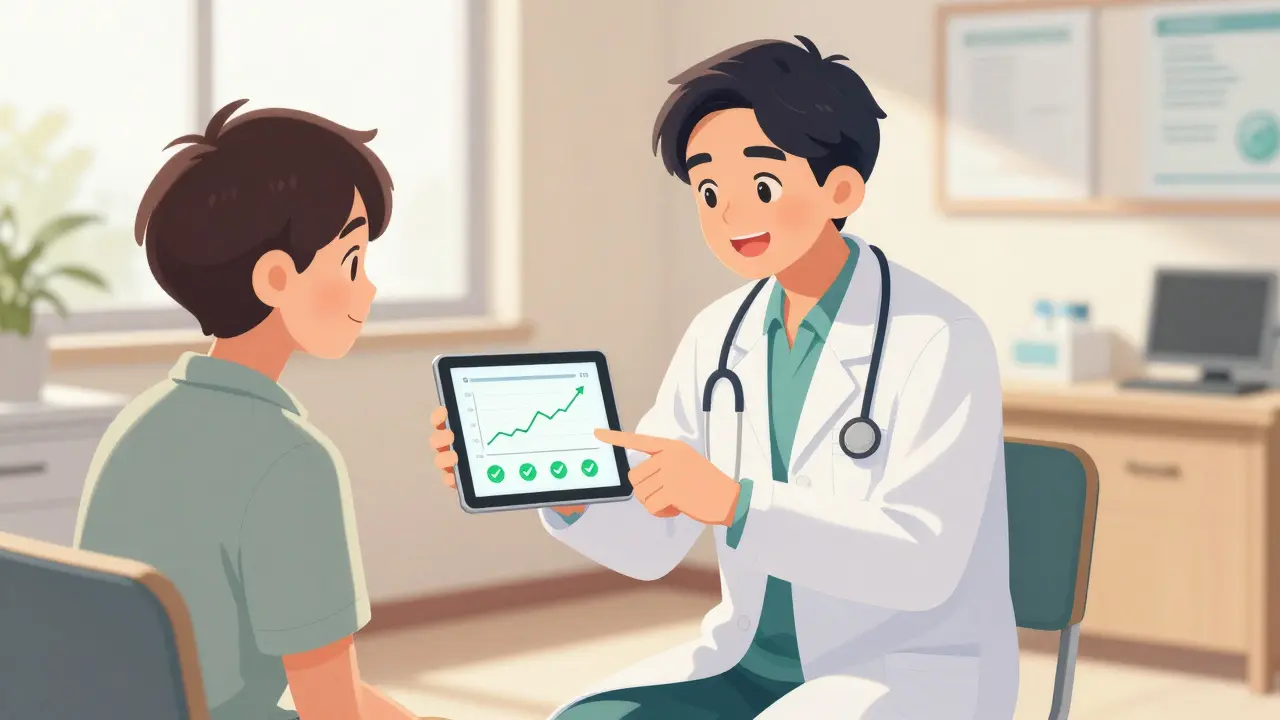
- Track Your Biomarkers: Work with your provider to monitor disease activity through blood tests or other metrics. If your inflammatory markers drop or stay stable on the biosimilar, you have concrete evidence it is working. This counters the nocebo effect.
- Seek Second Opinions on Education: If your provider dismisses your concerns, seek one who will listen. The Center for Biosimilars found that expanded definitions significantly improved healthcare professional attitudes. Providers who understand the science better communicate it better.
The Future of Biosimilar Adoption
The landscape is shifting. Between 2025 and 2034, approximately 118 biologic molecules representing nearly $232 billion in combined US sales will lose exclusivity. This creates a massive opportunity for biosimilars to enter the market. Segal Consulting projects that biosimilar market share will increase to 30-40% for targeted therapies by 2027. Dr. Lisa Chen, Director of the Evernorth Research Institute, predicts that as real-world evidence accumulates, patient and provider confidence will grow, leading to adoption rates exceeding 50% by 2030.
New regulations are also helping. The FDA’s 2024 draft guidance aims to streamline biosimilar approval by reducing the need for comparative efficacy studies, focusing instead on analytical assessments. This could lower development costs and time, addressing the "biosimilar void" where 27% of high-value biologics currently lack biosimilar options. However, challenges remain. Pharmaceutical manufacturers continue to employ "pay-for-delay" strategies that delay biosimilar entry by an average of 18 months. Policy reforms addressing PBM influence and increased transparency are essential to ensure patients benefit from these innovations.
Conclusion: Taking Control of Your Health
Hesitation is natural when it comes to changing a trusted medication. But ignoring biosimilars means missing out on proven, safe, and potentially more affordable care. By understanding the science, asking the right questions, and monitoring your health outcomes, you can make an informed decision. The goal is not just to save money for the healthcare system, but to improve access and quality of life for patients like you. Trust the data, engage with your provider, and take charge of your treatment journey.
Are biosimilars as safe as the original biologic drugs?
Yes. Biosimilars undergo rigorous testing by the FDA to demonstrate no clinically meaningful differences in safety, purity, or potency compared to the reference product. They are held to the same high standards as original biologics.
Can I switch back to the brand-name drug if the biosimilar doesn't work?
In many cases, yes. However, switching frequently between biologic drugs can sometimes lead to immune responses. It is important to discuss this possibility with your doctor before starting a biosimilar and to monitor your response closely.
Why are biosimilars more expensive to develop than generics?
Biosimilars are made from living cells, which introduces natural variability. Proving that a biosimilar is highly similar to the reference product requires complex analytical studies, animal tests, and clinical trials, costing $100-250 million and taking 8-10 years, compared to $2-3 million and 3-4 years for generics.
Will my insurance cover a biosimilar?
Most insurance plans prefer biosimilars due to lower costs and often place them on preferred formulary tiers. However, coverage varies by plan. Check with your insurer to understand your specific copay and prior authorization requirements.
What is the "nocebo effect" in relation to biosimilars?
The nocebo effect occurs when negative expectations about a treatment cause actual negative symptoms. If a patient doubts a biosimilar's efficacy, they may report worse outcomes despite the drug working effectively. Objective biomarker testing can help counteract this psychological phenomenon.