

Statin Diabetes Risk Assessment Tool
Select Your Statin & Dosage
Click to select your current or prescribed statin medication and intensity level.
Moderate to High Intensity
Moderate to High Intensity
Moderate Intensity
Low to Moderate Intensity
Low to Moderate Intensity
Personal Health Factors
Check all factors that apply to your current health status.
You take your daily pill to protect your heart, lower your cholesterol, and prevent a stroke. It’s a routine that saves lives for millions of people. But recently, you’ve noticed something unsettling on your lab results: your blood sugar levels are creeping up. Maybe your doctor mentioned prediabetes, or perhaps you’re already managing type 2 diabetes and seeing higher numbers than usual. You might be wondering if the medication you trust is secretly working against your metabolic health.
The short answer is yes, there is a link. Statins, the most widely prescribed class of drugs for lowering cholesterol, have been scientifically proven to cause a small but measurable increase in blood glucose. This doesn’t mean you should stop taking them-far from it. Understanding this relationship helps you manage both your heart and your metabolism more effectively.
How Statins Affect Your Body’s Glucose Processing
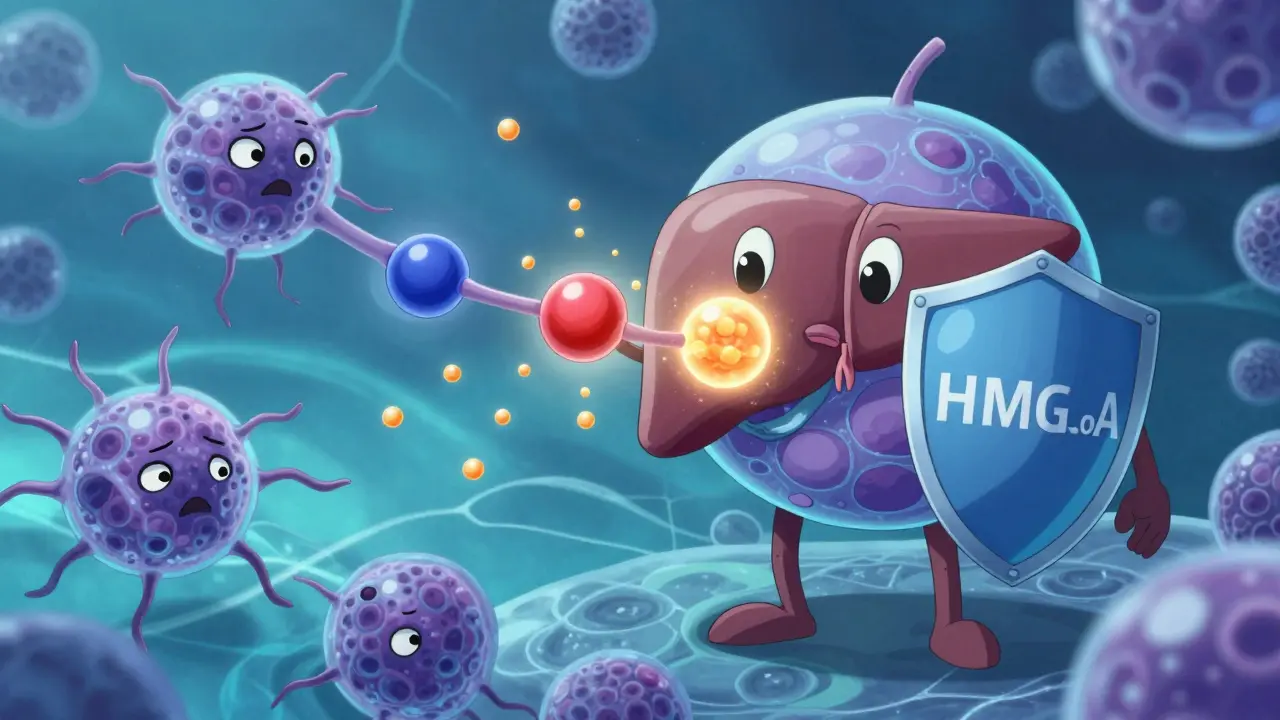
To understand why statins raise blood sugar, we need to look at what they do inside your cells. Statins work by blocking an enzyme called HMG-CoA reductase. This blockage stops your liver from producing cholesterol, which is great for your arteries. However, this same process interrupts the production of other essential molecules, including Coenzyme Q10 (CoQ10) and various isoprenoids like geranylgeranyl pyrophosphate.
These molecules play a crucial role in how your cells respond to insulin. When their production drops, two things happen. First, your muscles and fat cells become less sensitive to insulin, meaning they don’t absorb sugar from your bloodstream as efficiently. Second, the beta cells in your pancreas-the ones responsible for secreting insulin-become dysfunctional. Research published in the NIH’s PMC database involving over 8,700 participants showed that statin users experienced a 24% decrease in insulin sensitivity and a 12% drop in insulin secretion. Essentially, your body struggles to move sugar into cells, leaving more of it floating in your blood.
The Dose Matters: High-Intensity vs. Moderate Therapy
Not all statins carry the same risk profile. The likelihood of developing diabetes while on statins is directly tied to the dose and potency of the specific drug you are taking. Studies from Oxford Population Health reveal a clear gradient in risk:
- Low-dose statins: Associated with a roughly 10% increased risk of new-onset diabetes compared to placebo.
- High-dose statins: Associated with a 36% increased risk of new-onset diabetes.
This distinction matters when choosing between medications like Atorvastatin (Lipitor) and Rosuvastatin (Crestor), which are often prescribed at high intensities for aggressive cholesterol lowering. For patients who already have diabetes, high doses can worsen glycemic control by up to 24%. If your cardiovascular risk allows for it, doctors may opt for moderate-intensity statins like Pravastatin or lower-dose Atorvastatin to balance heart protection with metabolic stability.
| Statin Type | Intensity Level | Diabetes Risk Profile | Common Uses |
|---|---|---|---|
| Atorvastatin (Lipitor) | Moderate to High | Moderate to High | Aggressive LDL reduction, post-heart attack |
| Rosuvastatin (Crestor) | Moderate to High | Moderate to High | Severe hypercholesterolemia, high CV risk |
| Pravastatin (Pravachol) | Low to Moderate | Lower | Patients with existing diabetes or metabolic syndrome |
| Simvastatin (Zocor) | Moderate | Moderate | General primary prevention |
Who Is Most at Risk?
If you have perfect metabolic health, the impact of statins on your blood sugar is likely negligible. The risk concentrates heavily in individuals who already possess underlying metabolic vulnerabilities. Dr. Steven Nissen from the Cleveland Clinic notes that several factors amplify this risk:
- Prediabetes: If your fasting glucose is already elevated (100-125 mg/dL), statins can push you over the diagnostic threshold for type 2 diabetes.
- Central Obesity: Excess visceral fat around the abdomen increases inflammation and insulin resistance, compounding the effects of statins.
- Metabolic Syndrome: A cluster of conditions including high blood pressure, high triglycerides, and low HDL cholesterol.
- Genetics: Recent studies in Nature Medicine (2023) identified variants in the SLCO1B1 gene that may make certain individuals more susceptible to statin-induced metabolic changes.
If you fall into any of these categories, your doctor will likely monitor your Hemoglobin A1c and fasting glucose more closely before and after starting statin therapy.
Weighing the Risks: Heart Protection vs. Diabetes
It is natural to feel anxious about a medication that seems to trigger a new chronic condition. However, medical consensus is overwhelming: the benefits of statins vastly outweigh the risks for almost everyone who needs them. The American Heart Association and American Diabetes Association jointly affirm that preventing atherosclerotic cardiovascular disease (ASCVD) is the priority.
Consider the numbers. Statin therapy reduces the absolute risk of major vascular events (heart attacks, strokes) by approximately 1.5% over five years. In contrast, the annual absolute increase in diabetes risk is only about 0.1% to 0.2%. Furthermore, if you do develop diabetes while on a statin, you are still significantly protected against the deadly complications of diabetes, such as heart failure and stroke. In fact, statins reduce cardiovascular mortality in diabetic patients by nearly 30%. Stopping your statin because of fear of diabetes would leave you far more vulnerable to immediate life-threatening cardiac events.

Managing Blood Sugar While on Statins
You don’t have to accept rising blood sugar as an inevitable side effect. There are practical steps you can take to mitigate the metabolic impact of statins without compromising your heart health.
- Optimize Your Diet: Focus on low-glycemic foods. Reducing refined carbohydrates and added sugars helps keep insulin demand low, counteracting the slight decrease in insulin sensitivity caused by statins.
- Increase Physical Activity: Exercise is one of the most powerful tools for improving insulin sensitivity. Aim for at least 150 minutes of moderate aerobic activity per week, combined with strength training twice a week. Muscle contraction pulls glucose out of the bloodstream independent of insulin.
- Maintain a Healthy Weight: Losing even 5-10% of your body weight can dramatically improve insulin response and offset statin-related glucose rises.
- Monitor Regularly: Don’t wait for symptoms. Check your fasting glucose and HbA1c annually, or more frequently if you have prediabetes. Early detection allows for minor lifestyle adjustments before medication changes are needed.
- Discuss Dosage Adjustments: If your blood sugar rises significantly, ask your doctor if a lower dose or a different statin (like Pravastatin) could provide similar cardiovascular protection with less metabolic impact.
Some researchers also suggest that supplementing with CoQ10 might help, since statins deplete natural levels. While evidence is mixed, it is generally safe and may support mitochondrial function in muscle cells.
When to Reconsider Your Medication
In rare cases, the metabolic side effects may be too severe. If you experience rapid progression from prediabetes to full-blown type 2 diabetes despite strict lifestyle management, your healthcare provider might consider alternative lipid-lowering therapies. Options include Ezetimibe, which blocks cholesterol absorption in the gut, or PCSK9 inhibitors, which are injectable drugs used for very high-risk patients. These alternatives do not carry the same diabetes risk, though they are often more expensive and reserved for specific clinical scenarios.
Never stop taking your statin abruptly. Sudden discontinuation can lead to a rebound increase in cholesterol and inflammation, raising your immediate risk of a heart attack or stroke. Any change must be guided by a thorough risk-benefit analysis with your physician.
Do all statins increase the risk of diabetes equally?
No. The risk is dose-dependent and varies by type. High-intensity statins like Atorvastatin and Rosuvastatin carry a higher risk of increasing blood sugar compared to moderate or low-intensity options like Pravastatin or Fluvastatin. Patients with existing metabolic issues may benefit from lower-dose regimens.
Can I reverse statin-induced diabetes?
In some cases, yes. If the diabetes was primarily driven by the statin's effect on insulin sensitivity, discontinuing the medication under medical supervision may allow blood sugar levels to return to baseline. However, this decision must weigh the significant cardiovascular risks of stopping statin therapy. Lifestyle changes like weight loss and exercise are critical for reversal.
Should I avoid statins if I have prediabetes?
Generally, no. Major health organizations, including the American Heart Association and American Diabetes Association, recommend statins for patients with prediabetes who have other cardiovascular risk factors. The protection against heart attack and stroke far outweighs the modest increase in diabetes risk. Close monitoring of blood sugar is advised.
How quickly does statin use affect blood sugar?
Changes in blood glucose can occur within the first few months of starting statin therapy. Studies show that insulin sensitivity decreases relatively early, which is why baseline testing and follow-up checks at 3-6 months are standard practice for patients with metabolic risk factors.
Are there non-statin alternatives for lowering cholesterol?
Yes. Alternatives include Ezetimibe, bile acid sequestrants, and PCSK9 inhibitors. These medications work through different mechanisms and do not typically raise blood sugar. However, they are often used in combination with statins or reserved for patients who cannot tolerate statins due to severe side effects.