

Imagine your skin cells turning over faster than a speeding car. Instead of the usual month-long cycle, new cells rush to the surface in just three or four days. They pile up, creating thick, red patches covered in silvery scales. This is not just a cosmetic issue; it is psoriasis, an immune-mediated chronic inflammatory disease affecting the skin and joints. If you are living with this condition, you know that the itch can be relentless, and the visible plaques can feel isolating. But here is the good news: while there is no cure yet, modern medicine has shifted from simply covering up symptoms to actually controlling the underlying inflammation. You have more options now than ever before.
The goal of this guide is to help you navigate those options. We will break down daily skin care habits that soothe irritation, explain how systemic therapies work when creams aren't enough, and look at the latest treatments available in 2026. Whether you are newly diagnosed or looking for a change in your current regimen, understanding these tools puts you back in the driver's seat.
Understanding the Psoriasis Cycle
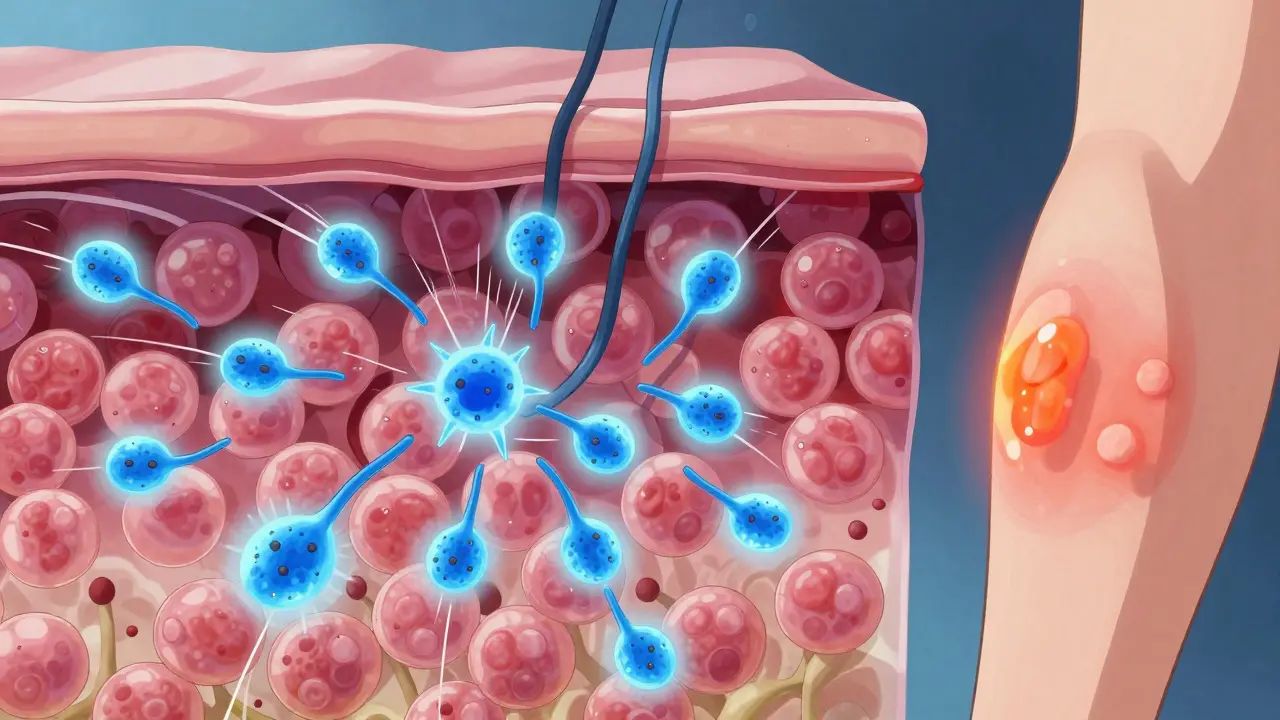
To treat psoriasis effectively, you first need to understand what is happening under the surface. It is not caused by poor hygiene or diet alone. It is an autoimmune disorder. Your immune system mistakenly attacks healthy skin cells, triggering a rapid production cycle. Normally, skin cells take about 28 to 30 days to mature and shed. In psoriasis, that process accelerates to 3 to 4 days. The old cells don't have time to fall off, so they build up into plaques.
This process is driven by T-cells, a type of white blood cell. When they become overactive, they release inflammatory signals. Genetics play a huge role here, with heritability estimated between 60% and 90%. However, genes are just the loaded gun; environment pulls the trigger. Common triggers include stress, skin injuries (like cuts or bug bites), infections, and certain medications. Identifying your personal triggers is one of the most powerful steps you can take to reduce flares.
| Type | Appearance | Common Locations | Prevalence |
|---|---|---|---|
| Plaque Psoriasis | Raised, red patches with silvery scales | Elbows, knees, scalp, lower back | 80-90% of cases |
| Guttate Psoriasis | Small, drop-like spots | Torso, arms, legs | 8% of cases |
| Inverse Psoriasis | Smooth, inflamed red patches | Skin folds (groin, armpits, under breasts) | 3-7% of cases |
| Pustular Psoriasis | White pustules surrounded by red skin | Palms, soles, or widespread | Less than 3% |
| Erythrodermic Psoriasis | Widespread redness and shedding | Entire body | Less than 2% (Medical Emergency) |
Daily Skin Care: The Foundation of Control
Before jumping to heavy-duty medications, solidify your daily routine. Think of this as building a strong wall to keep irritants out and moisture in. For many people with mild psoriasis, diligent skin care is enough to keep flares at bay. Even if you use stronger treatments, these habits support your skin’s health.
Moisturize aggressively. Dry skin itches more, and scratching worsens psoriasis through a phenomenon called the Koebner response, where new lesions form on injured skin. Apply a thick, petrolatum-based ointment or cream immediately after bathing while your skin is still damp. This locks in water. Avoid lotions that are mostly water and alcohol, as they evaporate quickly and can sting.
Shower smart. Hot water strips natural oils from your skin. Stick to lukewarm showers and limit them to 10 minutes. Use gentle, fragrance-free cleansers. Do not scrub the plaques hard; this can cause bleeding (known as the Auspitz sign) and trigger more inflammation. Pat dry gently instead of rubbing.
Identify and avoid triggers. Keep a simple journal. Note what you ate, your stress levels, and any skin changes. Did a flare-up happen after a stressful week? Or after trying a new laundry detergent? Patterns often emerge over time. Stress management techniques like mindfulness or regular exercise can significantly reduce flare frequency.
Topical Treatments: First-Line Defense
When moisturizers aren't enough, topical medications are usually the next step. These are applied directly to the skin and work best for mild to moderate cases or localized patches.
- Corticosteroids: These are the most common prescription topicals. They reduce inflammation and itching. Potency varies from low (for face/folds) to high (for thick plaques on elbows/knees). Be careful with long-term use on thin skin areas, as it can cause thinning (atrophy) and visible veins (telangiectasia).
- Vitamin D Analogues: Medications like calcipotriol slow down skin cell growth. They are often combined with steroids for better results. They are safer for long-term use on sensitive areas like the face.
- Tazarotene: A retinoid that normalizes DNA activity in skin cells. It can be irritating, so doctors often start with low doses.
- Calcineurin Inhibitors: Drugs like tacrolimus are non-steroidal options ideal for sensitive areas like the face, groin, and eyelids, where steroids might cause damage.
A major hurdle with topicals is adherence. Applying messy creams twice a day to large areas is tedious. Newer formulations, like foams and solutions, absorb faster and are less greasy. If you find yourself skipping applications, ask your doctor about once-daily options or combination products that simplify the routine.
Systemic Therapy: When Topicals Aren't Enough
If psoriasis covers more than 10% of your body, affects high-impact areas (face, hands, genitals), or doesn't respond to topicals, it is time to consider systemic therapy. These treatments work throughout the entire body, targeting the immune system's root cause rather than just the surface symptoms.
Traditional Systemics: These oral or injected drugs have been around for decades. Methotrexate is a widely used oral medication that suppresses the immune system and slows skin cell turnover. It requires regular blood tests to monitor liver and kidney function. Cyclosporine is a fast-acting immunosuppressant often used for severe flares or erythrodermic psoriasis, but it is not for long-term use due to kidney risks. Acitretin is an oral retinoid derived from vitamin A, often used for pustular psoriasis, but it is strictly avoided in pregnancy due to birth defect risks.
Biologics: This is where the biggest advancements have happened. Biologics are large molecules made in labs that target specific parts of the immune system, like TNF-alpha, IL-17, or IL-23. Because they are precise, they tend to have fewer side effects than traditional systemics that suppress the whole immune system.
- TNF-alpha inhibitors: Examples include adalimumab and etanercept. They block tumor necrosis factor, a protein involved in inflammation.
- IL-17 inhibitors: Drugs like secukinumab and ixekizumab target interleukin-17. They often provide very rapid clearance of skin lesions.
- IL-23 inhibitors: Newer agents like guselkumab and tildrakizumab target interleukin-23. They offer long-lasting relief with convenient dosing schedules (sometimes every 8 to 12 weeks).
Small Molecule Oral Agents: For those who prefer pills over injections, Apremilast is a PDE4 inhibitor that modulates inflammation inside cells. It has a favorable safety profile but may be less potent than biologics for severe cases. Another newer option is deucravacitinib, a TYK2 inhibitor that offers high efficacy with once-daily oral dosing.

The Systemic Impact: More Than Just Skin Deep
You might hear doctors talk about psoriasis as a "multisystem disease." This means the inflammation isn't just staying in your skin. Chronic inflammation travels through your bloodstream, increasing your risk for other conditions.
Psoriatic Arthritis: Up to 30% of people with psoriasis develop joint pain, stiffness, and swelling. If you have morning stiffness lasting more than 30 minutes, tell your dermatologist immediately. Early treatment can prevent permanent joint damage.
Cardiovascular Health: Studies show that people with moderate to severe psoriasis have a higher risk of heart attack and stroke. The inflammation damages blood vessels similarly to diabetes. Regular checks for blood pressure, cholesterol, and blood sugar are essential.
Mental Health: The stigma and discomfort of psoriasis take a toll. Depression and anxiety rates are significantly higher among patients. Seeking support, whether through therapy or support groups, is a valid and important part of treatment.
Making Treatment Decisions in 2026
Choosing the right therapy is personal. It depends on your severity, lifestyle, budget, and other health conditions. Here is a quick decision framework:
- Assess Severity: Is it mild (small patches)? Try topicals + skin care. Moderate to severe (large areas, joints involved)? Consider systemics or biologics.
- Check Comorbidities: Do you have arthritis? An IL-17 or TNF inhibitor might help both skin and joints. Heart disease? Discuss cardiovascular risks with your doctor before starting certain meds.
- Consider Lifestyle: Can you inject yourself? Some biologics require self-injection every few weeks. If needles scare you, oral options like apremilast or deucravacitinib might be better.
- Navigate Insurance: Biologics can be expensive. Work with your insurance provider early. Ask about patient assistance programs from pharmaceutical companies. Generic versions of older biologics (biosimilars) are becoming more available, reducing costs.
Don't settle for "good enough" if you are suffering. The standard of care has moved toward "treat-to-target," aiming for clear or almost clear skin (PASI 90 or 100). If your current treatment isn't working after 3 months, switch. There are too many options to stay stuck.
Is psoriasis contagious?
No, psoriasis is absolutely not contagious. You cannot catch it from touching someone with psoriasis, sharing towels, or swimming together. It is an internal immune system issue, not an infection caused by bacteria or viruses.
How long does it take for systemic therapy to work?
It varies by medication. Traditional systemics like methotrexate can take 8 to 12 weeks to show full effect. Biologics often work faster, with some patients seeing significant improvement within 2 to 4 weeks. Small molecule orals like apremilast typically take 12 to 16 weeks.
Can I stop treatment once my skin clears?
Generally, no. Psoriasis is a chronic condition. Stopping maintenance therapy often leads to a rebound flare, sometimes worse than before. Always consult your doctor before changing your dosage or stopping medication.
Are there dietary changes that help psoriasis?
While no specific diet cures psoriasis, an anti-inflammatory diet can help manage symptoms. Reducing alcohol, processed sugars, and red meat, while increasing omega-3 fatty acids (found in fish) and fruits/vegetables, may reduce overall inflammation. Weight loss also significantly improves treatment effectiveness.
What is PASI score?
PASI stands for Psoriasis Area and Severity Index. It is a tool doctors use to measure how much of your body is affected and how severe the redness, thickness, and scaling are. A PASI 75 means 75% improvement, which is a common goal for clinical trials and treatment success.