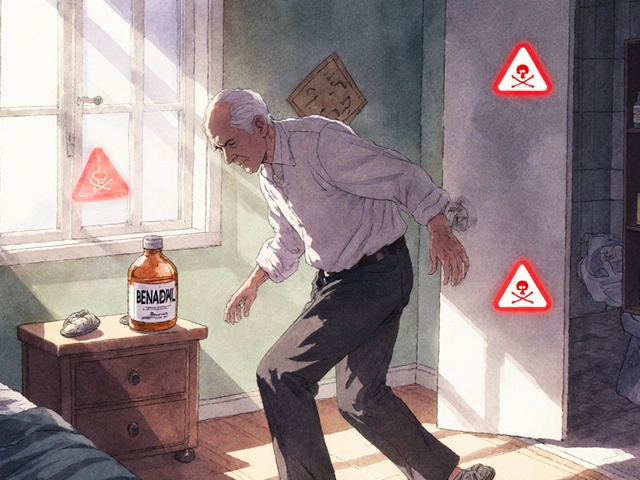

Have you ever picked up a prescription bottle, stared at the small white sticker on the side, and felt a wave of confusion? You see phrases like "Take with food" or symbols that look like little stop signs, but you aren't sure if they are suggestions or strict commands. It is easy to ignore them, especially when you are in a hurry or just want to get on with your day. But those tiny stickers are not just administrative clutter. They are critical safety checkpoints designed to keep you from making dangerous mistakes.
Every year, millions of people in the United States suffer from medication errors. Some of these lead to hospital visits, while others have far more serious consequences. The good news is that many of these errors happen because patients misunderstand what the label is telling them. By learning how to read these warnings correctly, you take control of your health and significantly reduce the risk of adverse reactions.
The Hidden Danger of Medication Errors
We often assume that once a pharmacist hands us a pill bottle, we are safe. However, the journey from prescription to patient is fraught with potential pitfalls. According to data from the Institute of Medicine, medication errors contribute to approximately 1.3 million injuries and 7,000 deaths annually in the United States. That is a staggering number. While doctors and pharmacists work hard to prevent these issues, the final line of defense is often the person holding the bottle: you.
The U.S. Food and Drug Administration (FDA) mandates that all prescription containers bear cautionary statements necessary to prevent injury. This requirement stems from the Federal Food, Drug, and Cosmetic Act of 1938 and was strengthened by the Kefauver-Harris Amendment of 1962. These laws ensure that manufacturers provide specific warning information. Yet, there is a gap between what is written on the label and what patients actually understand. Studies suggest that proper comprehension of warning labels could prevent 30-50% of adverse drug events among the billions of prescriptions filled each year.
The problem is not just about reading speed; it is about interpretation. A study published in U.S. Pharmacist found that nearly 91% of respondents had difficulty understanding simple phrases like "For external use only." Even clearer instructions can be misread. For instance, the instruction "Do not chew or crush, swallow whole" has been interpreted by some patients as meaning they should not swallow the pill at all, or that they should chew it to help it dissolve. These misunderstandings highlight why decoding these labels is essential.
Decoding the Types of Warning Labels
Not all warnings are created equal. The FDA uses a standardized system to categorize risks, but knowing the hierarchy helps you prioritize which instructions need immediate attention. At the top of this hierarchy is the Black Box Warning, also known as a Boxed Warning. This is the most serious type of warning mandated by the FDA. It appears prominently at the top of prescribing information and indicates that there is reasonable evidence of a causal association with a serious adverse reaction that may lead to death or serious injury.
While Black Box Warnings are primarily for healthcare professionals, their presence signals high-risk medications. As of recent years, about 40% of new drugs approved by the FDA included such warnings. If your medication has a Black Box Warning, your doctor and pharmacist will likely discuss it with you in detail. Do not skip this conversation.
Beyond the boxed warnings, you will encounter various textual and visual cues on the actual bottle sticker. Color plays a surprising role here. Research shows that 42% of patients correlate label color with message severity. Red labels are generally interpreted as indicating danger, yellow as caution, and colors like blue, white, or green are seen as less critical recommendations. When you see a red sticker, pause. It usually means there is an immediate risk involved, such as taking the medication with alcohol or operating heavy machinery.
| Warning Text/Symbol | What It Actually Means | Common Misinterpretation |
|---|---|---|
| Take on empty stomach | At least 1 hour before or 2 hours after meals | Just avoid fatty foods |
| Refrigerate | Store between 2-8°C (36-46°F); do not freeze | Keep in the fridge door (temperature fluctuations) |
| Do not operate heavy machinery | May cause significant drowsiness or impaired judgment | Only applies to industrial equipment, not cars |
| Swallow whole | Do not crush, chew, or break the tablet/capsule | Chew thoroughly to aid digestion |
| Avoid sunlight | Medication increases sensitivity to UV rays; risk of severe sunburn | Just stay out of direct noon sun |
Why Symbols Often Fail Us
You might think that pictures are universal, but in the world of pharmaceuticals, symbols can be notoriously confusing. The FDA has worked on standardizing icons, but older labels or those from different manufacturers still vary widely. In one study, the icon accompanying "For external use only" was misinterpreted by 32% of respondents as meaning "radioactive," while 28% thought it indicated "chills or shaking." Another 21% believed it meant "take anywhere."
This is why relying solely on symbols is risky. Verbal instructions combined with visual symbols achieve the highest comprehension rate at 92%, compared to text-only warnings at 78% and symbol-only warnings at a mere 65%. If you see a symbol you do not recognize, do not guess. Ask your pharmacist. They are trained to explain not just what the symbol looks like, but what action you need to take.
The FDA recently approved a standardized icon set for prescription warnings, including a universal "do not crush" symbol. Clinical testing showed this reduced misinterpretation from 31% to just 8%. As these new standards roll out over the next few years, you will start seeing more consistent imagery. Until then, treat unfamiliar symbols with caution and seek clarification.
The Health Literacy Gap
Understanding medical terminology is not a given. The National Assessment of Adult Literacy reports that only 12% of U.S. adults have proficient health literacy. This means that terms like "contraindication" or "adverse reaction" can sound like foreign languages to most people. The FDA acknowledged in a 2019 review that current labeling does not adequately address the challenges faced by the 80 million American adults with limited health literacy.
This gap creates a dangerous environment where well-meaning patients inadvertently harm themselves. For example, a common warning is to "take with food." A Healthline survey found that 42% of respondents ignored this instruction. Why? Perhaps they didn't realize that "food" doesn't mean a full meal; sometimes a cracker is enough. Or maybe they didn't understand that taking certain antibiotics on an empty stomach can cause severe nausea or reduce the drug's effectiveness.
Another frequently ignored warning is "avoid sunlight." About 37% of surveyed patients disregarded this. This is particularly dangerous for medications like tetracyclines or certain diuretics, which can make your skin extremely sensitive to UV rays, leading to severe burns even on cloudy days. Ignoring this isn't just uncomfortable; it can result in medical emergencies.

Practical Steps to Read Labels Correctly
So, how do you bridge the gap between complex medical jargon and daily safety? Start by changing your habits at the pharmacy counter. The average patient spends only 7-12 seconds reviewing a prescription label, according to observational research at CVS pharmacies. That is barely enough time to read the name, let alone the warnings.
Here is a simple three-step process to improve your safety:
- Verify the Physical Description: Before leaving the pharmacy, check that the pills match the description on the label. Note the shape, color, and imprint. If the pills look different from what you expect, ask immediately. This catches dispensing errors early.
- Check for Color-Coded Warnings: Scan the label for red or yellow stickers. These indicate immediate dangers or cautions. Read these first. If you see "Do not drive," take it seriously. Drowsiness can affect your ability to operate a car long before you feel "sleepy."
- Cross-Reference the Patient Information Sheet: Most prescriptions come with a paper insert called Patient Prescribing Information (PPI). While 68% of pharmacists report that patients discard these sheets, they contain vital details. Keep them. Look for sections titled "Warnings and Precautions" or "Drug Interactions."
If anything is unclear, use the "teach-back" method recommended by the American Medical Association. Simply repeat the instructions back to the pharmacist in your own words. For example, say, "So, I need to take this pill with a full glass of water and wait 30 minutes before eating, right?" This technique has been shown to improve warning comprehension by 47%. Pharmacists appreciate this approach because it ensures you leave with the correct information.
Future Trends in Medication Safety
The industry is aware of these comprehension gaps, and changes are coming. The FDA's 2022 "Facts Label" initiative introduced simplified patient medication information requirements for high-risk drug classes. Additionally, the American Society of Health-System Pharmacists announced a pilot program using dynamic QR codes on prescription labels. These codes link to video explanations of warnings, projected to improve comprehension by 52% based on trials at Mayo Clinic.
By 2026, many experts expect mandatory simplified warning labels to become standard. This shift aims to make safety information accessible regardless of education level. In the meantime, staying informed and proactive is your best defense. The goal is not just to fill a prescription, but to use it safely. Every time you pick up a bottle, take that extra minute to read, question, and confirm. Your health depends on it.
What is a Black Box Warning on a prescription?
A Black Box Warning, or Boxed Warning, is the strongest safety warning issued by the FDA. It indicates that the medication carries a risk of serious or life-threatening side effects. These warnings appear at the top of the prescribing information and alert healthcare providers and patients to significant risks such as organ damage, severe allergic reactions, or increased mortality risk.
Why do some prescription labels have colored stickers?
Colored stickers help patients quickly identify the severity of warnings. Red typically signifies danger or immediate precautions (like avoiding alcohol), yellow indicates caution (such as potential drowsiness), and other colors like blue or green often denote general instructions or storage requirements. While not universally standardized across all pharmacies yet, color coding aids in rapid recognition of critical safety information.
What does "Take on an empty stomach" really mean?
This instruction means you should take the medication at least one hour before eating or two hours after a meal. Food can interfere with the absorption of certain drugs, reducing their effectiveness or causing stomach upset. It does not just mean avoiding fatty foods; it requires a clear window without any food intake.
Should I throw away the paper insert that comes with my medicine?
No, you should keep the Patient Prescribing Information (PPI) sheet. It contains detailed information about side effects, drug interactions, and usage instructions that may not fit on the small bottle label. Many patients discard these sheets, but they are valuable resources for understanding how to use your medication safely over the long term.
How can I ensure I understand my prescription warnings?
Use the "teach-back" method by repeating the instructions back to your pharmacist in your own words. Ask questions if any term is unclear, such as "contraindication" or "adverse reaction." Take your time to read the label carefully, checking for color-coded warnings and verifying the physical appearance of the medication matches the description.