
Have you ever wondered if that cheaper generic pill at the pharmacy is truly just as good as the brand-name version your doctor prescribed? It’s a question that crosses the minds of millions of patients and healthcare professionals every day. The answer isn’t just in the price tag or the packaging-it’s hidden in an official government database known as the FDA Orange Book, which is the definitive resource for identifying FDA-approved drug products and evaluating therapeutic equivalence between brand-name drugs and their generic counterparts. Navigating this database might sound like a task reserved for regulatory lawyers or pharmaceutical executives, but it’s actually accessible to anyone with internet access. Whether you are a pharmacist checking substitution rules, a patient concerned about medication safety, or a student studying pharmacology, understanding how to verify generic equivalence is a critical skill. This guide will walk you through the exact steps to use the Electronic Orange Book, decode its complex ratings, and understand what those letters really mean for your health.
Understanding the Core Concept: What Is Therapeutic Equivalence?
Before diving into the search process, it is essential to grasp what "therapeutic equivalence" actually means. According to the U.S. Food and Drug Administration (FDA), two drugs are considered therapeutically equivalent only if they meet five strict criteria. First, both must be approved as safe and effective. Second, they must be pharmaceutical equivalents, meaning they contain identical amounts of the same active ingredient in the same dosage form and route of administration. Third, they must be bioequivalent, ensuring they deliver the same amount of active ingredient into the bloodstream in the same amount of time. Fourth, they must be adequately labeled, and fifth, they must be manufactured under Current Good Manufacturing Practice regulations. The Orange Book officially lists over 16,000 approved drug products, including both prescription and over-the-counter medications. However, it is important to note that while it lists Over-The-Counter (OTC) products, these are specifically excluded from therapeutic equivalence evaluations. The focus here is on prescription drugs where substitution laws apply. When the FDA determines that a generic meets all these rigorous standards compared to the brand-name original, it assigns a specific code. This code is the key to unlocking whether a generic can be automatically substituted at the pharmacy counter.
The Two-Letter Code System Decoded
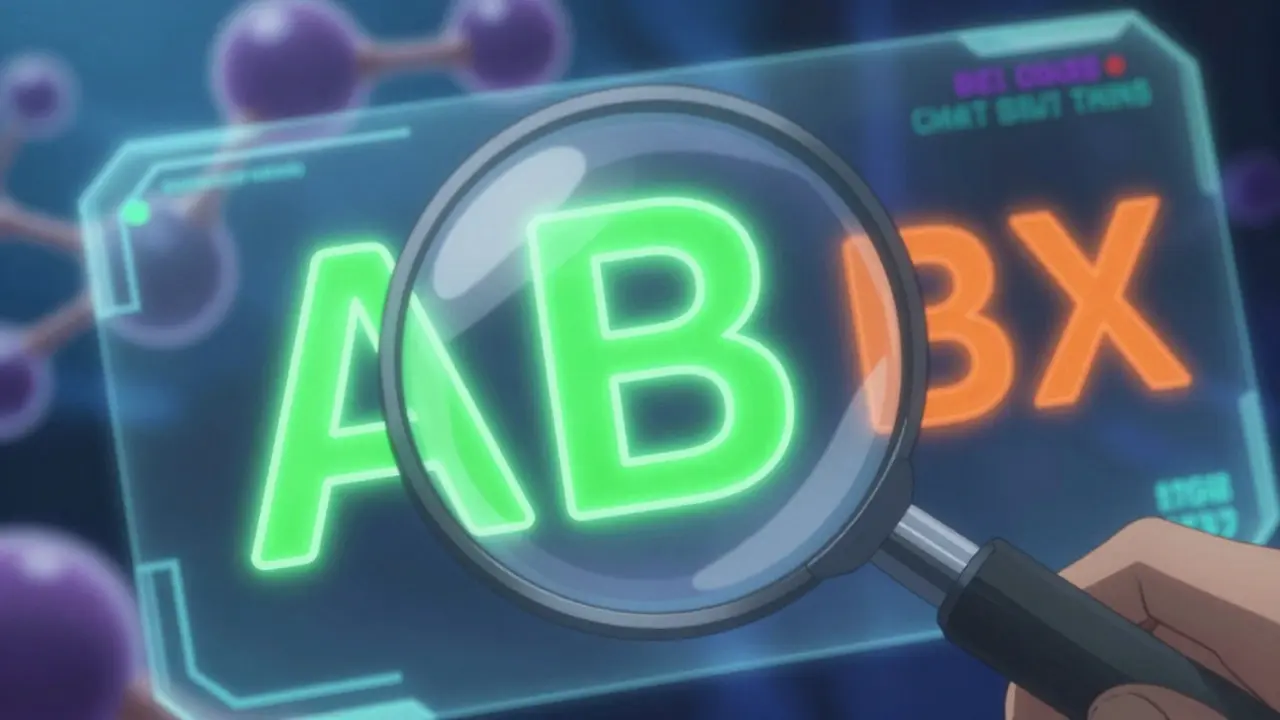
The heart of the Orange Book is its Therapeutic Equivalence (TE) coding system. This sophisticated two-letter system represents the FDA’s scientific judgment on whether a generic can replace a brand-name drug. You will primarily encounter two categories of codes: 'A' rated and 'B' rated products. Products rated with an 'A' are considered therapeutically equivalent to other pharmaceutically equivalent products. This is the green light for substitution. The most common code you will see is 'AB'. An 'AB' rating explicitly indicates that the generic drug has been determined to be therapeutically equivalent to the reference listed drug (RLD). If you see 'AB', you can generally expect the generic to have the same clinical effect and safety profile as the brand name when administered under the conditions specified in the labeling. On the other hand, 'B' rated products are not considered therapeutically equivalent. These ratings usually indicate known or potential bioequivalence issues. For example, a 'BX' code suggests that bioequivalence has not been demonstrated or there are potential issues. These generics should not be automatically substituted without careful consideration by a healthcare provider. Understanding this distinction is crucial because it directly impacts pharmacy substitution practices across all 50 states.
Step-by-Step: How to Search the Electronic Orange Book
Verifying generic equivalence involves a precise, multi-step process. The FDA updated the interface of the Electronic Orange Book in 2020, making it more user-friendly, but it still requires a methodical approach. Here is how you do it:
- Identify the Brand Name: Start by searching the prescription (Rx) section using the proprietary (brand) name of the drug. For instance, if you are looking up Lipitor, type "Lipitor" into the search bar. This step helps you identify the active ingredient, which in this case is atorvastatin calcium.
- Conduct an Ingredient Search: Once you have the active ingredient, perform an Ingredient Search for all approved products containing that ingredient. This generates a comprehensive list of approved products organized by dosage form (e.g., tablet) and route of administration (e.g., oral).
- Locate the Reference Listed Drug (RLD): In the search results, look for the column labeled "RLD." The brand-name drug will have a "Yes" in this column, designating it as the Reference Listed Drug. Generic equivalents will show "No" in this column. The RLD is the benchmark against which all generics are measured.
- Check the TE Code Column: Finally, look at the last column of the search results, labeled "TE Code." All approved generic products within the same dosage form-route grouping will display a Therapeutic Equivalence Code here. If you see 'AB', the generic is therapeutically equivalent. If the column is empty, the product might be discontinued or an OTC drug, neither of which carries a TE rating.
| Code Type | Meaning | Substitution Status |
|---|---|---|
| AB | Therapeutically equivalent to the RLD | Generally substitutable |
| AB1, AB2, etc. | Equivalent to specific RLDs when multiple exist | Substitutable for the specific RLD indicated |
| BX | Potential bioequivalence issues | Not automatically substitutable |
| No Code | Discontinued or OTC product | N/A |
Navigating Complexities: Multiple RLDs and Narrow Therapeutic Index Drugs
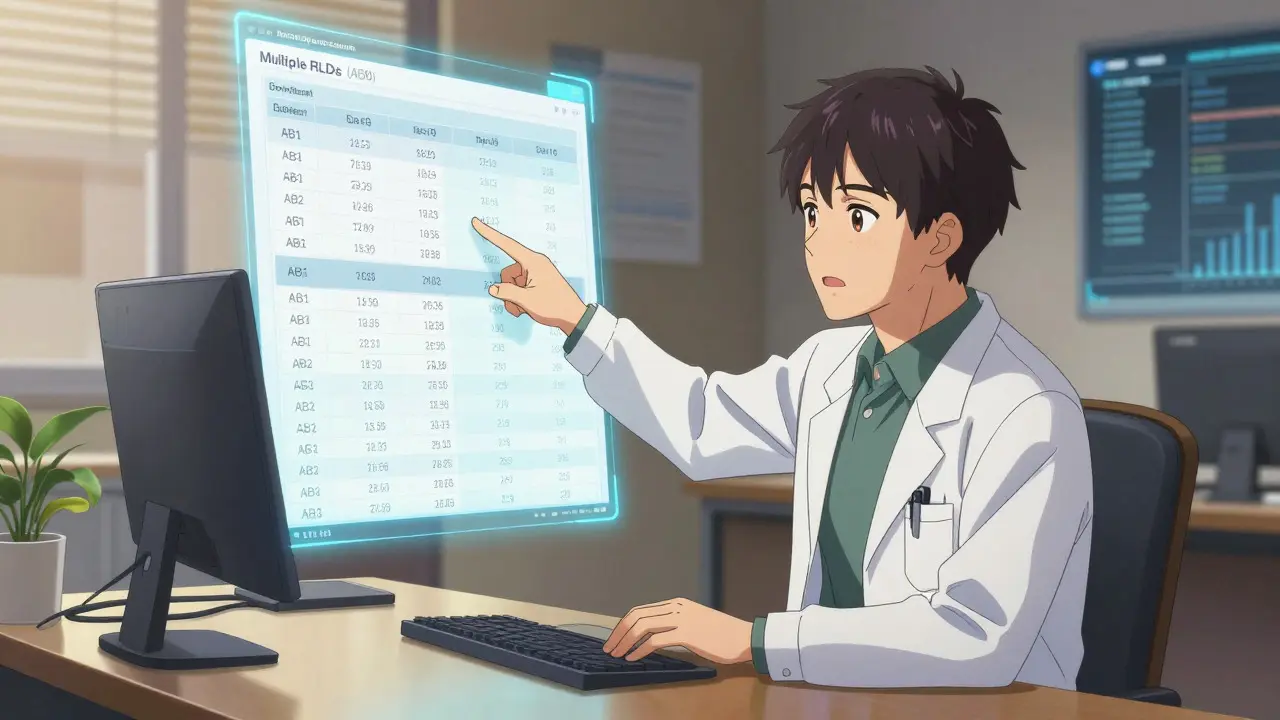
Things get trickier when multiple reference listed drugs exist for the same active ingredient. In these cases, numerical suffixes are added to the code, such as 'AB1,' 'AB2,' or 'AB3.' These numbers indicate equivalence to specific RLDs. For example, if Drug X is the RLD and has code AB1, and Drug Y is also an RLD with code AB2, a generic with code AB1 is only therapeutically equivalent to Drug X, not necessarily Drug Y. This distinction is vital for pharmacists and prescribers to avoid unintended substitutions. Another layer of complexity involves narrow therapeutic index (NTI) medications. These are drugs where small differences in blood concentration can lead to serious adverse effects or lack of efficacy. Examples include levothyroxine (Synthroid) and warfarin. Even if a generic has an 'AB' rating, state laws often require physician authorization for substitution due to NTI concerns. Pharmacist Sarah Chen noted in a 2023 discussion that while she found multiple levothyroxine products with AB ratings, state law required physician authorization for substitution. The Orange Book itself does not highlight these state-specific limitations, so users must cross-reference with local regulations. Dr. Mark Goldberger, a regulatory consultant, cautioned that 'AB-rated generics aren't always substitutable in practice due to state-specific substitution laws and bioequivalence limitations in certain drug classes.' This highlights that while the Orange Book provides the federal scientific standard, practical implementation depends on local legal frameworks.
Common Pitfalls and Pro Tips for Verification
Even experienced professionals make mistakes when using the Orange Book. Here are some common errors to avoid and tips to improve your accuracy:
- Confusing Patent Dates with Exclusivity: A frequent error is confusing patent expiration dates with market exclusivity periods. Market exclusivity can extend beyond patent terms, preventing generic entry even after patents expire. Always check both columns.
- Misinterpreting BX Codes: Do not assume a 'BX' code means the drug is unsafe. It simply means bioequivalence has not been fully demonstrated or there are potential issues. Consult a pharmacist before switching.
- Ignoring Discontinued Products: If a drug appears in the Discontinued Drug Product List, it no longer has an RLD or TE designation. Ensure you are looking at currently marketed products.
- Relying Solely on Third-Party Tools: While tools like Drugs.com and IBM Micromedex integrate Orange Book data, the FDA warns that these sources may lag the official database by 24-72 hours. For critical decisions, always verify with the official Electronic Orange Book.
The Bigger Picture: Why This Matters for Healthcare
The Orange Book operates within the broader context of the U.S. generic drug market, which accounts for 90% of all prescriptions filled but only 23% of total drug spending. The Hatch-Waxman Act of 1984 created the framework for this system, facilitating the approval of over 14,000 generic drugs since then. By providing transparency about patent and exclusivity information, the Orange Book supports competition, lowers costs, and ensures patient access to affordable medications. However, it is not without criticism. A 2023 Congressional Research Service report noted concerns about inaccurate or irrelevant patent listings potentially delaying generic competition. Despite these challenges, the Orange Book remains the linchpin of the generic drug substitution system in the United States. As technology evolves, the FDA plans to integrate the Orange Book with the Purple Book (for biologics) and implement structured product labeling for machine-readable data access. By 2027, industry analysts project that 70% of generic drug verifications will occur through API integrations rather than direct searches, reflecting the publication's evolving role in digital healthcare ecosystems. For now, mastering the manual search process empowers you to take control of your medication information. Whether you are verifying a new prescription or questioning a substitution, the Orange Book provides the evidence-based answers you need.
What does an AB rating mean in the FDA Orange Book?
An AB rating indicates that a generic drug has been determined by the FDA to be therapeutically equivalent to the reference listed drug (brand-name drug). This means the generic contains the same active ingredient, dosage form, and route of administration, and has demonstrated bioequivalence. Generally, AB-rated generics can be automatically substituted for the brand-name product at the pharmacy level, subject to state laws.
Are over-the-counter (OTC) drugs included in therapeutic equivalence ratings?
No, OTC drugs are listed in the Orange Book but are specifically excluded from therapeutic equivalence evaluations. They do not receive TE codes like AB or BX. The therapeutic equivalence system is designed primarily for prescription drugs where automatic substitution is regulated by state laws and federal guidelines.
What is a Reference Listed Drug (RLD)?
A Reference Listed Drug (RLD) is the brand-name drug product that serves as the benchmark for generic drug approvals. Generic manufacturers must demonstrate that their product is bioequivalent to the RLD. In the Orange Book, the RLD is designated with a "Yes" in the RLD column, while generics show "No."
Why do some AB codes have numbers like AB1 or AB2?
Numerical suffixes like AB1, AB2, etc., are used when multiple reference listed drugs exist for the same active ingredient. These numbers indicate that the generic is therapeutically equivalent to a specific RLD. For example, a generic with AB1 is equivalent to the RLD marked as AB1, but not necessarily to the one marked as AB2.
Can I trust third-party websites for Orange Book data?
While third-party tools like Drugs.com and IBM Micromedex are convenient, the FDA warns that they may lag the official database by 24-72 hours. For critical medical decisions or legal verification, always consult the official Electronic Orange Book on the FDA website to ensure you have the most current information.