
Anticoagulant & Alcohol Risk Assessment
Critical Warning Signs:
- Unexpected bruising or purple spots
- Bleeding gums or long-lasting nosebleeds
- Dark, tar-like stools or red urine
Enter your details and click Analyze to see your risk profile.
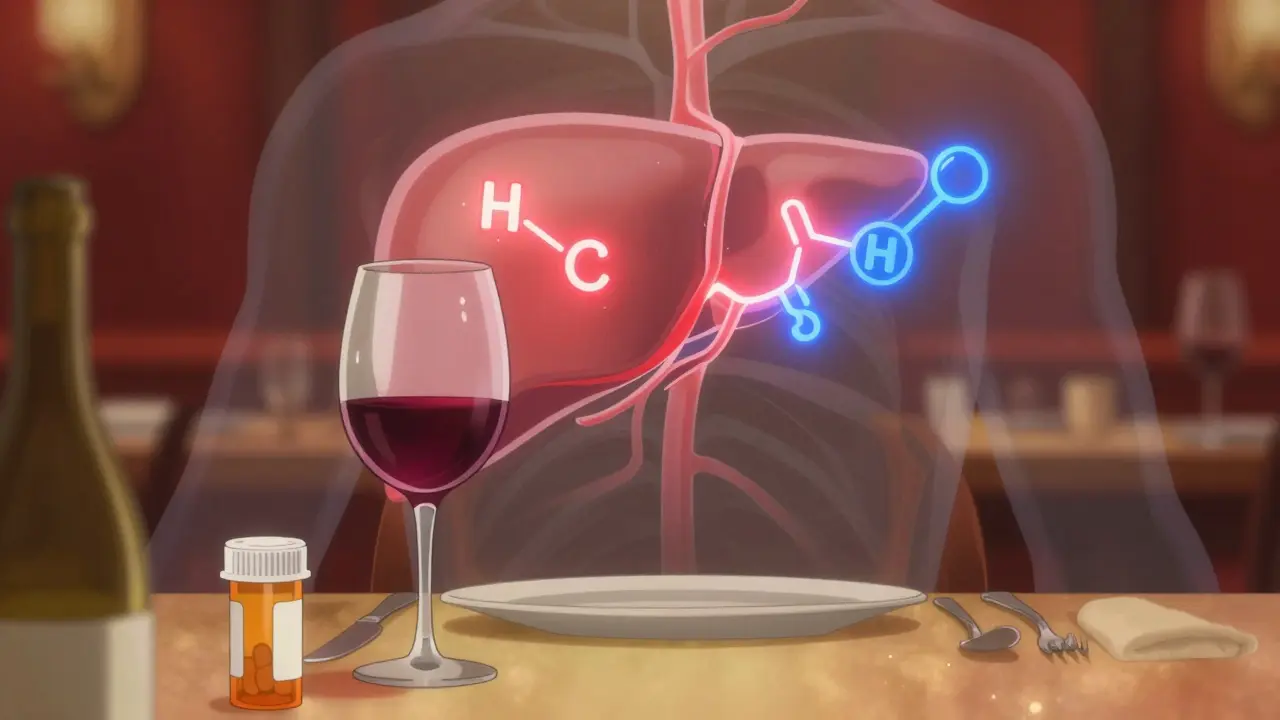
Imagine sitting down for a few glasses of wine at a weekend dinner, only to find out a few days later that your blood has become dangerously thin. For people taking anticoagulants, a simple drink isn't just about calories or a buzz-it's about a chemical tug-of-war happening in the liver. When you mix alcohol with certain blood thinners, you aren't just risking a hangover; you're potentially pushing your clotting ability into a danger zone where a simple bruise could become a major medical emergency.
The Delicate Balance of the INR
If you're on a medication like Warfarin, you've likely heard the term INR (International Normalized Ratio) dozens of times. Essentially, the INR is a standardized way to measure how long it takes your blood to clot. For someone not on medication, a normal value is usually between 0.8 and 1.1. However, if you're treating atrial fibrillation or have a mechanical heart valve, your doctor wants that number higher-typically between 2.0 and 3.5-to prevent strokes or clots.
The problem is that Warfarin is a medication with a narrow therapeutic index, meaning there is a very thin line between "safe" and "dangerous." If your INR drops too low, you risk a clot. If it climbs too high, your blood becomes too thin, and you risk spontaneous bleeding. Alcohol acts like a wildcard in this equation, throwing off the liver's ability to process the medication and causing your INR to swing unpredictably.
How Alcohol Actually Changes Your Blood
Alcohol doesn't just "interact" with blood thinners; it changes how your body handles them. Most anticoagulants are processed by the liver. When you drink, your liver prioritizes breaking down the alcohol, which can slow down the metabolism of the medication. This leaves more of the drug in your bloodstream, effectively "overdosing" you and spiking your INR.
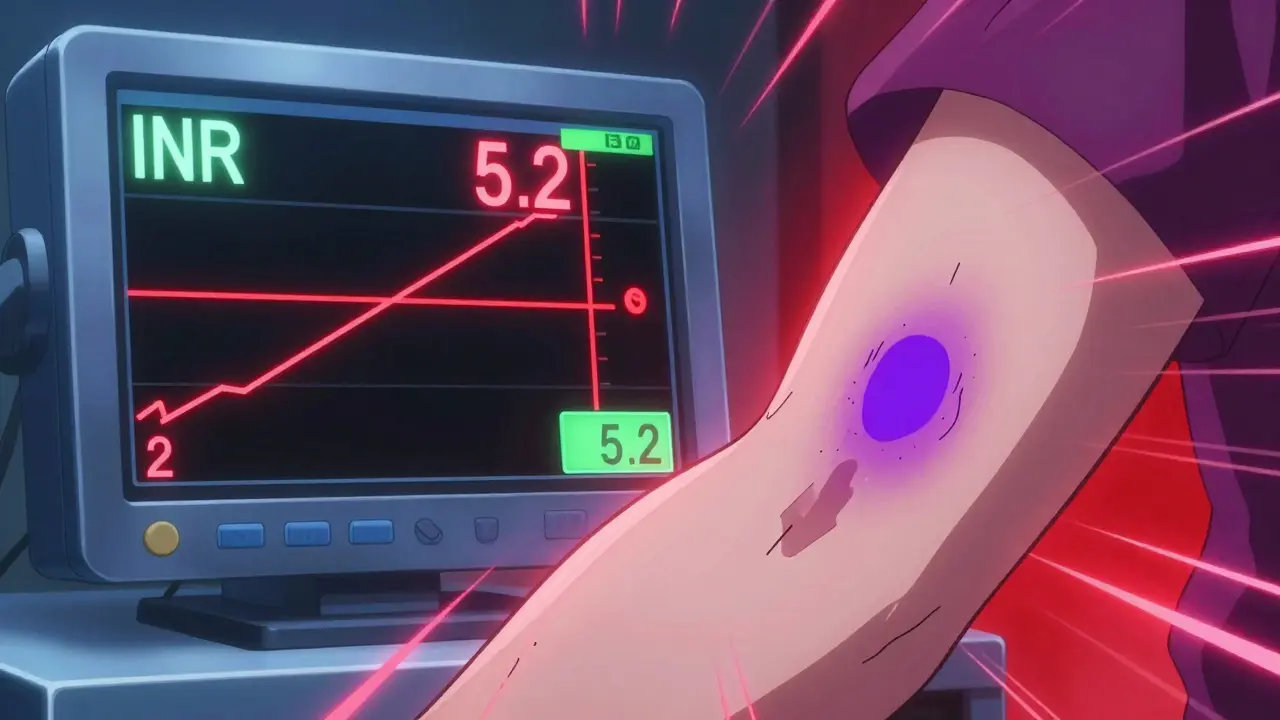
Binge drinking is where the real danger lies. While a single drink might not cause a crisis, consuming a large amount in one sitting can lead to a rapid climb in INR. For example, a 62-year-old patient reported his INR jumping from a stable 2.8 to a dangerous 5.2 within just 48 hours after drinking six pints of beer. At that level, the risk of internal bleeding increases dramatically.
| Feature | Warfarin (Coumadin) | DOACs (e.g., Apixaban) |
|---|---|---|
| Monitoring | Requires regular INR blood tests | Usually no regular monitoring needed |
| Alcohol Sensitivity | High; causes significant INR swings | Lower; fewer dietary interactions |
| Reversal Agent | Vitamin K or Plasma infusion | Specific agents (e.g., Andexanet alfa) |
| Consistency | Highly sensitive to diet and alcohol | More predictable drug levels |
Identifying the Danger Zones: When to Panic
Knowing your numbers is great, but knowing your body is better. When alcohol pushes your INR too high, you might not feel it immediately, but your body will start giving you signals that it can't stop bleeding. You should look out for "hidden" bleeding, which often shows up in your waste or unexpected places.
- Urine and Stool: Watch for red or brown urine, or stools that look like black tar. These are signs of internal gastrointestinal bleeding.
- Skin and Mucous Membranes: Gums that bleed excessively during brushing or a nosebleed that won't stop after ten minutes of pressure are major red flags.
- Unexpected Bruising: Large, purple bruises appearing without a known injury suggest your blood is too thin.
- Severe Symptoms: Bright red vomit or unusually heavy menstrual periods that differ from your norm require immediate medical attention.
Research in the American Journal of Clinical Pathology highlighted a scary statistic: among hospitalized patients with an INR higher than 9, roughly 35% experienced bleeding events, and 17% did not survive. While those are extreme cases, they prove that once the INR escapes the therapeutic range, the risks escalate quickly.
Guidelines for Safe Consumption
Does this mean you can never have a drink again? Not necessarily. Many health organizations, including the British Heart Foundation, suggest that moderate alcohol consumption is acceptable as long as it is consistent. The key is avoiding the "weekend warrior" pattern-where you don't drink all week and then have several drinks on Friday and Saturday.
To stay safe, follow these general rules of thumb:
- Limit the Volume: For men, aim for no more than 14 units per week; for women, keep it under 7.
- Spread it Out: Don't drink your weekly allowance in one night. Spread drinks over three or more days to prevent a massive spike in your medication levels.
- Stay Consistent: If you usually have one glass of wine on Fridays, keep that routine. Sudden changes in your drinking habits are what trigger the most dangerous INR fluctuations.
- Communicate: Tell your doctor if you plan to attend a celebration or event where you might drink more than usual. They may suggest a temporary dosage adjustment or a more frequent blood test.
The Role of Genetics and Personal Risk
Not everyone reacts to the alcohol-warfarin mix the same way. Some of it comes down to your DNA. Specifically, variants in the CYP2C9 and VKORC1 genes change how your body breaks down the drug. If you have certain versions of these genes, your risk of a major bleed when drinking alcohol is significantly higher than someone without those variants.
This is why "moderate" drinking for one person might be "dangerous" for another. If you've noticed that your INR swings wildly even with small amounts of alcohol, you might be more genetically sensitive. In these cases, a stricter zero-alcohol policy is often the only way to maintain a stable therapeutic range.

Managing a Spike: What Happens Next?
If you've overdone it and your INR has skyrocketed, simply stopping your medication isn't always enough. Because Warfarin inhibits vitamin K-dependent clotting factors, it takes time for the body to naturally rebuild those proteins. In severe cases where the INR exceeds 9, doctors may use plasma infusions to immediately drop the INR back to a safe level (around 2.4).
If you suspect your INR is too high, do not try to "fix" it by eating massive amounts of spinach or kale (which are rich in Vitamin K) without consulting your doctor. While Vitamin K is the antidote to Warfarin, unplanned dietary shifts can make your next blood test results impossible for your doctor to interpret, leading to incorrect dosing.
Can I drink just one glass of wine while on Warfarin?
Yes, for most people, an occasional single drink is fine. The danger comes from binge drinking or sudden changes in your drinking habits, which can cause your INR to spike and increase your risk of bleeding.
How long does it take for alcohol to affect my INR?
Effects can happen quickly. Some patients have reported significant INR increases within 24 to 48 hours after a period of heavier drinking.
Are newer blood thinners (DOACs) safer with alcohol?
Generally, yes. Medications like apixaban or rivaroxaban do not require regular INR monitoring and have fewer dietary interactions than Warfarin. However, alcohol can still increase the risk of stomach bleeding, so moderation is still key.
What should I do if I notice a bruise that won't go away?
You should contact your healthcare provider immediately. An unexplained or spreading bruise can be a sign that your INR is too high, meaning your blood is too thin to clot properly.
Does the type of alcohol matter (e.g., beer vs. wine)?
The amount of ethanol is what primarily affects the liver's processing of blood thinners. Whether it is beer, wine, or spirits, the volume and frequency of consumption are the most important factors.
Next Steps for Stability
If you're struggling to keep your INR stable while maintaining a social life, consider these steps. First, start a simple log of what you drink and when. When you go in for your monthly blood draw, show this log to your nurse or doctor. This helps them see if your "spikes" correlate with specific events.
For those who find it impossible to stick to a strict drinking limit, talk to your doctor about switching to a Direct Oral Anticoagulant (DOAC). While not suitable for everyone (especially those with certain mechanical heart valves), these newer drugs provide a much more predictable experience and remove the need for the constant "INR rollercoaster."




Brigid Prosser
April 20, 2026 AT 11:16Spot on about the consistency bit. I've seen a few folks in my circle try to 'game' the system by fasting or eating all the greens in the world right before a test, and it's a total nightmare for the docs to figure out the actual dose. Just keep it steady and don't go wild on the weekends!
Bob Collins
April 21, 2026 AT 16:08Fair point.
Quinton Bangerter
April 21, 2026 AT 19:44It is absolutely convenient how this narrative pushes the 'new' DOACs. Ever wonder why we're suddenly told the old meds are a 'rollercoaster' just as the patents on these fancy new ones are becoming the gold standard? Follow the money. They want you on the expensive stuff that doesn't require a cheap blood test because the monitoring lets you see exactly what's happening in your veins, and Big Pharma hates it when patients have too much data. The liver processing story is a neat way to keep us scared of a pint of ale while they slide a monthly subscription for a 'more predictable' drug down our throats. Total joke.
Shalika Jain
April 21, 2026 AT 21:57Imagine actually thinking your genes are the primary reason for a spike. Please. It's obviously about the quality of the alcohol and the sheer lack of discipline in most people's lives. I've had a glass of a very fine vintage while on anticoagulants and my levels were practically untouched. Some of us just have better constitutions, and others like to play the victim with 'genetic variants' to excuse their binge drinking.
Tanya Rogers
April 23, 2026 AT 00:48The fascination with quantifying human biological instability via the INR is quite quaint, yet the prose here oversimplifies the systemic complexity of hepatic enzyme competition. One must acknowledge that the intersection of ethanol consumption and pharmacological intervention is less a 'tug-of-war' and more a multifaceted biochemical collapse. To suggest that mere 'consistency' mitigates the inherent volatility of Warfarin is to ignore the stochastic nature of metabolic pathways.
Olushola Adedoyin
April 23, 2026 AT 19:55They are lying to us about the 'safe units'!! Who decided 14 units is okay? Some shadow government board in a basement! I bet they put something in the beer to make the blood thinners work faster so we all just bleed out quietly without even knowing why! It's a plot to keep us weak and dependent on these fancy-shmancy reversal agents that probably cost a million dollars a drop! Wake up people, the blood is the truth!
Cynthia Didion
April 24, 2026 AT 11:24American medicine is the only one that manages to make a simple drug sound like a death sentence. Just follow the rules and stop complaining.
Lynn Smith
April 25, 2026 AT 09:21I totally agree with the part about talking to your doctor! It's so much better to just be honest about a party coming up than to try and hide it and then end up in the ER with a huge bruise. Better safe than sorry!
William Young
April 26, 2026 AT 08:25I appreciate the reminder to keep a log. It sounds like a simple way to take some control back over the situation without feeling overwhelmed by the medical jargon.
Charlotte Boychuk
April 27, 2026 AT 01:04Wow, the bit about the 'black tar' stools is a real wake-up call. I've always been a bit lax with my evening glass of red, but knowing it could actually mess with my liver's priority list is wild. Definitely going to be more mindful of that weekend warrior habit!
Venkatesh Venky
April 28, 2026 AT 23:05The pharmacokinetic profile of DOACs is definitely a game changer for patient adherence. When we look at the bioavailability and the lack of CYP2C9 interaction, the stability is just way better. Let's all push for better access to these newer options!
Ms. Sara
April 29, 2026 AT 22:15It's so important to mention the genetic side of things. Some people really do feel like they're failing at their treatment when in reality their body is just wired differently. It takes a lot of the guilt away when you realize it's literally in your DNA.
anne camba
May 1, 2026 AT 20:15The blood is a river... flowing with the secrets of our mortality... and yet we try to tame it with chemicals and timers... a strange dance indeed...