

Anticholinergic Urinary Retention Risk Estimator
| Drug | Selectivity | Retention Risk | Key Attribute |
|---|---|---|---|
| Oxybutynin | Non-selective (M1,M2,M3) | High (OR 3.2) | Broad receptor affinity |
| Tolterodine | Moderate | Moderate | Lower risk in BPH men |
| Solifenacin | High M3 (31-fold) | Moderate (1.2-1.8%) | Targets contraction receptor |
| Darifenacin | M3 selective | Moderate-Low | Limited brain penetration |
Imagine waking up to a full bladder but finding it impossible to empty. For many people, this isn't just an inconvenience; it's a medical emergency caused by the very pills prescribed to help them. Anticholinergic drugs, commonly used for overactive bladder, allergies, and depression, are among the most frequent culprits behind drug-induced urinary retention. While these medications offer relief from urgency and frequency, they carry a hidden risk that can leave patients unable to void without catheterization.
You might wonder why a medication meant to calm your bladder would stop it from working altogether. The answer lies in how our bodies process signals. When you take an anticholinergic, you block specific receptors that tell your bladder muscle to contract. If that signal is blocked too effectively, or if your body is already struggling with obstruction (like an enlarged prostate), the bladder simply stops pushing urine out. This article breaks down who is at risk, which drugs are most dangerous, and how to monitor your health to prevent this painful complication.
The Mechanism: How Anticholinergics Stop Your Bladder
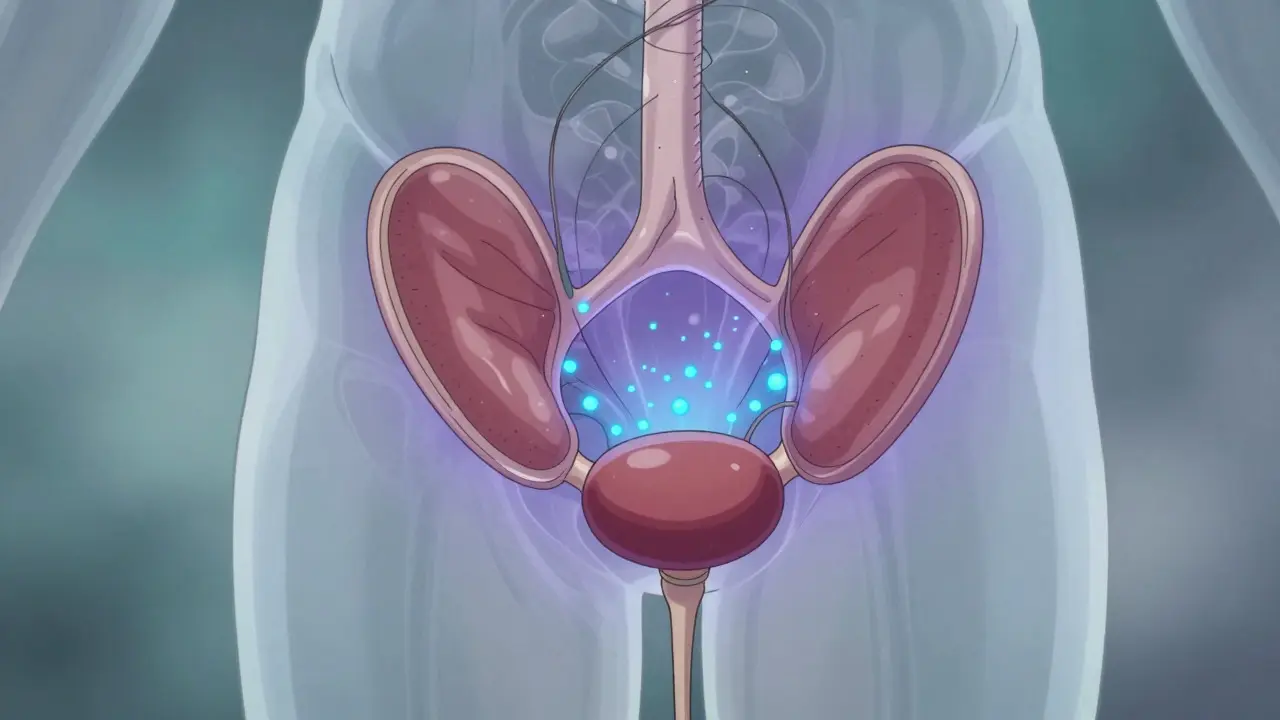
To understand the risk, you need to know what these drugs actually do. Anticholinergics are a class of medications that block the action of acetylcholine, a neurotransmitter responsible for stimulating the detrusor muscle in the bladder. Normally, when your bladder fills, acetylcholine binds to M3 muscarinic receptors on the bladder wall, triggering a contraction that pushes urine out through the urethra.
Anticholinergics work by occupying those receptor sites, preventing acetylcholine from binding. This relaxes the bladder muscle, which helps reduce sudden urges to urinate. However, if the relaxation is too strong, or if the outlet is partially blocked, the bladder cannot generate enough pressure to empty itself. The result is post-void residual (PVR) urine-liquid left in the bladder after you think you've finished. When PVR exceeds 100mL consistently, or if you become completely unable to void, you have acute urinary retention.
| Drug Name | Selectivity Profile | Relative Retention Risk | Key Attribute |
|---|---|---|---|
| Oxybutynin | Non-selective (M1, M2, M3) | High (OR 3.2 vs placebo) | Balanced affinity across all receptor types |
| Tolterodine | Moderate selectivity | Moderate | Lower risk than oxybutynin in men with BPH |
| Solifenacin | High M3 selectivity (31-fold) | Moderate (1.2-1.8% incidence) | Targets primary contraction receptor specifically |
| Darifenacin | Selective M3 antagonist | Moderate-Low | Limited blood-brain barrier penetration |
Who Is Most Vulnerable? High-Risk Profiles
Not everyone taking these meds faces the same danger. The risk of Urinary Retention is the inability to pass urine, often requiring catheterization, caused by medication interference with bladder function. spikes dramatically in specific groups. Men over 65 with benign prostatic hyperplasia (BPH) are the most susceptible. In this group, the incidence of drug-induced retention jumps from 0.5% in the general population to approximately 4.3%. Why? Because the enlarged prostate already narrows the urethral channel. When you add a medication that weakens the bladder's pumping ability, the system fails.
Elderly women also face elevated risks, particularly those with dementia. A 2016 study in JAMA Internal Medicine found that anticholinergic use increased retention risk by 49% in this demographic. Polypharmacy makes it worse. If you are combining anticholinergics with opioids or other sedatives, the risk compounds. For instance, when combined with opioids, the rate of retention in men over 65 rises to 12.7%. Always check your full medication list before starting a new anticholinergic.

Signs You Should Watch For
Retention doesn't always happen overnight. Often, there are warning signs days or weeks before a complete blockage occurs. Recognizing these early can save you a trip to the emergency room. Keep an eye out for:
- Straining to void: You feel like you're pushing hard but little comes out.
- Weak stream: The flow feels thin or intermittent compared to your normal.
- Incomplete emptying sensation: You finish urinating but still feel full.
- Increased frequency immediately after voiding: You go again within minutes because the bladder didn't empty properly.
- Suprapubic discomfort: A dull ache or pressure in the lower abdomen.
If you haven't urinated for 12 hours, seek immediate medical care. Acute retention is painful and can damage kidney function if left untreated for too long.
Monitoring Protocols: Protecting Yourself
Prevention is better than cure, especially with medication side effects. The American Urological Association recommends baseline post-void residual (PVR) measurements before starting anticholinergics in men. If your PVR is above 150mL before treatment, the risk of retention is significantly higher, and your doctor may choose a different therapy.
How do you measure PVR? It’s simple and non-invasive. After you urinate normally, a clinician uses a bladder scanner (an ultrasound device) to estimate the volume of urine left in your bladder. This takes about 8 minutes. If you are on high-risk medications, quarterly monitoring is standard, but weekly checks during the first month are ideal. Some patients use home bladder scanners via telehealth programs, which have shown a 61% reduction in retention episodes due to consistent tracking.
Consider asking your doctor about dose titration. Starting at 25% of the standard dose and increasing slowly allows your body to adjust. Transdermal patches, such as the oxybutynin patch, also show a 42% lower retention risk than oral forms because they bypass the digestive system and provide steadier levels in the blood.
Alternatives to Anticholinergics
If you are male, have an enlarged prostate, or have a history of retention, ask your provider about alternatives. Beta-3 adrenergic agonists, like mirabegron, work differently. Instead of blocking the contraction signal, they stimulate receptors that relax the bladder muscle gently. In clinical trials, mirabegron showed a urinary retention incidence of only 0.3%, compared to 1.7% for anticholinergics.
Other options include:
- OnabotulinumtoxinA injections: Carries a 0.5% retention risk but requires specialized administration.
- Peripheral neuromodulation: Uses electrical stimulation to regulate bladder nerves.
- Alpha-blockers: Often used alongside other treatments to relax the prostate and improve flow, reducing retention risk by 37% in BPH patients.
Market trends reflect this shift. Since 2015, market share has moved away from anticholinergics toward beta-3 agonists due to safety concerns. Mirabegron now holds 31% market share, while oxybutynin sits at 18%. This isn't just a marketing trend; it's a clinical response to patient safety data.
Frequently Asked Questions
Can I take anticholinergics if I have an enlarged prostate?
It depends on your severity. If you have mild BPH and no history of retention, low-dose anticholinergics might be safe with close monitoring. However, if you have significant obstruction or prior retention episodes, they are generally contraindicated. Ask your urologist to measure your post-void residual first.
What is the difference between acute and chronic urinary retention?
Acute retention is a sudden inability to void, usually requiring emergency catheterization. Chronic retention involves persistent incomplete emptying where residual volumes stay above 100mL over time. Both can be caused by medications, but acute cases are more urgent.
Which anticholinergic drug has the lowest risk of retention?
Among traditional anticholinergics, darifenacin and solifenacin tend to have lower risks than oxybutynin due to their selective action on M3 receptors. However, beta-3 agonists like mirabegron generally carry a lower overall risk profile for men with prostate issues.
How often should I get my bladder scanned while on these meds?
For high-risk patients, weekly scans during the first month are recommended, followed by quarterly checks. If you use a home bladder scanner, daily or every-other-day monitoring is ideal to catch rising residuals early.
Do anticholinergics affect memory as well as the bladder?
Yes. Non-selective anticholinergics like oxybutynin cross the blood-brain barrier and can cause cognitive side effects, including confusion and memory issues. Selective agents like trospium chloride have limited brain penetration, making them safer for elderly patients with dementia.