
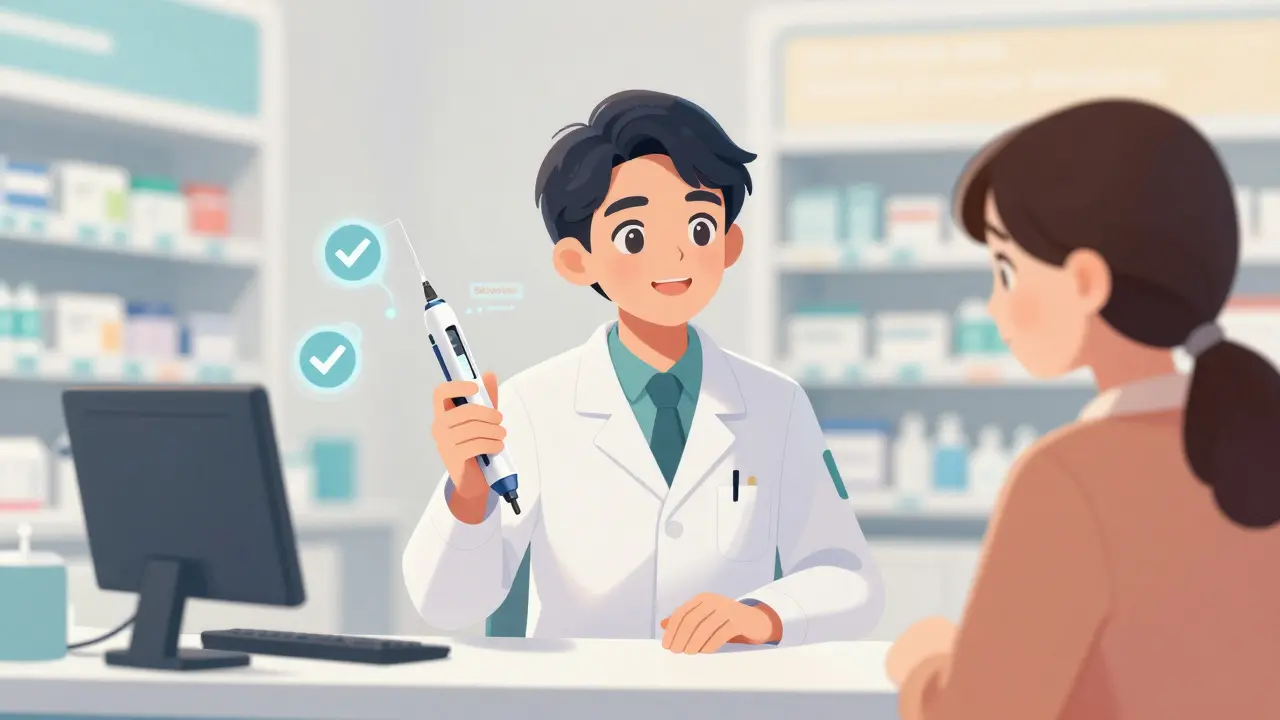
Imagine a patient walking into your pharmacy with a prescription for a high-cost biologic medication. You have the biosimilar version in stock-it’s safer, cheaper, and approved by the FDA. But before you hand it over, you need to navigate state laws, check if the product is 'interchangeable,' and explain to a nervous patient why their new injection looks different from the old one. This is the daily reality for pharmacists today.
Biosimilars are not generics. They are complex biological products made from living cells, which means they can never be identical copies of the original reference product. However, they are highly similar with no clinically meaningful differences in safety or effectiveness. Your role as a pharmacist is the bridge between this scientific nuance and real-world patient care. You are the gatekeeper for cost savings and the educator who ensures patients stick to their treatment plans.
Understanding the Core Difference: Biosimilars vs. Generics
To counsel patients effectively, you first need to master the distinction yourself. Generic drugs are small molecules. Think of them like aspirin. The chemical structure is simple, so a generic manufacturer can create an exact copy. That is why generic substitution happens automatically about 97% of the time. Patients rarely notice a difference because the pill is chemically identical.
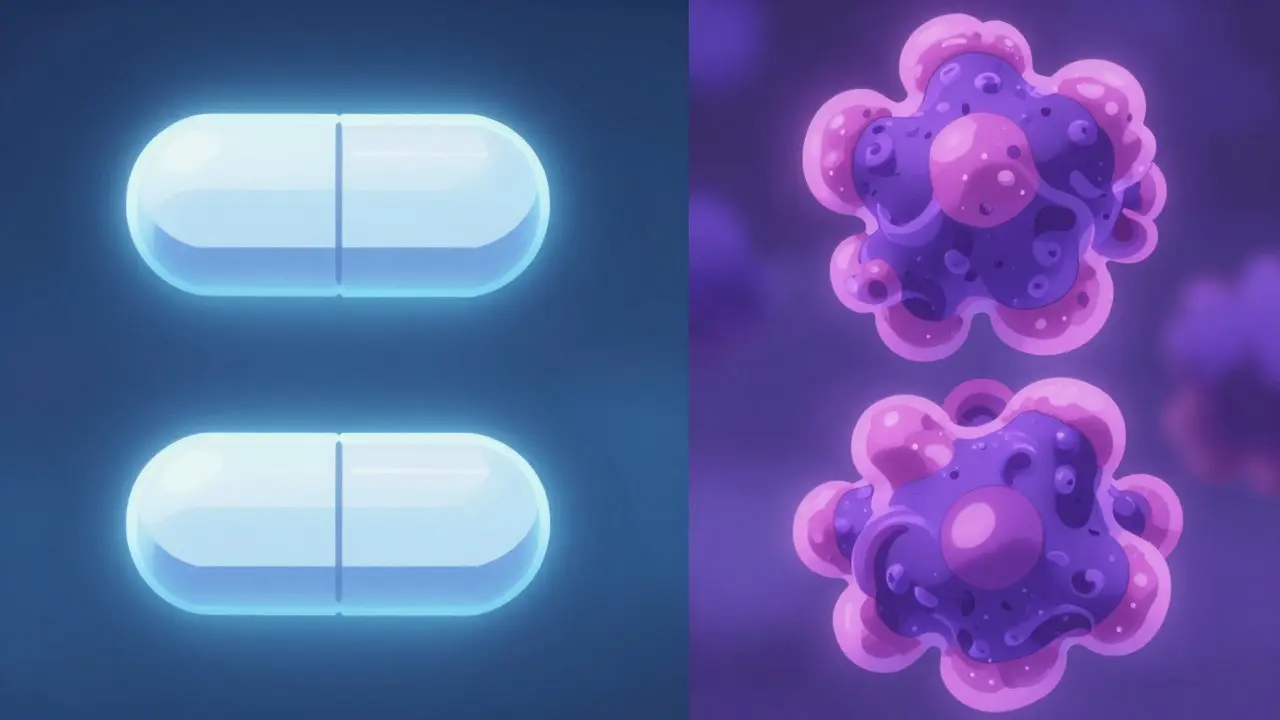
Biosimilars are different. They are large, complex proteins produced in living cell cultures. Because living systems vary slightly, every batch has minor structural differences. The FDA requires rigorous testing to prove these differences do not affect safety, purity, or potency. Biosimilars are biologic medical products that are highly similar to an already approved reference biologic product, with no clinically meaningful differences in terms of safety, purity, and potency.
| Feature | Generic Drugs | Biosimilars |
|---|---|---|
| Molecule Type | Small, simple chemicals | Large, complex proteins |
| Manufacturing | Synthetic chemical processes | Living cell cultures |
| Identity | Identical to reference drug | Highly similar, not identical |
| Substitution Rate | ~97% | Variable (lower due to complexity) |
| Regulatory Pathway | Abbreviated New Drug Application (ANDA) | Biologics License Application (BLA) via BPCIA |
When you explain this to a patient, use the analogy of twins versus clones. A generic is a clone-exact DNA match. A biosimilar is like a fraternal twin-they look alike, share the same parents (the manufacturing process), and function the same way, but they aren't carbon copies. Understanding this helps you address the "but it's not the same" objection with confidence.
The Interchangeability Designation and State Laws
Not all biosimilars can be substituted at the pharmacy counter. The Biologics Price Competition and Innovation Act (BPCIA) of 2009 created the pathway for biosimilars, but it also introduced a special designation called interchangeability. An interchangeable biosimilar meets additional standards that allow it to be substituted for the reference product without the prescriber's intervention, even if the patient switches back and forth between the two products multiple times.
As of late 2023, only a limited number of biosimilars hold this interchangeable status. This creates a critical workflow step for you. Before dispensing, you must check:
- FDA Status: Is the specific biosimilar designated as interchangeable?
- State Law: Does your state allow automatic substitution? As of October 2023, 48 states have enacted laws regarding biosimilar substitution, but the rules vary wildly. Some states require prescriber notification; others allow full autonomy.
- Payer Policy: Does the insurance plan prefer the biosimilar? Often, the financial incentive lies here, driving adoption more than clinical preference.
If a biosimilar is not interchangeable, you generally cannot substitute it unless the prescriber explicitly agrees. Attempting to substitute a non-interchangeable biosimilar against a prescriber's wishes can lead to legal issues and damaged professional relationships. Always know your local regulations inside out.
Counseling Strategies: Building Patient Confidence
The biggest barrier to biosimilar adoption isn't science; it's perception. Patients often fear that switching medications will cause their condition to flare up. Research shows that when a medication's appearance changes-different color, shape, or packaging-patients are 21% more likely to stop taking it. This is known as the "nocebo effect," where negative expectations cause physical symptoms.
Your counseling script needs to be direct, empathetic, and evidence-based. Here is how to handle common concerns:
- "Is it safe?" Explain that the FDA holds biosimilars to the same strict safety standards as the original drug. Mention that thousands of patients have used these products safely.
- "Why does it look different?" Remind them of the twin analogy. Different manufacturers use different packaging and dye colors, just like different brands of ibuprofen. The active ingredient works the same way.
- "Will I have side effects?" Reassure them that the safety profile is nearly identical. If they experience new symptoms, advise them to contact you immediately, emphasizing that you are monitoring their care closely.
A study presented at the American Society of Clinical Oncology Quality Care Symposium found that pharmacist-driven interventions led to statistically significant increases in biosimilar adoption. Why? Because pharmacists took the time to educate. Don't rush the conversation. Verify understanding by asking the patient to repeat back key points, such as how to store the new injection pen or what to expect during the switch.
Managing Prescriber Relationships and Workflow
Substitution isn't just about the patient; it's about the doctor. Some physicians are hesitant to let go of control over their patients' biologics. Others are simply unaware of the interchangeability status. Friction here can stall adoption.
The most successful pharmacies implement standardized workflows. For example, the US Oncology Network reduced provider interruptions by having all providers sign acknowledgment forms for automatic biosimilar substitutions after receiving mandatory e-learning training. This shifted the burden from the busy physician to the specialized pharmacist.
In your practice, consider these steps:
- Proactive Communication: If you substitute an interchangeable biosimilar, notify the prescriber's office promptly. Send a fax or secure message stating: "Per state law and FDA guidelines, we have dispensed [Biosimilar Name] instead of [Reference Product]. Please let us know if you have any concerns."
- Education First: Share brief, evidence-based summaries with hesitant prescribers. Highlight data showing equal efficacy and significant cost savings.
- Respect "Dispense as Written": If a prescriber marks a prescription "DAW" or "Do Not Substitute," honor it. Do not attempt to override this unless there is a genuine supply shortage and you have communicated with the prescriber to get approval for an alternative.
Remember, pharmacists reported higher rates of recommending biosimilars (87.3%) compared to physicians (62.1%) in a 2022 study. You likely have more up-to-date knowledge on this topic than many doctors. Use that expertise to guide them, not challenge them.

Pharmacovigilance and Traceability
Because biosimilars are complex, tracking adverse events is crucial. This is where pharmacovigilance comes in. You must maintain accurate records of exactly which product and batch number was dispensed. If a patient reports an allergic reaction, you need to know if it was caused by the biologic itself or a specific manufacturing batch.
The International Federation of Pharmaceutical Manufacturers & Associations (IFPMA) emphasizes that traceability measures, including batch number identification, are essential for pharmacy-mediated substitution. Ensure your pharmacy management system captures:
- The National Drug Code (NDC) of the specific biosimilar.
- The lot/batch number.
- Confirmation that the patient received counseling.
- Documentation of any prescriber notifications sent.
This data protects your license, safeguards the patient, and contributes to the broader safety database that keeps the healthcare system running smoothly. It also allows you to quickly identify if a specific batch has a recall issue.
Overcoming Barriers to Adoption
Despite the benefits, biosimilar uptake has been slower than expected. Biologics account for only 2% of prescriptions but roughly half of all prescription drug spending in the US. The potential for cost savings is massive, yet barriers remain.
Common hurdles include:
- Rebate Structures: Sometimes, Pharmacy Benefit Managers (PBMs) receive higher rebates for originator products, making them financially attractive despite higher list prices. Advocate for transparent pricing models.
- Lack of Education: Many clinicians still confuse biosimilars with generics. Continue offering continuing education units (CEUs) and workshops. In fact, 79.1% of pharmacists requested educational programs on billing and reimbursement to improve uptake.
- Supply Chain Issues: Ensure you have reliable access to interchangeable biosimilars. Stockouts can force patients back to expensive originators, breaking trust.
By addressing these barriers head-on, you position your pharmacy as a leader in value-based care. You are not just dispensing pills; you are optimizing health outcomes and reducing financial toxicity for patients.
Can I substitute a biosimilar if it is not labeled as interchangeable?
Generally, no. Without the interchangeable designation, you typically need explicit permission from the prescriber to substitute a biosimilar for the reference product. State laws vary, so always check your local regulations, but the default standard is to respect the prescriber's choice unless interchangeability is confirmed.
How do I explain biosimilars to a skeptical patient?
Use the "twin" analogy rather than the "clone" analogy. Explain that while they are not identical copies, they are highly similar with no clinically meaningful differences in safety or effectiveness. Emphasize that the FDA rigorously tests them to ensure they work just like the original drug. Address their specific fears about side effects directly with evidence.
What documentation is required for biosimilar substitution?
You must document the specific NDC and batch/lot number of the biosimilar dispensed. This is critical for pharmacovigilance and traceability. Additionally, record that patient counseling was provided and note any communications sent to the prescriber regarding the substitution.
Do all states allow automatic biosimilar substitution?
No. While 48 states have enacted laws regarding biosimilar substitution as of late 2023, the requirements differ significantly. Some states allow automatic substitution for interchangeable biosimilars, while others require prescriber notification or consent. You must know your specific state's pharmacy practice act.
Why is biosimilar adoption slower than generic adoption?
Biosimilars are complex biological products, not simple chemicals. This leads to stricter regulatory pathways, fewer interchangeable designations, and more hesitation among prescribers and patients. Additionally, rebate structures and lack of widespread education have historically slowed uptake compared to the near-universal acceptance of generics.