Imagine picking up a new prescription from your doctor. You hand it to the pharmacist, pay your copay, and head home. It feels routine. But what if that piece of paper-or digital message-contains a mistake? It’s not just a hypothetical scenario. According to the Institute of Medicine, medication errors harm at least 1.5 million people annually in the United States alone. These aren’t always dramatic hospital emergencies; often, they start with a simple slip-up during the prescribing phase.
As patients, we are often told to trust our doctors implicitly. And while most physicians are incredibly skilled, they are also human, working under intense time pressure. Dr. Dean Schillinger of UCSF notes that doctors average just 17 seconds per prescription in high-volume clinics. That’s barely enough time to type a name, let alone double-check complex dosing calculations. This reality means you play a critical role in your own safety. By learning how to spot common prescription writing errors, you can prevent potential harm before it ever reaches your medicine cabinet.
The Hidden Dangers of Common Prescribing Mistakes
Prescription errors fall into several distinct categories, each carrying its own risks. Understanding these categories helps you know exactly what to look for when reviewing your medication order. The National Coordinating Council for Medication Error Reporting and Prevention defines a medication error as any preventable event that leads to inappropriate use or patient harm. Here are the most frequent culprits:
- Illegible Handwriting: Despite the rise of electronic records, handwritten scripts still exist. Unclear handwriting accounts for 22% of all prescription errors. A scribbled "mg" might be read as "mcg," leading to a thousand-fold overdose.
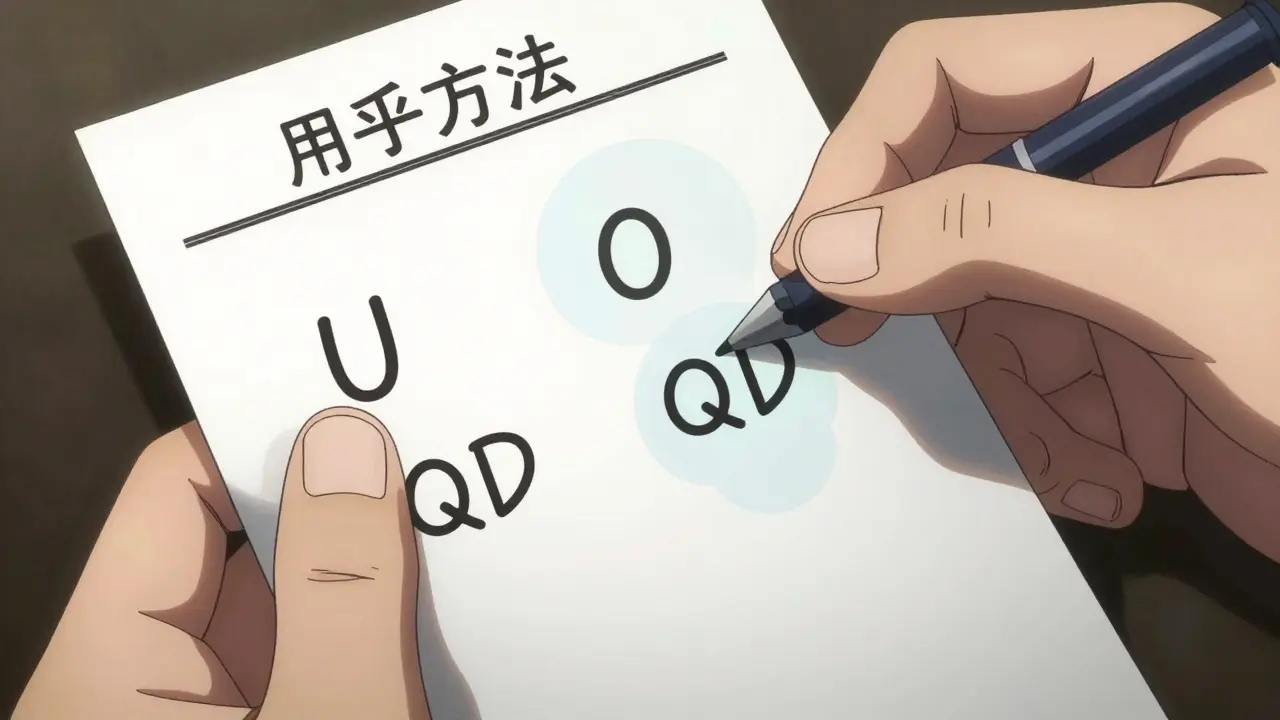
- Dangerous Abbreviations: Shortcuts like "U" for units or "QD" for daily are notorious traps. "U" can look like "0," turning a dose of 10 units into 100. "QD" (daily) can be confused with "QID" (four times a day). The FDA reports that decimal point errors, such as writing ".5" instead of "0.5," caused 128 deaths between 2010 and 2020.
- Look-Alike/Sound-Alike Drugs: Drug names that sound or look similar cause 25% of prescribing errors. For example, Celebrex (for arthritis) and Celexa (an antidepressant) are easily confused. Similarly, Zyprexa and Zyrtec differ by only one letter but treat vastly different conditions.
- Wrong Dosage or Quantity: This is the most common error type, accounting for nearly 20% of mistakes. It often involves trailing zeros (e.g., "5.0 mg" mistaken for "50 mg") or missing leading zeros.
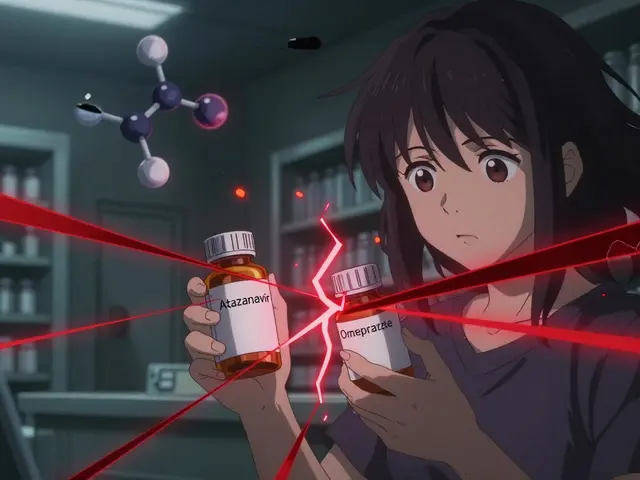
- Drug Interactions: Prescribing two medications that negatively interact with each other occurs in 15% of error cases. If you take blood thinners, adding certain painkillers could be dangerous without proper adjustment.
High-alert medications like insulin, anticoagulants, and opioids are particularly risky. Although they make up only 8% of prescriptions, they account for 72% of fatal prescription errors, according to Dr. Michael Cohen of the Institute for Safe Medication Practices.
Why Electronic Prescriptions Aren't Foolproof
You might think switching to electronic health records (EHRs) solved this problem. While electronic prescribing reduced traditional handwriting errors by 55%, it introduced new challenges. A 2019 study in JAMA Internal Medicine found that electronic systems contributed to 34% of new error types. Why? Because of human behavior within digital interfaces.
Doctors often use dropdown menus to select doses. If the list is sorted alphabetically or numerically in a confusing way, a physician might accidentally click "50 mg" instead of "5 mg" because the numbers are close together on the screen. Furthermore, providers sometimes bypass safety alerts-a practice known as "alert fatigue." The ECRI Institute reports that 31% of providers ignore system warnings, leading to 15,000 preventable errors monthly. So, even if your prescription is digital, it still requires careful scrutiny.
Your Seven-Point Checklist for Verification
Catching an error doesn’t require a medical degree. It requires attention to detail. The Food and Drug Administration (FDA) recommends that patients examine every prescription for seven critical elements. Using this checklist, a University of Michigan study showed patients caught 63% of errors before reaching the pharmacy, compared to just 22% without it.
- Complete Drug Name: Ensure the full generic or brand name is written clearly. Avoid abbreviations. If it looks like "MS," ask if it means morphine sulfate or magnesium sulfate.
- Precise Dosage: Look for leading zeros (e.g., "0.5 mg" not ".5 mg") and no trailing zeros (e.g., "5 mg" not "5.0 mg").
- Clear Frequency Instructions: Instructions should say "once daily" rather than "QD" and "twice daily" rather than "BID." Ambiguity here is a major source of confusion.
- Total Quantity: Does the amount match the duration? If you’re prescribed antibiotics for a 10-day course, do you have enough pills?
- Indication/Purpose: Modern guidelines mandate stating why you’re taking the drug. This helps you verify if the medication matches your condition.
- Prescriber Contact Info: Always have a phone number to call if something seems off.
- Expiration Date: Especially important for controlled substances like opioids, which often expire quickly after issuance.

Communicating Effectively with Your Provider
Communication is your strongest tool. Many patients hesitate to question their doctor, fearing they seem rude or uninformed. But asking questions saves lives. Use the "teach-back method," validated by Johns Hopkins Medicine, which reduces misunderstanding by 81%. Simply repeat back what you heard: "So, I’m taking 10 milligrams twice a day, correct?" If the doctor confirms, you’ve created a verbal record of the intent.
Adopt the "Ask Me 3" framework from the National Patient Safety Foundation. Before leaving the appointment, ask:
- What is my main problem?
- What do I need to do? (Specifically regarding this new medication)
- Why is it important for me to do this?
A 2021 study in JAMA Network Open found that consistently applying these questions reduced medication errors by 44%. Don’t be afraid to say, "I’m not sure I understand the dosage," or "Can you write out the instructions in plain English?" Doctors appreciate clarity because it prevents costly malpractice claims and, more importantly, keeps you safe.
Leveraging Technology and Pharmacy Support
Pharmacists are your second line of defense. They spend an average of 18.7 minutes verifying each prescription, much of it addressing prescriber-originated errors. When you pick up your meds, don’t just grab the bag and leave. Ask the pharmacist to explain the purpose of the drug. If you have diabetes, confirm that the label says "insulin" and not something else. Cross-referencing the printed label against your known conditions is a quick sanity check.
Technology is also becoming a powerful ally. Apps like MedSafety, used by over 2 million patients, scan prescription images using AI to detect error patterns, reducing patient-identified errors by 68% in pilot studies. Additionally, the Office of the National Coordinator for Health Information Technology (ONC) mandates that by 2025, all EHRs must provide patients with real-time prescription data through FHIR APIs. This means you’ll soon be able to see your prescriptions directly in patient portals, allowing for immediate verification before the pharmacy even processes them.
For vulnerable populations, especially those with low health literacy, programs like the National Council for Prescription Drug Abuse’s "Script Check" initiative train volunteers to help elderly patients verify prescriptions. In its first year, this program identified over 8,000 potentially dangerous errors. If you feel overwhelmed, seek help from family members or community resources.
What are the most common abbreviation errors in prescriptions?
The most dangerous abbreviations include 'U' for units (often mistaken for '0'), 'QD' for daily (confused with 'QID' for four times daily), and 'MS' for morphine sulfate (confused with magnesium sulfate). The FDA advises avoiding these entirely by spelling out units and frequencies.
How can I tell if a drug name is misspelled or confused?
Look for look-alike/sound-alike pairs. Common examples include Celebrex vs. Celexa, Zyprexa vs. Zyrtec, and Lamictal vs. Lamotrigine. If the name sounds unfamiliar or doesn't match your condition, ask your pharmacist to clarify the generic name.
Is it safe to rely solely on electronic prescriptions?
No. While e-prescribing reduces handwriting errors, it introduces new risks like dropdown menu selection errors and alert fatigue. Studies show that electronic systems contribute to 34% of new error types. Always verify the details yourself.
What should I do if I suspect a prescription error?
Do not take the medication. Contact your prescriber immediately to clarify. If unavailable, consult your pharmacist. Use the teach-back method to confirm understanding before filling the prescription.
Why are high-alert medications more dangerous?
High-alert medications like insulin, anticoagulants, and opioids have a narrow therapeutic index, meaning small dosing errors can lead to severe harm or death. They account for 72% of fatal prescription errors despite being only 8% of all prescriptions.