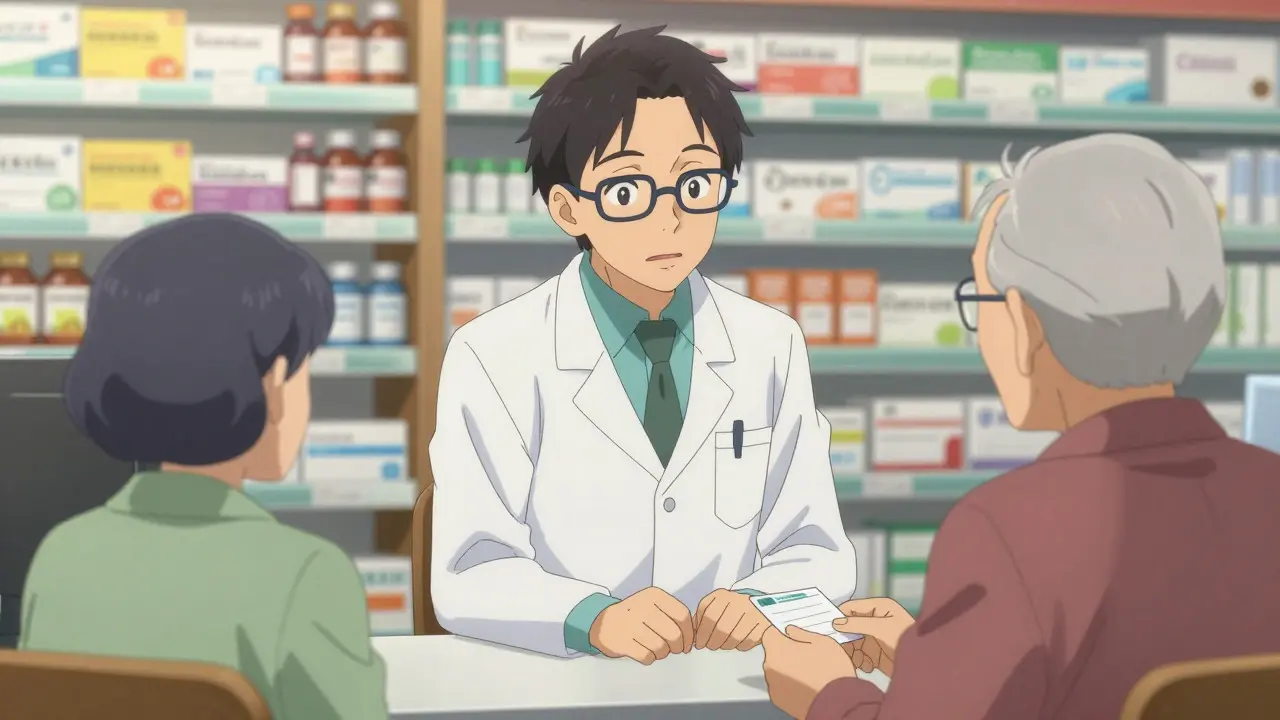
Medication errors kill thousands of people every year. According to the Institute of Medicine, roughly 7,000 deaths in the U.S. are linked to these preventable mistakes. But there is a bigger problem: half of all patients with chronic conditions do not take their medicine correctly. That is not just bad luck. It is often because they do not understand how to use what they were prescribed. This is where pharmacists step in. They are your medication experts, and they have access to powerful tools that can save you time, money, and potentially your health.
You might think getting a prescription filled is just about handing over a card and walking away. But under federal law and updated professional standards, you are entitled to much more. The landscape of pharmacy care changed significantly with the release of the JCPP's Pharmacists' Patient Care Process (PPCP) a comprehensive framework for person-centered care released in May 2025. This update emphasizes active partnership between you and your pharmacist. If you know what to ask for, you can turn a quick pickup into a detailed session that ensures you actually get better.
Why Pharmacist Education Beats Doctor Instructions
Your doctor diagnoses you. Your pharmacist manages the drugs. While doctors are vital, studies show they often lack the specific time or focus to explain complex administration techniques. A 2022 study published in the Journal of the American Pharmacists Association found that 87% of patients reported greater clarity on how to use their medications when instructed by a pharmacist compared to a physician.
This difference is stark for devices like inhalers or insulin pens. Knowing the name of the drug is not enough; you need to know how to hold the device, how long to breathe in, and how to clean it. Pharmacists average 6.2 years of clinical experience in medication therapy management, according to the American College of Clinical Pharmacy. They are trained specifically in the nuances of drug interactions, side effects, and storage. Relying solely on a doctor’s brief verbal instructions leaves you vulnerable to user error.
The Legal Right to Counseling: What OBRA '90 Means for You
Many patients do not realize that asking for help is not just polite-it is often required by law. The Omnibus Budget Reconciliation Act of 1990 (OBRA '90) mandated that pharmacists offer counseling to Medicaid beneficiaries. Today, that standard has expanded. All 50 states now require some form of patient counseling, and 47 states have additional specific requirements documented by the National Association of Boards of Pharmacy.
Under these guidelines, a pharmacist must provide information on nine core elements if requested:
- Medication name and purpose.
- Dosage form, route, and schedule (including duration).
- Directions for preparation adapted to your lifestyle.
- Action to take if a dose is missed.
- Expected benefits and when to expect them.
- Common adverse effects and how to manage them.
- Techniques for self-monitoring your therapy.
- Proper storage requirements.
- Potential drug-drug interactions or disease contraindications.
If you walk out of a pharmacy without understanding any of these points, you have been shortchanged. You have the right to request this information, and in many cases, the pharmacist is legally obligated to provide it.
Specific Materials to Request at the Counter
Asking for "help" is too vague. To get the best results, you need to request specific types of materials. Here is exactly what you should ask for during your next visit.
1. Customized Written Handouts
Verbal instructions fade quickly. Ask for printed materials that reinforce what was said. Resources like the Patient Education Reference Center (PERC) offer over 15,000 evidence-based handouts. These are not generic flyers; they can be customized with your specific dosage and frequency. If you speak Spanish, note that PERC offers versions for 92% of common medications. Having this in writing allows you to refer back to it later when anxiety or confusion sets in.
2. Visual Aids and Demonstration Tools
For anything involving technique-such as an inhaler, eye drops, or injection-a picture is worth a thousand words. The American Society of Health-System Pharmacists (ASHP) recommends using visual aids. In fact, a 2023 survey by Pharmacy Times found that 76% of patients who received visual aids demonstrated proper technique, compared to only 41% who relied on verbal instructions alone. Ask the pharmacist to show you the actual pill color and size, or demonstrate the device step-by-step.
3. Return Demonstration Confirmation
This is the most critical step. Do not just watch the pharmacist. Ask to try it yourself. This is called "return demonstration." You handle the device, and the pharmacist corrects your grip or timing. This simple act bridges the gap between knowing and doing. Without this confirmation, errors remain hidden until they cause harm.
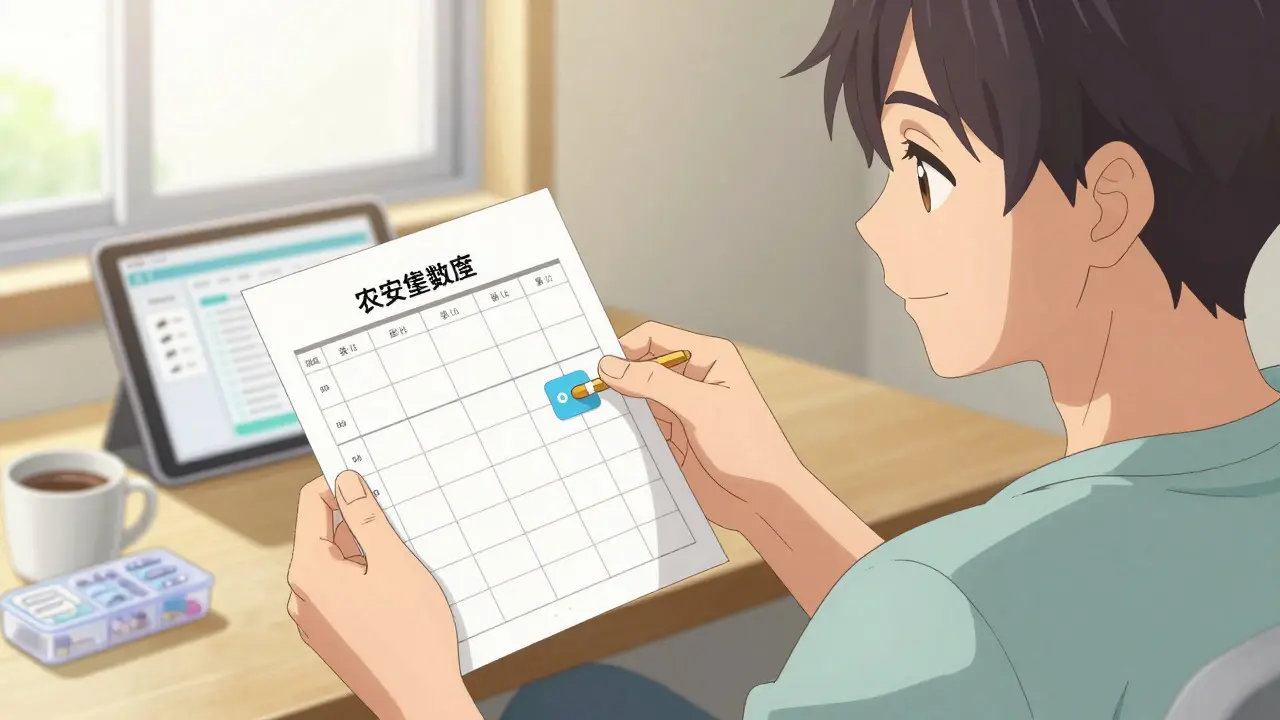
4. Personalized Medication Schedules
Complex regimens are hard to follow. Ask for a personalized schedule that fits your daily routine. Does the medicine go with breakfast? Before bed? With food? A 2023 study in the Annals of Pharmacotherapy showed that 73% of patients improved their adherence when given a schedule tailored to their lifestyle. This document should include start dates, end dates, and clear "take" vs. "skip" days.
5. Documentation in Your Medical Record
Ensure the counseling happens on record. ASHP guidelines state that pharmacists should verify patient understanding and document this interaction. Asking, "Will this counseling be noted in my chart?" encourages thoroughness. It also creates a paper trail that other healthcare providers can see, ensuring consistency across your care team.
| Feature | Pharmacist-Led Education | Physician Instructions | Online Resources (e.g., WebMD) |
|---|---|---|---|
| Depth of Drug Knowledge | High (Specialized) | Moderate (Broad Scope) | Variable (Often Outdated) |
| Personalization | High (Tailored to Patient) | Low (Time-Constrained) | None (Generic) |
| Administration Technique | Excellent (Hands-On Demo) | Fair (Verbal Only) | Poor (Text/Images Only) |
| Interaction Check | Comprehensive (Real-Time) | Limited (Prescription Focus) | Self-Managed (Error-Prone) |

Overcoming Barriers: Literacy and Language
A major hurdle in patient education is health literacy. Approximately 80 million U.S. adults have limited health literacy. Yet, a 2021 audit by the University of Florida College of Pharmacy found that only 35% of current pharmacy handouts meet the recommended reading level of sixth grade or lower. This mismatch leads to confusion and non-adherence.
If you struggle with medical jargon, speak up. Ask for materials written in plain language. The FDA is moving toward simplifying Medication Guides to an eighth-grade reading level and adding QR codes for video demonstrations. Until then, you must advocate for simplicity. Ask the pharmacist to avoid terms like "contraindicated" or "adverse event" and instead use "do not take if" or "side effect."
Language barriers are equally critical. If English is not your first language, request materials in your preferred language. As mentioned, PERC and UpToDate provide resources in over 18 languages. Never assume the standard English handout will suffice. Misunderstanding a dose due to translation errors can be fatal.
The Financial Aspect: Asking About Cost
Education is not just about pills; it is about affordability. Non-adherence costs the U.S. healthcare system $300 billion annually, largely because patients skip doses due to cost. Despite this, only 18% of patients report that pharmacists discuss lower-cost alternatives, even though 62% need them, according to Kaiser Family Foundation data.
Make cost part of your education request. Ask, "Is there a generic alternative?" or "Are there coupons available?" Pharmacists have access to databases that can instantly compare prices across brands and generics. Ignoring this aspect means you might leave with a perfect plan that you cannot afford to follow.
Preparing for Your Visit: The 7 Essential Questions
To make the most of your pharmacist's time, come prepared. The ASHP endorses a framework of seven essential questions. Write these down and bring them to the counter:
- What is this medication for?
- How and when should I take it?
- What should I do if I miss a dose?
- What side effects should I expect?
- How will I know if it is working?
- How should I store it?
- Is there anything else I need to know?
Asking these questions signals to the pharmacist that you are engaged. It shifts the dynamic from a transactional exchange to a collaborative partnership. It also forces the pharmacist to slow down and address each point systematically, rather than rushing through a script.
Future Trends: Digital Transformation and Medicare Changes
The field is evolving rapidly. Starting January 2026, Medicare Part D plans must include pharmacist-conducted medication therapy management with comprehensive education as a required benefit. This change could expand access to high-quality counseling for 52 million beneficiaries. Additionally, digital platforms like UpToDate Patient Education are becoming standard in teaching hospitals, offering multimedia resources that integrate directly with pharmacy systems.
However, technology does not replace human interaction. The JCPP's 2025 PPCP update stresses "active partnership" and "confirmation of understanding." No app can yet replicate the value of a pharmacist watching you use an inhaler and correcting your technique in real-time. Use digital tools as supplements, not substitutes, for face-to-face counseling.
Do pharmacists have to give me written materials?
While federal law (OBRA '90) mandates counseling for Medicaid patients, state laws vary. However, the CMS Patient Counseling booklet specifies that patients can request supplemental written materials to reinforce oral counseling. Most pharmacies have access to databases like PERC that allow them to print customized handouts upon request. It is always your right to ask for them.
What is the JCPP PPCP 2025 update?
The Joint Commission of Pharmacy Practitioners (JCPP) released an updated Pharmacists' Patient Care Process (PPCP) in May 2025. This framework strengthens the requirement for pharmacists to engage in active partnership with patients, confirming understanding and agreement with care goals. It moves beyond simple dispensing to holistic, person-centered care planning.
How can I ensure I understand my medication if I have low health literacy?
Ask for materials written at a sixth-grade reading level or lower. Request visual aids and ask the pharmacist to demonstrate the usage, then perform a "return demonstration" where you show them you can do it correctly. Avoid jargon by asking the pharmacist to explain terms in plain language.
Does Medicare cover pharmacist counseling?
Yes. Starting January 2026, Medicare Part D plans are required to include pharmacist-conducted medication therapy management with comprehensive education as a benefit. This aims to improve adherence and reduce hospitalizations for millions of beneficiaries.
Why are return demonstrations important?
Return demonstrations involve the patient performing the medication administration technique while the pharmacist observes. Studies show that 76% of patients who receive visual aids and practice demonstrate proper technique, compared to only 41% with verbal instructions alone. This step catches errors before they happen at home.