
mRNA Therapeutics Side Effect & Risk Estimator
Common Symptoms Predictor
Estimate your likelihood of experiencing common side effects based on the article data.
Rare Risk Factor Check
Check specific demographic risks mentioned in the article, such as myocarditis.
Symptom Probability Estimates
Demographic Risk Profile
Post-Treatment Action Guide
Select symptoms you are currently experiencing to get recommended actions based on clinical guidelines.
Understanding the Reality of mRNA Side Effects
When you hear about mRNA therapeutics, a revolutionary class of medical treatments that use messenger RNA to instruct cells to produce specific proteins for therapeutic purposes, your mind likely jumps to the COVID-19 vaccines. But this technology is much broader now, extending into cancer treatment and rare diseases. The big question on everyone's mind isn't just "does it work?" but "what happens to my body afterward?" Understanding the side effects and how we monitor them after approval is crucial for making informed health decisions.
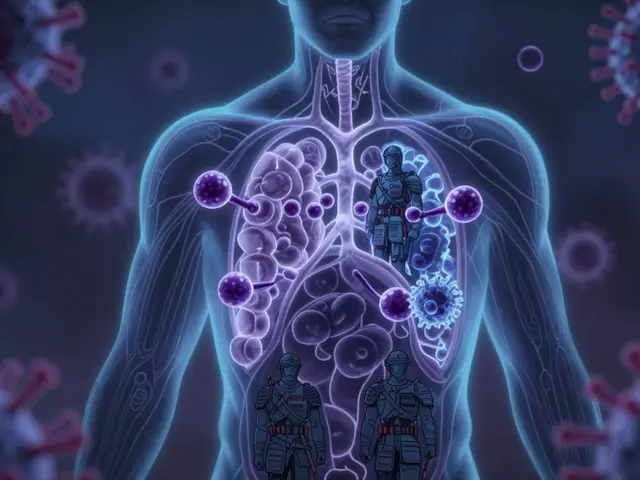
The short answer is that most side effects are temporary and manageable, but they do exist. Because mRNA works by triggering a strong immune response, you might feel like you have the flu for a day or two. This is actually a sign your immune system is waking up. However, because this technology is relatively new in widespread clinical use, rigorous post-approval monitoring, the process of tracking drug safety and efficacy in large populations after regulatory approval is essential to catch rare issues that small clinical trials missed.
Common Side Effects: What to Expect
Let’s get straight to the point. If you receive an mRNA-based treatment, whether it’s a vaccine or a therapy, you will likely experience some reaction. Data from the Vaccine Adverse Event Reporting System (VAERS) through September 2025 shows over 1.2 million reports for COVID-19 mRNA vaccines. The vast majority of these were mild.
- Injection site pain: This is the most common complaint, affecting about 76% of people after the first dose. It usually feels like a sore muscle and goes away in a few days.
- Fatigue and headache: About 25% of recipients report feeling tired or getting a headache. These symptoms typically resolve within 48 hours.
- Fever and chills: Some people run a low-grade fever. This is part of the immune activation process.
These reactions are often called "reactogenicity." In simple terms, it means the medicine is doing its job by stimulating your immune system. Dr. Paul Offit, Director of the Vaccine Education Center at Children's Hospital of Philadelphia, noted that this profile is consistent with how potent immune activators work. Most of these events clear up within 72 hours without any special treatment other than rest and maybe some acetaminophen.
Rare but Serious Risks
While most side effects are mild, there are rare serious risks that require attention. The most discussed has been myocarditis, which is inflammation of the heart muscle. This occurs primarily in young males, specifically those aged 12 to 29. Data indicates an incidence of about 4.3 cases per 100,000 doses in this demographic. The good news? In 98.7% of these cases, symptoms resolved within 30 days.
Another area of interest has been menstrual cycle changes. Social media discussions highlighted concerns here, with thousands of posts mentioning irregularities. A study published in *Clinical Infectious Diseases* in August 2024 analyzed 6.2 million vaccinated individuals. They found that 3.7% of women aged 18-45 experienced transient menstrual changes. Crucially, these changes resolved within two cycles and required no clinical intervention. This suggests a temporary hormonal fluctuation rather than long-term damage.
| Symptom | mRNA Vaccine Recipients (%) | Placebo Group (%) |
|---|---|---|
| Injection Site Pain | 76.7% | 9.9% |
| Fatigue | 25.4% | 15.5% |
| Headache | 20.0% | 10.0% |
| Severe Systemic Symptoms | 5.0% - 78.9% (dose-dependent) | <1% |

How Post-Approval Monitoring Works
Clinical trials before approval involve thousands of people, but millions or billions take the drug once it’s on the market. That’s where post-approval monitoring comes in. It’s not just passive waiting; it’s an active, multi-layered system designed to catch signals early.
The FDA uses the Sentinel Initiative, a national network of electronic health information capable of actively monitoring the safety of FDA-regulated products. This system scans 300 million patient records across 11 major data partners. It looks for patterns that suggest a drug might be causing harm more often than expected.
Then there’s the CDC’s v-safe program. This is a smartphone-based tool that enrolled 6.3 million participants. After getting a shot, users received text messages asking how they felt. About 87% completed at least seven days of follow-up. This provides real-time data on side effects as they happen, rather than relying on people remembering months later.
If something serious happens, healthcare providers must report it to VAERS within 15 days. Biostatisticians then use complex methods, like Bayesian Confidence Propagation Neural Networks, to analyze if the number of reports for a specific side effect is higher than what would be expected by chance. This helps distinguish between correlation and causation.
Challenges in Monitoring New Technologies
Despite these robust systems, challenges remain. One major issue identified by the FDA’s Advisory Committee in October 2024 was the lack of diversity in initial clinical trials. Only 9.8% of participants were Hispanic and 3.2% were Black. This means our understanding of how mRNA therapeutics affect different genetic backgrounds is still incomplete. Safety profiles observed in predominantly white trial populations may not fully generalize to the entire public.
Another challenge is the nature of the delivery system. mRNA drugs rely on lipid nanoparticles (LNPs), tiny fat-based spheres used to deliver mRNA into cells. These LNPs contain ionizable lipids, phospholipids, cholesterol, and PEGylated lipids. While effective, the batch-to-batch variability in how these form can affect potency and potentially reactogenicity. Ensuring consistent manufacturing quality is a constant hurdle.
Dr. Robert Wittes, former NIH Deputy Director, cautioned in a 2024 commentary that the long-term safety database remains limited compared to traditional platforms, especially for chronic conditions where patients might need repeated doses over years. We simply don’t have decades of data yet.

Future Directions and Improved Safety
The field is moving fast to address these concerns. By May 2025, the FDA approved the first AI-powered pharmacovigilance system, Vigi4mRNA. This tool analyzes 1.2 million social media posts daily alongside traditional medical data. It helps identify emerging safety signals faster than human reviewers ever could.
Scientists are also developing next-generation delivery systems. Dr. Drew Weissman, co-winner of the 2023 Nobel Prize for his work on mRNA, predicted that new ionizable lipids with tissue-specific targeting could reduce systemic side effects by 80% within five years. Imagine an LNP that only opens up in liver cells or tumor sites, sparing the rest of your body from unnecessary immune stimulation.
Self-amplifying mRNA (saRNA) is another promising avenue. These platforms require 10-fold lower doses (1-10 μg instead of 25-100 μg). Lower doses generally mean fewer side effects while maintaining efficacy. Several saRNA candidates are currently in Phase I trials, offering hope for safer future therapies.
What You Should Do
If you’re considering an mRNA-based treatment, talk to your doctor about your personal risk factors. Are you a young male? Do you have a history of heart issues? Your provider can help weigh the benefits against the small risks. Keep track of any symptoms you experience after treatment. If you develop chest pain, shortness of breath, or persistent swelling, seek medical attention immediately. For common side effects like sore arms or fatigue, rest and hydration are usually enough.
Remember, the monitoring systems are working hard behind the scenes to keep you safe. The data collected today helps refine tomorrow’s treatments, making them even safer and more effective for everyone.
Are mRNA vaccines safe for pregnant women?
Current data suggests mRNA vaccines are safe during pregnancy. Regulatory bodies like the EMA require pregnancy registries to track outcomes. Early studies show no increased risk of adverse birth outcomes, and vaccination may provide protective antibodies to the newborn.
Can mRNA change my DNA?
No. mRNA operates in the cytoplasm of the cell, outside the nucleus where DNA is stored. It degrades quickly (within 24-72 hours) and does not integrate into your genome. This is a key safety advantage over older gene therapy technologies.
Why do side effects seem worse with booster shots?
Your immune system remembers previous exposures. With each subsequent dose, your body mounts a faster and stronger response, leading to more noticeable reactogenicity like fatigue or fever. This is a sign of established immunity, not toxicity.
How long do mRNA side effects last?
Most common side effects resolve within 2 to 3 days. Rare serious events like myocarditis may take longer to heal but typically improve within 30 days. Persistent symptoms lasting weeks should be evaluated by a healthcare professional.
What is the role of lipid nanoparticles in side effects?
Lipid nanoparticles (LNPs) deliver the mRNA into cells. The components of LNPs, particularly the ionizable lipids, can trigger inflammatory responses. Improving LNP design to target specific tissues is a major focus of current research to minimize systemic side effects.