

Every year, over 1.5 million Americans take Ginkgo biloba hoping to boost memory or improve circulation. But what most people don’t realize is that this popular herb can quietly increase their risk of dangerous bleeding-especially if they’re already on blood thinners. It’s not a rumor. It’s not a myth. It’s documented in case reports, clinical studies, and hospital emergency rooms.
How Ginkgo Biloba Affects Blood Clotting
Ginkgo biloba doesn’t work like aspirin or warfarin, but it does interfere with the same final step: blood clotting. The active compounds in standardized extracts-flavonoid glycosides and terpene lactones-can reduce platelet aggregation. That means your blood has a harder time forming clots when it needs to. This isn’t always a problem. For healthy people not on medication, it might just mean slightly longer bleeding from a cut. But for someone taking a blood thinner? That small effect can stack up.Standard doses used in studies range from 120 to 240 mg per day. That’s what you’ll find in most bottles at the store. But here’s the catch: even at these "safe" levels, Ginkgo biloba doesn’t play nice with certain drugs. And the risk doesn’t always show up in lab tests. Sometimes, it only shows up when it’s too late.
Which Blood Thinners Are Dangerous with Ginkgo?
Not all blood thinners are the same. Some affect clotting factors in the liver. Others stop platelets from sticking together. Ginkgo biloba interferes with both pathways. That’s why the risk isn’t limited to one type of medication.- Warfarin (Coumadin, Jantoven): Case reports show INR levels spiking after people started taking Ginkgo. One man’s INR jumped from 2.1 to 5.8 in just 10 days-enough to cause internal bleeding.
- Clopidogrel (Plavix): This antiplatelet drug is commonly prescribed after stents or heart attacks. When combined with Ginkgo, the risk of bleeding rises significantly. Studies show this combo can lead to nosebleeds, bruising, and even gastrointestinal bleeding.
- Aspirin (80-325 mg): Even low-dose aspirin, taken daily to prevent heart attacks, becomes riskier with Ginkgo. One documented case involved spontaneous bleeding in the eye after just one week of using both.
- NSAIDs like ibuprofen and naproxen: These common painkillers also thin the blood. Mixing them with Ginkgo increases the chance of stomach bleeding, especially in older adults.
- Ticagrelor, etoricoxib, and others: These less common drugs also show interaction signals in research. The NIH found abnormal coagulation test results in people taking Ginkgo with these medications-even when no bleeding occurred.
It’s not just prescription drugs. Over-the-counter pain relievers, heart medications, and even acid reducers like omeprazole (Prilosec) can interact. The problem isn’t always obvious. Sometimes, the interaction shows up only as a weird lab result. Other times, it shows up as a stroke, a brain bleed, or a sudden drop in blood pressure.
Real Cases, Real Consequences
Science isn’t just numbers. It’s people.A 68-year-old man took Ginkgo biloba for "brain fog" and low-dose aspirin for heart health. After one week, he woke up with vision loss in his right eye. Doctors found bleeding inside the eye. He had no history of high blood pressure or diabetes. The only change? The Ginkgo.
A 32-year-old woman took Ginkgo daily for five years, thinking it was harmless. She never took any other blood thinner. One day, she collapsed with a massive brain hemorrhage. No trauma. No fall. Just Ginkgo. Her blood couldn’t clot.
These aren’t rare. They’re underreported. The FDA doesn’t require supplement makers to track side effects like drug companies do. So most cases never make it into the system. But when they do, they’re terrifying.

What About Studies That Say It’s Safe?
You’ve probably seen headlines like "Ginkgo doesn’t increase bleeding risk." They’re based on a 2023 PLOS ONE study that tested a specific extract-EGb 761-on 29 blood clotting markers. None showed inhibition.But here’s what that study didn’t say: it didn’t test real-world combinations. It didn’t look at people on multiple blood thinners. It didn’t measure bleeding events. It measured lab values. And those values didn’t change.
Meanwhile, other studies-like the one from the National Institutes of Health-found that while bleeding events didn’t always increase, abnormal coagulation tests did. That’s a warning sign. It means your blood is changing, even if you don’t feel it.
Think of it like this: a car’s check engine light doesn’t always mean the engine is broken. But if it’s on, you don’t keep driving without checking.
Who Should Avoid Ginkgo Biloba Altogether?
Some people should never take Ginkgo biloba-not even once.- People on blood thinners: Whether it’s warfarin, Plavix, aspirin, or even daily ibuprofen, the risk isn’t worth it.
- Older adults: Aging blood vessels are more fragile. The body’s clotting system slows down. Ginkgo adds stress where there’s already weakness.
- People with bleeding disorders: Hemophilia, von Willebrand disease, or even a history of easy bruising? Skip it.
- Pregnant women: There’s no safe dose established. The risk of placental bleeding is real.
- Anyone scheduled for surgery: The American Society of Anesthesiologists says stop Ginkgo 2 to 3 weeks before any procedure. That’s not a suggestion. It’s a safety rule.
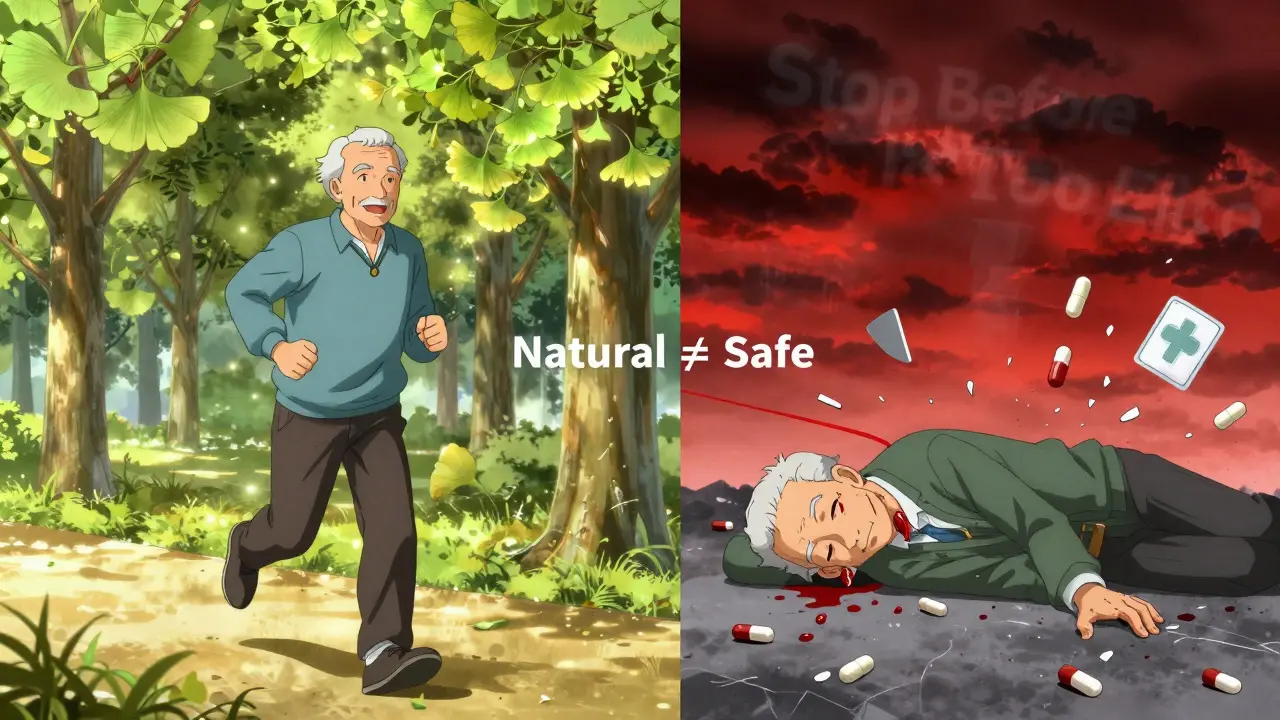
Even if you’ve taken Ginkgo for years without issues, that doesn’t mean it’s safe. Your body changes. Your medications change. Your risk changes.
What If You’re Already Taking Both?
If you’re on a blood thinner and currently taking Ginkgo biloba, don’t panic. But don’t ignore it either.Step 1: Stop taking Ginkgo immediately. Don’t wait. Don’t taper. Just stop.
Step 2: Call your doctor or pharmacist. Tell them exactly what you’ve been taking-name, dose, how long. Don’t say "I took a supplement." Say "I took 120 mg of Ginkgo biloba daily for 8 months." Specifics save lives.
Step 3: Get a blood test. If you’re on warfarin, ask for an INR check. If you’re on Plavix or aspirin, ask about platelet function or bleeding time. Don’t assume everything’s fine because you feel okay.
Step 4: Talk about alternatives. If you took Ginkgo for memory, ask about exercise, sleep, or medications proven to help cognition. If you took it for circulation, ask about walking, compression socks, or blood pressure control. There are safer options.
Why This Isn’t Just About Ginkgo
The bigger issue here isn’t Ginkgo biloba. It’s how we treat supplements.The FDA doesn’t review herbal products before they hit the shelf. Manufacturers don’t have to prove safety. Labels don’t have to list all ingredients. Two bottles of "Ginkgo biloba 120 mg" can have completely different potencies. One might have 10% active compounds. Another might have 25%. You won’t know.
And most people assume "natural" means "safe." That’s a deadly myth. Foxglove is natural. Poison ivy is natural. Ginkgo seeds? Poisonous. The leaves? Risky with blood thinners.
If you’re taking any supplement, you’re taking a drug. And drugs interact.
What to Do Next
Here’s what actually works:- Always tell every doctor, nurse, and pharmacist about every supplement you take-even if you think it’s "just herbs."
- Before starting any new supplement, ask: "Could this interact with my current meds?" Don’t Google it. Ask a pharmacist. They’re trained for this.
- If you’re on a blood thinner, avoid Ginkgo biloba entirely. There’s no benefit that outweighs the risk.
- If you’ve been taking Ginkgo for years and feel fine, that doesn’t mean it’s safe. It just means you haven’t had a bad reaction yet.
- Never take Ginkgo seeds. They’re toxic and can cause seizures.
There’s no magic pill for memory. No herb that replaces sleep, movement, or good blood pressure control. Ginkgo biloba might feel like a harmless shortcut. But when you’re on blood thinners, shortcuts can lead to the ER.
Can I take Ginkgo biloba if I’m on low-dose aspirin?
No. Even low-dose aspirin (80 mg) increases bleeding risk when combined with Ginkgo biloba. There are documented cases of eye bleeding and stomach hemorrhages from this combination. Stop Ginkgo if you’re on aspirin, even if you’ve taken it for years without issues.
How long should I stop Ginkgo before surgery?
The American Society of Anesthesiologists recommends stopping Ginkgo biloba 2 to 3 weeks before any surgery. Some studies suggest 36 hours might be enough, but that’s not enough of a safety margin. The 2-3 week window is the standard for good reason-it gives your body time to clear the compound and restore normal clotting function.
Does Ginkgo biloba thin the blood like warfarin?
No, it doesn’t work the same way. Warfarin blocks vitamin K, which affects clotting factors made in the liver. Ginkgo biloba affects platelets directly, making them less sticky. But the end result is similar: slower clotting. Even if the mechanism is different, the risk is the same.
Are there any safe herbal alternatives to Ginkgo for memory?
There’s no herbal supplement proven to reliably improve memory in healthy adults. The best evidence supports lifestyle changes: regular aerobic exercise, 7-8 hours of sleep, managing blood pressure, and staying socially active. If you have memory concerns, talk to your doctor about cognitive testing-not supplements.
Can Ginkgo biloba cause bleeding even without other medications?
Yes. There are documented cases of serious brain bleeding in people who took Ginkgo biloba daily for years without any other blood thinners. The herb alone can impair clotting enough to cause spontaneous hemorrhages, especially in older adults or those with fragile blood vessels.
What should I do if I start bleeding while taking Ginkgo?
Stop taking Ginkgo immediately. If bleeding is severe-like nosebleeds that won’t stop, blood in urine or stool, vomiting blood, or sudden headache with vision changes-go to the ER. Tell them you took Ginkgo biloba. Bring the bottle. This information can save your life.





oluwarotimi w alaka
December 29, 2025 AT 00:44Hakim Bachiri
December 30, 2025 AT 01:14Celia McTighe
December 30, 2025 AT 03:00ANA MARIE VALENZUELA
December 31, 2025 AT 07:39Bradly Draper
January 1, 2026 AT 11:16James Hilton
January 2, 2026 AT 13:16Sydney Lee
January 2, 2026 AT 22:51Julius Hader
January 3, 2026 AT 17:17Kelsey Youmans
January 5, 2026 AT 07:45Debra Cagwin
January 6, 2026 AT 09:54Ryan Touhill
January 7, 2026 AT 10:08