
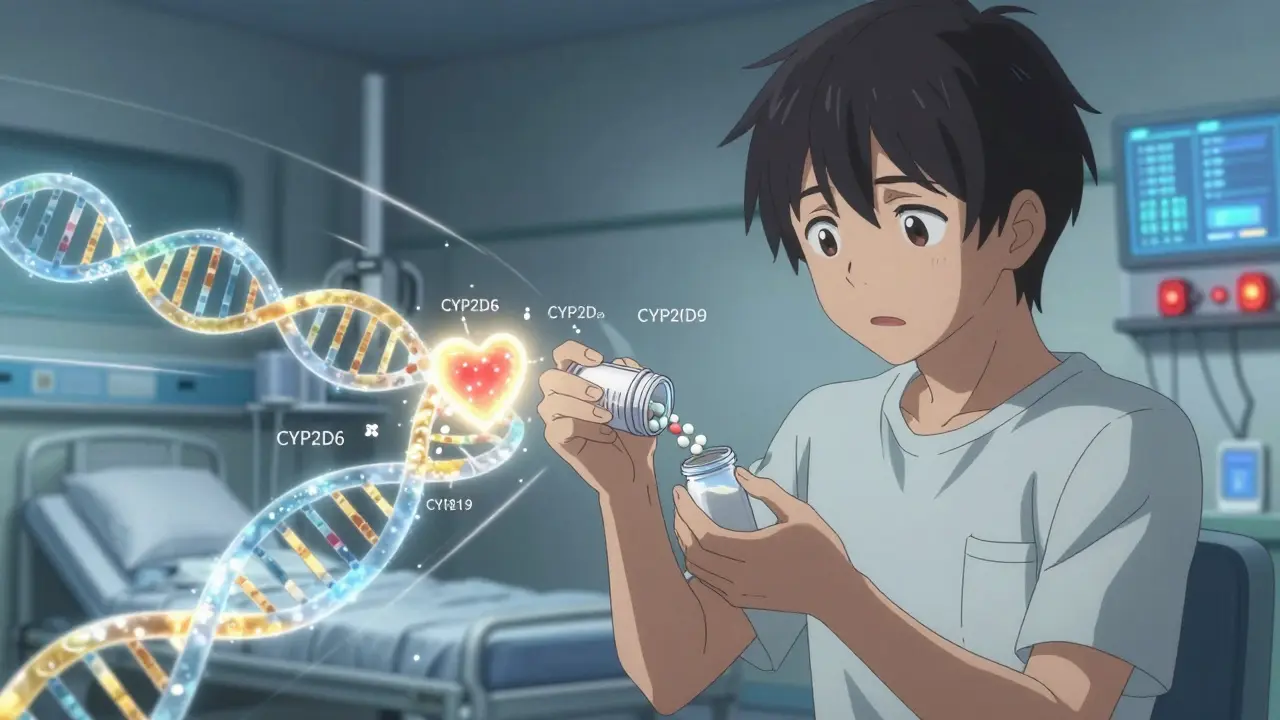
Pharmacogenomics Drug-Gene Interaction Checker
How Your Genes Affect Your Medications
Select a medication to see how your genetic variations could impact your response. This tool provides educational information only - always consult your healthcare provider.
Your Personalized Medication Analysis
Note: This is for educational purposes only. Genetic testing can provide more precise guidance for your specific medications. Always discuss with your healthcare provider before making any changes to your treatment plan.
Imagine taking a pill that’s supposed to help you feel better-only to end up in the hospital because your body processed it too fast, too slow, or not at all. This isn’t rare. About 70% of adverse drug reactions in the U.S. could be avoided if doctors knew how your genes affect your response to medication. That’s where pharmacogenomics comes in.
What Is Pharmacogenomics?
Pharmacogenomics is the study of how your genes influence the way your body handles drugs. It’s not about guessing. It’s about using your DNA to predict whether a medication will work, cause side effects, or even be dangerous. Think of it like a personalized instruction manual for your body’s drug-processing system. This field took off after the Human Genome Project finished in 2003. Suddenly, scientists could see the tiny differences in our DNA that make one person react to a drug completely differently than another. Today, it’s no longer just science fiction-it’s being used in hospitals across the country.Why Your Genes Matter More Than You Think
Your liver has a team of enzymes that break down most medications. The most important of these are part of the cytochrome P450 family. CYP2D6, CYP2C9, CYP2C19, and CYP3A4 handle about 70-80% of all prescription drugs. But here’s the catch: your version of these enzymes is shaped by your genes. For example, CYP2D6 metabolizes about 25% of commonly used drugs-like antidepressants, beta-blockers, and painkillers like codeine. Some people have extra copies of this gene and become “ultra-rapid metabolizers.” Their bodies turn codeine into morphine so fast they can overdose on a normal dose. Others have a broken version and are “poor metabolizers.” For them, codeine does nothing at all. Then there’s CYP2C19. If you’re taking clopidogrel (Plavix) after a heart stent, this enzyme turns the drug into its active form. About 30% of people have a variant that makes them poor metabolizers. Without testing, they’re left with a drug that doesn’t work-and a higher risk of another heart attack.Real-World Impact: From Trials to Real Life
In 2022, a major study in JAMA followed 1,838 patients on antidepressants. Those who got treatment based on their genetic profile had a 26.9% higher chance of going into remission and 29.7% fewer side effects than those who didn’t. That’s not a small improvement-it’s life-changing for someone who’s tried three drugs and still can’t sleep or feel happy. For warfarin, the blood thinner, combining genetic info with standard dosing cuts the risk of dangerous bleeding by 31% in the first month. That’s because two genes-CYP2C9 and VKORC1-control how quickly the body breaks it down. Without testing, doctors guess the dose. With testing, they know. In cancer care, a simple test for DPYD before giving 5-fluorouracil (a chemo drug) can prevent life-threatening toxicity. About 0.2% of people have a dangerous variant. Without screening, they get sick. With it, they get a safer alternative.
Who Benefits the Most?
Pharmacogenomics isn’t useful for every drug. It shines where the stakes are high and the options are limited:- Psychiatry: 40-60% of patients don’t respond to their first antidepressant. Genetics explains why.
- Cardiology: Clopidogrel, statins, and warfarin all have strong gene-drug links.
- Oncology: Chemo drugs like 5-FU and thiopurines can be deadly without genetic screening.
- Pain management: Codeine, tramadol, and oxycodone are all affected by CYP2D6.
What’s Tested? The Common Gene-Drug Pairs
Most clinical tests look at 50-100 genes, but only a few have proven, actionable results. Here are the big ones:| Gene | Drug(s) | Effect of Variant | Clinical Action |
|---|---|---|---|
| CYP2D6 | Codeine, tramadol, SSRIs, beta-blockers | Ultra-rapid or poor metabolizer | Avoid codeine in ultra-rapid; switch antidepressants in poor metabolizers |
| CYP2C19 | Clopidogrel, proton pump inhibitors | Poor metabolizer | Use prasugrel or ticagrelor instead of clopidogrel |
| TPMT | Thioguanine, azathioprine | Deficient activity | Reduce dose by 90% or avoid entirely |
| DPYD | 5-Fluorouracil, capecitabine | Deficient activity | Avoid drug; use alternative chemo |
| SLCO1B1 | Simvastatin | Variant increases muscle toxicity risk | Use lower dose or switch statin |
Barriers to Widespread Use
You might think: if this works so well, why isn’t everyone doing it? First, cost. A full pharmacogenomic test runs $250-$500. Insurance doesn’t always cover it. In 2022, 18% of patients had their tests denied. Another 32% waited over two weeks for approval. Second, doctors aren’t trained for it. Most didn’t learn pharmacogenomics in medical school. A 2023 survey found that 68% of clinicians feel more confident after using PGx-but nearly half say their electronic health records don’t make it easy to act on the results. Third, the data isn’t balanced. Over 90% of pharmacogenomic studies have been done on people of European descent. That means the guidelines may not work as well for Black, Hispanic, Asian, or Indigenous patients. This isn’t just a gap-it’s a safety risk.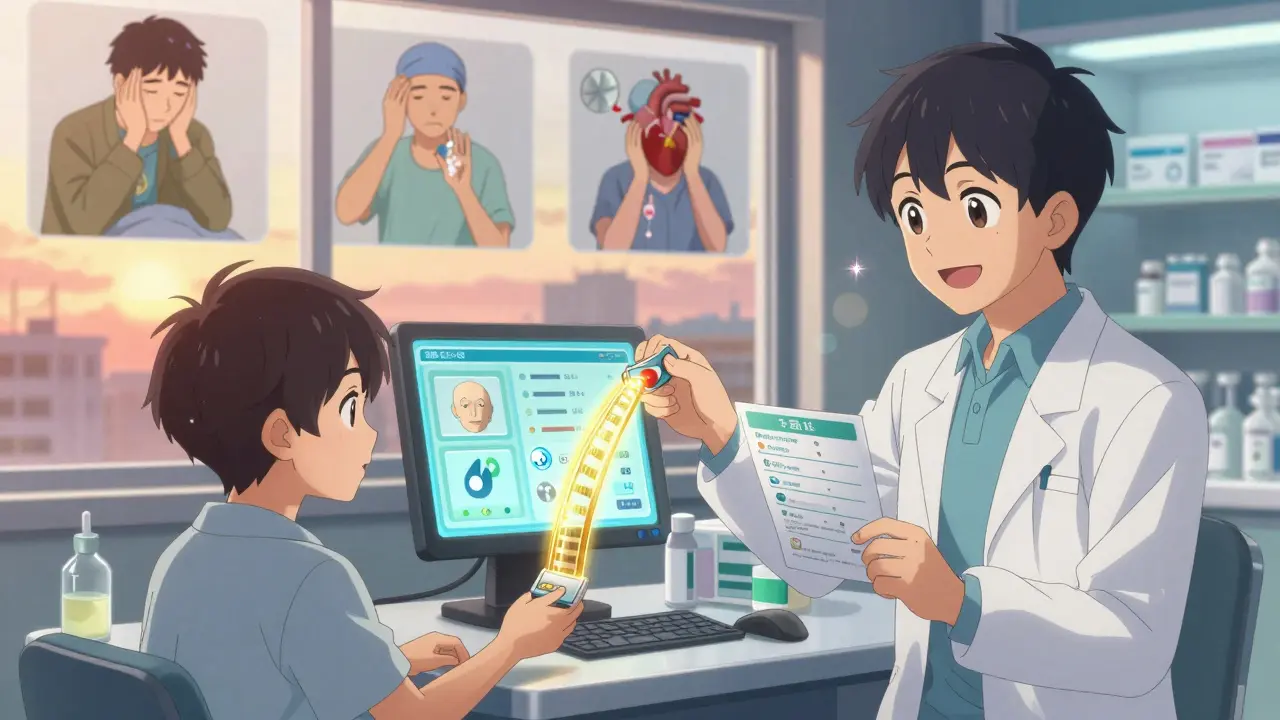
How It’s Being Used Today
The VA has tested over 100,000 veterans. Result? 22% fewer hospitalizations from drug reactions. The Mayo Clinic’s RIGHT study screened 10,000 patients and saved $1,200 per person per year by avoiding ER visits and hospital stays. In 2023, the FDA approved the first next-generation sequencing test for pharmacogenomics: OneOme’s RightMed Comprehensive. It checks 27 genes and 350+ drugs in one go. That’s a big step toward making this routine. Some direct-to-consumer companies like 23andMe now offer limited PGx reports-for seven drugs. But these aren’t diagnostic. They’re starting points. Always talk to a doctor before changing your meds based on a DTC test.Where This Is Headed
By 2030, 67% of healthcare leaders expect pharmacogenomic testing to be standard for everyone by age 18. Imagine getting your DNA checked at 16 or 18, and your results stored in your medical record for life. Then, every time a doctor prescribes a new drug, the system flags a potential risk before you even leave the office. The NIH is spending $190 million on the IGNITE Network to make this happen-especially in underrepresented populations. The WHO has added pharmacogenomics to its list of essential diagnostics. This isn’t about replacing doctors. It’s about giving them better tools. It’s about stopping the guesswork. It’s about making sure the next pill you take doesn’t just treat your illness-it doesn’t put you in more danger.What You Can Do Now
If you’ve had multiple medications fail, or you’ve had a bad reaction to a drug, ask your doctor about pharmacogenomic testing. It’s not a magic bullet-but for certain drugs, it’s the difference between feeling better and ending up in the hospital. You don’t need to wait for your doctor to bring it up. Bring it up yourself. Say: “I’ve had trouble with medications before. Is there a genetic test that could help guide what’s safe for me?” And if you’re on a drug like clopidogrel, warfarin, or a chemo agent-don’t assume your dose is right just because it’s “standard.” Ask if your genes have been considered. Your DNA doesn’t change. But your treatment should.What is pharmacogenomics?
Pharmacogenomics is the study of how your genes affect how your body processes medications. It helps doctors choose the right drug and dose based on your DNA, reducing side effects and improving effectiveness.
Which genes are most important for drug metabolism?
The most important genes are CYP2D6, CYP2C19, CYP2C9, and SLCO1B1. These control how your body breaks down common drugs like antidepressants, blood thinners, statins, and painkillers. Variants in these genes can make drugs ineffective or dangerous.
Is pharmacogenomic testing covered by insurance?
Coverage is improving but inconsistent. As of 2023, 87% of Medicare Advantage plans and 65% of commercial insurers cover at least one pharmacogenomic test-usually for high-risk drugs like clopidogrel or chemotherapy agents. Many tests still require prior authorization.
Can I get tested through 23andMe or Ancestry?
Yes, but with limits. 23andMe offers limited pharmacogenomic reports for seven medications, including clopidogrel and simvastatin. These are for informational purposes only and aren’t diagnostic. Always confirm results with a healthcare provider before changing your treatment.
Why doesn’t everyone get tested?
Cost, lack of provider training, and poor integration into electronic health records are the main barriers. Also, most research has been done on people of European descent, so the data may not apply well to other groups. These gaps are being addressed, but progress is slow.
How long does a pharmacogenomic test take?
Turnaround time varies. Simple single-gene tests can take 24-48 hours. Comprehensive panels using next-generation sequencing usually take 7-14 days. Some hospitals now offer rapid testing for urgent cases, like before starting chemotherapy.





Jamillah Rodriguez
February 2, 2026 AT 12:56OMG I took codeine after surgery and felt like I was dying 😵💫 turns out I’m an ultra-rapid metabolizer-my body turned it into morphine like a damn factory. My doctor had NO idea. This post saved my life.
Susheel Sharma
February 2, 2026 AT 18:09While the premise is scientifically sound, the article exhibits a glaring Eurocentric bias. The majority of pharmacogenomic data originates from populations of European descent, rendering clinical guidelines potentially hazardous for South Asian, African, and Indigenous populations. This isn't innovation-it's genetic colonialism dressed up as precision medicine.
Janice Williams
February 4, 2026 AT 11:39Let’s be brutally honest: this is all just expensive guesswork with a fancy name. If your doctor can’t prescribe a safe dose without a $500 genetic test, they shouldn’t be prescribing at all. We’ve been managing warfarin for decades with INRs. Why complicate it with DNA theatrics?
Roshan Gudhe
February 5, 2026 AT 02:07There’s something deeply human here-not just science. Our bodies carry ancestral whispers in our DNA. A grandmother’s metabolism, a great-uncle’s reaction to aspirin, a cousin’s tragedy with chemo… these aren’t just SNPs. They’re stories. And now, finally, medicine is learning to listen.
But we must be careful. Knowledge without equity is a weapon. If only the privileged get tested, we’re not healing-we’re dividing. The NIH’s $190M push is a start, but real change happens when clinics in rural India or Appalachia can access this too.
Rachel Kipps
February 5, 2026 AT 18:23i had no idea about cyp2c19 and clopidogrel… my dad had a stent and they gave him plavix and he had another heart attack… we never thought to check his genes. i’m going to ask my dr next appt. thanks for sharing.
Prajwal Manjunath Shanthappa
February 6, 2026 AT 00:47Oh, wonderful. Another corporate-backed, FDA-approved, profit-driven genetic panacea. Let’s not forget: 23andMe sells your data, your doctor doesn’t understand it, and your insurer denies it. This isn’t medicine-it’s a lucrative data harvest disguised as innovation. And the worst part? It distracts from systemic issues: underfunded hospitals, overworked clinicians, and pharmaceutical monopolies.
Wendy Lamb
February 6, 2026 AT 01:07My sister’s chemo dose was lowered because of DPYD. She didn’t end up in the ICU. That’s all I need to know.
Antwonette Robinson
February 7, 2026 AT 15:03Oh, so now we’re going to test everyone’s DNA before giving them ibuprofen? Next you’ll want to sequence my coffee tolerance. ‘Sorry, Karen, your CYP1A2 variant means you metabolize caffeine too slowly. You’re banned from lattes.’
Ed Mackey
February 8, 2026 AT 17:32My doc ordered the test after I had a bad reaction to an SSRI. Turned out I’m a poor CYP2D6 metabolizer. Switched meds, no more nausea or brain fog. Best $300 I ever spent. Just wish my insurance hadn’t fought it for 6 weeks.
Katherine Urbahn
February 9, 2026 AT 07:15This is not medicine. This is genetic determinism masquerading as science. You cannot reduce human physiology to a few SNPs. Drug interactions are complex. Environment matters. Diet matters. Liver function matters. Reducing care to a genetic report is not just reductive-it’s dangerous. And you’re normalizing it.
Alex LaVey
February 10, 2026 AT 17:46As someone who grew up in a country where meds are often bought off the street, I never imagined medicine could be this personal. This isn’t just about genes-it’s about dignity. Knowing your body’s rules before you take a pill? That’s respect. That’s care. I hope this becomes universal-not just for the rich.
caroline hernandez
February 11, 2026 AT 02:32From a clinical pharmacy perspective: the CPIC guidelines are gold standard. But the real bottleneck is EHR integration. We have the data, but the system doesn’t auto-flag CYP2C19 poor metabolizers on clopidogrel. It’s like having a Ferrari engine with a bicycle brake. We need smarter clinical decision support-not more testing.
Jhoantan Moreira
February 12, 2026 AT 06:17My mum’s from Jamaica, my dad’s from Wales. I got tested and found out I’m a CYP2D6 ultra-rapid metabolizer-no wonder I never responded to antidepressants growing up. It’s wild how much of our health history is locked in our DNA. I’m just glad we’re finally unlocking it-for everyone.
Joseph Cooksey
February 13, 2026 AT 22:28Let’s not kid ourselves: pharmacogenomics is the future, but we’re still in the Stone Age of implementation. We’ve got the science, sure-but we’re drowning in bureaucratic inertia. Insurance denials? Check. Clinicians who think ‘genetics’ means ‘blood type’? Check. EHRs that don’t even highlight flagged variants? Triple check. And don’t get me started on the fact that the FDA-approved test costs more than a used car. This isn’t precision medicine-it’s precision privilege. Until we fix access, equity, and education, we’re just putting lipstick on a pig. And yes, I’ve seen it firsthand: a patient on 5-FU with DPYD deficiency who nearly died because the lab report sat in a folder for three weeks. Three weeks. While they were vomiting blood. This isn’t innovation. It’s negligence dressed in white coats.