
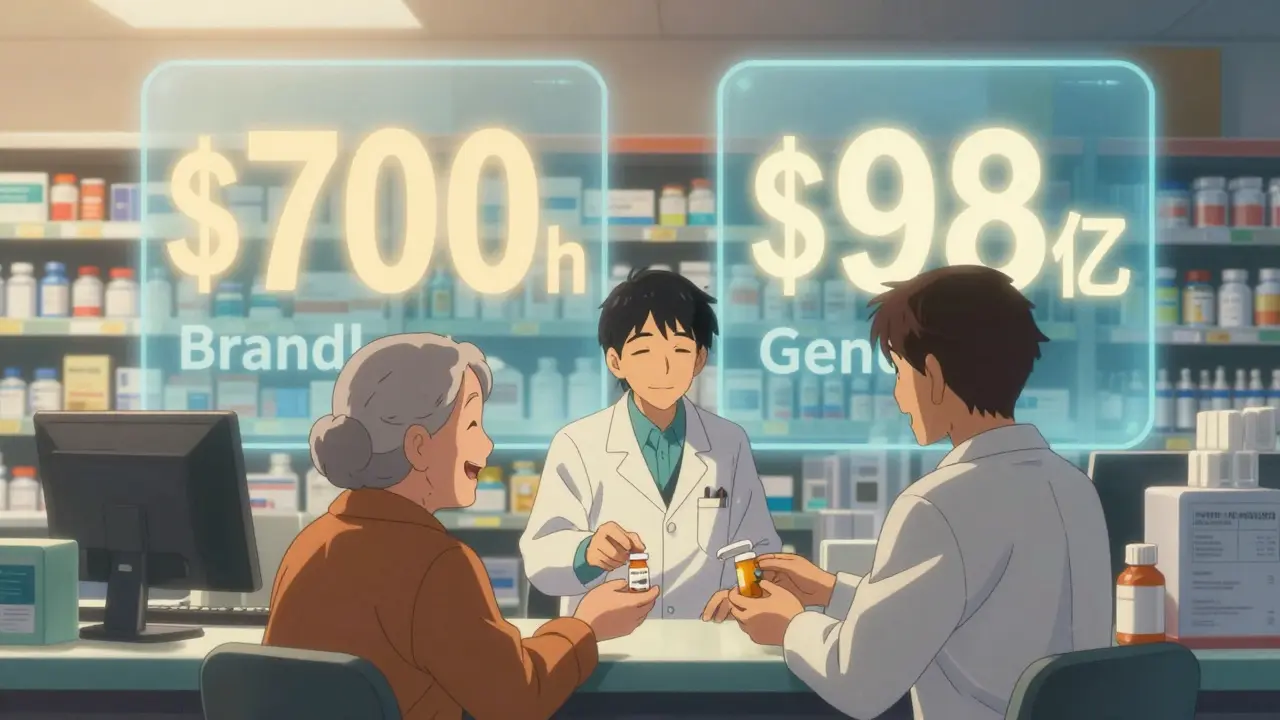
Every year, Americans fill over 3.9 billion prescriptions. Almost 90% of them are for generic drugs. And yet, those same generics make up just 12% of total prescription drug spending. The math doesn’t lie: you’re paying a fraction of what you’d pay for the brand-name version - and the savings are staggering.
How Much Are Generic Drugs Really Saving?
In 2024 alone, generic and biosimilar medicines saved the U.S. healthcare system $467 billion. That’s not a guess. It’s from the 2025 U.S. Generic & Biosimilar Medicines Savings Report, backed by data from IQVIA and the Association for Accessible Medicines. Over the past decade, those savings have added up to more than $3.4 trillion. To put that in perspective: if you took all the money spent on brand-name drugs in 2024 and gave it back to patients in cash, you’d need to hand out $700 billion. Generics covered 90% of prescriptions but cost only $98 billion. Brand-name drugs? Just 10% of prescriptions, but $700 billion in spending.
The difference isn’t small. The average out-of-pocket cost for a generic prescription in 2024 was $6.95. For a brand-name drug? $28.69. That’s almost five times more. For someone without insurance, the gap gets worse. Brand-name drugs cost $130.18 per prescription on average - up 50% since 2019. Meanwhile, generics went down. They dropped $2.45, or 6%, over the same period.
Why Are Generics So Much Cheaper?
It’s not magic. It’s competition. When a brand-name drug’s patent expires, other manufacturers can legally make the same medicine. They don’t have to repeat expensive clinical trials. They don’t have to spend millions on advertising. They just need to prove their version works the same way. That drives prices down - fast.
Since 2019, total spending on all generic drugs in the U.S. has dropped by $6.4 billion - even though more prescriptions are being filled. In 2015, about 167 billion generic pills were sold. By 2024, that number jumped to 197 billion. More people using generics. Less money spent. That’s deflation in action. No other sector in healthcare does that.
Take Vasostrict, a blood pressure drug. In April 2025, its list price was slashed by 76% in just a few months. That’s not an exception. It’s the pattern. Generic manufacturers compete so hard on price that they often sell at or near cost just to stay in the market.
Biosimilars Are the Next Big Wave
Biosimilars are the next generation of generic drugs - but for complex biologic medications, like those used for cancer, rheumatoid arthritis, or diabetes. They’re harder to copy than a simple pill, but they’re still far cheaper than the original.
In 2024, biosimilars saved $20.2 billion - nearly double what they saved the year before. Since they entered the market in 2015, they’ve saved $56.2 billion total. About 60% of those savings happened in just the last two years. That means adoption is accelerating. Patients are getting access to life-saving treatments at a fraction of the cost.
These drugs have been used across 3.3 billion patient therapy days with no unique safety issues reported. That’s important. Too many people still think biosimilars are “inferior.” They’re not. They’re clinically equivalent. The FDA requires them to match the original in safety, strength, and effectiveness.
The Hidden Cost of Brand-Name Price Hikes
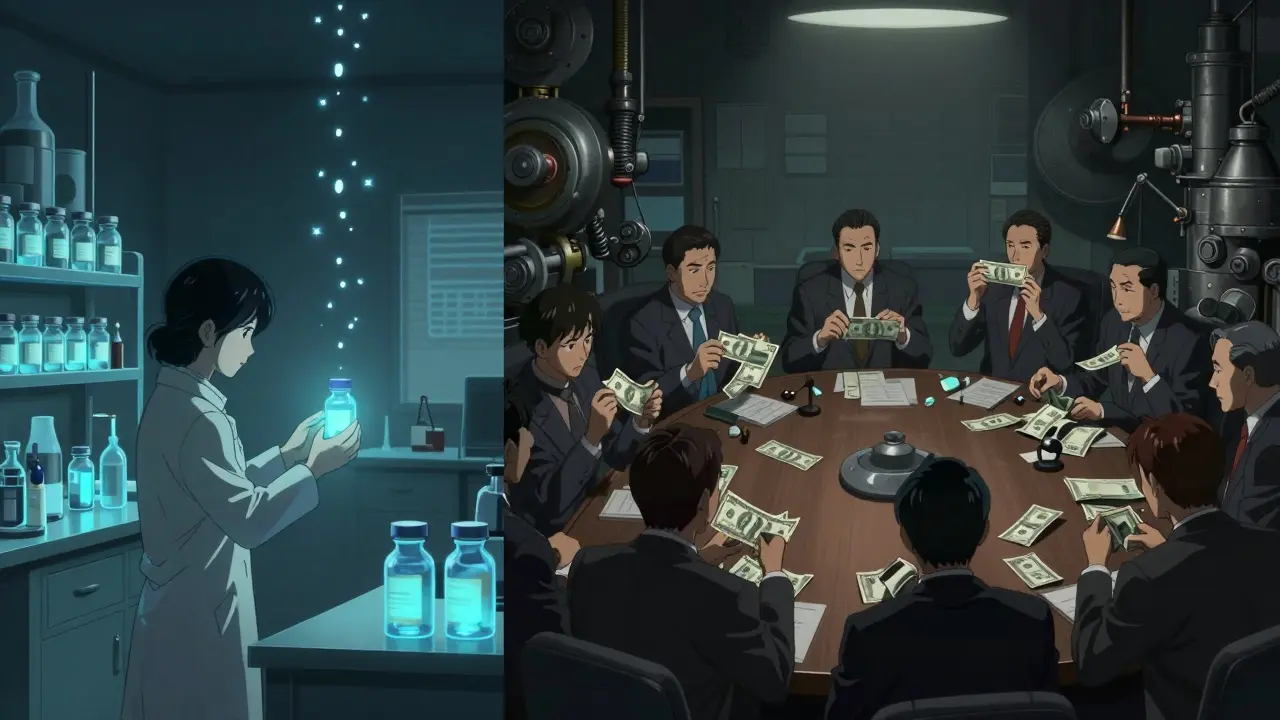
While generics keep getting cheaper, brand-name drug prices keep going up. In January 2025, major pharmaceutical companies raised prices on 250 drugs by a median of 4.5%. That’s nearly double the general inflation rate. Some drugs saw increases of 10%, 20%, even 50%.
Why does this matter? Because even if you’re on a generic, your insurance or Medicare might still be paying more for the brand-name version - and that cost gets passed on. It also means that when a generic isn’t available - because the manufacturer went out of business or couldn’t make a profit - you’re stuck with the expensive option.
And here’s the kicker: the biggest cost drivers aren’t generics. They’re specialty drugs. These are high-tech, high-cost treatments for rare conditions. By 2025, they’re expected to make up 60% of all drug spending - even though they account for less than 5% of prescriptions.
How Generics Are Saving Medicare
Medicare Part D spent $142 billion less in 2024 because of generic drugs. That’s $2,643 saved per beneficiary. Imagine if you got a $2,600 refund every year just for taking your pills. That’s what generics do for seniors.
But the system is under pressure. Generic manufacturers say they can’t keep making drugs if they’re forced to sell at prices that don’t cover production costs. Some have already stopped making certain medications because the profit margin is too thin. Others are leaving the market entirely.
The Biosimilars Council warns that if this continues, we could see drug shortages. Not because of supply chain issues - but because no one can afford to make the medicine anymore. That’s why they’re pushing for policy changes: stop patent abuse, streamline FDA approval, and fix how pharmacy benefit managers (PBMs) negotiate prices.

What’s Holding Back More Savings?
There are two big roadblocks: patent thicketing and pay-for-delay deals.
Patent thicketing is when a brand-name company files dozens of minor patents - on packaging, dosing schedules, even pill color - to block generics from entering the market. The Congressional Budget Office estimates that stopping this practice would save $1.8 billion over 10 years.
Pay-for-delay is even worse. That’s when a brand-name company pays a generic manufacturer to delay launching its cheaper version. The Actuarial Research Corporation found these deals cost the system $12 billion a year. Medicare alone loses $3 billion annually. Banning them could save $45 billion over a decade.
And then there’s the Most-Favored-Nation rule - a new policy trying to bring U.S. drug prices in line with other countries. Right now, the U.S. pays three to five times more than Canada, Germany, or the UK. If this rule sticks, it could pressure brand-name companies to lower prices - and make generics even more valuable.
What This Means for You
If you’re taking a prescription drug, ask: Is there a generic? Always. Even if your doctor didn’t mention it. Pharmacists can often switch you without a new prescription. And if your insurance denies it? Appeal. The savings are real.
For example, a 30-day supply of Lipitor (brand-name atorvastatin) might cost $150. The generic? $10. That’s $1,680 saved per year. Multiply that by millions of people. That’s why generics are the most effective cost-control tool in American healthcare.
The numbers don’t lie. Generics work. They’re safe. They’re effective. And they’re saving trillions. But if we don’t fix the broken parts of the system - the patent games, the pay-for-delay deals, the unsustainable pricing - we risk losing the very thing that keeps medicine affordable.
Are generic drugs as effective as brand-name drugs?
Yes. The FDA requires generic drugs to have the same active ingredients, dosage, strength, route of administration, and performance as the brand-name version. They must also be bioequivalent - meaning they work the same way in your body. The only differences are in inactive ingredients like fillers or colorants, which don’t affect how the drug works.
Why are generic drugs cheaper if they’re the same?
Generic manufacturers don’t have to repeat expensive clinical trials or spend millions on advertising. Once a brand-name drug’s patent expires, multiple companies can produce the same medicine. That competition drives prices down. Brand-name companies recoup their R&D costs during the patent period - generics don’t need to.
Can I switch from a brand-name drug to a generic without asking my doctor?
In most cases, yes. Pharmacists can substitute a generic unless your prescription says "dispense as written" or "no substitution." Many states allow automatic substitution. Even if your doctor didn’t prescribe it, ask your pharmacist - they can often switch you without a new prescription.
Why are some generic drugs still expensive?
Some generics stay pricey because there’s little competition - often because only one or two companies make them. This is common for older drugs, injectables, or medications with complicated manufacturing. When competition is low, prices don’t drop. That’s why policymakers are pushing for faster FDA approvals and more manufacturers to enter the market.
Do biosimilars save as much as regular generics?
They save even more - per drug. While a single generic pill might save $20, a biosimilar for a biologic drug like Humira can save $10,000 or more per patient per year. The total savings from biosimilars hit $20.2 billion in 2024, and they’re growing fast. The challenge is getting them adopted faster - many patients and doctors still don’t realize they’re safe and equivalent.
Is there a risk of shortages with generic drugs?
Yes. When manufacturers can’t make money on a drug, they stop making it. That’s happened with dozens of generics in recent years - especially older, low-cost drugs. The FDA tracks shortages, and in 2024, over 100 generic drugs were listed as in short supply. The solution? Better pricing structures, fewer regulatory delays, and policies that prevent price gouging on raw materials.

Jacob Hessler
March 22, 2026 AT 17:53Danielle Arnold
March 24, 2026 AT 07:29James Moreau
March 24, 2026 AT 23:55Brandon Shatley
March 25, 2026 AT 05:44Kenneth Jones
March 26, 2026 AT 18:34Natasha Rodríguez Lara
March 27, 2026 AT 10:42Caroline Bonner
March 29, 2026 AT 11:09peter vencken
March 30, 2026 AT 19:42Chris Crosson
March 31, 2026 AT 15:24