
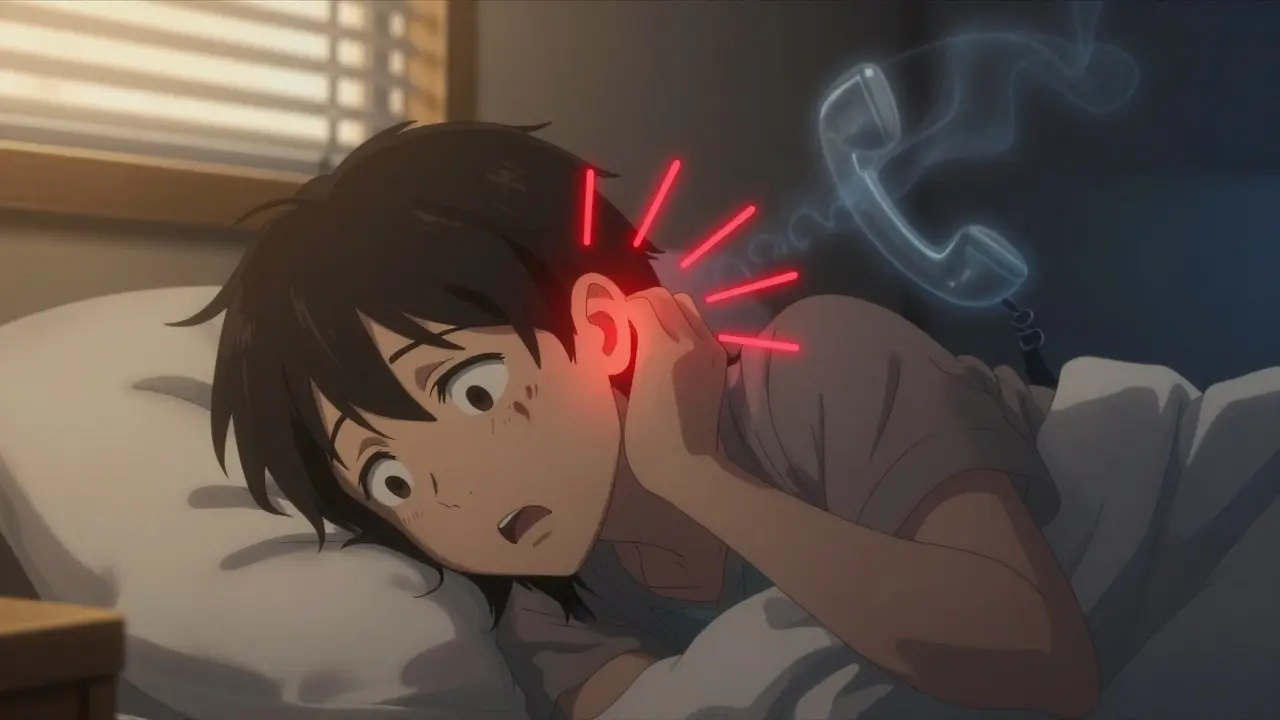
When your hearing drops suddenly-like flipping a switch off-it’s not just annoying. It’s a medical emergency. Sudden sensorineural hearing loss (SSNHL) isn’t just a quiet moment. It’s a signal that something in your inner ear has gone wrong, and time is working against you. You might wake up deaf in one ear, or notice it while talking on the phone. No pain. No warning. Just silence where sound used to be. And if you wait too long to act, that silence could become permanent.
What Exactly Is Sudden Sensorineural Hearing Loss?
SSNHL is defined as a rapid drop of at least 30 decibels in hearing across three connected frequencies, happening in under 72 hours. That’s like going from normal conversation to hearing only shouts. It affects 5 to 27 people per 100,000 each year, mostly between ages 50 and 60, but it can strike anyone-even kids. The cause? Often unknown. Some cases link to viruses, blood flow issues, or immune reactions, but in most, doctors can’t pinpoint why. That’s why treatment focuses on what we can control: reducing inflammation and protecting the delicate hair cells in your cochlea.
Why Steroids Are the First Line of Defense
High-dose oral corticosteroids are the standard starting point for treatment. The most common choice is Prednisone at 1 mg per kilogram of body weight-usually capped at 60 mg per day-taken as a single morning dose for 7 to 14 days, then slowly tapered. Why? Because steroids cut inflammation, calm immune overreactions, and may improve blood flow to the inner ear. They don’t cure the cause, but they give your hearing a fighting chance.
An alternative is Dexamethasone. It’s stronger-five to seven times more potent than Prednisone-and lasts longer in the body. But studies show both drugs lead to similar recovery rates. The choice often comes down to side effects and availability. Dexamethasone is sometimes preferred for patients with diabetes or high blood pressure because it’s given in shorter bursts, reducing overall systemic exposure.
The Clock Is Ticking: Timing Is Everything
This isn’t something you can put off. The window for effective treatment is narrow. If you start steroids within two weeks, about 61% of patients see significant hearing improvement. After four weeks? That number drops to 19%. Beyond six weeks, there’s almost no benefit. A 2015 study showed that patients treated within 72 hours had nearly double the chance of recovery compared to those who waited longer. That’s why every hour counts. If you notice sudden hearing loss, don’t wait for your next doctor’s appointment. Go to an emergency room or an ENT specialist immediately. Get an audiogram within three days. Delaying diagnosis is the number one reason people end up with permanent hearing loss.
What If Oral Steroids Don’t Work?
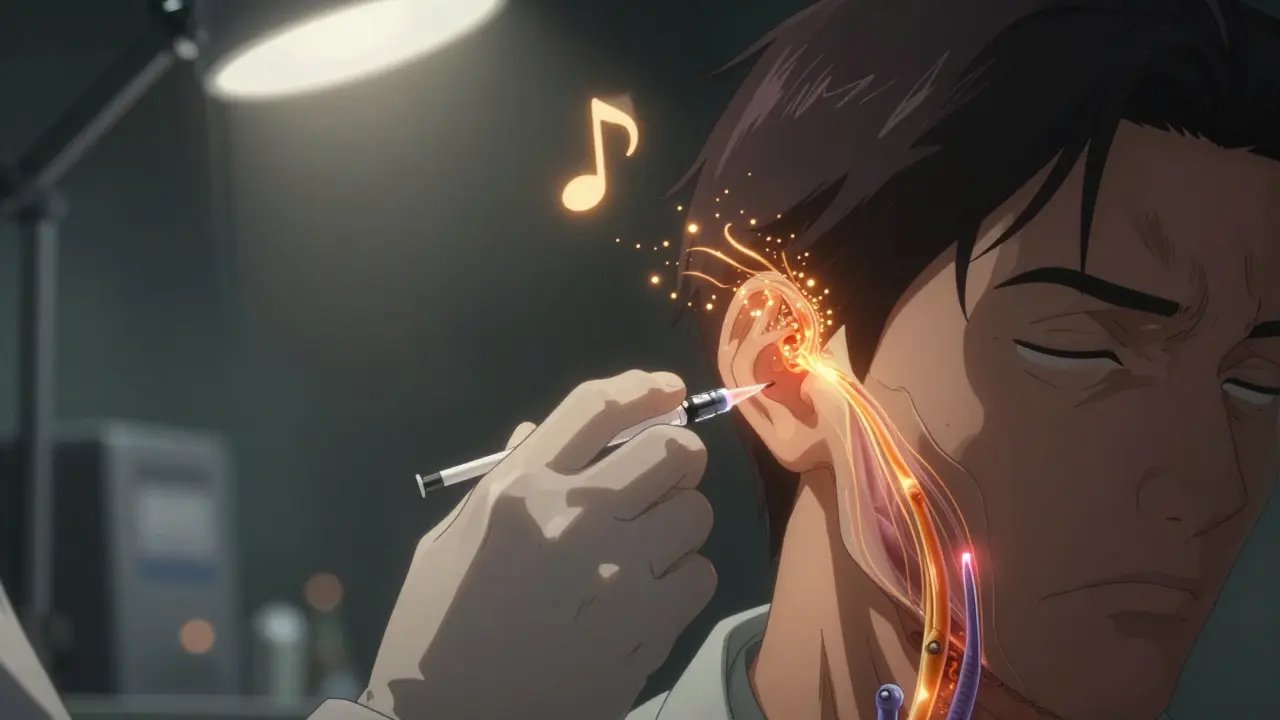
Not everyone responds to pills. That’s where intratympanic steroid injections come in. This is when a doctor injects Dexamethasone directly into the middle ear through the eardrum. The medication seeps through the membrane into the inner ear, delivering a high dose right where it’s needed-with far fewer side effects than oral steroids. It’s often used as a second step if hearing doesn’t improve after two to six weeks of oral treatment. Studies show 42% to 65% of these patients regain some hearing. It’s not glamorous-it’s a needle through the eardrum-but for many, it’s the only thing that works. One patient described it as an 8 out of 10 pain during the procedure, but said, “It saved my job. I’m a musician. I had to hear.”
What Doesn’t Work (And Why You Should Avoid It)
There’s a lot of noise out there about treatments for sudden hearing loss. Antivirals? Thrombolytics? Vasoactive drugs? None of them have proven better than a placebo in large studies. The American Academy of Otolaryngology clearly states these should not be used. Hyperbaric oxygen therapy (HBOT) shows a small benefit-adding 6% to 12% improvement when combined with steroids-but it’s expensive ($200 to $1,200 per session), hard to access (only 37% of U.S. hospitals offer it), and only effective if started within 28 days. For most people, it’s not worth the cost or hassle unless other options have failed.
Side Effects You Need to Know
Oral steroids aren’t harmless. Taking 60 mg of Prednisone daily for two weeks can cause serious side effects. About 28% of diabetic patients see dangerous spikes in blood sugar. Insomnia hits 41% of users. Mood swings, anxiety, and weight gain (average 4.7 kg over two weeks) are common. One Reddit user wrote, “I gained 10 pounds in 10 days. I felt like a different person.” Some develop stomach ulcers and need proton pump inhibitors just to cope. That’s why doctors weigh risks carefully-especially for patients with existing conditions. For those at high risk, intratympanic injections become the safer first choice.
What Happens If You Don’t Treat It?
About one-third to two-thirds of people recover some hearing on their own. But that’s a gamble. For every person who recovers naturally, another loses hearing permanently. That’s why guidelines strongly recommend treatment even when the cause is unknown. The risk of doing nothing is too high. Permanent hearing loss in one ear affects balance, speech understanding in noisy places, and even mental health. Studies show people with untreated SSNHL are more likely to develop depression and social isolation.
How Doctors Diagnose It
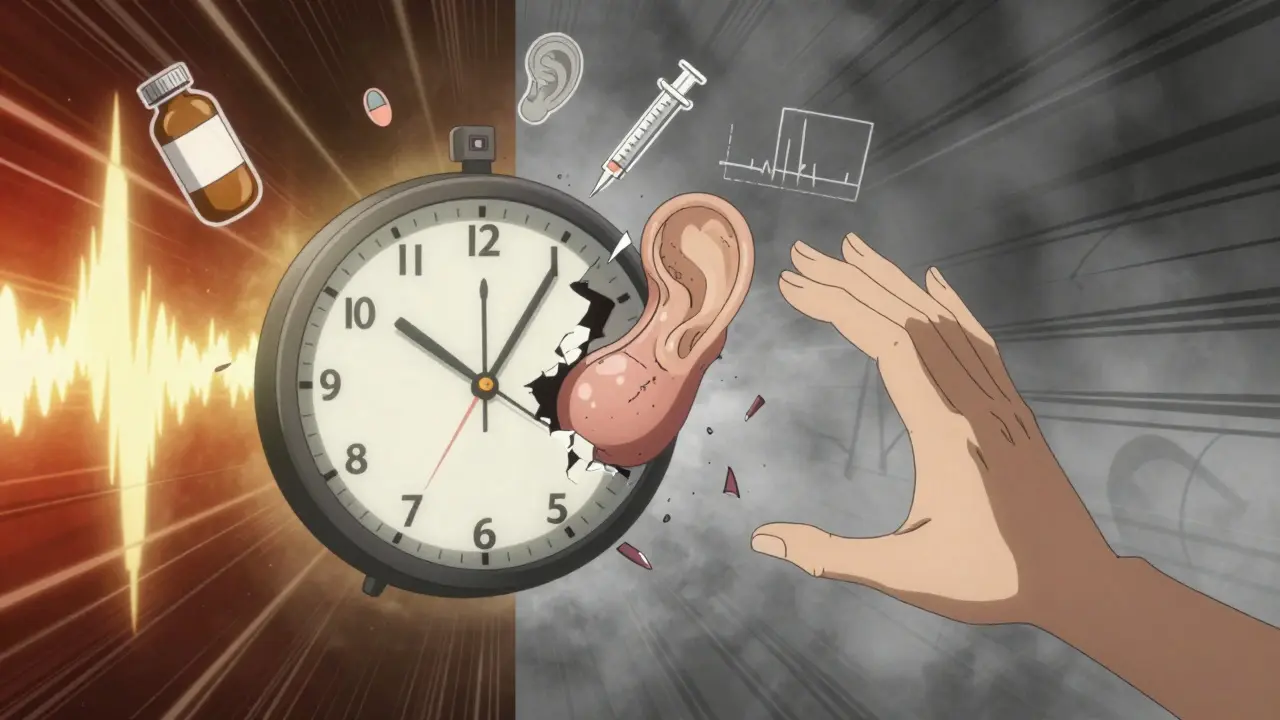
In the ER or clinic, they’ll start with simple tests. The Weber test checks if sound lateralizes to one ear. The Rinne test compares air and bone conduction. If the results point to sensorineural loss, they’ll rush you for a full audiogram. This isn’t optional. Without this test, you can’t confirm SSNHL or measure recovery. Primary care doctors need just 3 to 5 hours of training to recognize the signs and start treatment. But too often, patients are sent home with “earwax” or “ear infection” diagnoses-and lose precious time.
Insurance, Access, and Real-World Barriers
Even with clear guidelines, access isn’t equal. In the U.S., 42% of insurance claims for intratympanic injections are initially denied, requiring appeals and paperwork delays. Hyperbaric chambers are rare. In rural areas, getting to an ENT specialist within 72 hours can be impossible. And while steroids themselves cost as little as $5 for a full Prednisone course, follow-up audiograms and specialist visits can push total costs to $3,200-$7,800 per case. The system isn’t perfect. But knowing what to demand-immediate audiogram, steroid treatment within 72 hours-can make all the difference.
What’s Next? Personalized Treatment on the Horizon
Researchers are looking beyond steroids. Phase 2 clinical trials are testing blood markers that predict who will respond to steroids. If a patient’s inflammation profile suggests low response, doctors might skip oral steroids and go straight to injections. The goal is no longer “one-size-fits-all” treatment. It’s precision medicine for hearing. But for now, steroids remain the only proven tool. Experts agree: they’ll stay first-line for at least the next decade.
Can sudden hearing loss fix itself without treatment?
Yes, in about 32% to 65% of cases, some hearing returns on its own. But that’s a gamble. Without treatment, you risk permanent damage. The odds of full recovery jump significantly when steroids are started within 72 hours. Don’t wait to see if it gets better-act fast.
Is it safe to take steroids for sudden hearing loss if I have diabetes?
Oral steroids like Prednisone can spike blood sugar, and up to 28% of diabetic patients experience dangerous highs. If you have diabetes, your doctor may recommend intratympanic steroid injections instead. These deliver medication directly to the ear with minimal impact on your blood sugar. Always discuss your full medical history before starting treatment.
How long do I need to take steroids for sudden hearing loss?
The standard course is 7 to 14 days of high-dose oral steroids, followed by a gradual taper over the same period. Stopping too early can reduce effectiveness. Even if you feel better after a few days, finish the full course unless your doctor says otherwise. Skipping the taper can cause rebound symptoms.
Can children get sudden sensorineural hearing loss?
Yes. While most cases occur in adults over 50, SSNHL can happen at any age, including in children. It’s rarer, but just as urgent. Any child who suddenly stops responding to sounds, especially in one ear, needs immediate evaluation. Pediatric cases often require different dosing and careful monitoring, but the same time-sensitive treatment principles apply.
Do I need an MRI if I have sudden hearing loss?
Not always. The AAO-HNSF guideline recommends an MRI only if there are signs of asymmetry, neurological symptoms, or if hearing doesn’t improve after treatment. In most cases, a normal audiogram and no other symptoms mean an MRI isn’t needed right away. But if your doctor suspects a tumor or nerve issue, they’ll order one. Don’t assume you need one-ask why.
What should I do if my doctor says to wait and see?
Get a second opinion immediately. The 2019 clinical guideline is clear: SSNHL requires urgent evaluation and treatment. Waiting more than 72 hours reduces recovery chances by more than half. If your doctor dismisses it as “just earwax” or “a virus,” go to an ENT specialist or emergency room. Your hearing is on the line.