
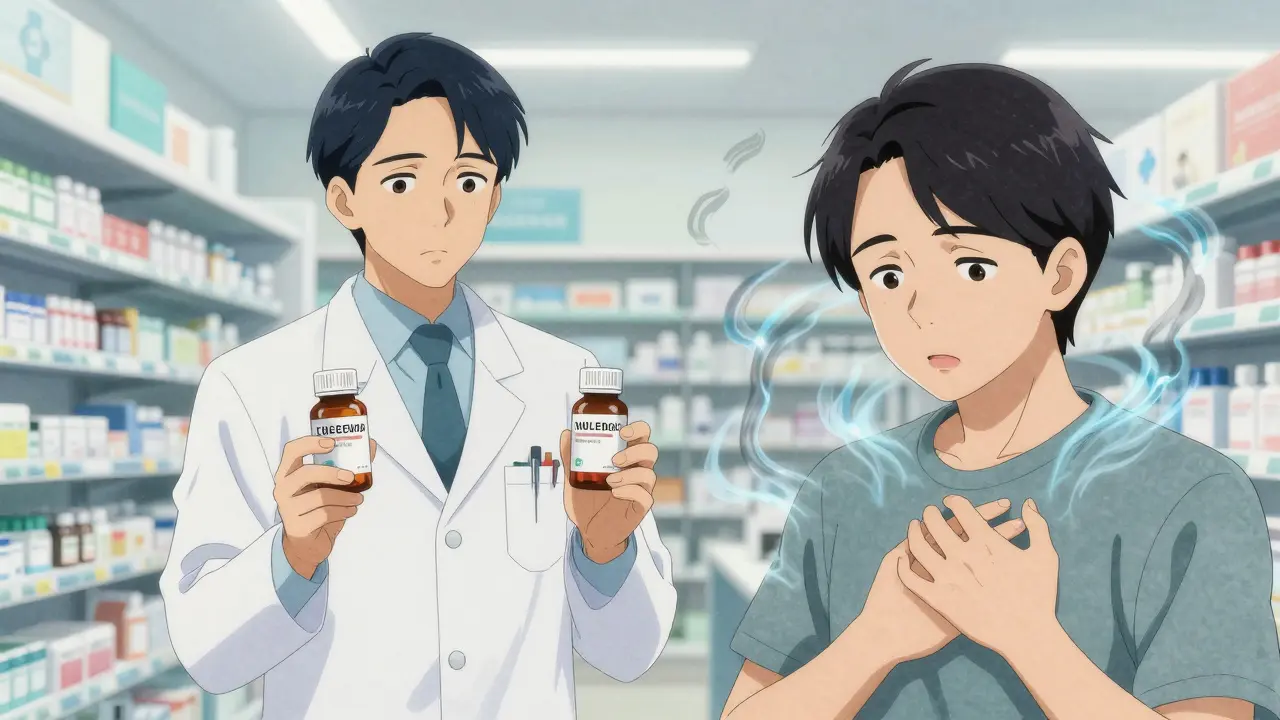
When a patient with multiple sclerosis switches from a $78,000-a-year brand-name drug to a $45,000 generic version, the savings are clear. But what happens when that same patient starts feeling dizzy, fatigued, or worse-after the pill looks different, tastes different, or comes in a new bottle? This isn’t a rare scenario. It’s everyday reality in specialty pharmacy, where the line between cost-saving and clinical risk is razor-thin.
What Makes Specialty Pharmacy Different
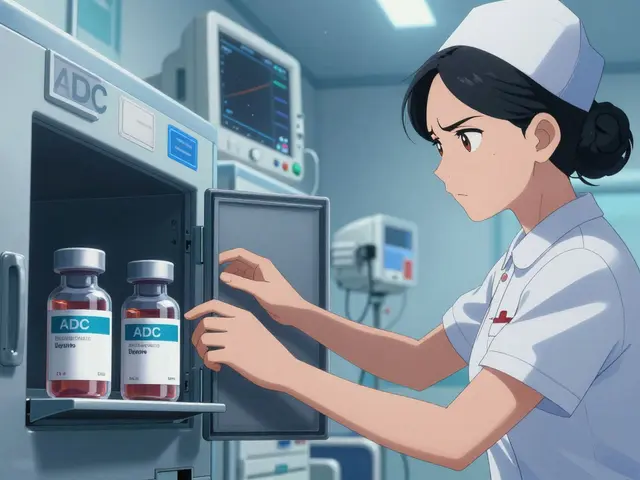
Specialty pharmacy isn’t just about expensive drugs. It’s about complex therapies for chronic, life-altering conditions: cancer, rheumatoid arthritis, hepatitis C, HIV, and multiple sclerosis. These medications are often biologics-large, intricate molecules made from living cells. They require cold storage (2-8°C), specialized administration (injections or infusions), and constant monitoring. Unlike a statin or a blood pressure pill you pick up at your local pharmacy, specialty drugs demand ongoing care coordination, patient education, and tracking of side effects. Most of these drugs were, until recently, only available as brand-name products. But that’s changing. Patents are expiring. Biosimilars-generic-like versions of biologics-are entering the market. The FDA approved its 35th biosimilar in December 2023. And with them comes a new set of challenges for pharmacists who’ve never had to manage this kind of complexity before.Generics in Specialty: Not All Are Created Equal
The FDA says generics must be bioequivalent to their brand-name counterparts. That means they deliver the same active ingredient, in the same amount, at the same rate. Sounds simple. But in specialty pharmacy, that’s not the whole story. For drugs with a narrow therapeutic index (NTI)-where even tiny changes in blood levels can cause toxicity or treatment failure-switching between brands or between different generic manufacturers can be risky. Levothyroxine, for example, is a small-molecule NTI drug. Patients on it often report symptoms when switched between generic brands, even though the FDA says they’re interchangeable. Reddit threads from the r/pharmacy community are full of patients describing sudden weight gain, heart palpitations, or depression after a switch. The issue isn’t always the active ingredient. It’s the excipients-the inactive fillers, dyes, and binders. One generic version of a specialty drug might use lactose. Another might use corn starch. For a patient with a rare allergy or sensitivity, that difference matters. Specialty pharmacies must track these details, not just the drug name.The PBM Problem
Pharmacy Benefit Managers (PBMs) control reimbursement. They set the prices pharmacies get paid. And they’re pushing hard for higher Generic Dispensing Ratios (GDR)-the percentage of prescriptions filled as generics. Here’s the catch: many specialty drugs don’t have generics. Yet PBMs still penalize specialty pharmacies that don’t meet GDR targets. Imagine a clinic treating 50 patients with a rare autoimmune disease. None of their drugs have generic alternatives. But the PBM still demands a 70% generic rate. The pharmacy gets fined. The patient gets confused. The pharmacist has to spend hours justifying why they can’t fill a non-generic drug with a generic that doesn’t exist. And when generics do become available, PBMs often force substitutions without consulting the prescriber or patient. One specialty pharmacy in Ohio reported a 40% drop in patient adherence after being required to switch 12 patients from a stable brand-name drug to a new generic. Three patients were hospitalized within six weeks.
Biosimilars: The Next Frontier
Biosimilars aren’t true generics. They’re not exact copies. Because biologics are made from living cells, no two batches are identical-even from the same manufacturer. A biosimilar must be highly similar, but not identical. That’s why the FDA requires extra testing. The first interchangeable biosimilar-Semglee for insulin glargine-was approved in 2021. That means pharmacists can swap it in without asking the doctor. But that’s not the case for most others. For drugs like Humira, biosimilars launched in 2023 after years of legal battles. Now, pharmacists have to know which ones are interchangeable, which aren’t, and which require a new prescription. The promise? Up to $54 billion in savings over the next decade, according to the Congressional Budget Office. The reality? Many PBMs still place biosimilars on high-tier formularies, making patients pay more out-of-pocket than for the brand-name drug. Why? Because the brand still pays bigger rebates. So even when a cheaper, equally effective option exists, the system still pushes the more expensive one.What Pharmacists Can Do
Specialty pharmacists aren’t just dispensers. They’re care coordinators. Here’s how to handle generics and biosimilars effectively:- Know your top therapies. Focus on the 5-10 most common specialty drugs in your practice. Map out which have generics or biosimilars, and which don’t.
- Standardize your inventory. Don’t stock every generic version of a drug. Pick one preferred manufacturer per product, based on reliability, patient feedback, and cost. This cuts down on confusion and errors.
- Document patient-specific risks. If a patient has had a reaction to a specific excipient, record it. Flag it in your system. Don’t assume all generics are safe for everyone.
- Monitor after substitution. For NTI drugs or biosimilars, schedule follow-ups within 30 days. Check labs. Ask how they’re feeling. Don’t wait for them to call you.
- Educate patients upfront. If a drug changes appearance, explain why. Show them the new label. Tell them it’s the same medicine, just made by a different company. Many patients think they’re getting a weaker version.
The Human Side of the Switch
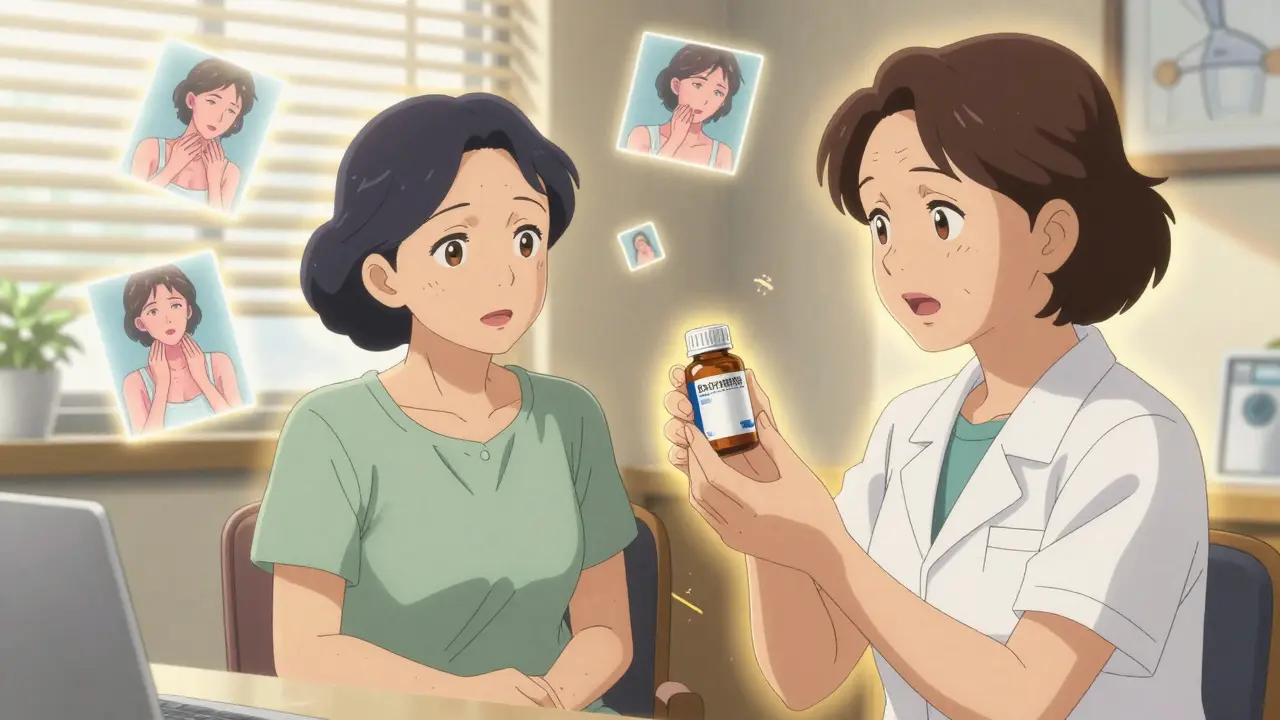
A 2022 survey of specialty pharmacy staff found that 78% said managing patient concerns about generic substitutions was a major workflow burden. Patients don’t trust change. They’ve been on the same brand for years. They’ve seen their disease stabilize. Now, they’re being told to try something new-something that looks different, costs less, and might not work the same. One woman with rheumatoid arthritis told her pharmacist: “I’ve been on this drug for eight years. My joints don’t hurt. Why are you giving me a different pill?” She wasn’t resisting because she didn’t understand. She was resisting because she’d been told, over and over, that this drug saved her life. And now, someone was trying to take that away. That’s where the pharmacist’s role becomes critical. It’s not about pushing cost savings. It’s about building trust. It’s about saying: “I hear you. Let’s make sure this change is safe for you.”Future Challenges
The number of specialty drugs with generics or biosimilars will keep growing. Humira biosimilars are just the beginning. More than 20 biologics are set to lose patent protection by 2030. That means more switches, more confusion, more risk. Specialty pharmacies will need better systems to track manufacturers, manage inventory, and flag at-risk patients. They’ll need clearer guidelines from PBMs and regulators. And most of all, they’ll need time-to talk to patients, to monitor outcomes, to make sure that savings don’t come at the cost of safety. The goal isn’t to eliminate brand-name drugs. It’s to use generics and biosimilars wisely-when they’re safe, when they’re appropriate, and when the patient is ready.Can I substitute a generic for a specialty drug without consulting the prescriber?
It depends. For traditional small-molecule generics, substitution rules vary by state. For biosimilars, only those labeled as "interchangeable" by the FDA can be substituted without a new prescription. For all others, the prescriber must authorize the switch. Always check state laws and the specific drug’s FDA designation before substituting.
Why do some patients have side effects after switching to a generic?
While the active ingredient is identical, the inactive ingredients (excipients) can differ between manufacturers. These may include fillers, dyes, or preservatives that trigger allergic reactions or affect absorption. This is especially true for narrow therapeutic index drugs, where even small changes in how the drug is absorbed can lead to clinical consequences.
Are biosimilars as safe as brand-name biologics?
Yes, according to the FDA. Biosimilars undergo rigorous testing to show they are highly similar to the reference product with no clinically meaningful differences in safety or effectiveness. Real-world data from Europe, where biosimilars have been used for over a decade, supports this. However, because biologics are complex, ongoing monitoring is still essential, especially during the first few months after switch.
Why do PBMs penalize specialty pharmacies for low generic dispensing rates?
PBMs use Generic Dispensing Ratio (GDR) as a performance metric to drive cost savings. But many specialty drugs have no generic alternatives. Penalizing pharmacies for this ignores clinical reality. Some PBMs now offer exemptions for specialty therapies, but pharmacists must proactively request them and provide documentation to support their case.
How can specialty pharmacies reduce confusion when switching to generics?
Standardize on one preferred generic manufacturer per drug, maintain clear labeling, and educate patients before the switch. Provide written materials showing the new packaging and explain that the active ingredient is unchanged. Schedule follow-up calls or visits to assess tolerance. Document patient concerns in the record to prevent future switches.




Tim Goodfellow
December 17, 2025 AT 12:06Let me tell you something - this isn’t just about pills and paperwork. It’s about people who’ve been on the same drug for a decade and suddenly get handed a new bottle that looks like it came from a discount bin. The brand didn’t just treat their disease - it gave them back their lives. Now some bean counter in a PBM office thinks ‘generic = better’? Nah. It’s not that simple. I’ve seen patients cry because they think they’re being ‘upgraded’ to a lesser version. That’s not cost-saving - that’s emotional sabotage.
mark shortus
December 17, 2025 AT 16:09OH MY GOD. I JUST GOT A NEW PRESCRIPTION AND MY PILL IS A DIFFERENT SHAPE. I THOUGHT I WAS DYING. I CALLED MY PHARMACY AT 2AM. THEY SAID ‘IT’S JUST A GENERIC.’ I SAID ‘BUT IT’S NOT THE SAME BLUE ROUND THING THAT SAVED ME!’ I’M STILL IN A FREAKOUT. SOMEONE PLEASE TELL ME I’M NOT CRAZY.
Elaine Douglass
December 19, 2025 AT 06:10thank you for writing this i’ve been a pharmacy tech for 12 years and this is exactly what we deal with every day. patients dont understand why the pill changed and we dont have time to explain it all. but we try. we really do. just please listen to them.
Kelly Mulder
December 19, 2025 AT 08:48One must acknowledge the structural malfeasance embedded within the PBM-industrial complex. The perverse incentives incentivize suboptimal therapeutic outcomes under the guise of fiscal prudence. The FDA’s bioequivalence metrics are statistically robust but clinically myopic. Excipient variance - a phenomenon systematically underappreciated by regulatory bodies - constitutes a latent threat to pharmacovigilance. One cannot reduce complex biopharmaceuticals to mere chemical equivalence. The reductionist paradigm of ‘generic = cheaper = better’ is not only intellectually bankrupt - it is ethically indefensible.
Jedidiah Massey
December 21, 2025 AT 01:30Bro this is why we need blockchain-based drug traceability. Imagine a QR code on every bottle that shows you the manufacturer, batch, excipients, and even the lab that tested it. We’re living in 2024 and we’re still playing guess-the-pill with people’s lives? 😩 We need transparency. Not just for patients - for pharmacists too. PBMs are running a Ponzi scheme disguised as cost control.
Gloria Parraz
December 22, 2025 AT 10:18My sister switched from Humira to a biosimilar last year. She was terrified. We sat down with her pharmacist for 45 minutes. He showed her the FDA data, explained the differences, and called her doctor to confirm. She’s doing great now. But it took TIME. That’s what we’re missing. Not more generics - more conversations.
Takeysha Turnquest
December 23, 2025 AT 08:07we are all just atoms in a machine that sells us hope in pill form. the brand name was a ritual. the generic is a transaction. who are we really saving? the system? or the person? the pill doesn’t care. but the person does.
Kathryn Featherstone
December 25, 2025 AT 01:57My clinic just started tracking patient-reported outcomes after every switch. We ask: ‘How are you feeling compared to last month?’ Not ‘Are you taking it?’ - how do you FEEL? We’ve caught three cases of hidden side effects before they became emergencies. It’s not hard. Just ask. Listen. Write it down.
Sahil jassy
December 27, 2025 AT 00:49in india we dont have much specialty drugs but when we do switch generics patients panic. we give them a small card with the drug name and manufacturer. simple. but it helps. also smile. they feel better when you smile.
Emily P
December 27, 2025 AT 08:51I’m curious - do any studies track long-term clinical outcomes after switching to biosimilars in real-world settings? Like, 5+ years out? Not just lab values - actual quality of life, hospitalizations, patient-reported fatigue? I’ve seen the FDA data, but it feels… curated.