
Medication Safety Assessment for Post-Menopausal Women
Medication Safety Assessment
Enter your current medications to identify potential safety risks during menopause. This assessment helps you understand possible interactions and whether your regimen needs review.
When a woman reaches menopause, her body doesn’t just stop having periods-it starts changing how medicines work. Hormone levels drop, liver function shifts, kidneys slow down, and fat distribution changes. All of this affects how drugs are absorbed, broken down, and cleared from the body. For many women, this means taking more medications than ever before. On average, post-menopausal women take 4 to 5 prescription drugs daily, according to the National Poll on Healthy Aging (2019). That’s not unusual. But it’s dangerous if no one is checking how these drugs interact or whether they’re still needed.
Why Medication Safety Changes After Menopause
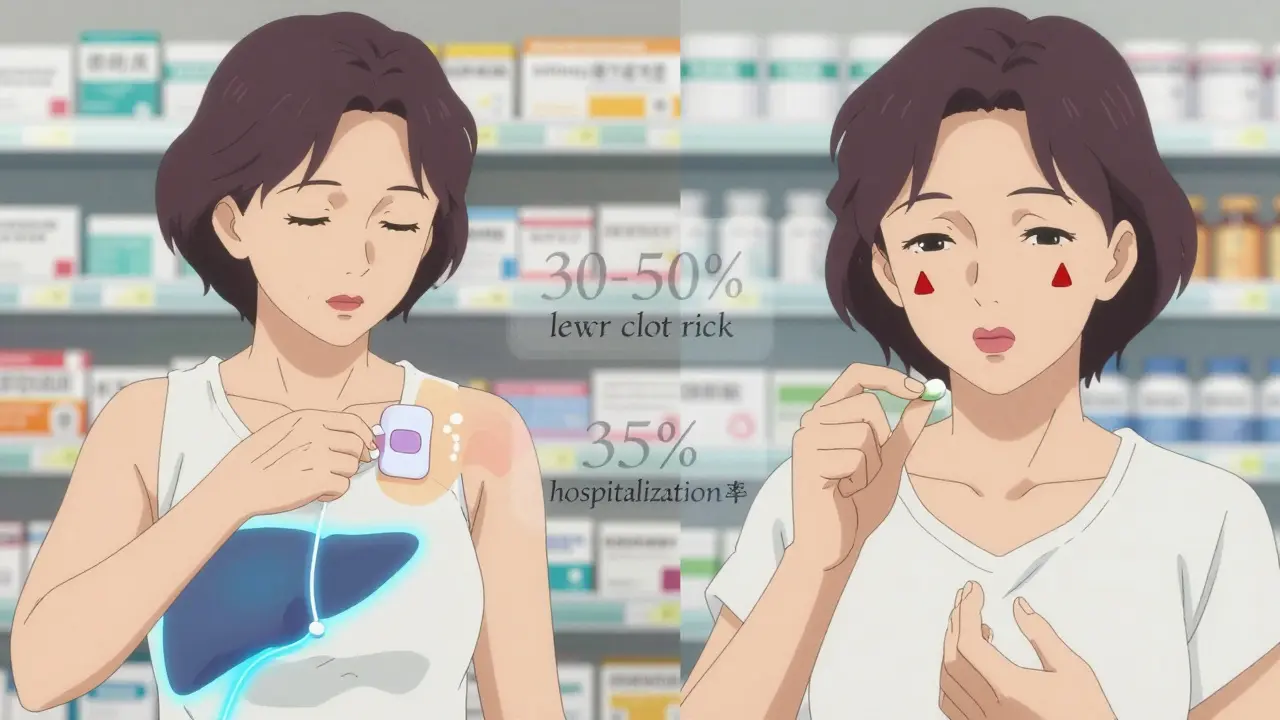
Your body’s metabolism slows after menopause. The liver processes drugs differently. Kidneys filter less efficiently. Fat increases while muscle mass decreases. These changes mean a drug that was safe at 45 might become risky at 65. For example, oral estrogen is broken down by the liver, which can raise triglycerides and increase clotting risk. Transdermal estrogen-applied through the skin-bypasses this first-pass effect and cuts the risk of blood clots by 30-50%. That’s not a small difference. It’s a game-changer for women with a history of DVT or high triglycerides.
Many women also develop new conditions after menopause: osteoporosis, high blood pressure, type 2 diabetes, or heart disease. Each condition brings its own meds. A woman might be on estrogen, a statin, a blood pressure pill, a calcium supplement, and an antidepressant-all at once. The more drugs you take, the higher the chance of a bad reaction. In fact, 35% of hospitalizations in women over 65 are due to adverse drug events, according to the Agency for Healthcare Research and Quality (2020). That’s not just bad luck. It’s a system failure.
What Hormone Therapy Can and Can’t Do
Hormone therapy isn’t a one-size-fits-all fix. The Endocrine Society’s 2015 guidelines list clear absolute contraindications: if you’ve had breast cancer, a blood clot, a stroke, or liver disease, estrogen therapy is off the table. Even if your symptoms are severe, the risks outweigh the benefits. For women with a uterus, adding progesterone is necessary to protect the lining of the uterus-but that combo increases breast cancer risk. The Women’s Health Initiative found that after 5.6 years of combined estrogen and progestin, breast cancer risk rose by 24%.
But here’s the twist: for women who’ve had a hysterectomy, estrogen alone may actually lower breast cancer risk. The same study showed a hazard ratio of 0.77-meaning a 23% reduction. That’s counterintuitive, but it’s backed by data. Still, the U.S. Preventive Services Task Force (2017) says don’t use hormone therapy to prevent chronic disease. Not for heart disease. Not for osteoporosis. Not for memory loss. The only valid reason is to treat moderate-to-severe hot flashes or night sweats, and even then, only if started within 10 years of menopause.
Timing matters. Dr. Cynthia Stuenkel, who led the Endocrine Society’s guidelines, calls it the “window of opportunity hypothesis.” Start hormone therapy close to menopause, and you might get cardiovascular benefits. Start it after 60, or more than a decade after menopause, and you’re more likely to trigger a stroke or heart attack. That’s why transdermal 17-beta-estradiol at 50 mcg/day is often the best choice for women in their 50s with early menopause.
Polypharmacy: The Silent Threat
Polypharmacy isn’t just a fancy word. It’s the reality for nearly half of all women over 65. Taking five or more medications sounds routine-but it’s a minefield. Each new drug adds interaction risk. A blood thinner and an NSAID? That’s a bleeding ulcer waiting to happen. A diuretic and a blood pressure pill? You could crash your electrolytes. The WHO’s 2019 report found that 40% of older adults get prescriptions from multiple doctors, none of whom talk to each other. One prescribes a statin. Another adds an antidepressant. A third throws in a muscle relaxant. No one checks if they’re safe together.
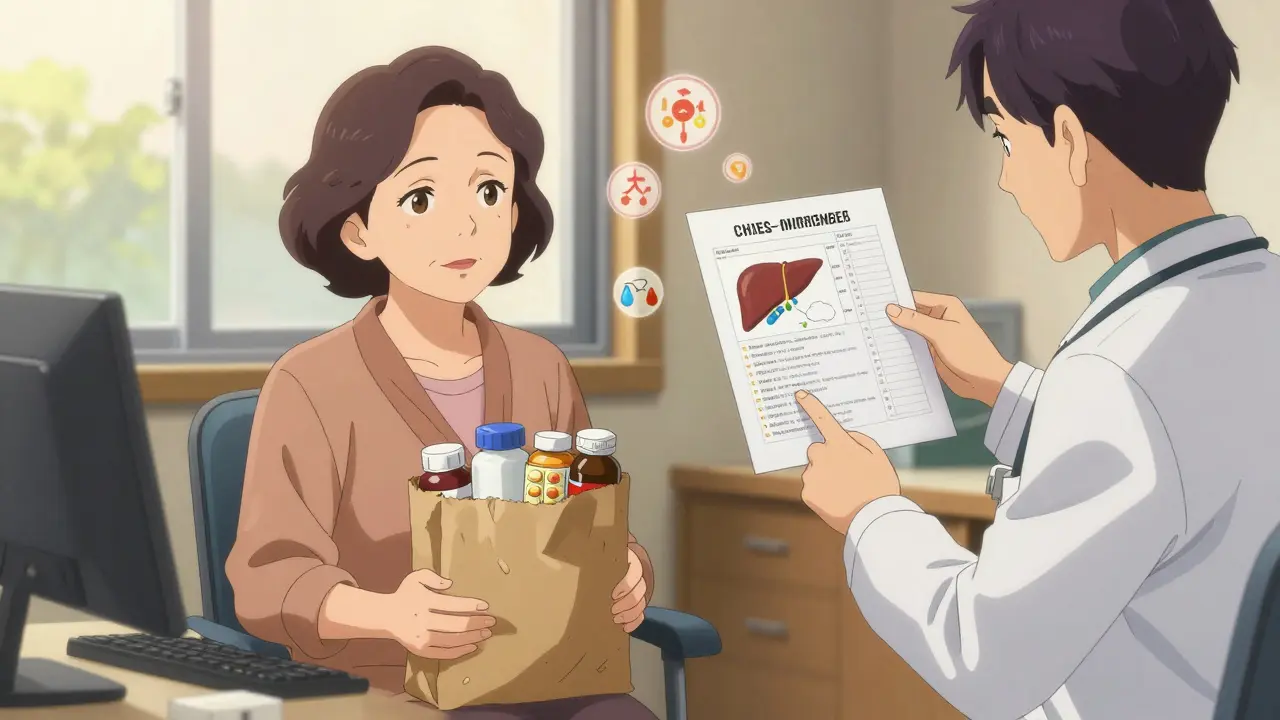
The Beers Criteria (2019 update) lists 30 drugs that should be avoided in older adults. Long-acting benzodiazepines like diazepam? They increase hip fracture risk by 50%. Anticholinergics like diphenhydramine? They raise dementia risk. Even common OTC meds like ibuprofen can cause kidney damage or stomach bleeds in women over 65. The National Institute on Aging recommends a “brown bag” review: bring all your pills-prescription, OTC, supplements-to your doctor once a year. You’d be surprised how many people are taking duplicates or expired meds.
Non-Hormonal Alternatives That Actually Work
Not every woman wants hormones. And that’s okay. There are effective non-hormonal options. SSRIs like paroxetine and escitalopram reduce hot flash frequency by 50-60%. They’re not magic, but they’re real. The catch? Up to 40% of users report sexual side effects-low libido, delayed orgasm, or dryness. For some, that’s worse than the hot flashes.
Other options include gabapentin (used for nerve pain) and clonidine (a blood pressure drug). Both help with night sweats. They’re not FDA-approved for menopause, but they’re used off-label with good results. Cognitive behavioral therapy (CBT) also reduces symptom severity. A 2022 study showed CBT cut hot flash distress by 60% over 12 weeks. It doesn’t stop the flashes-but it helps you stop fearing them.
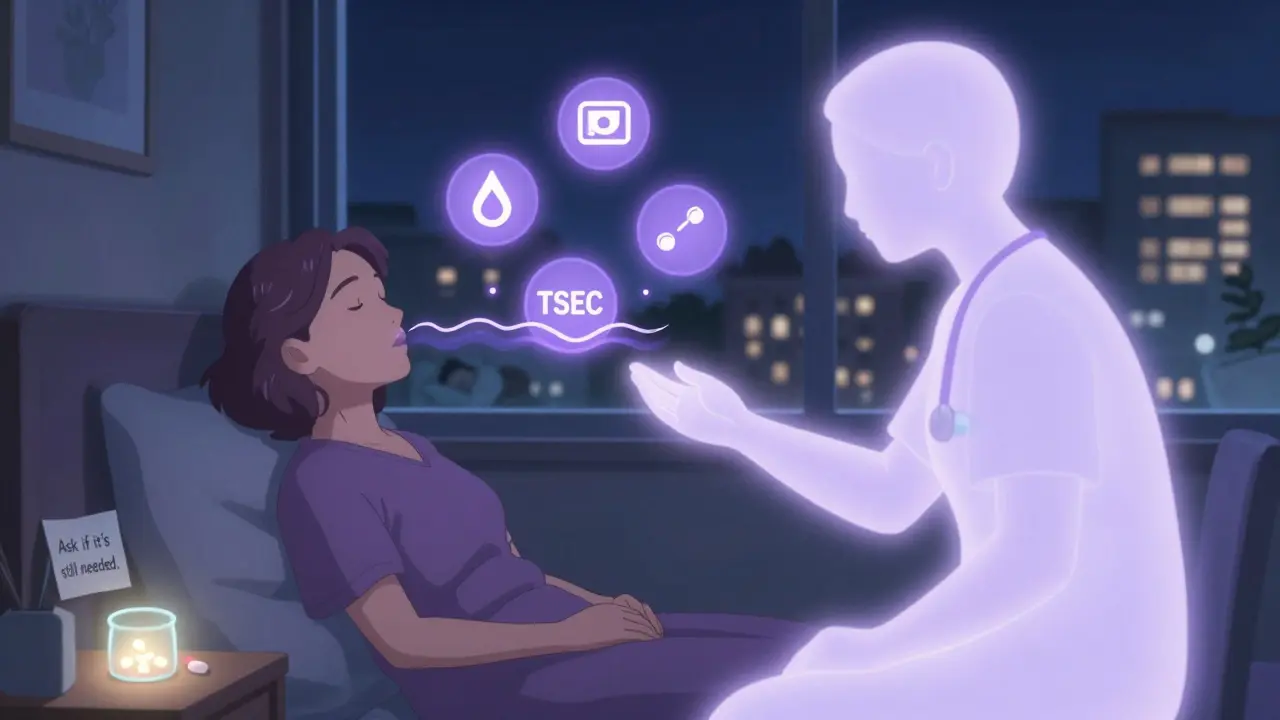
And then there’s the emerging option: tissue-selective estrogen complexes (TSECs). Conjugated estrogens with bazedoxifene (like Duavee) offer estrogen benefits without the uterine thickening. The SMART-5 trial showed a 70% drop in endometrial hyperplasia risk. It’s not available everywhere, but it’s a promising middle ground.
Deprescribing: Taking Medications Off
Most people focus on adding drugs. Few think about removing them. But deprescribing-carefully stopping medications that are no longer needed-is just as important. The WHO found that structured deprescribing reduces medication burden by 1.4 drugs per patient and cuts adverse events by 33%. That’s huge.
Some meds should be stopped cold. Like long-term proton pump inhibitors (PPIs) for heartburn. After 6 months, they often aren’t needed-and they raise the risk of bone fractures and gut infections. Others need a slow taper. Antidepressants? Cut the dose over 4-8 weeks. Benzodiazepines? Over 8-12 weeks. Abrupt stops can trigger seizures, anxiety, or rebound insomnia.
Use the START/STOPP criteria. It’s a tool doctors use to spot inappropriate prescriptions and missed opportunities. For example: Is a woman on a statin but has no history of heart disease? Maybe it’s not needed. Is she on aspirin daily without a clear reason? The risk of bleeding might outweigh the benefit.
Real-World Mistakes and How to Avoid Them
Take Mrs. Poly, the WHO’s case study. A 72-year-old woman was on diclofenac for arthritis, simvastatin, enalapril, and atenolol. Her doctor told her to stop the NSAID. She didn’t. Two weeks later, she was in the hospital with a bleeding ulcer. Her hemoglobin dropped from 12.5 to 8.1 g/dL. She needed a transfusion. This isn’t rare. In fact, 40% of post-menopausal women stop taking recommended meds within a year-often because of side effects or fear.
Reddit threads from r/menopause show why. 78% of women say fear of breast cancer is their top reason for avoiding hormone therapy. 63% say they can’t find a doctor who knows about non-hormonal options. That’s a gap in care. It’s not that the science is missing. It’s that the system isn’t connecting.
Simple fixes help. Use a pill organizer. The JAMA Internal Medicine study found they reduce errors by 81%. But even then, 28% of women still make mistakes. The most common? Taking a pill twice (42%) or missing a dose (38%). Write down your meds. Know why you take each one. Ask your pharmacist: “Is this still necessary?”
What You Can Do Today
- Make a full list of every medication, supplement, and OTC drug you take-including dosages and why.
- Bring it to your next appointment. Ask: “Which of these do I still need? Which could I stop?”
- If you’re on hormone therapy, ask if transdermal estrogen is an option. It’s safer than pills for most women.
- Don’t take NSAIDs daily unless absolutely necessary. Talk about alternatives like physical therapy or acetaminophen.
- Get your kidney and liver function checked yearly. These change with age.
- If you’re on antidepressants or sleep aids, ask about tapering. Don’t stay on them longer than needed.
Menopause isn’t the end of your health journey. It’s a pivot point. With the right approach, you can manage symptoms, avoid dangerous interactions, and stay independent for years to come. The goal isn’t to take fewer drugs just for the sake of it. It’s to take the right ones-and nothing more.
Is hormone therapy safe for post-menopausal women?
Hormone therapy can be safe for some women, but only under specific conditions. It’s generally recommended for women under 60 or within 10 years of menopause who have moderate to severe hot flashes or night sweats. Transdermal estrogen (patches or gels) is safer than oral forms because it lowers the risk of blood clots. It’s not safe for women with a history of breast cancer, blood clots, stroke, liver disease, or unexplained vaginal bleeding. The U.S. Preventive Services Task Force advises against using hormone therapy to prevent chronic diseases like heart disease or osteoporosis.
Why is polypharmacy dangerous for post-menopausal women?
Polypharmacy-taking five or more medications-increases the risk of harmful drug interactions, side effects, and medication errors. As women age, their kidneys and liver process drugs less efficiently, so medications build up in the body. Many older women see multiple doctors who may not communicate, leading to duplicate or conflicting prescriptions. The Agency for Healthcare Research and Quality found that 35% of hospitalizations in women over 65 are caused by adverse drug events, many linked to polypharmacy.
What are safer alternatives to hormone therapy for hot flashes?
Non-hormonal options include SSRIs like paroxetine and escitalopram, which reduce hot flash frequency by 50-60%. Gabapentin and clonidine are also effective for night sweats. Cognitive behavioral therapy (CBT) helps manage the distress caused by hot flashes, cutting perceived severity by 60%. Tissue-selective estrogen complexes (TSECs), such as conjugated estrogens with bazedoxifene, offer estrogen benefits without increasing uterine lining growth. These alternatives avoid the cancer and clotting risks of traditional hormone therapy.
How can I reduce my risk of medication errors?
Use a pill organizer with compartments for each day and time. Keep an updated list of all medications-including supplements-and bring it to every appointment. Ask your pharmacist or doctor to review your list annually. Avoid long-term use of NSAIDs, benzodiazepines, and anticholinergics. If you’re taking antidepressants or sleep aids, ask if tapering is possible. The National Institute on Aging recommends a “brown bag” review: bring all your meds to your provider once a year.
Should I stop taking aspirin after menopause?
Not necessarily-but only if you have a clear reason. Aspirin reduces ischemic stroke risk by 24% in women over 45, but it increases gastrointestinal bleeding risk by 58% in women over 65. If you have no history of heart disease or stroke, the bleeding risk likely outweighs the benefit. The U.S. Preventive Services Task Force now recommends against daily aspirin for primary prevention in adults over 60. Talk to your doctor about your personal risk factors before continuing.
What medications should post-menopausal women avoid?
The Beers Criteria (2019) lists 30 high-risk medications for older adults. Avoid long-acting benzodiazepines (like diazepam) because they increase hip fracture risk by 50%. Steer clear of anticholinergics (like diphenhydramine) linked to dementia. Long-term proton pump inhibitors (PPIs) raise the risk of bone fractures and gut infections. NSAIDs like ibuprofen can cause kidney damage or ulcers. Always ask: “Is this still necessary?” and consider deprescribing if you’ve been on a drug for years without a clear benefit.


Alfred Noble
February 26, 2026 AT 15:42man i wish my grandma knew this stuff back when she was on 7 different pills and still taking benadryl for sleep 😅
she died from a bleedin ulcer after 3 years of daily ibuprofen… no one ever told her to stop
just saying… this post is a lifesaver
Matthew Brooker
February 27, 2026 AT 09:59YES YES YES
my mom just got off 4 meds last month after her pharmacist did a brown bag review
one was a statin she’d been on since 2010 with zero heart issues
another was a PPI she didn’t even remember starting
she’s got more energy now and no more stomach burning
stop assuming more pills = better health
less is often more especially after 60
Emily Wolff
February 28, 2026 AT 16:57Transdermal estrogen isn’t 'safer'-it’s the *only* rational option for women under 60 with vasomotor symptoms.
Oral? Outdated. Dangerous. Amateur hour.
Lou Suito
March 2, 2026 AT 04:26Wait-so you’re saying the WHI study showed estrogen alone lowers breast cancer risk? That’s not what the media says.
Also-CBT? Really? As if talking about hot flashes makes them disappear. LOL.
And who the hell is Dr. Stuenkel? Never heard of her.
Joseph Cantu
March 2, 2026 AT 20:10they don’t want you to know this but the pharmaceutical companies are pushing estrogen like it’s candy
and the FDA? In bed with them
they’re hiding the truth about breast cancer
and don’t get me started on SSRIs-those are just chemical lobotomies
my cousin’s wife took paroxetine and became a zombie
they’re drugging women into submission
it’s all about profit
they don’t care if you live or die
they just want your prescription
Jacob Carthy
March 3, 2026 AT 21:15all this medical jargon is just woke nonsense
women were fine in the 80s taking whatever they wanted
why do we need a whole manual just to take a pill
my aunt took 6 pills a day for 20 years and lived to 89
stop overcomplicating everything
Lisandra Lautert
March 5, 2026 AT 16:27Deprescribing isn’t optional. It’s medical ethics.
And if you’re still on a PPI after 6 months? You’re not being careful-you’re being negligent.
Cory L
March 7, 2026 AT 13:52honestly this is the most useful thing i’ve read all year
my mom’s on 8 meds and i didn’t even know half of them were for stuff she doesn’t have anymore
we’re doing a brown bag this weekend
also-transdermal estrogen? i’m telling my gyno
she’s been on oral for 12 years
time to fix this
Joanna Reyes
March 9, 2026 AT 08:19I’ve been reading up on this for months now, and honestly, the more I dig, the more I realize how deeply broken our system is for post-menopausal women.
We’re not just being overmedicated-we’re being ignored. Doctors don’t have time to do comprehensive med reviews, and most aren’t trained in menopause-specific pharmacology.
And don’t even get me started on how little research exists on non-hormonal options. SSRIs are the go-to because they’re profitable, not because they’re ideal.
I’ve been on escitalopram for hot flashes, and while it helped, the sexual side effects were brutal. I switched to gabapentin and it’s been night and day-no libido crash, no emotional numbness.
Also, the Beers Criteria should be mandatory in every pharmacy system. Why are we still prescribing diazepam to 70-year-olds? It’s like handing out grenades.
And the fact that 40% of women stop taking necessary meds because they’re scared? That’s a failure of communication, not compliance. We need better education, not more pills.
I started a notebook: every med, every dose, every reason. I bring it to every appointment. My doctor says it’s the first time she’s seen someone actually track their own regimen. That’s sad.
And yes-I asked about TSECs. My PCP had never heard of them. So I printed the SMART-5 trial summary and brought it in. She’s now referring me to a menopause specialist.
This isn’t about being anti-medication. It’s about being pro-health. And that means asking hard questions. Even if it makes people uncomfortable.
Stephen Archbold
March 9, 2026 AT 22:02just had my first deprescribing chat with my doc after reading this
got off the aspirin and the melatonin
also switched from oral to patch
feels like a weight lifted
thanks for the nudge