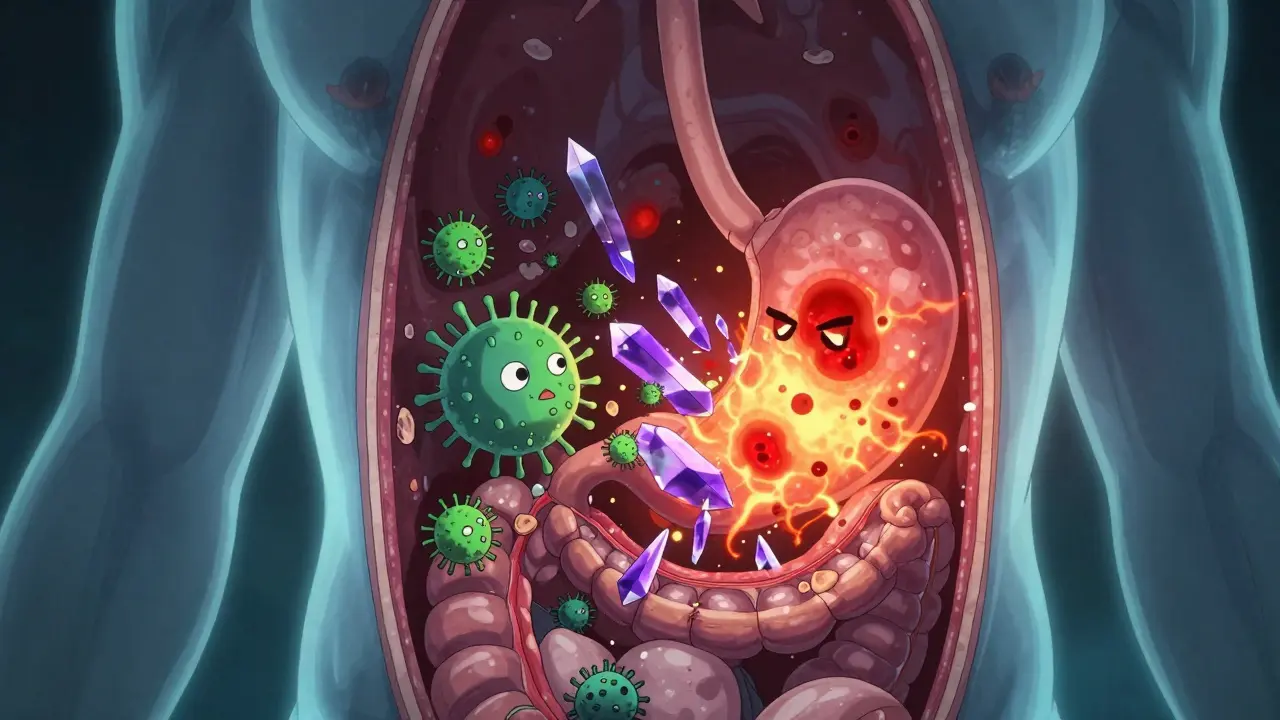
That burning sensation in your upper stomach isn't just indigestion. It could be a peptic ulcer, which is a sore or open wound that develops on the lining of your stomach or the upper part of your small intestine (duodenum). While these sores are common, affecting millions worldwide, they are also highly treatable when you understand what causes them and how modern medicine addresses the root problem rather than just masking symptoms.
The landscape of ulcer treatment has changed dramatically since the 1980s. We used to blame stress and spicy food almost exclusively. Today, we know that bacteria and painkillers are the primary culprits. Understanding this shift is crucial because it changes everything about how you should approach healing. If you take acid reducers without addressing an underlying bacterial infection, the ulcer will likely return. Let’s break down exactly why ulcers form, how doctors diagnose them, and the specific medication protocols that actually cure the condition.
The Two Main Culprits Behind Peptic Ulcers
Most people assume lifestyle choices like eating too much chili or working under high pressure cause ulcers. While stress can worsen symptoms, it rarely creates the initial lesion. The medical consensus identifies two dominant factors responsible for the vast majority of cases: a bacterial infection and chronic use of certain pain medications.
The first major cause is Helicobacter pylori (H. pylori), which is a type of bacteria that infects the stomach lining. Discovered by Barry Marshall and Robin Warren in 1982-a discovery that earned them the Nobel Prize-this bacterium weakens the protective mucous coating of your stomach and duodenum. This allows acid to eat away at the sensitive tissue underneath. Statistically, H. pylori is present in over 50% of patients with duodenal ulcers and 30-50% of those with gastric ulcers.
The second major cause is long-term use of Non-Steroidal Anti-Inflammatory Drugs (NSAIDs), such as ibuprofen, naproxen, and aspirin. These drugs block the production of prostaglandins, chemicals that help maintain the protective lining of the stomach. Without this shield, stomach acid damages the tissue directly. In fact, NSAIDs now account for more than 50% of peptic ulcers in many developed nations, surpassing bacterial infections as the leading cause in some demographics.
| Cause | Mechanism of Damage | Prevalence in Ulcer Patients | Primary Treatment Focus |
|---|---|---|---|
| H. pylori Infection | Weakening of mucosal barrier via inflammation | 30-50% (Gastric), >50% (Duodenal) | Antibiotic eradication + Acid suppression |
| NSAID Use | Inhibition of protective prostaglandins | >50% (Increasing trend) | Discontinuation/Switching meds + Acid suppression |
Diagnosis: How Doctors Confirm an Ulcer
You cannot self-diagnose a peptic ulcer based on symptoms alone. Burning epigastric pain, heartburn, nausea, and feeling full quickly after eating are common, but they overlap with gastritis, GERD, and even heart issues. Accurate diagnosis is essential because the treatment paths diverge completely depending on the cause.
The gold standard for diagnosis is an upper endoscopy (EGD), which is a procedure where a thin tube with a camera is passed down the throat to visualize the stomach and duodenum. During this procedure, a gastroenterologist can see the ulcer directly and take biopsies to test for H. pylori. If endoscopy isn’t immediately available, non-invasive tests like the urea breath test or stool antigen test can detect the bacteria with high accuracy. Blood tests for antibodies are less preferred now because they cannot distinguish between current and past infections.
Acid-Reducing Medications: PPIs vs. H2 Blockers
Regardless of whether your ulcer is caused by bacteria or NSAIDs, reducing stomach acid is critical to allow the tissue to heal. There are two main classes of acid-suppressing drugs, but they work differently and have different strengths.
Proton Pump Inhibitors (PPIs), such as omeprazole, lansoprazole, esomeprazole, and pantoprazole, are currently the most effective agents for healing ulcers. They work by blocking the enzyme system (the "proton pump") in the wall of your stomach that produces acid. A single dose can suppress acid production for 24 to 72 hours. Because they provide near-complete acid suppression, they promote faster healing rates compared to older medications. For optimal effectiveness, PPIs must be taken 30-60 minutes before a meal, as they require active pumps to bind to.
H2-Receptor Antagonists (H2 Blockers), including famotidine and cimetidine, work by blocking histamine from binding to receptors on acid-producing cells. They reduce acid secretion but not as profoundly as PPIs. Their effects last about 10-12 hours. While useful for mild symptoms or nighttime acid breakthrough, they are generally insufficient for healing severe ulcers on their own. Most guidelines recommend PPIs as the first-line acid reducer for active peptic ulcer disease.

Treating H. pylori: The Antibiotic Regimen
If your ulcer is caused by H. pylori, acid reducers alone are not enough. You must eradicate the bacteria to prevent recurrence. Studies show that treating only the acid reduces recurrence from 70% to just 10% when combined with antibiotic therapy. The standard approach is a multi-drug regimen taken for 10 to 14 days.
The traditional "triple therapy" consists of:
- A Proton Pump Inhibitor (e.g., omeprazole)
- Clarithromycin (an antibiotic)
- Either Amoxicillin or Metronidazole (a second antibiotic)
However, antibiotic resistance is rising. In regions where clarithromycin resistance exceeds 15%-which includes parts of the United States-doctors increasingly prescribe "bismuth quadruple therapy." This adds bismuth subsalicylate (Pepto-Bismol) to the mix, creating a four-drug cocktail that achieves higher eradication rates (up to 90% with newer agents). Newer treatments involving vonoprazan, a potassium-competitive acid blocker, are also showing superior results compared to traditional PPI-based regimens.
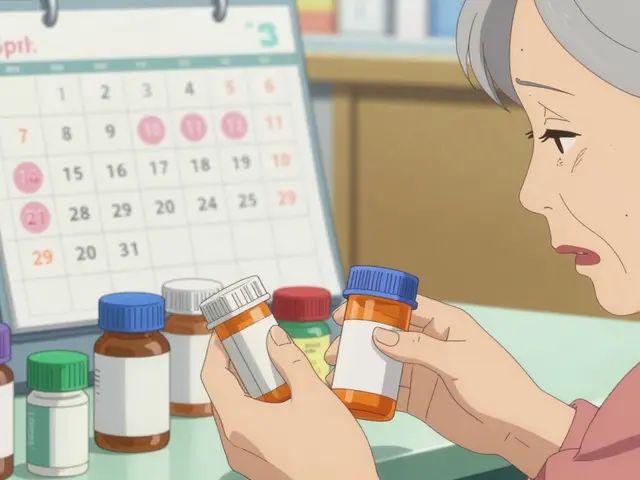
Adherence is critical here. Missing doses leads to treatment failure and potentially resistant bacterial strains. Common side effects include a metallic taste (from metronidazole) and digestive upset, but completing the full course is non-negotiable for a cure.
Managing NSAID-Induced Ulcers
If your ulcer stems from painkiller use, the primary treatment is stopping the offending drug. However, many patients rely on NSAIDs for chronic conditions like arthritis or back pain, making discontinuation difficult. In these cases, gastroenterologists employ several strategies:
- Switch to Acetaminophen: Tylenol does not inhibit prostaglandins in the stomach lining and is safer for ulcer patients, though it lacks anti-inflammatory properties.
- Use COX-2 Inhibitors: Drugs like celecoxib selectively target inflammation pathways while sparing the stomach’s protective mechanisms.
- Add Misoprostol: This prostaglandin analog replaces the natural protection lost by NSAID use, though it often causes diarrhea and cramping.
- Maintain Long-Term PPI Therapy: If you must continue taking NSAIDs, daily low-dose PPIs can significantly reduce the risk of recurrent ulcers and bleeding.

Lifestyle Factors and Healing Support
While medication does the heavy lifting, lifestyle adjustments support the healing process and prevent future flare-ups. Smoking, for instance, increases ulcer risk by 2-3 times and slows healing by interfering with blood flow to the stomach lining. Alcohol consumption, particularly more than three drinks daily, irritates the mucosa and increases acid production.
Dietary modifications are less about avoiding specific "trigger" foods and more about regular eating patterns. Skipping meals allows acid to accumulate without food to buffer it, which can aggravate an existing ulcer. Eating smaller, frequent meals may help manage symptoms. While spicy foods don’t cause ulcers, they can exacerbate discomfort during the healing phase, so moderation is wise until the tissue repairs itself.
Risks of Long-Term Acid Suppression
Because PPIs are so effective, they are sometimes used long-term. However, prolonged use carries risks that warrant caution. Reduced stomach acid can lead to decreased absorption of vitamin B12, magnesium, and calcium. Low calcium levels have been linked to an increased risk of bone fractures, particularly in the hip, wrist, and spine. Additionally, there is a slightly elevated risk of Clostridium difficile infection and acute interstitial nephritis (kidney inflammation).
Doctors typically prescribe the lowest effective dose for the shortest duration necessary. Once the ulcer heals and H. pylori is eradicated, many patients can taper off PPIs. Some experience rebound acid hypersecretion when stopping abruptly, so a gradual reduction under medical supervision is recommended.
How long does it take for a peptic ulcer to heal?
With appropriate treatment, most gastric ulcers heal within 4 to 8 weeks, while duodenal ulcers often heal faster, typically in 2 to 4 weeks. Healing speed depends on the size of the ulcer, adherence to medication, and cessation of contributing factors like smoking or NSAID use.
Can I drink alcohol while treating a peptic ulcer?
It is best to avoid alcohol during treatment. Alcohol irritates the stomach lining, increases acid production, and can interfere with the effectiveness of antibiotics and other medications. Heavy drinking significantly delays healing and increases the risk of complications like bleeding.
Are peptic ulcers contagious?
The ulcers themselves are not contagious. However, if your ulcer is caused by H. pylori, the bacteria can be transmitted through close personal contact, sharing utensils, or contaminated food and water. Good hygiene practices help prevent spread, but casual contact like hugging is safe.
What are the warning signs of a bleeding ulcer?
Seek immediate medical attention if you experience vomiting blood (which may look like coffee grounds), black or tarry stools, sudden severe abdominal pain, dizziness, or fainting. These are signs of gastrointestinal bleeding or perforation, which are life-threatening emergencies.
Do I need to stay on PPIs forever?
Not necessarily. If your ulcer was caused by H. pylori, eradicating the bacteria usually means you no longer need long-term acid suppression. For NSAID-induced ulcers, you may need ongoing PPI therapy only if you must continue taking NSAIDs. Always consult your doctor before stopping medication to avoid rebound symptoms.