
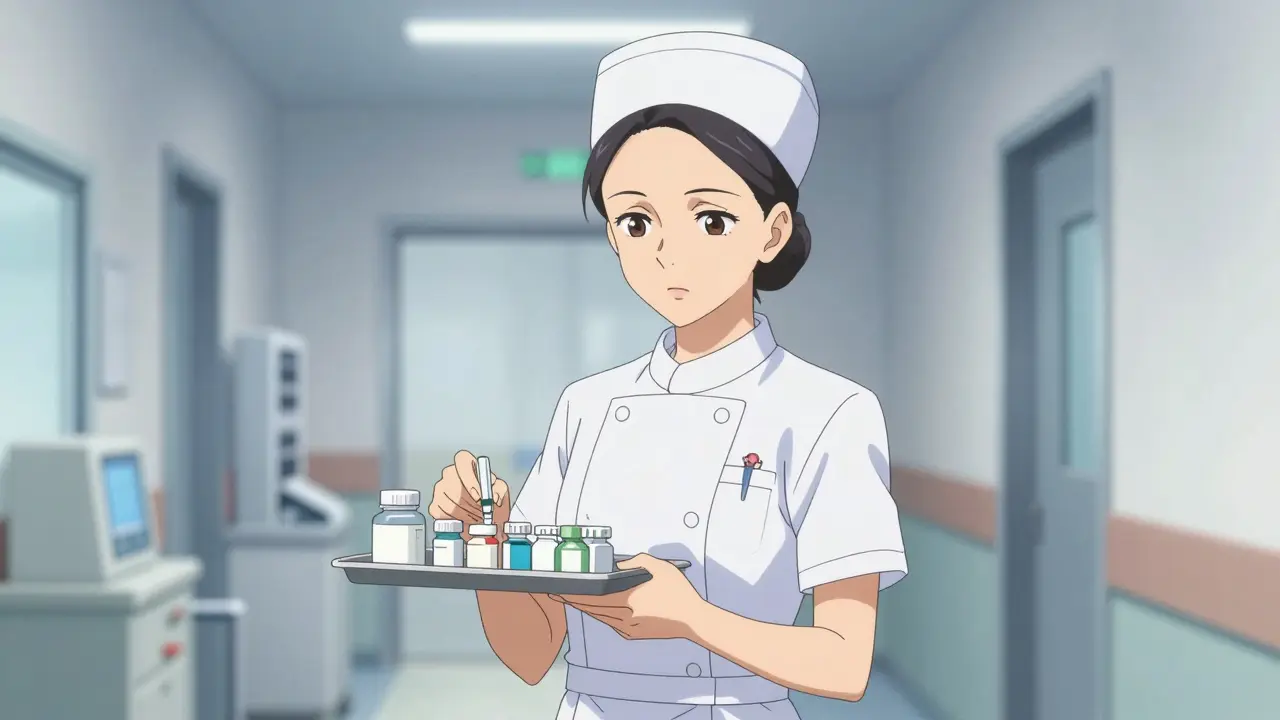
Imagine walking into a hospital room. You are there because you are sick, perhaps very sick. The last thing you want to worry about is the medicine you are about to take. Yet, in the United States alone, medication errors used to account for thousands of deaths annually. The Institute of Medicine's 1999 report, To Err is Human, shocked the world by revealing that between 44,000 and 98,000 people died each year from preventable medical errors. While progress has been made, the risk remains a critical part of healthcare today. Navigating medication safety isn't just about following rules; it is about building a system where mistakes are caught before they reach the patient.
Medication safety refers to the systematic approaches designed to prevent errors in the medication-use process. The American Society of Health-System Pharmacists (ASHP) defines a medication error as 'any preventable event that may cause or lead to inappropriate medication use or patient harm while the medication is in the control of the healthcare professional, patient, or consumer.' This definition is broad because it covers everything from a doctor's prescription to a nurse administering a dose, and even a patient taking a pill at home. The goal is simple: reduce the harm caused by these errors, which still cost the U.S. healthcare system an estimated $21 billion annually.
Understanding the Frameworks: ISMP vs. Joint Commission
When hospitals talk about safety, they usually refer to specific guidelines. Two major players dominate this space: the Institute for Safe Medication Practices (ISMP) and The Joint Commission. Understanding the difference between them helps you understand why certain protocols exist in your clinic or hospital.
The ISMP Targeted Medication Safety Best Practices is a specific list of rules developed to address the most dangerous and persistent safety issues. The current version, updated for the 2024-2025 cycle, contains 19 specific best practices. These are not suggestions; they are mandatory implementation requirements for organizations that want to be considered leaders in safety. For example, ISMP explicitly requires preventing the intrathecal administration of vinca alkaloids, which can be fatal if given by the wrong route.
On the other hand, The Joint Commission provides broader standards known as the National Patient Safety Goals (NPSG). These goals cover a wider range of patient safety issues, including medication reconciliation and safe medication practices. A 2021 study published in the Journal of Patient Safety found that hospitals fully implementing ISMP's Targeted Best Practices experienced a 37% reduction in preventable harm incidents compared to those following only Joint Commission standards. However, the ISMP framework requires more intensive resource allocation. Implementation costs average around $285,000 per hospital for technology modifications and staff training, according to a 2020 Healthcare Financial Management Association report.
| Feature | ISMP Targeted Best Practices | Joint Commission NPSG |
|---|---|---|
| Focus | Specific high-risk scenarios (e.g., Methotrexate) | Broad patient safety standards |
| Implementation | Mandatory specific protocols | General compliance requirements |
| Cost | Higher (approx. $285k avg) | Variable |
| Impact on Harm | 37% reduction in preventable harm | Baseline standard |
High-Alert Medications: The Danger Zone
Not all medications carry the same risk. High-alert medications are drugs that bear a heightened risk of causing significant patient harm when used in error. The ASHP Guidelines on Preventing Medication Errors in Hospitals (2018) specify that these medications should be identified using the ISMP list in conjunction with hospital-specific patterns of use. Common high-alert medications include insulin, opioids, anticoagulants, and chemotherapy agents.
One of the most critical examples is oral methotrexate. This drug is used for cancer and autoimmune diseases, but the dosage differs drastically between the two. A weekly dose for arthritis can be fatal if taken daily. Best Practice 2 from the ISMP requires implementation of a weekly dosage regimen default in electronic systems. It also mandates a 'hard stop' verification for any daily dosing orders, requiring oncologic indication confirmation. Dr. Robert Wachter, Chair of the Department of Medicine at UCSF, noted in a 2021 JAMA editorial that this hard stop verification requirement alone has prevented an estimated 1,200 serious errors annually since its implementation.
Another critical area is obstetrics. The ACOG's medication safety guidelines specifically address obstetric settings, noting that intravenous oxytocin has been identified by ISMP as a high-alert medication in obstetrics. This requires specialized protocols not included in general hospital frameworks. The concentration of the drug matters immensely; a tenfold error in oxytocin can lead to uterine rupture. This is why standardized concentrations are a non-negotiable part of modern safety protocols.
The Role of Technology in Safety
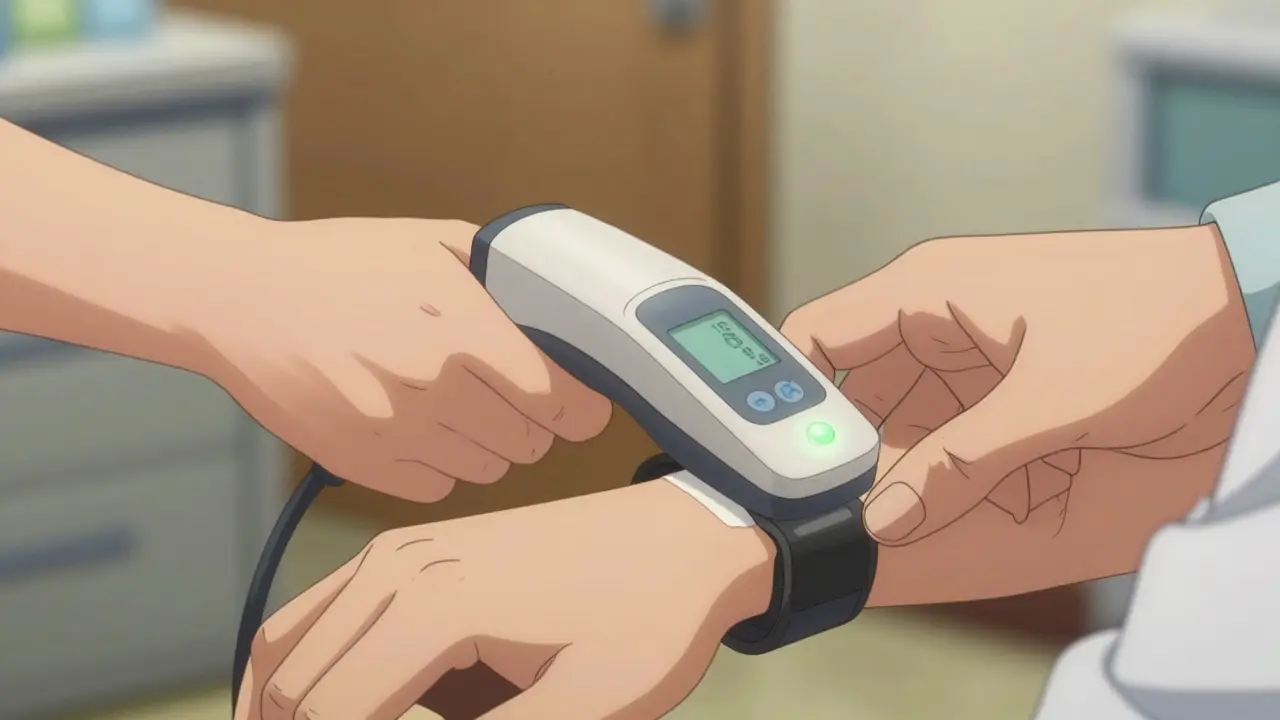
Technology is the backbone of modern medication safety. You cannot rely on human memory alone to prevent errors. System requirements for effective medication safety implementation include electronic health records (EHR) with clinical decision support, barcode medication administration (BCMA) systems, and standardized order sets.
Barcode Medication Administration (BCMA) is a system where nurses scan a patient's wristband and the medication barcode before administration. This ensures the 'Five Rights': right patient, right drug, right dose, right route, and right time. Adoption rates show that 89% of U.S. hospitals with 300+ beds have implemented BCMA systems, compared to 54% of hospitals with fewer than 100 beds. This disparity highlights a gap in safety resources between large academic centers and smaller community hospitals.
Looking ahead, artificial intelligence is becoming the next frontier. Analysts at Gartner predicted that by 2025, 75% of U.S. hospitals would integrate AI for real-time medication error detection. As we move through 2026, this technology is becoming standard. AI systems can analyze patient data to flag potential interactions or dosing errors that a human might miss, especially in complex cases involving multiple medications.
Implementation Challenges and Human Factors
Despite the technology, the human element remains the most complex variable. Practical implementation of medication safety systems typically requires 12-18 months for full deployment, with an initial learning curve of 3-6 months for staff. Hospitals must develop interdisciplinary teams including pharmacists, physicians, nurses, and IT specialists. Recommended staff training is 8-12 hours per employee during initial implementation.
However, challenges arise. A nurse manager at a rural hospital posted on the American Nurses Association's discussion board that 'the requirement for both written and verbal methotrexate discharge instructions created significant workflow bottlenecks during staffing shortages.' This is a common issue: safety protocols can slow down workflow, leading to 'alert fatigue' where staff start ignoring warnings because there are too many of them.
Dr. David Bates of Brigham and Women's Hospital has criticized the proliferation of medication safety frameworks. In a 2022 Health Affairs article, he argued that 'fragmented approaches to medication safety create confusion and implementation fatigue among frontline staff.' This is why consistency is key. A 2022 ECRI Institute study showed only 42% of community hospitals fully implemented all ISMP Targeted Best Practices, compared to 78% of academic medical centers. The gap often comes down to resources and the ability to maintain rigorous standards day after day.

Patient Involvement in Safety
Safety is not just the hospital's job; patients play a vital role. Patient experiences documented by the National Council on Aging show that 68% of adults aged 65+ feel more confident about medication safety when hospitals implement the 'Right Patient Check' protocol. This requires the nurse to verify the patient's name, birth date, and wristband before administration.
Patients should feel empowered to ask questions. "What is this medication for?" "How often should I take this?" "Are there any side effects I should watch for?" Long-term viability assessments are generally positive, with KLAS Research projecting continued investment growth of 9.1% annually through 2028. Experts predict increasing integration of patient-reported outcomes into medication safety systems. Pilot programs at Mayo Clinic and Johns Hopkins showed a 32% improvement in error detection when incorporating patient feedback into safety protocols.
Future Trends and Updates
The landscape of medication safety is constantly evolving. Current developments include the 2023 update to ISMP's Targeted Best Practices adding new protocols for compounded sterile preparations following the 2022 fungal meningitis outbreak linked to contaminated medications. The FDA's 2023 Safe Use Initiative includes new labeling requirements for high-concentration electrolytes, with full implementation required by December 31, 2024. These changes are now standard practice in 2026.
The AHRQ's 2023 National Action Plan for Adverse Drug Event Prevention sets specific targets including a 50% reduction in opioid-related adverse events by 2027. Industry trends show increasing focus on outpatient medication safety, with a 47% rise in reported errors in ambulatory settings between 2018-2022. The ISMP Board of Trustees has announced plans to expand the Targeted Best Practices to include ambulatory care settings in the 2024-2025 update cycle, addressing the 40% increase in reported medication errors in outpatient clinics since 2019.
What is a medication error?
A medication error is any preventable event that may cause or lead to inappropriate medication use or patient harm while the medication is in the control of the healthcare professional, patient, or consumer. This includes prescribing, dispensing, and administration errors.
What are high-alert medications?
High-alert medications are drugs that bear a heightened risk of causing significant patient harm when used in error. Common examples include insulin, opioids, anticoagulants, and chemotherapy agents like vinca alkaloids.
How does ISMP differ from The Joint Commission?
ISMP provides specific, mandatory best practices for high-risk scenarios (like methotrexate dosing), while The Joint Commission offers broader National Patient Safety Goals. ISMP implementation often results in a higher reduction of preventable harm but requires more resources.
Why is methotrexate considered high-risk?
Methotrexate is high-risk because the dosage for arthritis is weekly, while the dosage for cancer is daily. A confusion between these regimens can be fatal. Safety systems now require hard stops for daily dosing orders to prevent this error.
How can patients help ensure medication safety?
Patients can participate by verifying their identity (name and birth date), asking about the purpose and side effects of their medications, and reporting any discrepancies in their medication lists to their healthcare providers.



J. Murphy
March 26, 2026 AT 18:27protocols are just paper work nobody reads anyway
Jefferson Moratin
March 27, 2026 AT 18:09The philosophical underpinning of safety protocols often neglects the autonomy of the individual patient. We must consider whether the system protects the patient or the institution. A rigid framework can stifle the nuanced judgment required in complex medical scenarios. True safety emerges from a culture of trust rather than mere compliance. We should strive for a balance between regulation and professional discretion. The cost of implementation is significant but the cost of error is higher. Technology aids us but it cannot replace human empathy. We must remain vigilant about the unintended consequences of automation.
Sean Bechtelheimer
March 28, 2026 AT 01:08they want us dependent on the system :P big pharma loves the errors
Seth Eugenne
March 28, 2026 AT 02:28I really hope everyone feels empowered to speak up during their visits. It is so important to have open communication with your healthcare team. We all want to feel safe and heard when we are vulnerable. Small checks can make a huge difference in preventing mistakes. Let us support each other in asking the right questions. You deserve the best care possible always. :heart:
Namrata Goyal
March 29, 2026 AT 06:30you sound like a child trust is not enough for medical safety. only experts should decide these things. common people dont understand the complexity. stop spreading false hope.
Alex Arcilla
March 30, 2026 AT 19:05finally we are getting somewhere with the ai stuff lol. seems like a good way to catch the dumb mistakes. but humans are still going to mess up regardless.
Brandon Shatley
April 1, 2026 AT 00:11i think ai is good but people are better at some things. the tech is hard to use sometimes. it takes a lot of time to learn. but it helps with the big stuff.
Blessing Ogboso
April 1, 2026 AT 01:18Safety is a global conversation that we often ignore. In my community we see different struggles with medication. The technology mentioned here is vital for progress. However we must remember the human cost of implementation. Nurses work incredibly hard shifts every single day. They need tools that help them not hinder them. Alert fatigue is a real problem in many hospitals. We see this in developing nations as well. Resources are scarce but the need is high. Patients often feel lost in the system. Empowerment is key to preventing errors. Asking questions saves lives in the long run. The methotrexate example is particularly scary. Weekly versus daily dosing is a huge difference. Systems must be designed with empathy in mind. We cannot just rely on software to fix everything.
rebecca klady
April 2, 2026 AT 22:26that is a lot of info but thanks for sharing. i agree that empathy matters a lot too.