
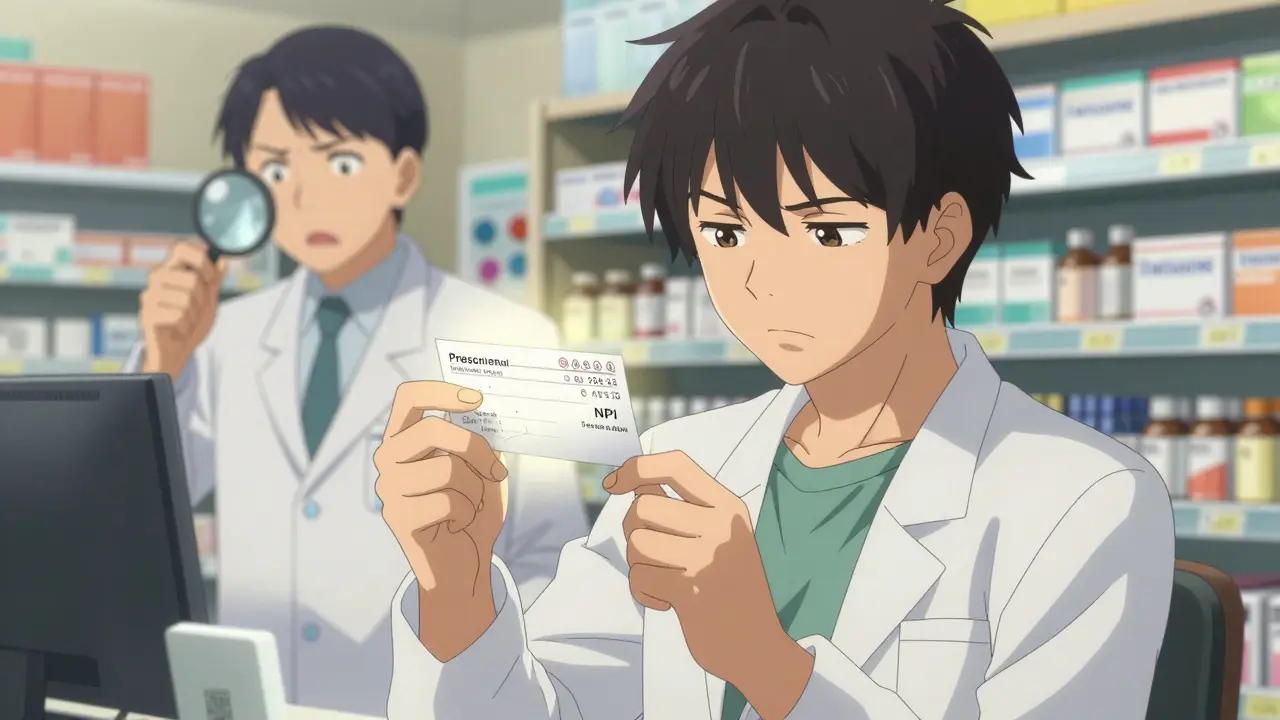
When you pick up a new prescription, you probably grab it, check the name, and head out. But what if that label is wrong? A mismatched prescriber name, an incorrect pharmacy number, or a misspelled doctor’s name might seem like a small typo-but it could be the difference between getting the right medicine and risking serious harm. Every year, over 1.3 million people in the U.S. are injured because of medication errors, and 12% of those come from mistakes in prescriber or pharmacy information on the label. That’s not just a statistic. It’s someone’s parent, sibling, or friend. You can prevent this. All it takes is 60 seconds.
What You Need to Check on Every Label
Your medication label isn’t just a sticker. It’s your safety checklist. By law, every prescription label must include specific details, and you have the right to verify them. Here’s exactly what to look for:- Prescriber Name - This should be the full legal name of the doctor, nurse practitioner, or other provider who prescribed the medication. It’s not enough to see “Dr. J.” or “Cardio Clinic.” You need the full name matching your records.
- NPI Number - Every licensed provider in the U.S. has a National Provider Identifier (NPI), a 10-digit number. It’s often printed near the prescriber’s name. If it’s missing or looks wrong, ask.
- Prescription Number - This unique code is used to track refills. Match it to the number on your prescription receipt or the one your doctor gave you. If it doesn’t match, the pharmacy may have filled the wrong script.
- Pharmacy Name and Address - The legal name of the pharmacy must appear. Don’t rely on logos or nicknames. If it says “CVS Pharmacy, 123 Main St.” but you picked it up at Walgreens, that’s a red flag.
- Pharmacy Phone Number - This isn’t for customer service. It’s your direct line to the pharmacist who filled your prescription. If you have questions about dosage, interactions, or side effects, call this number.
- Pharmacist’s Name (in 42 states) - In most states, the pharmacist’s name must be printed. If it’s missing, ask why.
These aren’t suggestions. They’re federal and state requirements. The FDA’s 2023 Structured Product Labeling (SPL) rules and state pharmacy boards enforce this. If something’s missing or wrong, the pharmacy broke the law.
When to Verify: Three Critical Moments
Don’t wait until you’re already taking the pill. Check the label at three key moments:- When you first receive the medication - Right at the counter. Don’t just take it and leave. Hold it up. Read it out loud. Compare it to what your doctor told you.
- Before your first dose - Even if the label looked right when you picked it up, check again at home. A mistake could have been made during packaging or scanning.
- Every time you refill - Prescriptions can get mixed up in automated systems. One patient in a 2024 ISMP report got a different drug entirely because the refill system auto-filled the wrong prescriber. She caught it because she checked.
Studies show patients who check their labels at all three points reduce their risk of medication errors by up to 32%, according to the FDA’s analysis of 2.7 million prescriptions. That’s not luck. That’s routine.
Common Errors and Real Cases
It’s not just about typos. Here’s what actually goes wrong:- Misspelled prescriber names - 42% of reported errors involve names like “Dr. R. Smith” instead of “Dr. Robert Smith.” One patient received a Schedule II opioid prescribed by a dentist, but the label said her primary care doctor. She didn’t notice until she called to refill.
- Wrong specialty - 28% of errors involve the wrong provider type. A patient got a psychiatric medication labeled as prescribed by a dermatologist. The pharmacy system auto-populated the wrong provider.
- Electronic prescription glitches - 18% of failures happen because e-prescriptions pull the wrong provider from a shared system. A doctor might have left a clinic, but their name still appears on outgoing scripts.
- Mail-order pharmacy mix-ups - Mail-order pharmacies have a 23% higher error rate than local pharmacies. One patient received a chemotherapy drug meant for someone else. The label had the right name but the wrong prescription number.
These aren’t rare. A Reddit thread from March 2024 had over 1,200 comments from people who caught errors. One man saved his mother from a dangerous drug interaction because he noticed the prescriber was a podiatrist, not her cardiologist. Another woman realized the pharmacy had filled her insulin with a completely different medication because the NPI number didn’t match her doctor’s.
Why Physical Labels Still Beat Apps
You might think your pharmacy app is enough. It’s not. A 2023 study in the Journal of the American Pharmacists Association compared physical label checks with mobile app verification. The results were clear:| Method | Error Rate | Reliability |
|---|---|---|
| Physical Label | 2.1% | High - No tech dependency |
| Mobile App | 7.2% | Lower - Glitches, sync delays |
Apps can lag, crash, or show outdated info. Physical labels don’t. You hold it. You read it. You know. Even the FDA recommends physical verification as the baseline. Apps are helpful for reminders and refills, but they shouldn’t replace the label in your hand.
What to Do If Something’s Wrong
If you spot a mistake, don’t wait. Don’t assume it’s “just a typo.” Take action:- Call the pharmacy immediately - Use the number on the label. Ask to speak to the pharmacist who filled the script. Don’t settle for a customer service rep.
- Ask for a printout of the original prescription - Pharmacies are required to keep records. You have the right to see what was sent in.
- Request a corrected label - If there’s an error, they must fix it before you take the medication.
- Report it - If the pharmacy refuses to fix it or seems dismissive, report it to your state board of pharmacy. You can find your board’s contact info at nabp.net.
One patient in 2023 reported a pharmacy that kept giving her the wrong drug. She called the state board. The pharmacy was fined, and their error rate dropped by 60% after the inspection.
Tools That Help
You don’t have to do this alone. Many tools exist to make verification easier:- Magnifying glasses - 82% of pharmacies offer free magnifiers. Ask at the counter.
- Personal Medication Record (PMR) - Keep a list of all your meds, dosages, and prescribers. Most major pharmacies (CVS, Walgreens, etc.) offer free digital PMRs in their apps.
- QR code pilot program - Starting in May 2024, the FDA began testing QR codes on labels that link to verified digital records. Early results show a 19% improvement in accuracy. Look for these on newer prescriptions.
Independent pharmacies scored higher in label clarity (4.2/5) than big chains (3.7/5) in a 2023 Consumer Reports survey. If you have trouble reading labels, consider switching.
Why This Matters More Than You Think
Verifying your label isn’t about being “difficult.” It’s about survival. Dr. Sarah Thompson from the Institute for Safe Medication Practices says failure to verify prescriber info contributes to 8.7% of all wrong-drug errors. That’s one in every 11 preventable mistakes.And it’s not just about drugs. It’s about trust. When you verify, you’re not just checking a label-you’re protecting yourself from systems that can and do fail. Technology helps, but it doesn’t replace human attention.
According to the CDC, only 62% of U.S. adults consistently check their labels. Medicare beneficiaries do better-78%-because they’re required to participate in medication therapy management. But you don’t need Medicare to be safe. You just need to pause. Look. Ask.
Final Checklist Before You Take Any Pill
Before you swallow anything:- Is the prescriber’s full name correct and spelled right?
- Does the NPI number match what your doctor gave you?
- Is the pharmacy name and phone number accurate?
- Is the prescription number the same as the one you were given?
- Does the drug name and dose match what your doctor told you?
If even one thing is off, stop. Call the pharmacy. Don’t take it. Your life isn’t worth the risk of assuming it’s fine.
What if the prescriber name on my label is different from my doctor’s name?
This is a major red flag. It could mean the pharmacy filled the wrong prescription, the e-prescription system pulled the wrong provider, or someone else’s script was accidentally sent to you. Call the pharmacy immediately and ask to speak to the pharmacist. Request to see the original prescription record. Never take the medication until this is resolved.
Can I trust the pharmacy app instead of the physical label?
No. Pharmacy apps can have delays, sync errors, or outdated information. A 2023 study found mobile app verification had a 7.2% error rate, compared to just 2.1% for physical label checks. Apps are useful for reminders and refills, but they should never replace physically reading your label before taking any medication.
Why is the NPI number important?
The NPI number is a unique 10-digit identifier assigned to every licensed healthcare provider in the U.S. It’s harder to fake than a name. If the NPI on your label doesn’t match your doctor’s, it’s likely a system error or fraud. You can verify your provider’s NPI at nppes.cms.hhs.gov. If it doesn’t match, contact your pharmacy.
What should I do if I notice a mistake after I’ve already taken the pill?
Call your pharmacist and your doctor immediately. Do not take any more doses. Keep the bottle and label. If you feel unwell or notice unusual symptoms, go to the ER. Report the incident to your state board of pharmacy and to the FDA’s MedWatch program. Even if you feel fine, a delayed reaction could still occur.
Are mail-order pharmacies more likely to make mistakes?
Yes. A 2022 CMS analysis found mail-order pharmacies have a 23% higher error rate than local pharmacies. This is often due to higher volume, automated systems, and less direct patient interaction. If you take complex or high-risk medications, consider using a local pharmacy for better oversight.
Do I need to verify every time I refill?
Yes. Automated refill systems can pull the wrong prescription, especially if you’ve recently switched doctors or pharmacies. One patient received a completely different drug on refill because the system matched the wrong NPI. Always check the label-even if it’s the same medication.
Can I ask the pharmacist to spell out the prescriber’s name?
Absolutely. Pharmacists expect this. If the name looks unusual or hard to read, ask them to spell it out. Many pharmacies offer free magnifiers or large-print labels upon request. You’re not being difficult-you’re being smart.
Is it normal for my label to have a different pharmacy name than where I picked it up?
No. If you picked it up at CVS but the label says “Express Scripts,” that’s a serious issue. It means the prescription was sent to a mail-order pharmacy and then distributed through a retail location. This can lead to incorrect dosing or drug interactions. Contact the pharmacy immediately and ask why this happened.




Tommy Chapman
February 20, 2026 AT 15:04Irish Council
February 22, 2026 AT 05:57Freddy King
February 23, 2026 AT 20:16Jayanta Boruah
February 25, 2026 AT 08:26Danielle Gerrish
February 26, 2026 AT 20:59madison winter
February 27, 2026 AT 13:57Jana Eiffel
February 28, 2026 AT 03:53aine power
February 28, 2026 AT 21:18Laura B
March 2, 2026 AT 04:00Robin bremer
March 2, 2026 AT 15:36Davis teo
March 2, 2026 AT 22:24Michaela Jorstad
March 3, 2026 AT 17:02Chris Beeley
March 4, 2026 AT 02:59