
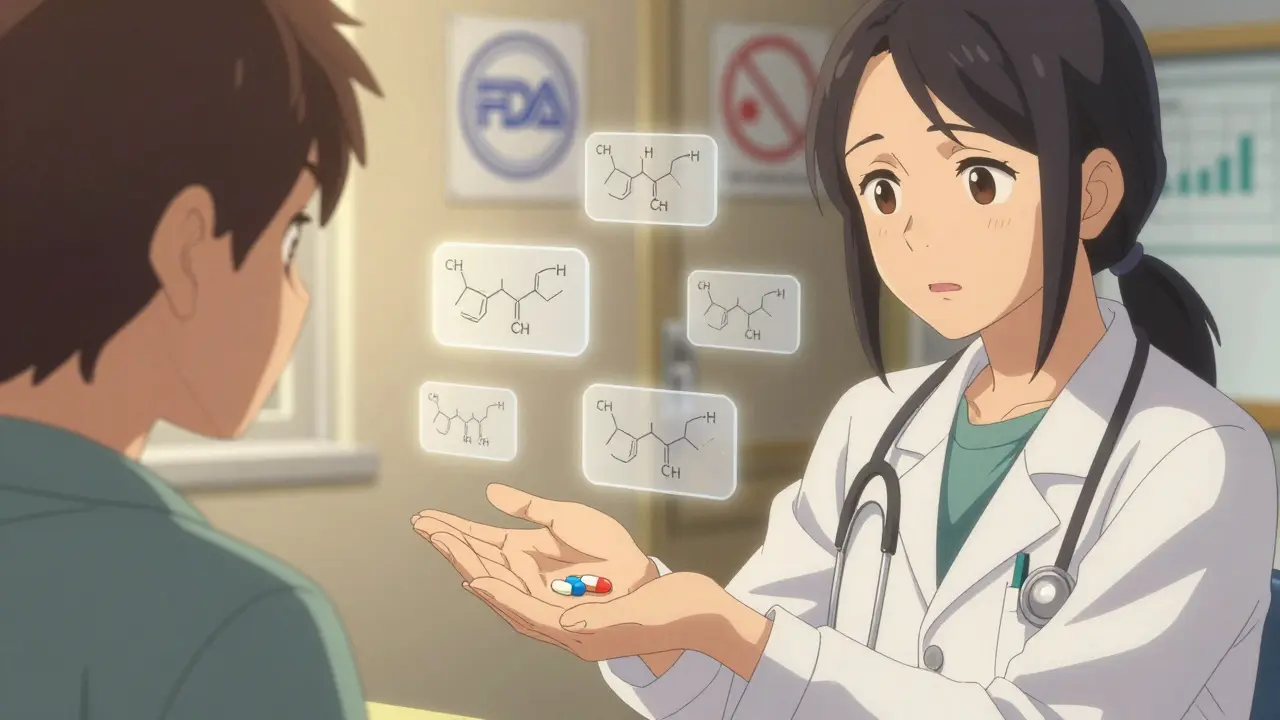
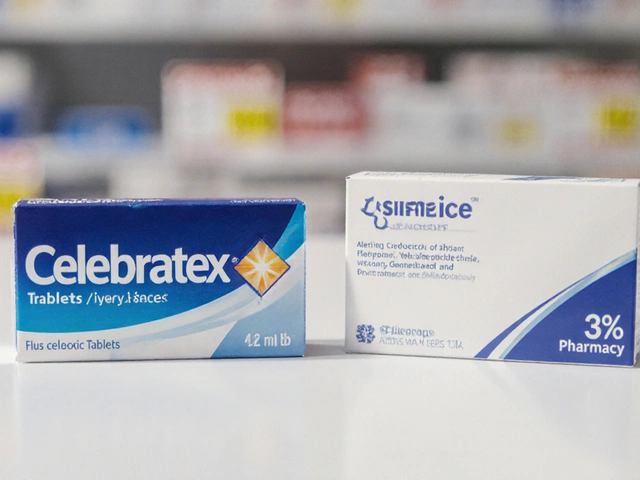
When a patient picks up a prescription and sees a pill that looks nothing like the one they’ve been taking for years, confusion sets in. Generic medications are just as safe and effective as brand-name drugs-but most patients don’t know that. They see a different color, a different shape, a different label, and suddenly they’re worried: Is this the same medicine? Will it even work? As a provider, your job isn’t just to prescribe-it’s to explain.
Why Patients Doubt Generics (Even When They Shouldn’t)
It’s not irrational to be suspicious. The pharmaceutical industry markets brand-name drugs with slick ads, celebrity endorsements, and promises of reliability. Generics? They show up in plain packaging, often with no name recognition at all. And when a patient switches from the blue oval pill they’ve taken for five years to a white round one, it’s easy to assume something’s changed.
The truth? The active ingredient is identical. The FDA requires generics to deliver the same amount of medicine into the bloodstream at the same rate as the brand. That’s not a suggestion-it’s a legal requirement. Bioequivalence studies must show results within 80-125% of the brand’s performance, with 90% confidence. That’s tighter than most manufacturing tolerances for anything else in medicine.
But patients don’t care about bioequivalence curves. They care about how they feel. And if they’ve had a bad experience-maybe a headache after switching to a different generic manufacturer-they’ll remember that. A 2023 Drugs.com analysis found that 18% of negative reviews for multi-manufacturer generics mentioned side effects like headaches or nausea, even though clinical trials show no consistent pattern. The issue isn’t the drug. It’s the perception.
What Generics Actually Are (And What They’re Not)
Let’s clear up the myths. A generic drug is not a cheaper copy. It’s not a substitute. It’s not a second-tier option. It’s the same medicine, approved under the same standards, made in the same type of facilities, and inspected by the same agency.
The Hatch-Waxman Act of 1984 created the legal pathway for generics in the U.S. It allowed manufacturers to skip expensive clinical trials because the safety and effectiveness of the original drug had already been proven. All they had to prove was bioequivalence. That’s why generics cost 80-85% less. Not because they’re lower quality. Because they don’t carry the R&D debt of the original.
And yes, inactive ingredients can differ. That’s why the pill looks different. It’s also why some patients report changes in how they feel-like stomach upset or a strange taste. But those are rare, and usually tied to allergies or sensitivities to fillers like dyes or lactose. The active ingredient? Always the same. Always tested. Always regulated.
Even for drugs with narrow therapeutic windows-like warfarin or levothyroxine-the FDA applies the same standards. In fact, they require extra scrutiny. Studies reviewing 47 trials with over 9,000 patients found no clinically meaningful difference in outcomes between brand and generic versions of cardiovascular drugs.
How to Start the Conversation (Without Sounding Like a Salesperson)
You’re not trying to sell a cheaper option. You’re trying to remove fear. The worst thing you can do is say, “It’s just a generic.” That sounds dismissive. Instead, lead with empathy.
Try this: “I see you’ve been on Crestor for a while. Your new prescription is rosuvastatin-the same medicine, just without the brand name. It’s been used by millions of people and works the same way. The only difference is the cost-you’ll save about $300 a month.”
That’s the TELL method: Tell them it’s the same active ingredient. Explain why it looks different. Listen to their concerns. Link it to their goals.
Don’t assume they’re worried about effectiveness. Maybe they’re worried about insurance coverage. Or they had a bad experience with a generic before. Ask: “What’s your biggest concern about switching?” Then listen. Really listen. The 2022 GoodRx survey showed that 78% of patients who got a detailed explanation were satisfied-compared to just 42% who got a quick “it’s fine.”
What to Say When They Push Back
Patients will ask the same questions over and over. Here’s how to answer them clearly, without jargon:
- “Is this really the same medicine?” - “Yes. The FDA requires it to have the exact same active ingredient, strength, and how it works in your body. The only differences are in the color, shape, or filler ingredients-things that don’t affect how the drug works.”
- “Why does it look different?” - “Trademark laws prevent generic makers from copying the brand’s appearance. It’s not about the medicine-it’s about legal rules. Think of it like two different brands of aspirin. They’re both aspirin, just packaged differently.”
- “Is it as strong?” - “It has to be. The FDA tests this. The amount of medicine in your bloodstream has to match the brand within a very tight range. If it didn’t, they wouldn’t approve it.”
- “I tried a generic before and it didn’t work.” - “That’s frustrating. Sometimes, switching between different generic manufacturers can cause minor changes in how you feel, especially if you’re sensitive to inactive ingredients. Let’s try the same generic you used before, or we can look at the authorized generic version-same as the brand, just cheaper.”
For patients who’ve had bad experiences, the authorized generic is a powerful tool. It’s made by the brand-name company, under the same conditions, but sold without the brand label. It’s identical to the original-just cheaper. About 37% of top-selling brand drugs now have an authorized generic option.
Why This Matters More Than You Think
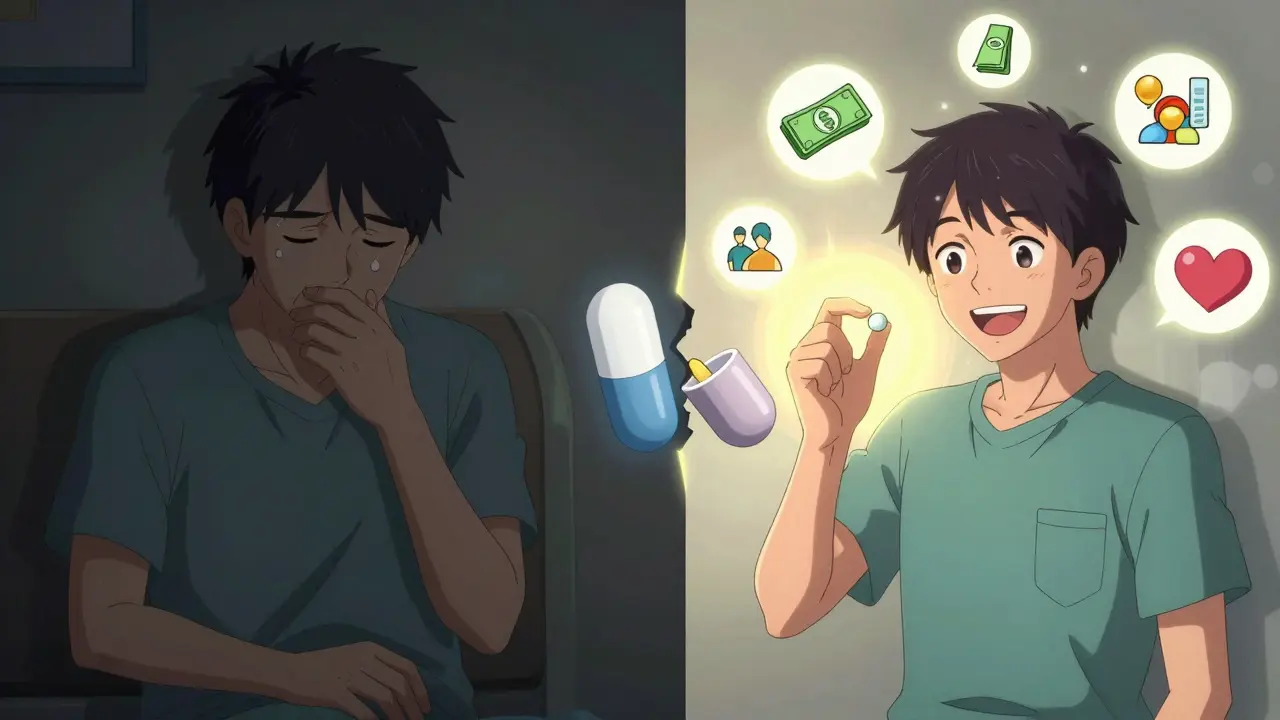
Cost isn’t just a number. It’s a barrier to health. In 2022, Medicare Part D patients saved an average of $1,269 per year by using generics. That’s not pocket change. That’s rent, groceries, or transportation to appointments. When patients can’t afford their meds, they skip doses. They stop taking them. And that’s when hospitalizations start.
Research shows patients who get clear counseling about generics have 22% higher adherence at six months. That’s not a small win. That’s fewer ER visits, fewer complications, better outcomes.
And it’s not just about money. It’s about trust. If you’re the one who explains it, the patient learns to trust you-not just the system. That trust carries over to every other conversation you have with them.
What You Can Do Tomorrow
You don’t need a fancy script. You don’t need hours of training. But you do need to make time.
- When you prescribe a generic, say one sentence: “This is the same medicine as [brand], but it’s much cheaper. I’ll explain how if you have questions.”
- Ask your pharmacist to flag patients who’ve refused generics in the past. They’re the ones who need the extra time.
- Use the teach-back method: “Can you tell me in your own words why we’re switching to this version?” If they can explain it back, they’ve understood it.
- Document the conversation. Not just that you discussed it-but what their concern was and how you addressed it. That’s critical for continuity.
The FDA is spending $5 million in 2023 to improve patient education on generics. That’s because they know the problem isn’t the drug. It’s the message. And you’re the one who delivers it.
What’s Next? Biosimilars and Complex Generics
Generics are getting more complicated. New drugs like insulin, epinephrine auto-injectors, and inhalers are now being copied as “biosimilars.” These aren’t simple pills-they’re complex biological products. The same principles apply: same active component, same effectiveness, lower cost. But the conversation is harder.
Start preparing now. Learn the difference between a generic and a biosimilar. Know which drugs have authorized generic versions. And remember: the goal doesn’t change. It’s still about trust, clarity, and helping patients stay on their meds.
By 2030, the global generic market will be worth over $750 billion. That’s not because people are desperate. It’s because they’re smart. They want good medicine at a fair price. And you’re the one who can help them get it.
Are generic medications really as effective as brand-name drugs?
Yes. The FDA requires generic medications to contain the same active ingredient, strength, dosage form, and route of administration as the brand-name version. They must also prove bioequivalence-meaning they deliver the same amount of medicine into the bloodstream at the same rate. Studies reviewing thousands of patients show no meaningful difference in effectiveness for most conditions, including heart disease, diabetes, and high blood pressure.
Why do generic pills look different from brand-name ones?
Trademark laws prevent generic manufacturers from making pills that look identical to brand-name drugs. The color, shape, and size can differ because those features are protected as part of the brand’s identity. But the active ingredient-and how it works in your body-is exactly the same. Differences in inactive ingredients (like dyes or fillers) are carefully reviewed by the FDA to ensure they don’t affect safety or effectiveness.
Can switching to a generic cause side effects?
Rarely. Side effects from switching are usually due to differences in inactive ingredients, not the active drug. For example, someone allergic to a dye or lactose in one generic formulation might react-but that’s not common. Most patients experience no change. If a patient reports new symptoms after switching, check if they switched between different generic manufacturers. In some cases, returning to the same generic they used before-or trying an authorized generic-can resolve the issue.
What is an authorized generic?
An authorized generic is made by the original brand-name company but sold without the brand label. It’s identical in every way to the brand-name drug-same manufacturer, same ingredients, same packaging-except it’s priced like a generic. About 37% of top-selling brand drugs now have an authorized generic option. It’s a great choice for patients who are skeptical about generics but need to save money.
Why do some patients refuse generics even when they’re cheaper?
The main reasons are appearance differences and misinformation. Many patients believe that if it looks different, it must be weaker. Others had a bad experience with a generic in the past-sometimes due to switching between manufacturers or unrelated health changes. Studies show that patients who receive a clear, empathetic explanation are far more likely to accept generics. The key is listening first, then answering concerns with facts-not assumptions.
Do generics save money for patients and the healthcare system?
Yes-significantly. Generics account for 90% of all prescriptions filled in the U.S. but only 23% of total drug spending. In 2022, they saved the U.S. healthcare system $373 billion. For individual patients, switching from a brand-name drug like Crestor to its generic rosuvastatin can save $300 or more per month. Medicare Part D beneficiaries saved an average of $1,269 per year just by using generics.
Final Thought: It’s Not About the Pill. It’s About the Person.
You’re not just prescribing a drug. You’re prescribing stability. You’re prescribing peace of mind. When a patient understands that the generic they’re holding is just as safe, just as effective, and far more affordable-they don’t just take it. They trust you more. And that’s the real win.



Michael Patterson
January 11, 2026 AT 17:07look i get it, generics are ‘the same’ blah blah but i’ve had my blood pressure med switched 3 times in 2 years and each time i get this weird metallic taste and my head feels like it’s full of cotton. the FDA says it’s ‘within 80-125%’ but that’s a huge range. what if i’m on the edge of that? i’m not a lab rat. also, why do they make them look like candy? white oval? looks like a vitamin i’d get at gnc. i’m not dumb, i just want consistency. they keep saying ‘same active ingredient’ like that’s magic. no it’s not. my body remembers the pill. and now i’m scared to take anything new.
Priscilla Kraft
January 12, 2026 AT 14:01Ugh I feel you 😔 I had the same thing with my thyroid med-switched generics and felt like I was walking through molasses for a week. But here’s the thing: I went back to the *same* generic brand I originally had (not the brand, just the generic maker) and boom-back to normal. Turns out it’s not the drug, it’s the filler. Some people are sensitive to dyes or lactose. Ask your pharmacist for the manufacturer code on the bottle. If it’s the same as before, you’re golden. And if you’re still nervous? Ask for the authorized generic. It’s literally the brand pill in a plain box. No hype, same results. You deserve to feel okay 💙
Christian Basel
January 12, 2026 AT 17:59It’s not that generics are ineffective-it’s that the bioequivalence threshold is statistically permissive, not clinically absolute. The 80-125% AUC range is a regulatory artifact designed for cost efficiency, not physiological fidelity. When you’re dealing with narrow therapeutic index drugs like warfarin or levothyroxine, even minor pharmacokinetic variance can trigger downstream effects. The literature cherry-picks meta-analyses that aggregate across populations, but individual variability is ignored. You can’t treat a human like a population mean. The system is optimized for volume, not precision. And don’t get me started on the lack of post-marketing surveillance for generics. We’re flying blind.
Adewumi Gbotemi
January 14, 2026 AT 16:44I like this. In Nigeria, many people think generic means bad medicine. But my uncle took generic blood pressure pills for 8 years-same as brand, cheaper, no problem. He said the only thing different was the color. He didn’t even know it was generic until I told him. People need to hear this. Not all medicine is about the name on the bottle. What matters is if it works. And if it saves money so you can eat? That’s good medicine.
Jennifer Littler
January 16, 2026 AT 15:37Let’s be real-the real issue isn’t the drug. It’s the lack of standardized labeling across manufacturers. One generic for levothyroxine has a different dissolution profile than another, even if both meet FDA bioequivalence. But because they’re both labeled ‘rosuvastatin 10mg’, prescribers and patients assume interchangeability. That’s dangerous. We need batch-level tracking, like with vaccines. And pharmacists should be required to disclose manufacturer at point of sale. No more ‘it’s just a generic’ handwave. Patients deserve transparency. This isn’t about trust in the system-it’s about accountability.
Vincent Clarizio
January 17, 2026 AT 19:05Oh wow. So we’re now treating patients like they’re toddlers who can’t handle the truth? ‘It’s the same medicine!’-as if that’s a soothing lullaby? You think telling someone their $300/month pill is now a $25 pill with a different shape is going to calm their anxiety? Please. The placebo effect isn’t just about sugar pills-it’s about identity. That blue oval? It’s not just a pill. It’s a ritual. A symbol of stability. You don’t swap someone’s emotional anchor for a spreadsheet. And now you want them to ‘trust you’? You didn’t build that trust-you just changed the packaging. The real crime isn’t the generic. It’s the healthcare system that forces people to choose between dignity and survival. And you’re just the guy handing out the cheap version with a smile.
Sam Davies
January 18, 2026 AT 18:19So let me get this straight-we’ve got a system where a drug company spends $2 billion developing a pill, then a competitor comes along, copies the active ingredient, skips all the trials, and sells it for 85% less… and we’re supposed to be *impressed*? 🤦♂️ The FDA’s ‘bioequivalence’ is basically a handshake deal. Meanwhile, the brand-name company is out there sponsoring yoga retreats for cardiologists. It’s capitalism with a side of cognitive dissonance. I’ll take the generic if it’s cheaper-but don’t pretend I’m not being sold a compromise. And yes, I know the math. I just don’t like the narrative.
Alex Smith
January 20, 2026 AT 10:01Interesting how we all act like generics are some new scandal. Back in 2010, I was a pharmacy tech and we had a guy who refused every generic for his antidepressant. Said he ‘felt’ the difference. We switched him to the authorized generic-same exact pill, different label. He cried. Not because it didn’t work. Because he realized he’d been paying $400/month for a placebo version of himself. The pill didn’t change. His perception did. That’s the real lesson here: medicine isn’t just chemistry. It’s psychology. And we’re terrible at talking about it. We need more ‘TELL’ and less ‘trust me, bro’.
Priya Patel
January 20, 2026 AT 23:02My mom took generic insulin for 5 years. No issues. She saved $200 a month. That’s groceries, bus fare, heating in winter. If you’re scared, ask for the authorized one-it’s the same as the brand but cheaper. But don’t let fear make you sick. You’re not losing anything by trying. You’re gaining freedom. 💪❤️