

You grab your inhaler during a sudden asthma flare-up, press down, and get… nothing. Or worse, a weak puff that does little to open your airways. It’s terrifying, especially when you realize the canister expired six months ago. We’ve all been there-staring at a bottle of cloudy eye drops or a tube of cream with a date long past, wondering if it’s still good or just dangerous clutter.
Here is the hard truth: expiration dates aren’t just suggestions. They are strict guarantees from manufacturers about potency and safety. While some pills might hold up longer than their label suggests, inhalers, drops, and topicals are different beasts. They degrade faster, lose effectiveness unpredictably, and can even become hazardous. Managing these specific types of expired meds requires more than just tossing them in the bin. Let’s break down exactly what happens to each type, how to spot trouble, and the safest ways to get rid of them without harming yourself or the environment.
Why Inhalers, Drops, and Creams Age Differently Than Pills
Most people think all medicines expire the same way. They don’t. A tablet is a solid, stable form. But an inhaler is a complex delivery system involving pressurized gas, liquid suspensions, and precision mechanics. An eye drop is a sterile solution vulnerable to bacteria. A topical cream is an emulsion that can separate or grow mold.
The FDA mandates expiration dates to ensure full potency. For most drugs, this is 12-24 months post-manufacturing. But for respiratory devices, stability testing shows rapid degradation once opened. A study in the *Journal of Aerosol Medicine* found that dry powder inhalers like Advair Diskus can lose 15-20% of their potency within six months after expiration if humidity exceeds 60%. That means on a damp Scottish day, your expired inhaler might be delivering half the dose you need.
The Hidden Risks of Using Expired Respiratory Meds
Using an expired inhaler isn’t just about reduced effectiveness; it’s about unpredictability. Dr. Robert Citard, a pharmacy professor, noted that while fresh albuterol inhalers have a dose variance of about 5%, those twelve months past expiration can vary by up to 35%. Imagine needing 100mcg of rescue medication during an attack and getting anywhere between 65mcg and 135mcg randomly. That inconsistency can be life-threatening.
Beyond dosing issues, the propellants themselves change. Soft mist inhalers, such as Combivent Respimat, rely on precise pressure. Data submitted to the FDA showed that pressure drops by 25% eighteen months beyond the expiration date. If the pressure fails, the device won’t spray at all, leaving you stranded mid-attack. The American Lung Association warns that relying on these devices during emergencies could fail when you need them most.
Eye Drops and Topicals: Contamination vs. Degradation
If inhalers fail mechanically, eye drops fail biologically. Once the seal is broken, sterility is compromised. A 2022 study in *Clinical Ophthalmology* revealed that artificial tears stored at room temperature showed significant microbial growth within seven days of expiration. By thirty days post-expiration, 42% of samples tested positive for contamination compared to just 8% of unexpired ones.
Putting contaminated drops into your eyes risks serious infections like conjunctivitis or keratitis. Topical medications like hydrocortisone creams face a different issue: chemical breakdown. These creams typically retain 90% potency for six months post-expiration if kept below 25°C. But heat accelerates decay. At 30°C, potency drops to 65%. You’re not just wasting money; you’re applying an ineffective barrier that might irritate sensitive skin due to degraded preservatives.
Safe Disposal: Why the Trash Can Is Often Wrong
So, you’ve decided to toss them. Where? Most people throw everything in the household trash. This is problematic for two reasons: safety and environment. Pressurized canisters contain residual medication and propellant gases. Throwing them loose in the trash creates explosion risks in garbage trucks and landfills. MedProDisposal noted that up to 29% of medication remains in expired devices.
Environmentally, pharmaceutical pollution is real. The US Geological Survey detected medication residues in 80% of waterways tested. When you flush pills or toss chemicals, they often end up in our water supply. However, flushing is generally discouraged for most meds unless specifically stated on the label (like certain opioids). For inhalers, flushing is impossible anyway.
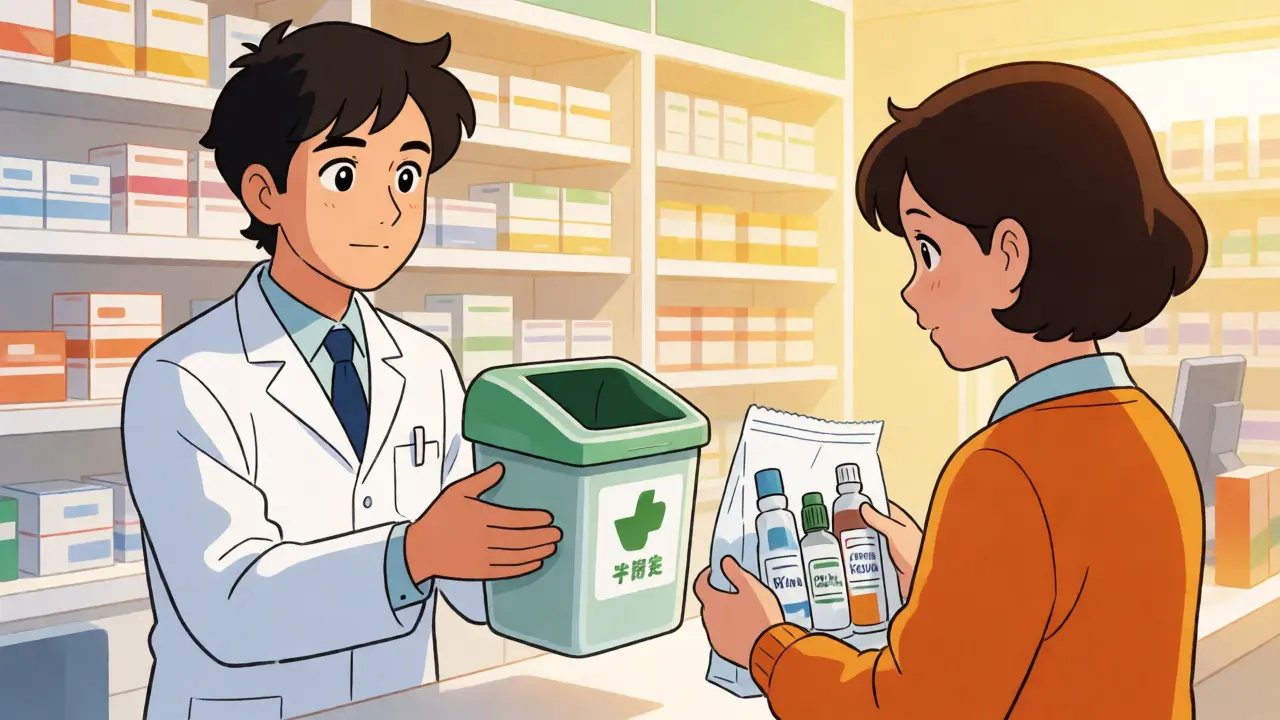
The Best Option: Take-back programs. The DEA runs National Prescription Drug Take Back Day events, but local pharmacies offer permanent solutions. CVS has take-back kiosks in nearly 10,000 locations, and Walgreens covers another 8,500. In the UK, many high-street pharmacies accept unused medicines for safe incineration.
Step-by-Step Guide to Managing Your Expired Stockpile
Don’t wait for an emergency to check your dates. Set a calendar reminder every six months to audit your medicine cabinet. Here is a practical workflow:
- Check Dates and Condition: Look for the printed expiration date. Also inspect physical changes. Is the inhaler counter showing zero? Are eye drops cloudy or discolored? Has the cream separated into oil and water?
- Isolate Hazardous Items: Separate pressurized inhalers from non-hazardous items like tablets. Inhalers are often classified as hazardous waste due to toxic propellants under regulations like the RCRA.
- Use Pharmacy Take-Backs: Bring inhalers, eye drops, and tubes to a participating pharmacy. Do not try to puncture or dismantle the inhaler canister yourself; this releases harmful vapors.
- At-Home Disposal (If No Take-Back Available): For non-hazardous items like expired creams or pills, mix them with undesirable substances like used coffee grounds or kitty litter. Seal them in a plastic bag before throwing them in the trash. This prevents animals or children from digging them out.
- Recycle Packaging: The plastic casing of some inhalers can be recycled, but the metal canister cannot. Check local guidelines. Usually, you must remove the metal canister from the plastic mouthpiece before recycling.
Preventing Waste Before It Happens
Managing expired meds starts with buying less. Many patients buy large quantities because they seem cheaper, only to let half expire. For chronic conditions like asthma, ask your doctor about smaller prescription sizes. Some insurers cover monthly refills better than quarterly bulk buys.
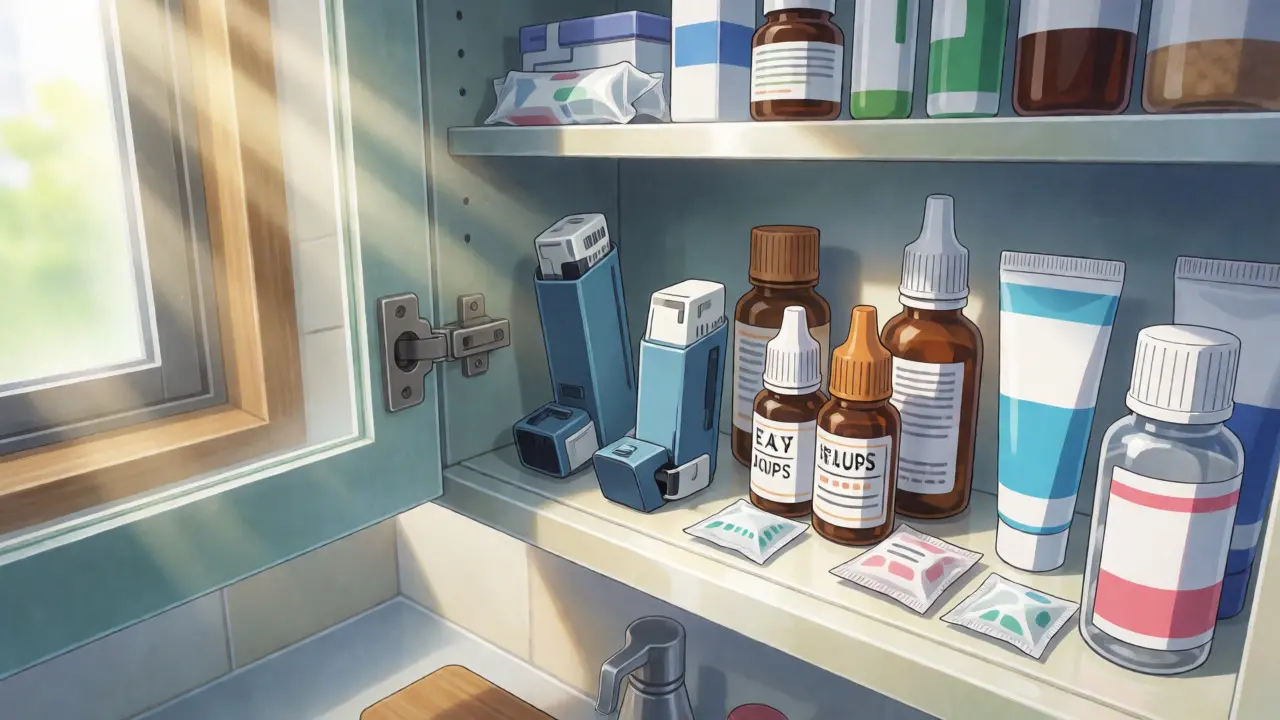
Storage matters immensely. Keep medications away from bathroom humidity and kitchen heat. A cool, dark drawer in the bedroom is ideal. Humidity above 60% accelerates the breakdown of dry powders and creams. If you live in a humid climate, consider using silica gel packets in your medicine box.
Technology can help too. Smart caps, like Propeller Health’s GPS-enabled device, alert users 30 days before expiration. Even a simple smartphone reminder works. Label your inhalers with the date you first opened them, not just the manufacture date, as usage time affects lifespan differently than shelf time.
| Medication Type | Primary Risk Post-Expiration | Timeframe for Significant Degradation | Recommended Disposal Method |
|---|---|---|---|
| Metered-Dose Inhaler (MDI) | Inconsistent dosing; propellant loss | Rapid decline after opening; 12-13 months max | Pharmacy take-back / Hazardous waste |
| Dry Powder Inhaler (DPI) | Potency loss due to humidity | 15-20% loss in 6 months post-expiry | Pharmacy take-back |
| Eye Drops | Bacterial contamination | High risk within 7-30 days post-expiry | Trash (sealed) or Take-back |
| Topical Creams | Emulsion separation; reduced efficacy | Gradual over 6+ months depending on temp | Trash (mixed with absorbent) |
Frequently Asked Questions
Can I use an expired inhaler in an emergency if I have no other option?
Yes, but with caution. It is better to use an expired inhaler than none at all during a mild attack. However, expect inconsistent dosing. If symptoms do not improve immediately, seek medical help rather than assuming the medication failed and taking excessive puffs, which could lead to side effects from variable concentrations.
Why shouldn't I flush my expired medications down the toilet?
Flushing introduces pharmaceuticals directly into the water supply. Treatment plants aren't always designed to filter out complex drug compounds, leading to contamination of rivers and streams. This affects aquatic life and potentially human health through drinking water. Only flush medications listed on the FDA's "Flush List," which typically includes high-risk opioids.
How do I know if my eye drops are contaminated?
Visual cues include cloudiness, discoloration, or particles floating in the solution. If the solution was originally clear but now looks murky, discard it immediately. Also, if the bottle tip touches your eye or fingers, contamination risk increases significantly regardless of the expiration date.
Are there free options for disposing of inhalers?
Yes. Many major pharmacy chains like CVS and Walgreens offer free take-back services. Additionally, some states provide prepaid mail-back envelopes specifically for inhalers. Check with your local council or health authority for community collection points, which are often free for residents.
Does storage temperature really affect expiration?
Absolutely. High temperatures accelerate chemical reactions that break down active ingredients. For example, hydrocortisone cream loses potency much faster at 30°C than at 25°C. Humidity also ruins dry powder inhalers. Always store meds in a cool, dry place, not in a steamy bathroom.





Aurelio Haney
September 3, 2026 AT 02:00Finally someone says it. Expiration dates are not suggestions they are law 📜. If you use expired meds you are gambling with your life. Period.
Amy B
September 3, 2026 AT 19:34This is so helpful! I always feel guilty throwing away half-full bottles 😭 but knowing about the bacterial growth in eye drops makes me feel better. Do you think storing them in the fridge helps extend that window a bit?
Mary Tait
September 4, 2026 AT 23:48Storing inhalers in the fridge is a terrible idea because condensation ruins the powder mechanism immediately. You keep them at room temperature or you ruin the device. It is basic physics and anyone who has lived in this country long enough knows how humidity works here. Stop trying to outsmart manufacturer guidelines with home remedies.
Louis Tarro
September 6, 2026 AT 08:23I appreciate the nuance here. Many folks simply toss everything without considering the environmental impact of pharmaceutical pollution. It's a delicate balance between personal safety and ecological stewardship, isn't it? We must be mindful of where these compounds end up.
Rob Alderman
September 7, 2026 AT 17:56The mention of propellant pressure drop is the most critical takeaway. Most people don't realize the mechanical failure point precedes the chemical degradation. It’s rather elementary knowledge for anyone who understands fluid dynamics.
Evelyn Reed
September 8, 2026 AT 09:08totally agree on the pharmacy take back programs. i’ve been using cvs kiosks for years and it’s just so much less hassle than figuring out hazardous waste protocols myself. plus it keeps the waterways cleaner which feels good
Jim Bisesi
September 8, 2026 AT 19:49Ugh another article telling me what I already know. The drama about 'terrifying' asthma attacks is exhausting. Just buy new ones. Why do we need a whole essay on this? I'm tired.
Shu Chowdhury
September 9, 2026 AT 13:17it helps to have a routine honestly. i set a reminder every 6 months and it takes 10 minutes. no stress no panic just done
Falgun R Patel
September 10, 2026 AT 01:33We often view medicine as a static object but it is a dynamic system interacting with time and environment. Your post highlights this beautifully. By understanding the degradation process we respect both our health and the earth. A thoughtful approach indeed.
Rebecca Makayla Crane
September 10, 2026 AT 19:52Omg yes!! 💖 The part about cloudy eye drops gave me chills 🥶. I literally used some last week and felt weird but ignored it. Now I’m gonna go check my cabinet ASAP. Thanks for the nudge! ✨
Somnath Thombre
September 12, 2026 AT 03:21great info guys. dont forget to check local rules though sometimes trash disposal is fine if you mix it with coffee grounds like mentioned. stay safe everyone!