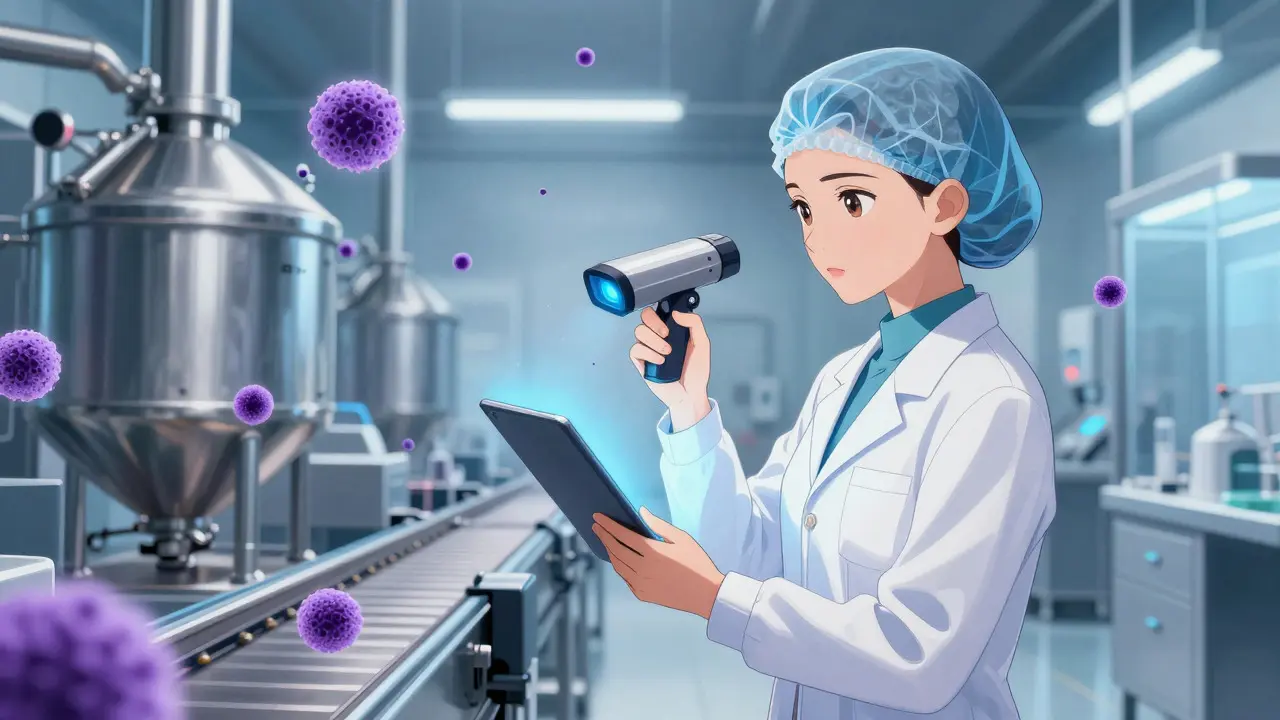
Imagine spending weeks perfecting a product batch, only to have it rejected because of invisible mold spores in the air or bacteria hiding on a floor drain. It happens more often than you might think. In manufacturing, especially in food and pharmaceuticals, cleanliness isn't just about looking tidy; it's about proving that your environment is safe. This is where environmental monitoring comes in. It’s not optional paperwork-it’s the early warning system that keeps consumers safe and your business running.
What Is Environmental Monitoring?
At its core, environmental monitoring (EM) is a systematic approach to detecting and controlling contamination in production facilities. Think of it as a health checkup for your factory. You regularly sample surfaces, air, water, and other potential vectors to see if microorganisms or chemical hazards are present before they reach your product.
Environmental Monitoring Programs (EMPs) are defined by the Centers for Disease Control and Prevention (CDC) as methods for sampling environmental surfaces for microorganisms. These programs serve as verification mechanisms. The U.S. Food and Drug Administration (FDA) explicitly states that environmental monitoring verifies control of microbial hazards. Without it, you’re flying blind.
The stakes are high. Foodborne illness outbreaks cost the U.S. economy $77.7 billion annually according to USDA data from 2022. Effective EM can prevent these outbreaks by identifying contamination sources early. Whether you run a small bakery or a large pharmaceutical plant, understanding how to test your facility is crucial for compliance and consumer trust.
The Zone Classification System: Where to Look
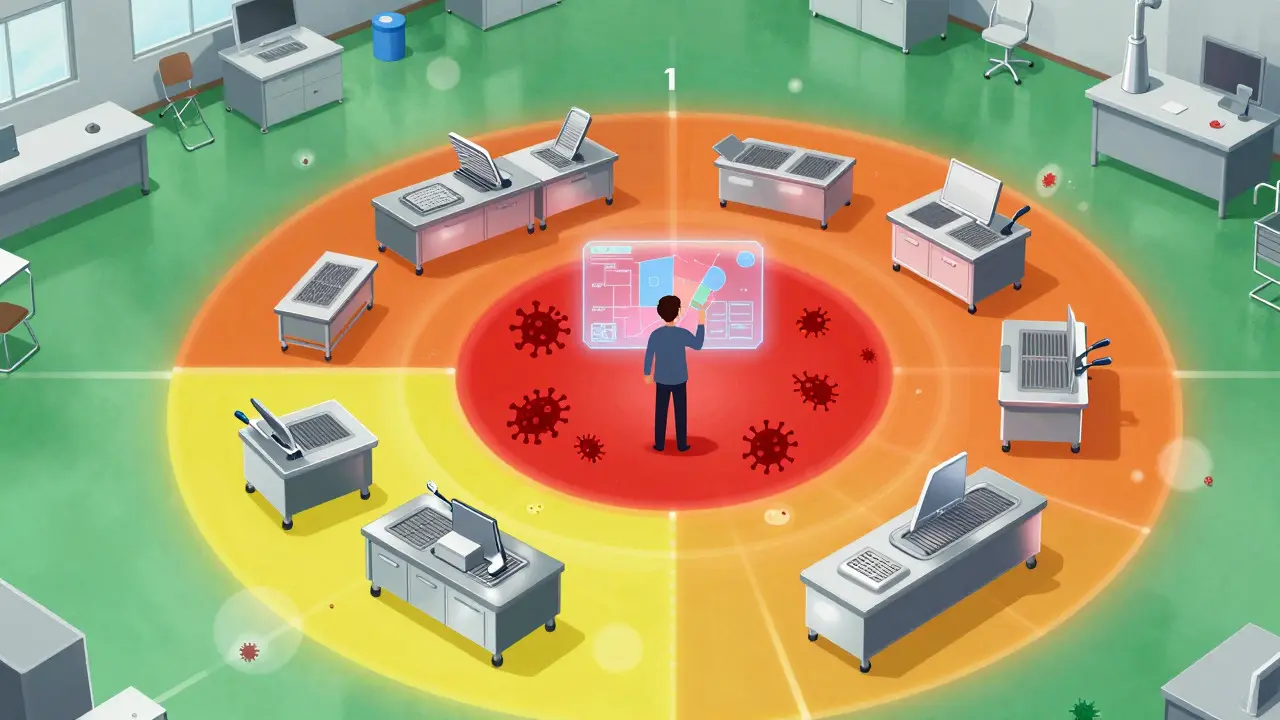
You can’t test everything everywhere all at once. That would be inefficient and expensive. Instead, industry standards use a zone classification system to prioritize areas based on risk. This framework helps you allocate resources where they matter most.
- Zone 1: Exposed food contact surfaces. This includes slicers, mixers, conveyors, and utensils. These are the highest-risk areas because any contamination here goes directly into the product.
- Zone 2: Non-food contact surfaces in close proximity to food. Think of the exterior of processing equipment, refrigeration units, or walls right next to the line.
- Zone 3: More remote non-food contact surfaces near processing areas. Examples include forklifts, carts, and floors within the production room but not touching the product path.
- Zone 4: Non-food contact surfaces outside processing areas. This includes storage rooms, offices, and break areas adjacent to production.
Dr. Laurel Dunn from the University of Georgia Cooperative Extension emphasizes that the greatest time and resources should go to monitoring and cleaning Zone 1 surfaces, followed by Zone 2, then Zones 3 and 4. However, don’t ignore the outer zones entirely. A study by PPD Laboratories found that laboratory floors (often considered lower risk) were the source of 62% of all alert and action limit events. Contaminants travel. If you miss Zone 4, it can eventually creep into Zone 1.
Testing Methodologies: What Are We Measuring?
Different contaminants require different detection methods. You wouldn’t use a thermometer to find bacteria. Your EMP needs to cover microbiological, physical, and chemical analytes.
| Analyte Type | Methodology | Purpose |
|---|---|---|
| Microorganisms | Swabs, sponges, contact plates | Detect general microbes, specific pathogens (Listeria, Salmonella), molds, and yeasts |
| Air Particulates | Liquid impingers, solid impactors | Measure organisms or particles per cubic meter (CFU/m³) in cleanrooms |
| Water Quality | Total Organic Carbon (TOC), conductivity | Assess purity of purified water systems, especially in pharma |
| Metals | Inductively Coupled Plasma (ICP) | Detect heavy metal contamination from equipment wear |
| Chemical Compounds | Chromatography (GC, HPLC, UPLC) | Identify specific chemical residues or allergens |
For air sampling, liquid impinger and solid impactor samplers are the most practical tools because they can process large volumes of air quickly. The CDC notes that these devices must be sterilized before each use to avoid cross-contamination-a detail many facilities overlook. For surface sampling, sterile sponges or swabs are standard. FDA investigators specifically target Salmonella spp. and Listeria monocytogenes during inspections, using these tools to collect samples from both food-contact and non-food-contact surfaces.
Industry Differences: Pharma vs. Food
Not all environmental monitoring looks the same. Your industry dictates your priorities. Pharmaceutical facilities follow strict EU GMP Annex 1 requirements, focusing heavily on air particulate monitoring. They require continuous non-viable particle monitoring at ISO Class 5 standards. Their goal is sterility.
Food processing facilities, particularly those handling Ready-to-Eat (RTE) products, face different pressures. Under the USDA’s Listeria Rule (9 CFR part 430), RTE facilities must aggressively test for Listeria spp. across all four zones. The FDA requires RTE facilities to test for Listeria in Zone 1 areas at least weekly. While pharma monitors temperature and humidity continuously, food facilities prioritize pathogen detection. Water systems also differ: pharma uses TOC and conductivity measurements meeting USP <645> standards, while food facilities focus on municipal water safety per EPA regulations.
Building an Effective Program: Frequency and Resources
Setting up an EMP isn’t just about buying swabs. It requires planning, training, and consistent execution. Sampling frequency must be risk-based. Zone 1 surfaces typically require daily to weekly sampling. Zone 2 might be sampled weekly to monthly. Zones 3 and 4 are usually tested monthly to quarterly.
Resource allocation is significant. Medium-sized food processing facilities often dedicate 2-3 full-time employees to environmental monitoring activities. Annual costs for testing supplies and lab services can range from $15,000 to $25,000. Training is equally critical. The FDA recommends at least 40 hours of hands-on training for personnel before they conduct official monitoring. Poor technique is a major issue; a survey by the International Dairy Foods Association (IDFA) found that 68% of facilities struggle with inconsistent sampling techniques.
Data integration is another hurdle. Many facilities use ATP testing for rapid sanitation verification because results come in seconds compared to 24-72 hours for microbiological tests. However, integrating ATP data with microbiological and allergen testing data remains a challenge for 37% of facilities. Without proper integration, you might pass an ATP test but still harbor pathogens.
Future Trends: Technology and Regulation
The field is evolving rapidly. The global environmental monitoring market reached $7.2 billion in 2022 and is projected to grow to $12.5 billion by 2027. Drivers include stricter regulations like the FDA’s Food Safety Modernization Act (FSMA) and updated EU GMP guidelines.
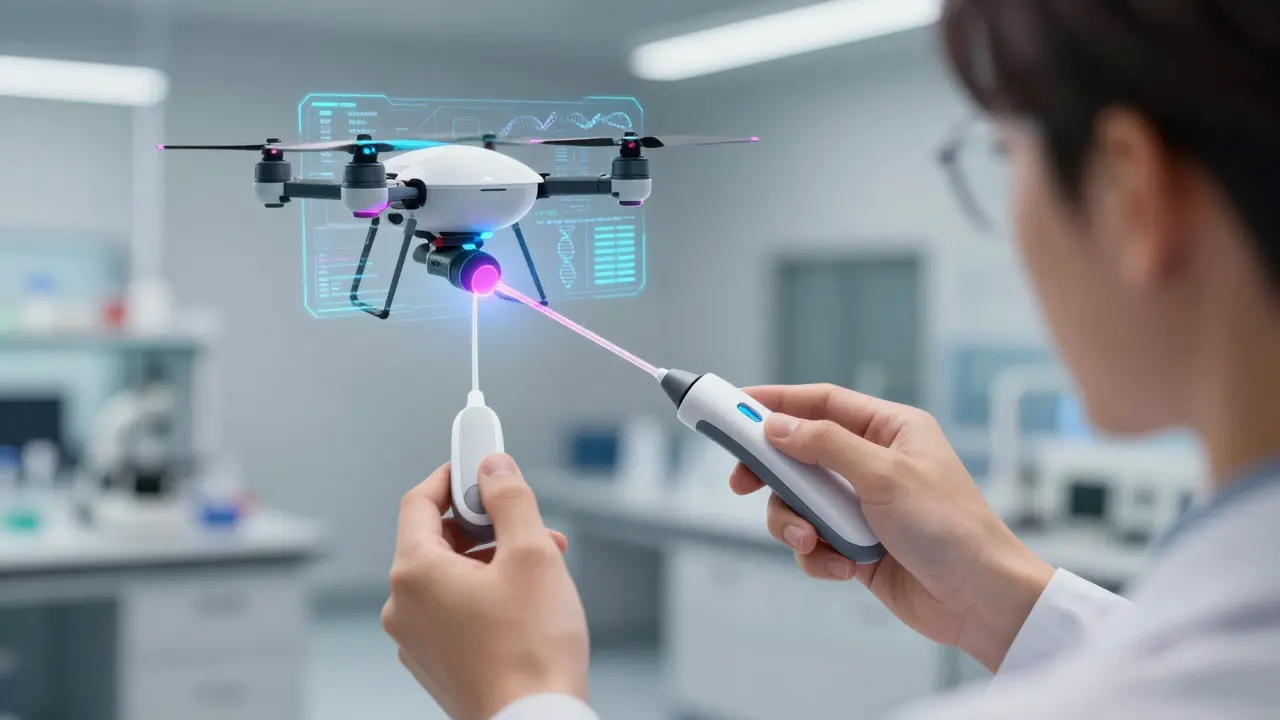
Technology is changing how we detect threats. Next-generation sequencing (NGS) and metagenomics are emerging as powerful tools. The FDA’s 2023 draft guidance encourages their adoption, potentially reducing pathogen identification time from days to under 24 hours. AI-powered analytics are also gaining traction, helping facilities predict contamination risks rather than just reacting to them. By 2027, AI-integrated monitoring systems are expected to reach 38% market penetration.
Regulatory scrutiny is increasing. The FDA announced increased environmental sampling during routine inspections of high-risk food facilities in 2023. Antimicrobial-resistant pathogens are also a growing concern, with 19% of Listeria isolates from food environments showing resistance to multiple antibiotics. Staying ahead of these trends ensures your program remains effective and compliant.
How often should I test my facility for contamination?
Frequency depends on the zone and risk level. Zone 1 (food contact) surfaces should be tested daily to weekly. Zone 2 (near food contact) weekly to monthly. Zones 3 and 4 (remote areas) monthly to quarterly. RTE food facilities must test for Listeria in Zone 1 at least weekly per FDA guidelines.
What is the difference between ATP testing and microbiological testing?
ATP testing measures adenosine triphosphate, indicating organic matter presence, with results in seconds. It’s great for immediate sanitation verification. Microbiological testing detects specific living microorganisms like bacteria or mold but takes 24-72 hours. Both are valuable; ATP doesn’t replace microbial testing.
Why are floors important in environmental monitoring?
Floors are often overlooked but can be major contamination sources. A PPD Laboratories study found floors caused 62% of alert and action limit events. Dust and microbes from floors can become airborne and settle on higher surfaces, including product contact areas.
Do I need environmental monitoring if I’m a small business?
Yes. While implementation challenges are greater for small facilities (<50 employees), regulatory requirements apply regardless of size. Only 48% of small processors maintain fully compliant programs, making this a key area for improvement and risk reduction.
What are the latest technologies in environmental monitoring?
Next-generation sequencing (NGS) and metagenomics allow faster, more precise pathogen identification. AI-driven analytics help predict contamination trends. Real-time data trending is now required in some pharmaceutical contexts under updated EU GMP guidelines.