

Every time you take an antibiotic, you’re not just fighting an infection-you’re also wiping out trillions of good bacteria in your gut. Most people don’t realize that antibiotics don’t discriminate. They kill the bad bugs causing your sore throat or ear infection, but they also wipe out the helpful microbes that keep your digestion running, your immune system strong, and your body balanced. This isn’t just about feeling off for a few days. It’s about long-term health risks-like antibiotic resistance, life-threatening diarrhea from Clostridioides difficile, and a gut that never fully recovers.
What Antibiotic Stewardship Really Means
Antibiotic stewardship isn’t a buzzword. It’s a set of proven practices designed to make sure antibiotics are only used when they’re truly needed, and when they are, they’re given in the right dose, for the right length of time, and with the right drug. The CDC defines it simply: measuring and improving how antibiotics are prescribed and used. It’s not about saying no to antibiotics. It’s about saying yes, but only if it makes sense. For example, most sore throats are viral. Antibiotics won’t help. But if it’s strep throat-caused by bacteria-then a 10-day course of penicillin is life-saving. Stewardship helps doctors tell the difference. Hospitals with strong stewardship programs have cut inappropriate antibiotic use by 22%. That’s not magic. It’s training, data, and accountability. A team of infectious disease doctors and pharmacists review every antibiotic order. They ask: Is this really needed? Can we use something narrower? Can we shorten the course?Why Your Gut Is the First Casualty
Your gut is home to about 40 trillion bacteria. These aren’t just passengers-they’re active players in your health. They help digest food, make vitamins, train your immune system, and keep harmful bugs in check. When you take an antibiotic, especially a broad-spectrum one like amoxicillin or ciprofloxacin, you’re basically dropping a bomb on this ecosystem. Studies show that just one course of antibiotics can reduce gut diversity by up to 30%. Some species never come back. The biggest danger? Clostridioides difficile, or C. diff. This nasty bacterium lies dormant in your gut, held in check by your good bacteria. When antibiotics wipe out those defenders, C. diff takes over. It causes severe diarrhea, colon inflammation, and can be deadly. The CDC says antibiotic use is the #1 risk factor for C. diff-and about 20% of people who take antibiotics develop it. In the U.S. alone, C. diff causes more than 223,000 infections and 12,800 deaths every year. Most of these are preventable. That’s the power of stewardship: fewer unnecessary antibiotics = fewer C. diff cases.How Hospitals Are Getting It Right
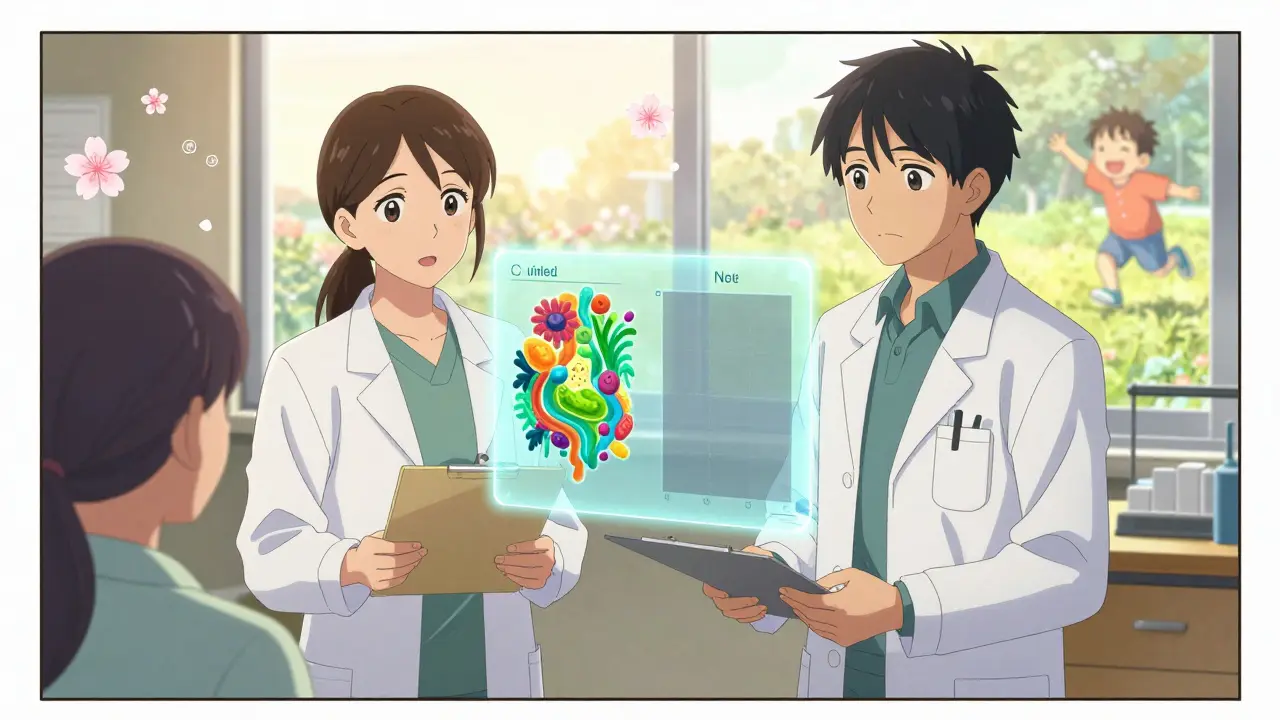
The best hospitals don’t just hand out antibiotics like candy. They have teams dedicated to stewardship. The CDC’s Core Elements framework outlines what works:- A dedicated infectious disease doctor and pharmacist leading the effort
- Tracking how many antibiotics are used per 1,000 patient days
- Monitoring C. diff rates as a key outcome
- Real-time feedback to doctors-called “handshake stewardship”
What Happens Outside the Hospital
Most antibiotics are prescribed in doctor’s offices, not hospitals. And here’s the problem: nearly half of all antibiotic prescriptions for respiratory infections-like colds, bronchitis, and sinus infections-are unnecessary. Viruses cause 90% of these. Antibiotics do nothing. Outpatient stewardship is catching up. Some clinics now use:- Decision-support tools in electronic records that pop up: “This patient has viral symptoms. Antibiotic not recommended.”
- Peer comparison reports-“You prescribed antibiotics for 65% of sore throats. The national average is 38%.”
- Commitment posters in exam rooms: “I pledge to only prescribe antibiotics when truly needed.”
What You Can Do as a Patient
You’re not just a passive recipient of care. You have power in this system. Ask these three questions the next time an antibiotic is offered:- “Is this infection definitely bacterial?” If it’s a cold, cough, or flu-no, it’s not.
- “What’s the evidence this antibiotic will help?” Some are prescribed out of habit, not science.
- “Can we start with a shorter course?” For many infections, 5 days works as well as 10.





Frank SSS
December 31, 2025 AT 05:03Man, I took amoxicillin last year for a sinus thing that was probably viral, and I spent the next three months feeling like my guts were a ghost town. No joke. I started eating kimchi like it was my job. Still don’t feel 100%. This post? Spot on. We treat antibiotics like candy and wonder why we’re all so damn fragile.
Joy Nickles
January 1, 2026 AT 18:13Wait wait wait-so you’re saying I shouldn’t take my leftover cipro from last year for this UTI?!!?? But I felt fine after 3 days last time!! And my cousin’s aunt’s neighbor took it and it worked!!?? Also, my doctor always gives me a script-so why not??
Brady K.
January 2, 2026 AT 01:54Let’s be brutally honest: antibiotic stewardship isn’t ‘new’-it’s just medicine finally admitting it’s been running a Ponzi scheme on the public for decades. We’ve been sold the myth that more drugs = better care. Meanwhile, your microbiome is a coral reef, and we’ve been dynamiting it with broad-spectrum antibiotics like they’re fire extinguishers for a candle. The real scandal? Pharma’s been profiting off this dysfunction while doctors got trained to prescribe like vending machines. AI tools? Great. But until we fix the incentive structures-prescribing quotas, patient satisfaction scores, insurance pressures-we’re just rearranging deck chairs on the Titanic. And yes, I’ve read the CDC reports. No, I’m not exaggerating.
Lawver Stanton
January 3, 2026 AT 10:16I get it, I get it-antibiotics are bad, we should be more careful, blah blah blah. But here’s the reality: my kid had a fever, I waited three days like the AAP says, and then he started screaming because his ear looked like it was gonna explode. So yeah, I took him in. The doctor gave him amoxicillin. He felt better in 24 hours. Now you want me to sit there and debate the microbiome while my child is crying? I’m not a doctor. I’m a dad. And if I can save my kid from pain, I’m not gonna wait for a 15-minute lecture on stewardship. This isn’t about ‘trust’-it’s about survival. You tell me to ‘ask questions’ when I’m holding a sobbing 3-year-old? That’s not empowerment-that’s cruelty dressed up as public health.
Urvi Patel
January 4, 2026 AT 23:59USA always overcomplicate everything. In India we know when to take antibiotic. If you feel sick you take it. No waiting. No posters. No AI. No PhD to tell you what to do. We fix it fast. Why waste time with microbiome? Your body is strong. Let it fight. Why do you need 10 days of medicine? One pill and you good. This is why you have resistance-you listen to too many experts. Just take the pill. Done.
anggit marga
January 5, 2026 AT 20:05Oh so now antibiotics are the villain? Funny how the same people who scream about Big Pharma are now begging for more regulation. Who controls the CDC? Who funds the ‘stewardship’ programs? Who decided that 5 days is better than 10? You think this isn’t just another way to control populations under the guise of science? We’ve been lied to about vaccines, about masks, now antibiotics? I’ll take my cipro from the Mexican pharmacy thank you very much. And my gut will thank me more than your data-driven dogma.
Emma Hooper
January 6, 2026 AT 07:49My microbiome threw a rave after my last course of doxycycline. It was like a post-apocalyptic rave with C. diff as the headliner. I’m not even kidding-I went from ‘I’m fine’ to ‘I’m dying in the bathroom’ in 36 hours. Now I’m obsessed with probiotics. I’ve got a fridge full of kefir, sauerkraut, and kombucha that looks like a health cult’s altar. I even started fermenting my own pickles. My husband thinks I’ve lost it. But hey-I’m alive. And my poop? It’s got personality now. You want to save the world? Start with your gut. And maybe stop eating that damn yogurt with 20 grams of sugar.
Kayla Kliphardt
January 7, 2026 AT 10:31Can I ask… how do you know if your gut has recovered? Is there a test? Or do you just… feel it? I’ve taken antibiotics a few times and always feel off afterward, but I never know if it’s psychological or actual damage. I don’t want to overthink it, but I also don’t want to ignore it.
Martin Viau
January 9, 2026 AT 08:36As a Canadian, I’ll say this: our family doctor here just gave me a ‘wait-and-see’ script for my daughter’s ear infection. No antibiotic unless it didn’t improve in 48 hours. She didn’t need it. We saved money. We saved her microbiome. We didn’t panic. It’s not about being anti-antibiotic-it’s about being pro-wisdom. We don’t need AI to tell us that sometimes, silence is the best medicine.