

Buying prescription drugs shouldn’t feel like a guessing game. One pharmacy might charge $120 for your monthly medication, while another down the street asks for $45. That’s not a typo. The same pill. Different price. And without the right tools, you have no way of knowing until you’re standing at the counter with your card ready. That’s where price transparency tools come in. These digital platforms let you see exactly what you’ll pay out of pocket before you even leave the house. No more surprises. No more overpaying.
Why Drug Prices Vary So Much
Not all pharmacies charge the same for the same drug. Why? It’s because drug prices aren’t set by the government or even the manufacturer. They’re negotiated between pharmacies, insurance companies, and pharmacy benefit managers (PBMs). A drug’s list price - the one you see on the manufacturer’s website - often has nothing to do with what you actually pay. Your insurance plan, your deductible, your copay structure, and even which pharmacy you choose all affect your final cost.For example, a 30-day supply of metformin might cost $5 at one CVS, $22 at a Walgreens, and $18 at an independent pharmacy. But if your insurance covers 80% of the cost at CVS, your out-of-pocket could be just $1. At Walgreens, maybe your plan only covers 50%, so you pay $11. Without checking, you’d assume they’re all the same. They’re not.
According to a 2023 Merative study, people who called pharmacies to check prices spent an average of 25-35 minutes per medication. Those who used transparency tools cut that time to under 10 minutes. And they saved 15-20% on average.
How to Find Your Insurance’s Built-In Tool
Most people don’t realize their insurance already gives them access to a free price comparison tool. If you’re covered through an employer, Medicaid, Medicare, or a marketplace plan, there’s a good chance your insurer offers one. Look for it in your online member portal.For example, if you’re with a plan that uses Optum Rx, log into your myCompass account and click “Go to Optum Rx.” That’s where you’ll find real-time pricing for your exact medication, dosage, and quantity - filtered by your plan’s formulary. It shows you what you’ll pay at every pharmacy within 10 miles. No guesswork. No assumptions.
78% of large employers now include these tools directly in their health plans, according to the 2024 Kaiser Family Foundation Employer Health Benefits Survey. If you’re not sure where to look, call your insurer. Ask: “Do you have a tool that shows what I’ll pay out of pocket for my prescriptions at different pharmacies?” If they say yes, get the link. If they say no, ask when they plan to add one. You’re not just asking for convenience - you’re asking for your right to know.
Top Tools to Compare Drug Prices
Here are the most reliable tools available right now - and what each one does best:- Rx Savings Solutions (RxSS): This tool scans your current prescription and finds lower-cost alternatives that are just as effective. In a 2023 case study, it identified cost-saving options for 83% of users. It works with 18 of the top 25 pharmacy benefit managers. If you’re on a long-term medication like statins, antidepressants, or blood pressure drugs, this is your best bet.
- Optum Rx: Integrated with many employer plans, it gives you accurate out-of-pocket estimates based on your specific coverage. It’s not just a list price - it’s your real cost after insurance. Used by millions through myCompass portals.
- FAIR Health Consumer: No login required. Just enter your drug name, dosage, and zip code. It pulls data from over 1.5 billion insurance claims. Great if you’re uninsured, on Medicare, or just want to compare without signing in.
- Turquoise Health: Used by hospitals and large health systems, it shows pricing across pharmacies, clinics, and even mail-order services. It’s especially useful if you take multiple medications and want to see the full picture.
- Change Healthcare’s True View: Covers over 4,000 prescriptions and 500 medical services. Good for people who need both drugs and procedures priced side by side.
According to the Commonwealth Fund’s 2023 rating, Rx Savings Solutions scored 4.6/5 for pharmacy-specific savings, while Optum Rx got 4.3/5. FAIR Health isn’t tied to insurance, so it’s perfect for checking prices if you’re unsure how your plan works.
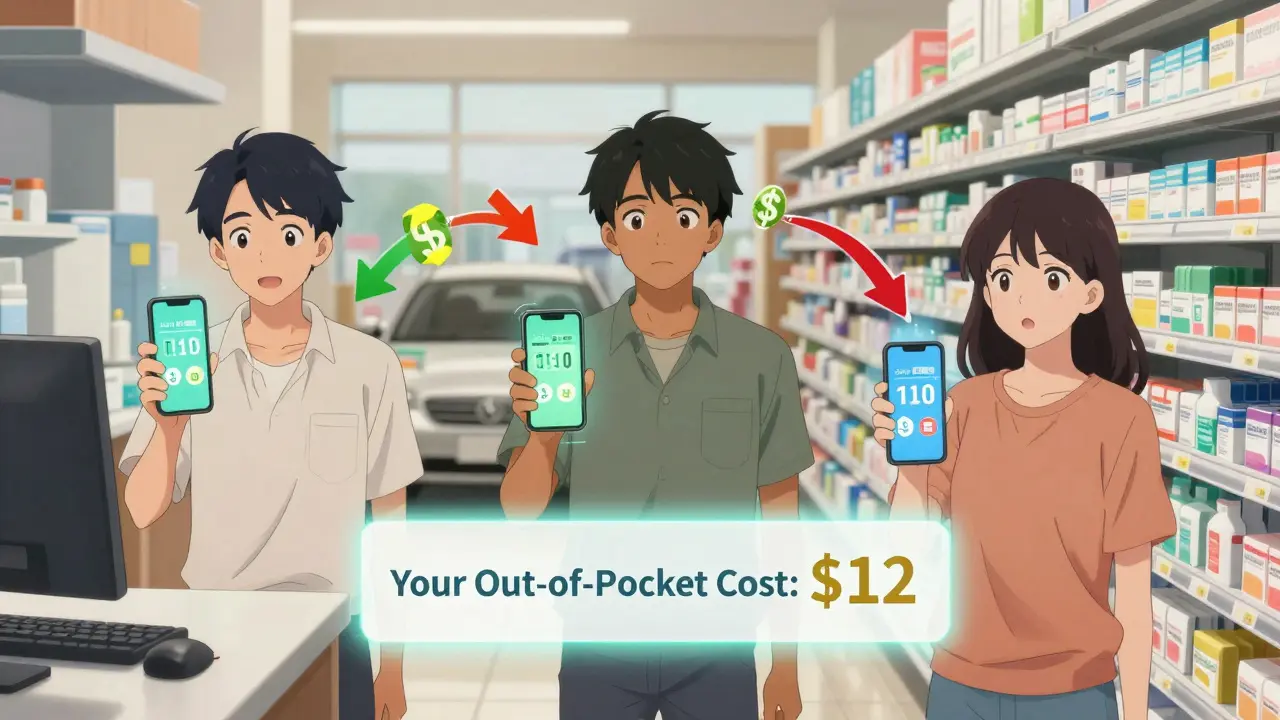
How to Use These Tools Correctly
Using these tools isn’t hard - but people make mistakes. Here’s how to do it right:- Start with your insurer’s tool. If you have one, use it first. It’s the most accurate because it’s tied to your plan.
- Enter the exact drug name and dosage. “Lisinopril 10mg” is not the same as “Lisinopril 20mg.” Be precise.
- Compare both retail and insurance prices. Some tools show you the list price and your copay separately. Look for the total out-of-pocket amount.
- Check at least 3 pharmacies. Sometimes the closest one isn’t the cheapest. A 5-mile radius can save you hundreds.
- Ask for alternatives. If a tool suggests a different medication (like switching from brand-name metformin to generic), ask your doctor if it’s safe. Many alternatives are just as effective and cost 70% less.
- Call the pharmacy before you go. Tools can be off by a day or two due to insurance processing delays. A quick call confirms the price.
Users who follow these steps reduce their medication costs by an average of 30% within the first three months, according to a 2024 analysis by Evidence Care. One Reddit user, ‘MedSaver2023,’ saved $287 on a 90-day supply of apixaban just by switching pharmacies using Rx Savings Solutions.
What These Tools Don’t Tell You
These tools are powerful - but they’re not perfect. Here are the blind spots:- They don’t always include discount cards. GoodRx, SingleCare, and other coupons aren’t always integrated. Always check them separately. A tool might say your drug costs $40, but GoodRx shows $12.
- They can’t predict prior authorization delays. If your drug needs approval from your insurer, the tool won’t know if it’s approved until you submit it.
- Some tools still show list prices. The Analysis Group found that 40% of tools default to manufacturer pricing instead of your actual cost. Always look for the phrase “your out-of-pocket cost” - not “estimated price.”
- Specialty drugs are often missing. Medications for cancer, MS, or rare diseases may not appear because they’re handled through specialty pharmacies.
A December 2023 Consumer Reports investigation found that 22% of price estimates from major tools didn’t match what patients paid at the counter. Why? Insurance claims hadn’t been processed yet. That’s why calling the pharmacy is still necessary.
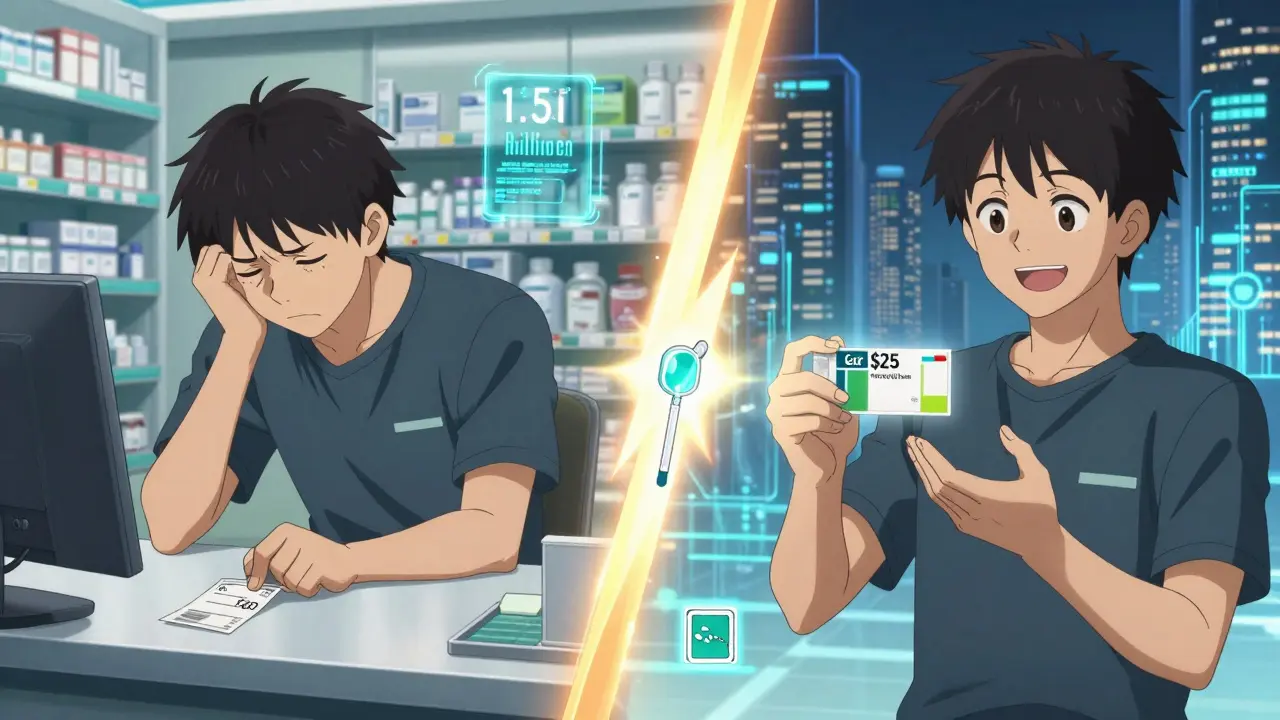
Real Savings, Real Stories
People are using these tools and saving big:- A woman in Florida used FAIR Health to compare prices for her insulin. She found a pharmacy 12 miles away that charged $25 instead of $140. She switched and saved $1,380 a year.
- A man in Ohio used Rx Savings Solutions to replace his brand-name blood pressure drug with a generic. His monthly cost dropped from $98 to $12.
- A family in Texas used Optum Rx to compare prices for their child’s ADHD medication. The lowest price was at a local Walmart - $15 instead of $87 at their usual pharmacy.
These aren’t rare cases. A 2023 National Bureau of Economic Research study found that in states with strong price transparency laws, outpatient drug costs dropped 4.7% per year. In states without them, costs rose 1.2%.
What’s Coming Next
The rules are changing fast. By 2026, the Congressional Budget Office projects that 90% of prescription purchases will involve price comparison tools - saving Americans $18.7 billion annually.New tools are being built to fix current gaps:
- AI-powered cost predictors are being tested by Clarify Health. They’ll estimate your future costs based on your usage patterns.
- CMS is requiring all tools to show quality ratings alongside price by 2025 - so you’ll know if a cheaper pharmacy has lower safety scores.
- The Alliance for Transparent Drug Pricing, launched in May 2024, includes Express Scripts and UnitedHealthcare. They’re working to standardize how prices are displayed so you’re not confused by different formats.
One thing’s clear: the days of blindly accepting whatever the pharmacy charges are over. You have more power than you think.
Do I need insurance to use price transparency tools?
No. Tools like FAIR Health and GoodRx work without insurance. They show you cash prices, which can sometimes be lower than your insurance copay. Even if you’re on Medicare, Medicaid, or have no coverage, you can still compare prices and find savings.
Why does the price change when I go to the pharmacy?
Insurance claims can take 24-48 hours to process. If you check your price on Monday and pick up your prescription on Wednesday, the system might not have updated yet. Also, some pharmacies apply discounts after the tool’s estimate. Always call ahead to confirm.
Can I use these tools for specialty drugs like cancer meds?
Most tools don’t cover specialty drugs because they’re often dispensed through limited specialty pharmacies. But some, like Rx Savings Solutions and Turquoise Health, are starting to include them. If your drug isn’t listed, contact your insurer’s pharmacy help line. They often have internal tools that aren’t public.
Are generic drugs always cheaper than brand names?
Usually, yes - but not always. Sometimes, a brand-name drug is discounted so heavily by the manufacturer that it’s cheaper than the generic. That’s why tools that compare both are so valuable. Never assume - always check.
What if my doctor won’t switch my prescription?
You have the right to request a change. If your tool suggests a cheaper alternative, print the estimate and bring it to your doctor. Many doctors are willing to switch - especially if the alternative is just as effective. Ask: “Is there a generic or lower-cost option that’s right for me?”




phyllis bourassa
March 7, 2026 AT 03:21Adebayo Muhammad
March 7, 2026 AT 17:26Pranay Roy
March 8, 2026 AT 22:18amber carrillo
March 9, 2026 AT 22:56Tim Hnatko
March 10, 2026 AT 05:59Aaron Pace
March 10, 2026 AT 09:47Roland Silber
March 10, 2026 AT 18:36Patrick Jackson
March 12, 2026 AT 05:07Joe Prism
March 13, 2026 AT 22:12Bridget Verwey
March 14, 2026 AT 09:21Andrew Poulin
March 16, 2026 AT 06:31Weston Potgieter
March 17, 2026 AT 02:54Vikas Verma
March 18, 2026 AT 00:15