
Throwing away old pills might seem like a simple chore, but if you don’t handle the packaging right, you’re risking your personal information. Prescription bottles aren’t just empty plastic-they’re loaded with your name, address, birth date, doctor’s name, even your diagnosis. That’s not just clutter. That’s a target for identity thieves. In 2023, over 40% of discarded pill bottles still had readable personal details, according to a study in the Journal of the American Pharmacists Association. And it’s not just about theft-someone could use that info to get more opioids, stimulants, or other controlled drugs. Protecting your privacy when disposing of medications isn’t optional. It’s essential.
Why Prescription Labels Are a Privacy Risk
Your prescription label has more than just the drug name. It includes your full name, address, phone number, the prescribing doctor’s name, the pharmacy’s contact info, the Rx number, and often the condition being treated-like "for anxiety" or "for diabetes." That’s enough to build a profile on you. Identity thieves don’t need your Social Security number to open accounts or file fake insurance claims. They just need your name, date of birth, and insurance details-all found on a pill bottle. The U.S. Department of Health and Human Services says this is one of the top 10 privacy violations in healthcare today. And it’s not just big corporations at risk. Regular people have lost thousands to fraud after their empty bottles ended up in the trash.What the Law Says About Disposing of Medications
Under HIPAA, healthcare providers and pharmacies must protect your health information-even after you’ve taken the medicine. That includes making sure personal details on prescription containers are unreadable before disposal. The rules don’t just apply to hospitals and clinics. If you’re keeping and then throwing away your own meds, you’re still responsible for safeguarding your data. The FDA, DEA, and EPA all agree: privacy protection is part of safe disposal. In 2023, the HHS Office for Civil Rights settled 17 cases involving improper PHI disposal, totaling over $4 million in fines. That’s not just a warning. It’s a reminder that this isn’t just good practice-it’s the law.Best Method: Drug Take-Back Programs
The safest, most private way to dispose of medications is through a take-back program. The DEA runs National Prescription Drug Take Back Days twice a year-most recently in April 2024-collecting over 820,000 pounds of unused drugs. But you don’t have to wait for those events. Over 87% of chain pharmacies like CVS, Walgreens, and Rite Aid now have permanent drop-off boxes in their lobbies. These are locked, monitored, and handled by law enforcement. Your pills go straight to a secure facility where they’re destroyed without ever being seen by anyone else. No labels. No names. No risk. And it’s free. You don’t even need to remove the label-the pharmacy takes the whole bottle. This is the only method that gives you 100% privacy protection.Mail-Back Kits: A Convenient Alternative
If there’s no drop-off box nearby, mail-back kits are the next best option. Companies like Walgreens and DisposeRx offer prepaid envelopes you can order online or pick up in-store. You put your medications in, seal it, and drop it in any mailbox. The envelope goes directly to a licensed disposal facility. These kits are designed with privacy in mind-your name stays inside the sealed container. Prices range from $3 to $7 per envelope, and they’re often covered by insurance or pharmacy loyalty programs. A 2023 Consumer Reports survey found that 89% of people who used mail-back services felt confident their privacy was protected, compared to just 32% who used at-home trash disposal.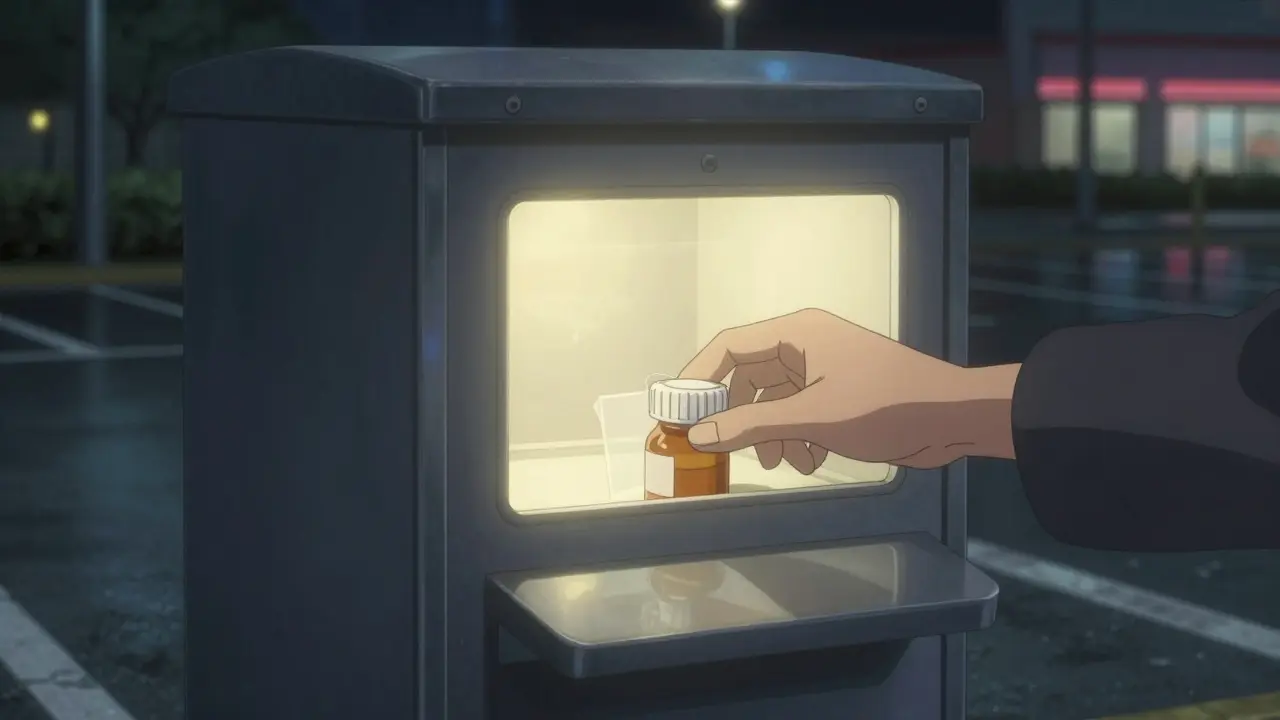
At-Home Disposal: How to Do It Right
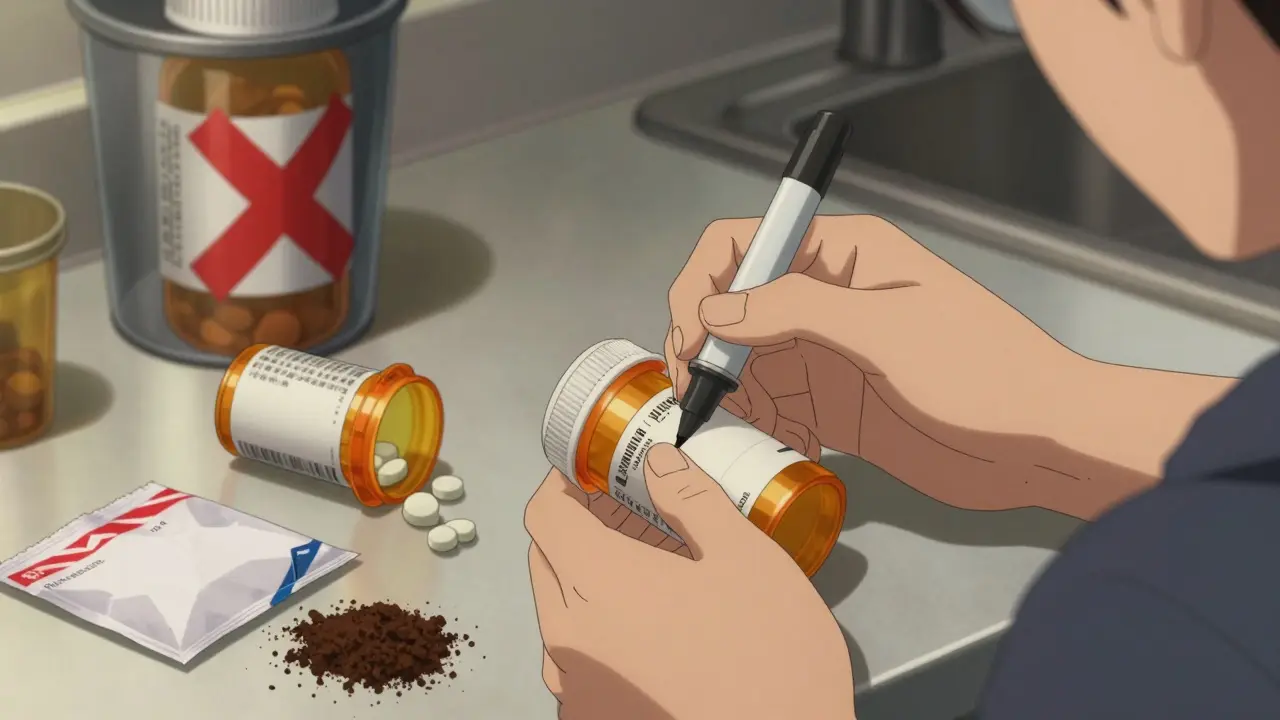
If you can’t access a take-back or mail-back option, the FDA says you can dispose of most medications in your household trash-but only if you follow these five steps exactly:- Take pills out of the original bottle.
- Mix them with something unappetizing-used coffee grounds, cat litter, or dirt.
- Pour the mixture into a sealable plastic bag or container with a lid.
- Scratch out or cover every bit of personal info on the empty bottle with a permanent marker, or wrap it in duct tape.
- Put the sealed container in your regular trash.
What Not to Do
Some methods look safe but aren’t. Don’t flush pills unless they’re on the FDA’s Flush List. Only 15 medications are on it-mostly potent opioids like fentanyl patches and certain painkillers that can be deadly if accidentally ingested by kids or pets. Flushing everything else pollutes water systems. The EPA estimates 3.2 million pounds of pharmaceuticals end up in U.S. waterways each year. Also, don’t just throw the bottle in the trash without removing the label. That’s the #1 mistake people make. And never give your old meds to friends or family-even if they have similar symptoms. That’s illegal and dangerous.Special Tools for Privacy Protection
There are new products designed to make this easier. DisposeRx pouches, for example, cost about $2 each and contain activated carbon. You drop your pills in, add water, shake, and the medication is neutralized. The pouch then becomes a solid, non-toxic block that you throw away. The label stays on the pouch, but since the pills are destroyed, there’s no risk of misuse. Some pharmacies now offer these for free with prescription pickups. Smartphone apps like DisposeRx’s free tool can tell you if your medication is on the Flush List. Just scan the label or type in the drug name.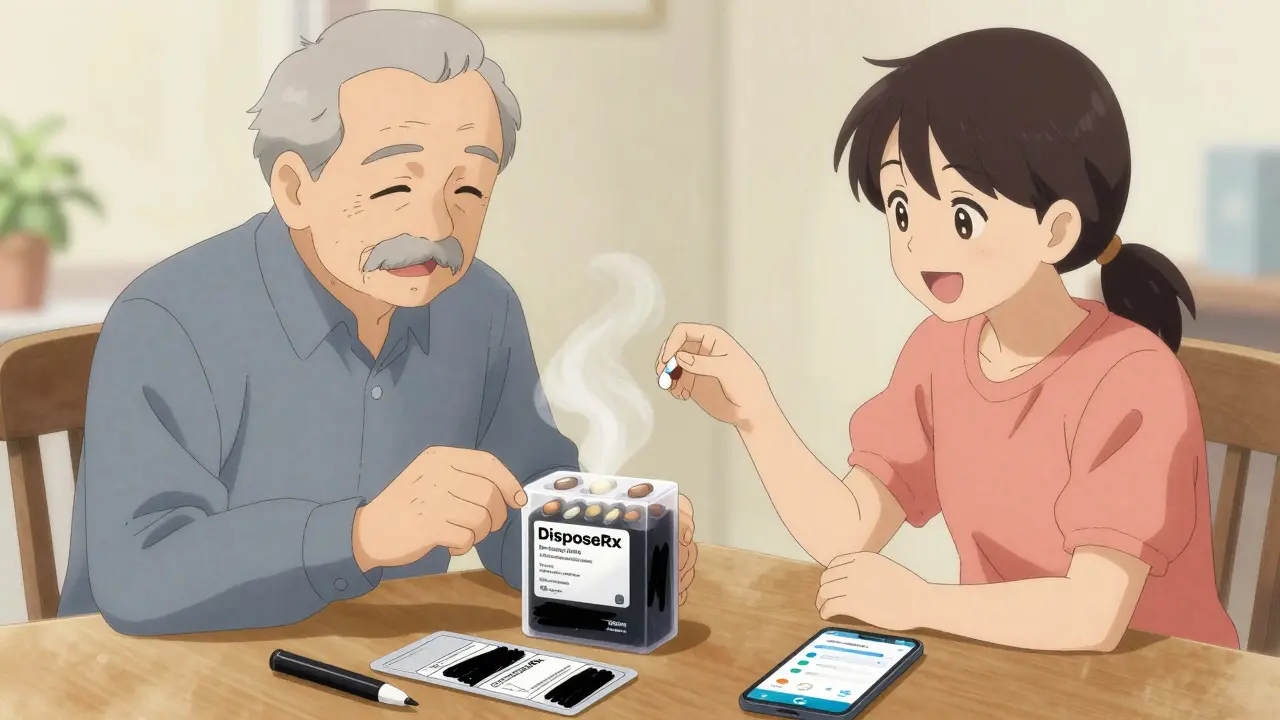
What to Do With Empty Containers
After you’ve removed the pills and destroyed the label, you can recycle the bottle-if your local recycling program accepts #1 or #2 plastic. But only if the label is completely gone. Tape over it. Scratch it with a knife. Use white-out or a permanent marker. If you’re unsure, just cut the label off with scissors and throw it in the trash. Don’t risk leaving even a sliver of your name or Rx number visible. One person on Reddit shared that after throwing away an empty oxycodone bottle without removing the label, someone used the info to get more pills-and ended up charging $1,200 to their insurance.Help for Older Adults
Many seniors struggle with this process. A 2022 Kaiser Family Foundation survey found that 37% of adults over 65 are confused about how to properly dispose of meds. If you’re helping a parent or grandparent, do it with them. Sit down, go through their medicine cabinet, and dispose of everything together. Use a marker to cover labels. Show them how to use a mail-back envelope. Make it part of your routine-like changing smoke detector batteries. The National Community Pharmacists Association says patients get better at it after two or three tries. With a little help, it becomes second nature.Future Changes Coming
The government is stepping up. The Safe Drug Disposal Act of 2024, now in Congress, would fund $50 million a year for community take-back programs-with privacy built in. By 2027, 40% of major pharmacies are expected to install smart kiosks that automatically destroy labels and neutralize meds in one step. The next update to HIPAA guidelines, expected in 2025, will likely require specific technical standards for making PHI unreadable. This isn’t going away. Privacy protection is becoming standard-and it’s going to be easier to do.Final Checklist
Before you toss any medication:- Check if it’s on the FDA Flush List-only flush these.
- Use a take-back drop-off if available-best option.
- If using mail-back, seal it properly.
- If using trash: remove pills, mix with coffee grounds or cat litter, seal in a bag.
- Scratch out or cover ALL personal info on the bottle.
- Don’t recycle until the label is gone.
It takes five minutes. But those five minutes could save you from a year of identity theft headaches, insurance fraud, or worse. Your privacy matters. Don’t let your old meds become someone else’s opportunity.
Can I just throw away my old pill bottles without removing the label?
No. Leaving personal information on prescription bottles puts you at risk of identity theft. Thieves can use your name, address, and Rx number to get more drugs or file fake insurance claims. Always scratch out or cover your info with a permanent marker, duct tape, or cut the label off before recycling or trashing the bottle.
Are drug take-back programs really safer than at-home disposal?
Yes. Take-back programs are the only method where your medications and personal info are handled by law enforcement and destroyed in secure facilities. No one sees your name, no one accesses your records. At-home methods rely on you doing every step correctly-and studies show most people skip the privacy part. Take-back is free, easy, and 100% private.
What if I can’t find a take-back location near me?
Use a mail-back kit. Companies like Walgreens and DisposeRx offer prepaid envelopes you can order online or pick up at the pharmacy. Put your meds in, seal it, and drop it in any mailbox. The package goes directly to a licensed disposal site. It’s more private than trash disposal and costs less than $7.
Which medications should I flush down the toilet?
Only medications on the FDA’s Flush List-currently 15 drugs, mostly powerful opioids like fentanyl patches, oxycodone, and certain painkillers. These are dangerous if accidentally ingested by children or pets. Flushing prevents harm. For all other medications, don’t flush. Use take-back, mail-back, or trash disposal with proper privacy steps instead.
Do I need to remove the label before recycling the bottle?
Yes. Recycling centers don’t remove labels. If your name or Rx number is still visible, your information could be exposed. Use a permanent marker to black it out, cover it with tape, or cut the label off completely. Only recycle the bottle after you’re sure no personal info remains.
Is it okay to give my old pills to a friend or family member?
No. It’s illegal and dangerous. Medications are prescribed for specific people based on their health history. What helps one person could harm another. Giving away prescription drugs can lead to overdose, addiction, or legal trouble. Always dispose of unused meds properly instead.

Emily P
December 20, 2025 AT 13:06Interesting read. I never realized how much personal data is just sitting in my medicine cabinet. I’ve been tossing bottles in the recycling without thinking twice. Guess I’m doing it wrong.
Anna Sedervay
December 21, 2025 AT 04:47One must acknowledge the systemic negligence of pharmaceutical institutions in enabling this vulnerability. The very architecture of prescription labeling is a violation of HIPAA’s spirit, if not its letter. One wonders if this is intentional obfuscation to facilitate data harvesting by third-party intermediaries. The state’s inaction is complicit.
mark shortus
December 21, 2025 AT 19:36MY GRANDMA GOT STOLEN FROM BECAUSE OF A PILLOW BOTTLE!!! I’M NOT KIDDING. Some guy used her name and Rx number to get 300 oxy pills and charged it to Medicare. She had to go to court. She cried for a week. I cried harder. This isn’t just ‘privacy’-it’s a war on the elderly. WE NEED TO FIGHT BACK.
Jedidiah Massey
December 22, 2025 AT 12:59Let’s be real-take-back programs are the only PHI-compliant disposal vector. The DEA’s closed-loop system ensures end-to-end chain of custody. Any at-home method introduces entropy into the confidentiality matrix. Also, #1 plastic isn’t even recyclable in 78% of municipal systems. Just sayin’. :)
Alisa Silvia Bila
December 23, 2025 AT 10:40My mom’s 78 and doesn’t use the internet. I just showed her how to use a Sharpie. We did it together last weekend. She said it felt like a small act of rebellion. I think that’s kind of beautiful.
Marsha Jentzsch
December 23, 2025 AT 20:10OMG I JUST REALIZED I THREW AWAY MY OXYCODONE BOTTLE LAST WEEK AND DIDN’T EVEN SCRATCH THE LABEL!! I’M A TERRIBLE PERSON. I’M GOING TO CRY. I’M SO GUILTY. WHO’S GOING TO USE MY INFO NOW?? I’M SORRY I’M SORRY I’M SORRY!!!
Chris porto
December 25, 2025 AT 08:16It’s funny how we worry about digital privacy but ignore the physical traces we leave behind. A pill bottle is just a tiny, forgotten data point. But it’s one that can unravel everything. Maybe we need to treat our bodies’ histories with the same care we give our phones.
mary lizardo
December 26, 2025 AT 04:57The fact that this even requires a guide is a testament to societal decay. HIPAA was designed to protect patients-not to be a checklist for the lazy. If you cannot properly dispose of a prescription container, you are unfit to manage your own healthcare. This is not a ‘tip’-it is a baseline expectation.
Kinnaird Lynsey
December 27, 2025 AT 15:39Yeah, I get it. But honestly? I just throw the bottle in the trash with the label on. I mean, who’s going to dig through my recycling? I’m not a celebrity. I’m not on opioids. It feels like overkill.
shivam seo
December 28, 2025 AT 05:23USA has the worst drug disposal policies in the developed world. In Australia, all pharmacies have automated label-destroying bins. You drop the bottle in, it shreds and incinerates it on the spot. No fuss. No risk. No drama. Why can’t America just… do it right?
benchidelle rivera
December 29, 2025 AT 18:20To everyone who says ‘it’s not a big deal’-you’re wrong. To everyone who says ‘I don’t have time’-you’re not trying. I’ve helped 14 seniors in my neighborhood set up mail-back kits. It takes 10 minutes. You’re not too busy to protect your life. Don’t make me come to your house with a Sharpie and a lecture.