
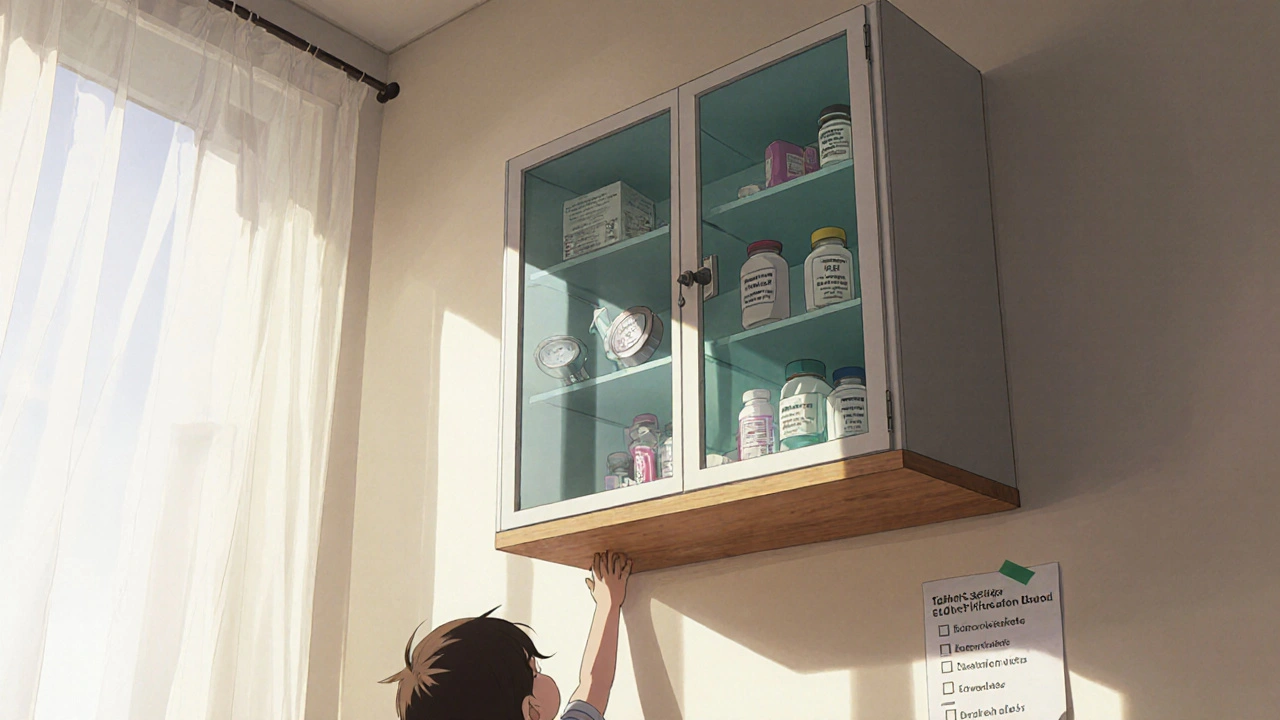
Every family has a medicine cabinet. But how many of them are actually safe? If your cabinet is in the bathroom, stuffed with old bottles, and unlocked, you’re not just being convenient-you’re putting your kids at risk. Every year in the U.S., more than 60,000 children under five end up in emergency rooms after accidentally swallowing medications. And it’s not just pills-vitamins, eye drops, and even cough syrups can be deadly in small doses. The good news? Building a truly safe OTC medicine cabinet isn’t hard. It just takes a few smart choices and a little discipline.
Stop Storing Medicine in the Bathroom
The bathroom is the most common place families keep their medicines. But it’s also the worst. Steam from showers, humidity from sinks, and temperature swings from hot water all break down medications faster than you think. Melonie Crews-Foye, a pharmacy supervisor at Cone Health, says moisture can make pills crumble or lose effectiveness. Some medications even become toxic when exposed to humidity over time. The fix? Move your medicine cabinet to a dry, cool spot-like a high shelf in a linen closet, bedroom, or hallway. Keep it at least four feet off the ground. That’s out of reach for most toddlers and young kids. And don’t just move it-clean it out first. Take everything out. Check each bottle. Toss anything expired, discolored, or smelling weird. If you’re not sure, throw it out. Better safe than sorry.Lock It Up-Even If You Think Your Kids Can’t Get In
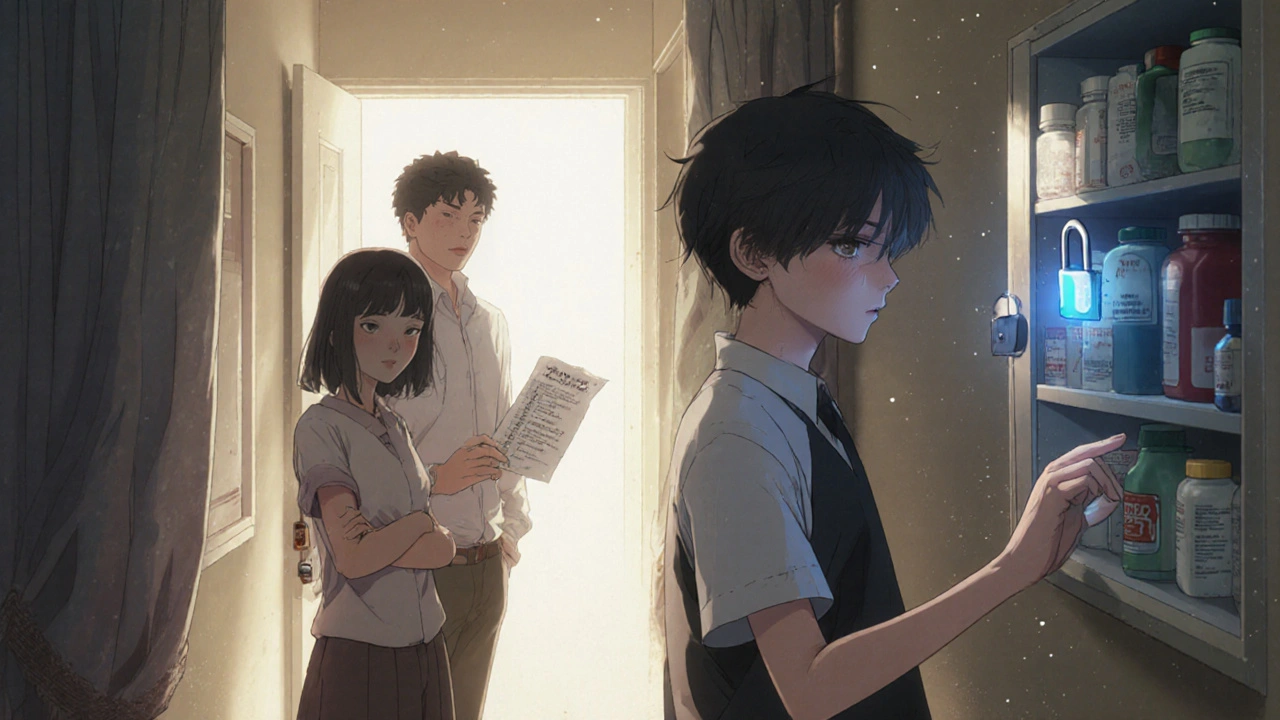
You might think your child is too young to open a bottle. Or that they’d never reach your cabinet. That’s what most parents think-until they don’t. A 2021 Johns Hopkins study found that 42% of kids between four and five can open standard child-safety caps in under ten minutes. And that’s just the caps. If the cabinet door is unlocked, a curious kid with a chair can get inside. You need layers of protection. First, use child-safety caps on every bottle. Then, lock the cabinet. If your cabinet doesn’t have a lock, install a simple childproof latch. These cost less than $10 and are easy to put on. For extra safety, use a locked drawer inside the cabinet. If you have prescription opioids or other high-risk meds, store them in a small lockbox inside the locked cabinet. Double security isn’t overkill-it’s necessary.Keep Only What You Actually Need
Your medicine cabinet isn’t a storage unit for old prescriptions or random supplements. It should be a well-curated first-aid kit. Here’s what belongs:- Acetaminophen (Tylenol) and ibuprofen (Advil, Motrin) for fever and pain
- Antihistamines like diphenhydramine (Benadryl) for allergies
- Hydrocortisone cream for rashes
- Antiseptic wipes and alcohol swabs
- Bandages, gauze, and medical tape
- Thermometer (digital, not glass)
- Saline nasal spray and a bulb syringe for babies
- Oral rehydration solution for vomiting or diarrhea
Track Everything-And Keep a List
You can’t protect what you can’t see. Keep every medicine in its original container. That means no dumping pills into random jars. The label has the name, dosage, and expiration date. Without it, you’re guessing-and guessing with medicine is dangerous. Also, make a written list of everything you keep in the cabinet. Include:- Brand and generic names
- Dosage (e.g., 100 mg, 5 mL)
- Expiration date
- Why you keep it (e.g., “for fevers in kids over 2”)
Dispose of Expired or Unwanted Medications the Right Way
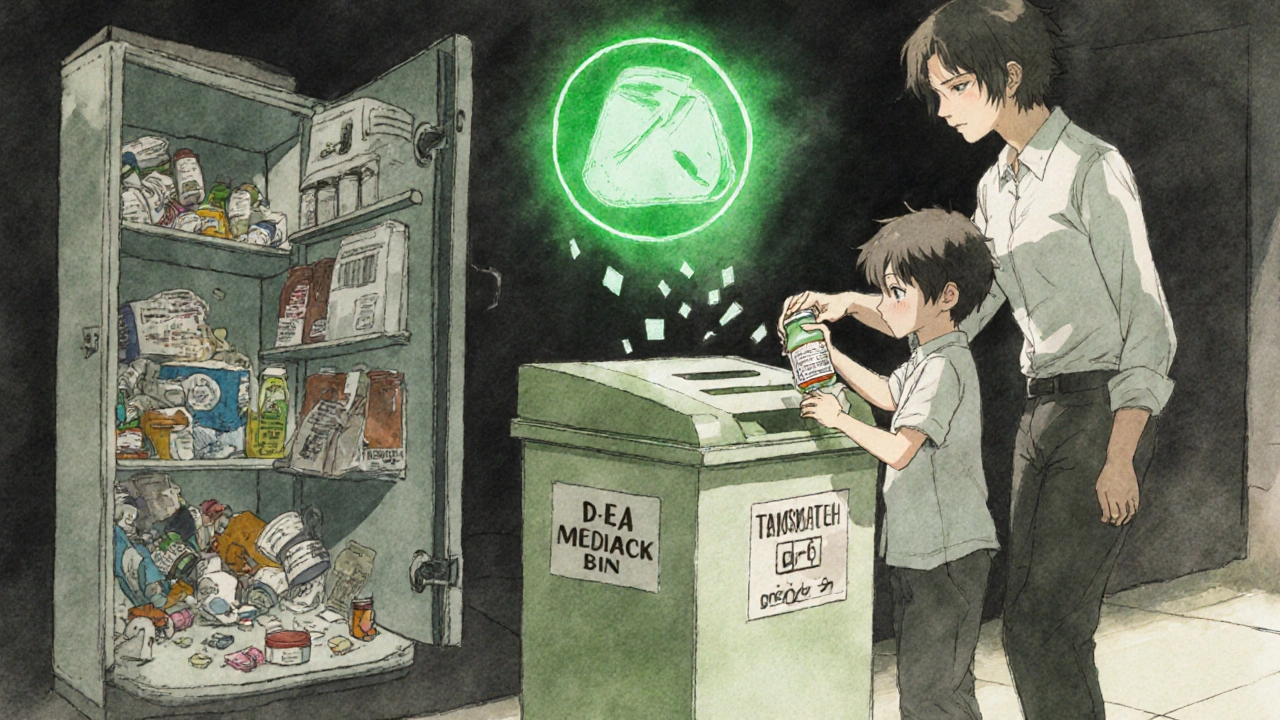
Don’t flush pills down the toilet. Don’t throw them in the trash. And don’t just leave them sitting around. The DEA says improper disposal contributes to drug abuse and environmental harm. Here’s how to do it right:- Use a drug take-back program. CVS, Walgreens, and many police stations have free disposal kiosks. You can drop off meds anytime, no questions asked.
- If no kiosk is nearby, use DisposeRX powder (free at many pharmacies). Mix it with your meds in the bottle, add water, shake, and throw the bottle in the trash. The powder turns pills into a gel that can’t be reused.
- If neither option works, mix pills with coffee grounds or cat litter in a sealed bag before tossing. This makes them unappealing and unusable.
Teens and Visitors Are Bigger Risks Than You Think
It’s not just toddlers. Teens are the second biggest danger. The National Survey on Drug Use and Health found that 54% of teens who misuse prescription drugs get them from home medicine cabinets. That’s not just theft-it’s access. A locked cabinet isn’t enough if your teen knows where the key is, or if your cousin’s kid is visiting and sees a bottle of Advil on the counter. Talk to your teens about why you lock the cabinet. Don’t treat it like a punishment. Say: “This isn’t about not trusting you. It’s about keeping everyone safe-including you.” Keep the list of meds visible to all caregivers. If you have guests, put the cabinet out of sight during parties or open houses. Drug theft from homes rose 27% between 2019 and 2023, according to DEA data. Don’t become a statistic.Have an Emergency Plan Ready
No matter how careful you are, accidents happen. That’s why you need a plan. Post the Poison Help number-800-222-1222-on your fridge, near your phone, and save it in every family member’s contacts. This line is free, confidential, and staffed by medical experts 24/7. If your child swallows something, don’t wait for symptoms. Call immediately. Don’t try to make them vomit. Don’t give milk or charcoal unless they tell you to. Just call. Also, keep your list of medications with you when you go to the ER. If your child is unconscious, the first thing they’ll ask is: “What did they take?” If you can answer that quickly, they can treat them faster.Check It Twice a Year-And Make It a Habit
A safe medicine cabinet isn’t a one-time job. It’s a habit. Every six months, set aside 20 minutes to go through everything. Ask yourself:- Is anything expired?
- Is anything missing or broken?
- Are the locks still working?
- Has anyone been asking about the meds?
Building a safe OTC medicine cabinet isn’t about buying expensive gear. It’s about thinking ahead. It’s about choosing your child’s safety over convenience. And it’s about realizing that even the most harmless-looking pill can be dangerous in the wrong hands.
Can I store vitamins and supplements with my other medicines?
Yes, but only if they’re kept in their original bottles and stored securely. Vitamins can be dangerous in large doses-especially iron and vitamin D. Keep them locked up just like any other medication. Don’t assume they’re harmless because they’re "natural."
What if I live in a small apartment with no extra closet space?
Use a small lockbox that fits on a high shelf, inside a dresser, or even behind a picture frame. Many affordable options are designed for apartments. The goal isn’t to have a big cabinet-it’s to have a locked, dry, out-of-reach space. Even a locked lunchbox on a top shelf works if it’s not in the bathroom.
Are childproof caps really enough?
No. Childproof caps are designed to slow kids down-not stop them. Studies show many children under five can open them within minutes. That’s why you need a locked cabinet on top of the caps. Think of it like a seatbelt and airbag. One isn’t enough. Both are needed.
How do I know if a medicine is expired?
Look at the expiration date printed on the bottle or box. It’s usually labeled "EXP" followed by a month and year. If it’s past that date, don’t use it-even if it looks fine. Some meds, like insulin or liquid antibiotics, become dangerous after expiration. When in doubt, throw it out.
Can I use a smart lock or app-controlled cabinet?
Yes-and it’s a smart upgrade. Smart locks that send alerts when opened are becoming more common. They’re especially helpful if you have teens or frequent visitors. Just make sure the lock still works without power and that you have a backup key or code. Technology helps, but it doesn’t replace the need for physical security and regular checks.



LINDA PUSPITASARI
December 1, 2025 AT 08:28Just did this last weekend and holy crap what a difference 😅 Moved everything outta the bathroom, tossed 17 expired bottles, and got a $8 latch from Target. My 2-year-old now just stares at the cabinet like it's a safe in a heist movie. Best 20 minutes of my life.
gerardo beaudoin
December 2, 2025 AT 04:00This is spot on. I used to keep meds in the bathroom because it was easy. Now they're in a locked drawer in my bedroom. No more guessing if something's expired. Simple changes save lives.
Brandy Johnson
December 3, 2025 AT 03:57It is an egregious oversight of public health policy that families are left to self-regulate potentially lethal substances. The federal government should mandate tamper-proof, climate-controlled, biometric-locked cabinets in every household with children under six. This is not a lifestyle choice; it is a public safety imperative.
Monica Lindsey
December 5, 2025 AT 02:35You're all so naive. Locking cabinets? Childproof caps? Please. If your kid can open a drawer, they're not your problem-their parents are. You let them roam free, then act shocked when they find the Advil. It's not the cabinet. It's you.
stephen idiado
December 6, 2025 AT 18:16OTC medicine cabinet? In Nigeria, we use traditional herbs and prayer. Why are you investing in Western pharmaceutical infrastructure? The real issue is overmedicalization. Your kids are fine. Your anxiety is not.
Subhash Singh
December 7, 2025 AT 00:33While the recommendations are generally sound, I would like to inquire whether there are any peer-reviewed studies validating the claim that humidity significantly degrades the efficacy of acetaminophen or ibuprofen. The pharmacokinetic data on degradation under ambient conditions appears to be underreported in the literature.
Geoff Heredia
December 9, 2025 AT 00:01They’re watching you. The government wants you to lock up your meds so they can track what you’re taking. That’s why they push these ‘safe cabinet’ campaigns. Next thing you know, your Tylenol usage gets flagged by the CDC and you get flagged for ‘potential substance abuse patterns.’ Wake up.
Andrew Keh
December 10, 2025 AT 16:25I appreciate the practical advice here. I used to think my kids were too young to be a risk. Then I caught my 3-year-old holding a bottle of children’s Benadryl like it was candy. That was the day I locked everything up. Thanks for the reminder-it’s not paranoia, it’s parenting.
Peter Lubem Ause
December 11, 2025 AT 01:51Look, I know this sounds like a lot of work, but let me tell you-this one habit changed everything in our house. We used to have meds everywhere: on the counter, in the car, in my purse. Now? One locked box, one list on my phone, and we clean it every April and October like clockwork. My wife even set a recurring calendar alert. It’s not perfect, but it’s consistent. And consistency? That’s what keeps kids safe. You don’t need fancy gear. You just need to care enough to do it right, every time.
Joy Aniekwe
December 12, 2025 AT 01:29Oh wow, so now we’re supposed to turn our homes into pharmaceutical vaults? Next you’ll tell me to install a biometric scanner on the fridge so my toddler doesn’t steal the yogurt.
Sullivan Lauer
December 12, 2025 AT 07:56Let me tell you about the time my 4-year-old got into the cabinet while I was in the shower. I heard a *clunk*, ran out, and there she was-spitting out half a bottle of children’s melatonin like it was gummy candy. I called Poison Control on speaker while screaming for my wife. They told me to keep her awake, keep her hydrated, and get to the ER. We were there for 8 hours. She’s fine. But I will never, ever forget the look on her face when she realized I wasn’t mad-I was terrified. That’s why I locked everything. Not because it’s trendy. Because I almost lost her. And I won’t risk it again.