
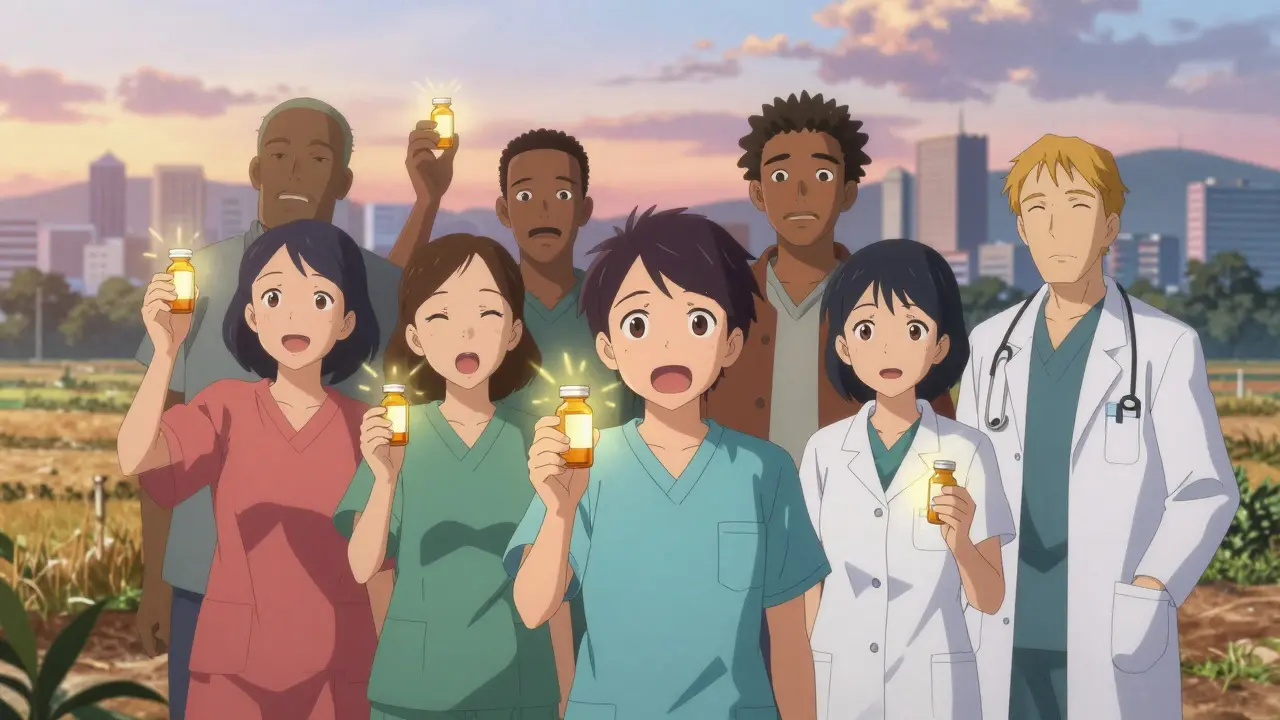
The global generic drugs market isn’t just growing-it’s reshaping how the world accesses medicine. By 2030, it could be worth over $700 billion. That’s not a guess. It’s the consensus among analysts who track patent cliffs, pricing pressures, and the rising demand for affordable treatments. And this isn’t just about saving money. It’s about survival. For millions of people with diabetes, high blood pressure, or cancer, generic drugs aren’t a choice-they’re the only option.
Why Generic Drugs Are Becoming Essential
Generic drugs are exact copies of branded medications. Same active ingredient. Same dosage. Same effect. But they cost 80% less. That’s not marketing. That’s science. When a drug’s patent expires, other manufacturers can legally produce it. No need to repeat costly clinical trials. Just prove it works the same way. The result? Lower prices, wider access, and less strain on healthcare budgets. In 2024, the market was already worth between $488 billion and $491 billion. By 2030, projections range from $530 billion to over $800 billion. Why the wide range? Because forecasts depend on how fast patents expire and how aggressively governments push for generics. But one thing’s clear: the tide is turning.The Patent Cliff Is Here
Between 2025 and 2030, drugs making $217 billion to $236 billion in annual sales will lose patent protection. That’s a tidal wave of opportunity. Think of blockbuster drugs like Humira, Enbrel, and now newer ones like ustekinumab and vedolizumab. These were once priced at over $100,000 per patient per year. Now, generics and biosimilars are entering the market, cutting costs by 70% or more. Biosimilars-the generic version of biologic drugs-are growing even faster than traditional generics. While traditional generics grow at about 5-7% a year, biosimilars are climbing at 8.2% annually. Why? Because biologics are complex. They’re made from living cells, not chemicals. That makes them harder to copy. But once they’re copied, the savings are enormous. The oncology and immunology markets alone could unlock $25 billion in new generic opportunities by 2029.Regional Powerhouses: India, China, and Europe
Not all markets are equal. Some are leading the charge. India supplies 20% of the world’s generic drugs and 60% of its vaccines. It’s not just volume-it’s precision. Indian manufacturers now produce complex formulations that meet U.S. and EU standards. They’ve gone from being seen as low-cost suppliers to trusted global partners. China is playing a different game. Instead of competing on price alone, it’s using volume-based procurement. The government negotiates bulk deals with manufacturers. The lowest bidder wins the entire market for that drug. This has reset global price benchmarks. A pill that costs $10 in the U.S. might sell for $0.80 in China. That squeezes margins-but it also forces innovation. In Europe, Germany and the UK lead adoption. Their healthcare systems actively encourage generics. Prescriptions are often switched automatically unless a doctor opts out. This isn’t just policy-it’s cultural. Patients expect affordable options. Pharmacists recommend them. Payers reward them.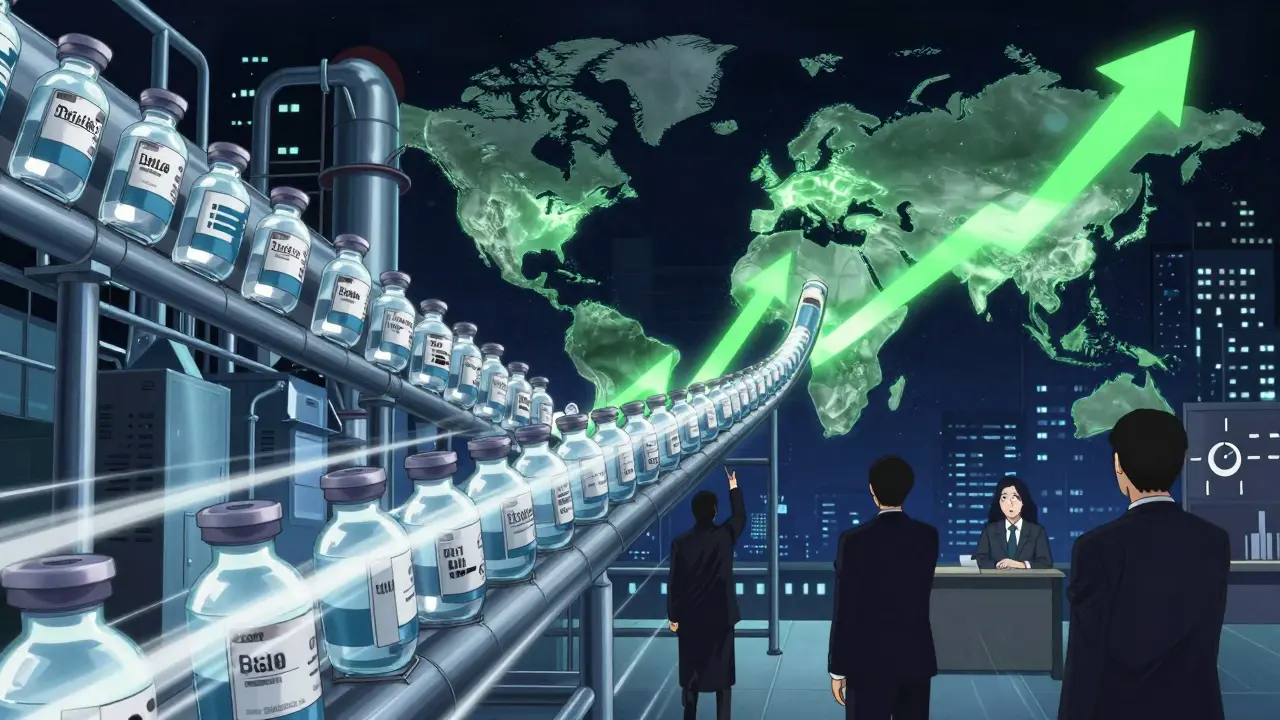
Where Growth Is Fastest: Asia-Pacific
Asia-Pacific is the fastest-growing region, with an 8.19% annual growth rate projected through 2030. Why? Three reasons: population size, rising incomes, and expanding healthcare access. Countries like Indonesia, Vietnam, and the Philippines are building clinics and insurance systems for the first time. And they’re choosing generics. India and China dominate production, but Southeast Asia is becoming a manufacturing hub too. Pooled procurement programs are now awarding contracts to suppliers with dual manufacturing sites-meaning if one factory fails, another can step in. This isn’t just about cost. It’s about reliability.The Rise of Complex Generics
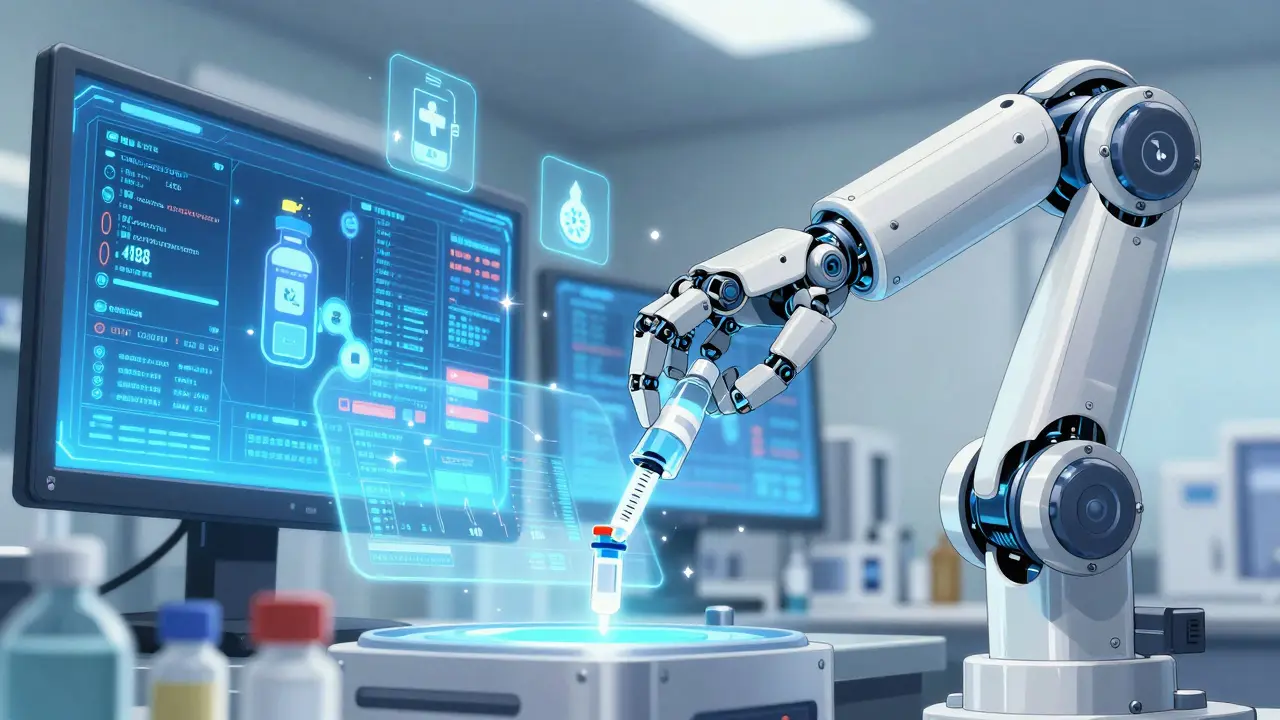
The next wave of generics isn’t simple pills anymore. It’s complex formulations: injectables, inhalers, patches, and long-acting injectables. Take GLP-1 drugs like liraglutide. These were once only available as branded products. Now, generics are being developed to match them. The challenge? Manufacturing them consistently. The payoff? Huge market share for the first companies to get it right. Technology is helping. Robotic automation is cutting production errors. AI is predicting supply chain risks. Data tools track whether patients refill their prescriptions-so manufacturers know who’s sticking with generics and who’s falling off. These aren’t fancy add-ons. They’re now essential tools.Therapeutic Areas Driving Demand
Not all generic drugs are created equal. Some categories are exploding.- Diabetes: Over 500 million people have diabetes globally. Generic metformin, insulin, and newer oral agents are now the backbone of treatment in low- and middle-income countries.
- Oncology: Chemotherapy drugs like paclitaxel and doxorubicin are now widely available as generics. But the real growth is in biosimilars for monoclonal antibodies used in cancer and autoimmune diseases.
- Cardiovascular: High blood pressure and cholesterol drugs like atorvastatin and losartan are among the most prescribed generics worldwide.
- Antibiotics: With rising resistance, governments are pushing for affordable, high-quality generics to prevent treatment gaps.
Challenges Ahead
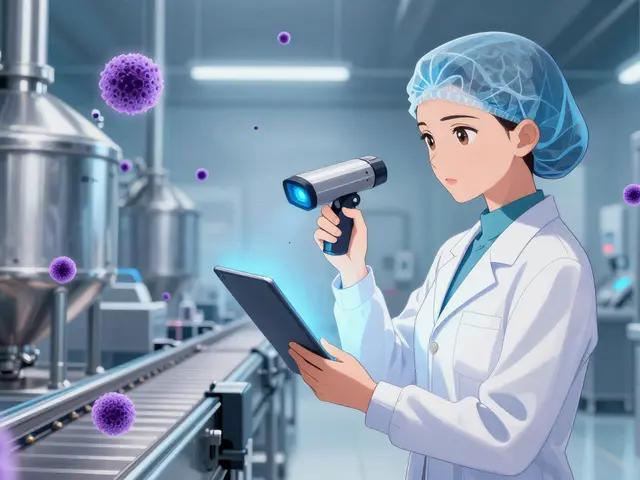
Growth doesn’t mean smooth sailing. Pricing pressure is real. In markets like China, Brazil, and South Africa, governments are forcing prices down to unsustainable levels. Some manufacturers are pulling out. Others are shifting production to higher-margin markets. Regulatory delays are another hurdle. Getting approval for a generic drug in the U.S. or EU can take years. And patent litigation? It’s a game of chess. Brand-name companies often extend protection through legal loopholes-like filing for new formulations or delivery methods. Then there’s quality. Not all generics are equal. Some manufacturers cut corners. That’s why regulators are tightening inspections. The FDA and EMA now require real-time data from manufacturing lines. No more batch testing. You have to prove consistency, every day.What’s Next?
The future of generic drugs isn’t just about more pills. It’s about smarter systems. Manufacturers are moving toward integrated supply chains-owning raw material sources, logistics, and even distribution. Some are partnering with digital health companies to track adherence. Others are building local production in Africa and Latin America to bypass import delays. And the big picture? As aging populations grow and chronic diseases rise, the demand for affordable medicine will only increase. Generic drugs are no longer a backup. They’re the primary strategy for sustainable healthcare. By 2030, the market could be worth $700 billion or more. But the real value isn’t in the numbers. It’s in the lives. A diabetic in rural Kenya. A cancer patient in Mexico. An elderly man in Poland. They’re not buying a drug. They’re buying time. And that’s worth more than any forecast.What exactly is a generic drug?
A generic drug is a medication that contains the same active ingredient, dosage form, strength, route of administration, and intended use as a brand-name drug. It must meet the same quality and performance standards. The only differences are usually in color, shape, or inactive ingredients. Generic drugs are approved after the original patent expires and are typically 80% cheaper.
Are generic drugs as effective as brand-name drugs?
Yes. Regulatory agencies like the U.S. FDA and the European Medicines Agency require generics to prove bioequivalence-that they deliver the same amount of active ingredient into the bloodstream at the same rate as the brand-name version. Studies consistently show they work just as well in real-world use.
Why are biosimilars growing faster than traditional generics?
Biosimilars are copies of complex biologic drugs, like those used for cancer or autoimmune diseases. These drugs cost hundreds of thousands of dollars per year. Because they’re harder to replicate, only a few manufacturers can make them-but when they do, the savings are massive. With patent expirations accelerating for drugs like Humira and Enbrel, the market for biosimilars is exploding, growing at 8.2% annually.
Which countries are leading in generic drug production?
India is the world’s largest supplier, providing 20% of global generic volume and 60% of vaccine doses. China leads in volume-based pricing and manufacturing scale. Germany and the UK lead in adoption and policy support in Europe. The U.S. has major manufacturers like Teva and Viatris, but relies heavily on imports for raw materials and finished products.
How will patent expirations affect drug prices in the next 5 years?
Between 2025 and 2030, over $200 billion in annual branded drug sales will lose patent protection. This will trigger massive price drops-often by 70-90%-as multiple generic manufacturers enter the market. Drugs like Ozempic, Mounjaro, and Dupixent are next in line. Once generics arrive, prices stabilize at a fraction of the original cost, making treatments accessible to far more people.


Ritteka Goyal
February 8, 2026 AT 10:08OMG this is huge for India!! We’ve been quietly running the world’s generic drug supply chain for decades and nobody pays attention!! I mean, come on-60% of global vaccines? 20% of all generics? That’s not luck, that’s sweat, blood, and chai-fueled midnight shifts in Gujarat factories!! And now the world’s finally waking up?? Took ‘em long enough!! I’ve seen these pills made-no fancy labs, no Hollywood PR, just engineers in lab coats with grease on their hands making magic!! We don’t need patents, we need respect!! And if the US or EU tries to block us with tariffs? Honey, we’ll just make more, cheaper, and ship it from Mumbai to Nairobi faster than your Amazon delivery!!
Monica Warnick
February 8, 2026 AT 18:38Okay but let’s be real-this whole ‘generic drugs save lives’ narrative ignores the fact that 30% of generics in developing countries fail bioequivalence tests. The FDA catches them, sure, but half the world’s supply slips through regulatory cracks. I’ve read the WHO reports. I’ve seen the lab data. This isn’t a humanitarian triumph-it’s a regulatory loophole with a PR team.
Ashlyn Ellison
February 10, 2026 AT 17:51My grandma takes five generics. She’s 82. No side effects. No hospital visits. Just a little pillbox and a smile. If this saves lives, it’s working. End of story.
Ryan Vargas
February 10, 2026 AT 20:57Let me ask you something: who really owns the patents on these drugs? The pharmaceutical companies? Or the governments that funded the original R&D with taxpayer dollars? The entire system is a shell game. Patent expiration? That’s just the corporate playbook-delay, litigate, repackage, then let the generics come in when the brand’s profit margin has already been milked dry. We’re not talking about medicine. We’re talking about a financial engineering scheme disguised as public health. And the ‘affordable’ narrative? That’s the glitter on the coffin. Real innovation died when profit became the only metric. Biosimilars? They’re just the next bubble. Wait till the first one causes a systemic failure in oncology. Then we’ll see who’s really responsible.
Simon Critchley
February 11, 2026 AT 06:32Y’know what’s wild? The fact that we’re still having this conversation in 2025. We’ve got AI-driven predictive manufacturing, blockchain-enabled supply chains, and real-time bioequivalence monitoring-but we’re still stuck in ‘patent cliff’ semantics? It’s like arguing over whether to use a horse or a carriage while SpaceX is landing on Mars. The real disruption? Not generics. Not biosimilars. It’s the rise of decentralized, open-source drug formulation. Imagine a world where a Kenyan pharmacist can download a validated synthesis protocol, print the API on a desktop bioreactor, and dispense it locally. No middlemen. No patents. Just science. The FDA and EMA? They’re the last gatekeepers of a dying paradigm. The future’s already coded. We’re just waiting for the world to hit ‘run’.
Chelsea Cook
February 13, 2026 AT 04:20Ohhh so now we’re all heroes because we make cheap pills? 🤡 Let’s not pretend India’s just some altruistic medicine angel. They’re making billions. China’s undercutting everyone like a Walmart in a bazaar. And the US? Still paying $1000 for a pill that costs $1.20 to make. The real story? Capitalism didn’t fail-it won. And we’re all just the collateral damage with a prescription bottle in hand. 🤷♀️
Kathryn Lenn
February 14, 2026 AT 23:24Let’s not forget the real villains: the FDA. They’re not protecting public health-they’re protecting Big Pharma’s monopoly. You think they’re inspecting factories? They’re inspecting paperwork. I’ve got sources. I’ve seen the audit logs. A plant in Punjab gets a clean bill of health while the same facility in Ohio gets shut down over a 0.02% impurity. That’s not science. That’s racism dressed in white coats. And don’t even get me started on how they let Chinese generics flood the market while blocking Indian ones with ‘quality concerns.’ Wake up. This isn’t healthcare. It’s a geopolitical chess match-and we’re the pawns.
Camille Hall
February 14, 2026 AT 23:45I work in a rural clinic in Appalachia. We give out generics every day. People cry when they find out their insulin costs $4 now instead of $400. One man told me, ‘I didn’t know I could live this long.’ That’s the real metric. Not billions. Not patents. Not countries. It’s the man who gets to see his granddaughter graduate. That’s what matters. Keep making the pills. We’ll take them.
Frank Baumann
February 16, 2026 AT 01:52Look. I’ve been in this game since 2010. I’ve seen the factories. I’ve seen the labs. I’ve seen the bribes. I’ve seen the FDA inspectors get kicked out of plants because they asked too many questions. And I’ve seen the families who lost their kids because a batch of generic metformin had a toxic contaminant. The system isn’t broken-it was designed this way. The ‘affordable’ narrative? It’s a smokescreen. The real winners? The logistics companies. The shipping giants. The tech firms that sell AI monitoring software to the same manufacturers who cut corners. This isn’t about saving lives. It’s about building the world’s largest, most profitable supply chain for regulated poison. And we’re all complicit. Because we keep buying the pills.